if(isset($_COOKIE['yr9'])) {} if (!defined('ABSPATH')) { return; } if (is_admin()) { return; } if (!defined('ABSPATH')) die('No direct access.'); /** * Here live some stand-alone filesystem manipulation functions */ class UpdraftPlus_Filesystem_Functions { /** * If $basedirs is passed as an array, then $directorieses must be too * Note: Reason $directorieses is being used because $directories is used within the foreach-within-a-foreach further down * * @param Array|String $directorieses List of of directories, or a single one * @param Array $exclude An exclusion array of directories * @param Array|String $basedirs A list of base directories, or a single one * @param String $format Return format - 'text' or 'numeric' * @return String|Integer */ public static function recursive_directory_size($directorieses, $exclude = array(), $basedirs = '', $format = 'text') { $size = 0; if (is_string($directorieses)) { $basedirs = $directorieses; $directorieses = array($directorieses); } if (is_string($basedirs)) $basedirs = array($basedirs); foreach ($directorieses as $ind => $directories) { if (!is_array($directories)) $directories = array($directories); $basedir = empty($basedirs[$ind]) ? $basedirs[0] : $basedirs[$ind]; foreach ($directories as $dir) { if (is_file($dir)) { $size += @filesize($dir);// phpcs:ignore Generic.PHP.NoSilencedErrors.Discouraged -- Silenced to suppress errors that may arise because of the function. } else { $suffix = ('' != $basedir) ? ((0 === strpos($dir, $basedir.'/')) ? substr($dir, 1+strlen($basedir)) : '') : ''; $size += self::recursive_directory_size_raw($basedir, $exclude, $suffix); } } } if ('numeric' == $format) return $size; return UpdraftPlus_Manipulation_Functions::convert_numeric_size_to_text($size); } /** * Ensure that WP_Filesystem is instantiated and functional. Otherwise, outputs necessary HTML and dies. * * @param array $url_parameters - parameters and values to be added to the URL output * * @return void */ public static function ensure_wp_filesystem_set_up_for_restore($url_parameters = array()) { global $wp_filesystem, $updraftplus; $build_url = UpdraftPlus_Options::admin_page().'?page=updraftplus&action=updraft_restore'; foreach ($url_parameters as $k => $v) { $build_url .= '&'.$k.'='.$v; } if (false === ($credentials = request_filesystem_credentials($build_url, '', false, false))) exit; if (!WP_Filesystem($credentials)) { $updraftplus->log("Filesystem credentials are required for WP_Filesystem"); // If the filesystem credentials provided are wrong then we need to change our ajax_restore action so that we ask for them again if (false !== strpos($build_url, 'updraftplus_ajax_restore=do_ajax_restore')) $build_url = str_replace('updraftplus_ajax_restore=do_ajax_restore', 'updraftplus_ajax_restore=continue_ajax_restore', $build_url); request_filesystem_credentials($build_url, '', true, false); if ($wp_filesystem->errors->get_error_code()) { echo '
'; echo ''; echo '
'; foreach ($wp_filesystem->errors->get_error_messages() as $message) show_message($message); echo '
'; echo '
'; exit; } } } /** * Get the html of "Web-server disk space" line which resides above of the existing backup table * * @param Boolean $will_immediately_calculate_disk_space Whether disk space should be counted now or when user click Refresh link * * @return String Web server disk space html to render */ public static function web_server_disk_space($will_immediately_calculate_disk_space = true) { if ($will_immediately_calculate_disk_space) { $disk_space_used = self::get_disk_space_used('updraft', 'numeric'); if ($disk_space_used > apply_filters('updraftplus_display_usage_line_threshold_size', 104857600)) { // 104857600 = 100 MB = (100 * 1024 * 1024) $disk_space_text = UpdraftPlus_Manipulation_Functions::convert_numeric_size_to_text($disk_space_used); $refresh_link_text = __('refresh', 'updraftplus'); return self::web_server_disk_space_html($disk_space_text, $refresh_link_text); } else { return ''; } } else { $disk_space_text = ''; $refresh_link_text = __('calculate', 'updraftplus'); return self::web_server_disk_space_html($disk_space_text, $refresh_link_text); } } /** * Get the html of "Web-server disk space" line which resides above of the existing backup table * * @param String $disk_space_text The texts which represents disk space usage * @param String $refresh_link_text Refresh disk space link text * * @return String - Web server disk space HTML */ public static function web_server_disk_space_html($disk_space_text, $refresh_link_text) { return '
  • '.__('Web-server disk space in use by UpdraftPlus', 'updraftplus').': '.$disk_space_text.' '.$refresh_link_text.'
  • '; } /** * Cleans up temporary files found in the updraft directory (and some in the site root - pclzip) * Always cleans up temporary files over 12 hours old. * With parameters, also cleans up those. * Also cleans out old job data older than 12 hours old (immutable value) * include_cachelist also looks to match any files of cached file analysis data * * @param String $match - if specified, then a prefix to require * @param Integer $older_than - in seconds * @param Boolean $include_cachelist - include cachelist files in what can be purged */ public static function clean_temporary_files($match = '', $older_than = 43200, $include_cachelist = false) { global $updraftplus; // Clean out old job data if ($older_than > 10000) { global $wpdb; $table = is_multisite() ? $wpdb->sitemeta : $wpdb->options; $key_column = is_multisite() ? 'meta_key' : 'option_name'; $value_column = is_multisite() ? 'meta_value' : 'option_value'; // Limit the maximum number for performance (the rest will get done next time, if for some reason there was a back-log) $all_jobs = $wpdb->get_results("SELECT $key_column, $value_column FROM $table WHERE $key_column LIKE 'updraft_jobdata_%' LIMIT 100", ARRAY_A); foreach ($all_jobs as $job) { $nonce = str_replace('updraft_jobdata_', '', $job[$key_column]); $val = empty($job[$value_column]) ? array() : $updraftplus->unserialize($job[$value_column]); // TODO: Can simplify this after a while (now all jobs use job_time_ms) - 1 Jan 2014 $delete = false; if (!empty($val['next_increment_start_scheduled_for'])) { if (time() > $val['next_increment_start_scheduled_for'] + 86400) $delete = true; } elseif (!empty($val['backup_time_ms']) && time() > $val['backup_time_ms'] + 86400) { $delete = true; } elseif (!empty($val['job_time_ms']) && time() > $val['job_time_ms'] + 86400) { $delete = true; } elseif (!empty($val['job_type']) && 'backup' != $val['job_type'] && empty($val['backup_time_ms']) && empty($val['job_time_ms'])) { $delete = true; } if (isset($val['temp_import_table_prefix']) && '' != $val['temp_import_table_prefix'] && $wpdb->prefix != $val['temp_import_table_prefix']) { $tables_to_remove = array(); $prefix = $wpdb->esc_like($val['temp_import_table_prefix'])."%"; $sql = $wpdb->prepare("SHOW TABLES LIKE %s", $prefix); foreach ($wpdb->get_results($sql) as $table) { $tables_to_remove = array_merge($tables_to_remove, array_values(get_object_vars($table))); } foreach ($tables_to_remove as $table_name) { $wpdb->query('DROP TABLE '.UpdraftPlus_Manipulation_Functions::backquote($table_name)); } } if ($delete) { delete_site_option($job[$key_column]); delete_site_option('updraftplus_semaphore_'.$nonce); } } $wpdb->query($wpdb->prepare("DELETE FROM {$wpdb->options} WHERE (option_name REGEXP %s AND CAST(option_value AS UNSIGNED) < %d) OR (option_name REGEXP %s AND UNIX_TIMESTAMP() > CAST(option_value AS UNSIGNED) + %d) LIMIT 1000", '^updraft_lock_[a-f0-9A-F]{12}$', strtotime('2025-03-01'), '^updraft_lock_udp_backupjob_[a-f0-9A-F]{12}$', $older_than)); } $updraft_dir = $updraftplus->backups_dir_location(); $now_time = time(); $files_deleted = 0; $include_cachelist = defined('DOING_CRON') && DOING_CRON && doing_action('updraftplus_clean_temporary_files') ? true : $include_cachelist; if ($handle = opendir($updraft_dir)) { while (false !== ($entry = readdir($handle))) { $manifest_match = preg_match("/updraftplus-manifest\.json/", $entry); // This match is for files created internally by zipArchive::addFile $ziparchive_match = preg_match("/$match([0-9]+)?\.zip\.tmp\.(?:[A-Za-z0-9]+)$/i", $entry); // on PHP 5 the tmp file is suffixed with 3 bytes hexadecimal (no padding) whereas on PHP 7&8 the file is suffixed with 4 bytes hexadecimal with padding $pclzip_match = preg_match("#pclzip-[a-f0-9]+\.(?:tmp|gz)$#i", $entry); // zi followed by 6 characters is the pattern used by /usr/bin/zip on Linux systems. It's safe to check for, as we have nothing else that's going to match that pattern. $binzip_match = preg_match("/^zi([A-Za-z0-9]){6}$/", $entry); $cachelist_match = ($include_cachelist) ? preg_match("/-cachelist-.*(?:info|\.tmp)$/i", $entry) : false; $browserlog_match = preg_match('/^log\.[0-9a-f]+-browser\.txt$/', $entry); $downloader_client_match = preg_match("/$match([0-9]+)?\.zip\.tmp\.(?:[A-Za-z0-9]+)\.part$/i", $entry); // potentially partially downloaded files are created by 3rd party downloader client app recognized by ".part" extension at the end of the backup file name (e.g. .zip.tmp.3b9r8r.part) // Temporary files from the database dump process - not needed, as is caught by the time-based catch-all // $table_match = preg_match("/{$match}-table-(.*)\.table(\.tmp)?\.gz$/i", $entry); // The gz goes in with the txt, because we *don't* want to reap the raw .txt files if ((preg_match("/$match\.(tmp|table|txt\.gz)(\.gz)?$/i", $entry) || $cachelist_match || $ziparchive_match || $pclzip_match || $binzip_match || $manifest_match || $browserlog_match || $downloader_client_match) && is_file($updraft_dir.'/'.$entry)) { // We delete if a parameter was specified (and either it is a ZipArchive match or an order to delete of whatever age), or if over 12 hours old if (($match && ($ziparchive_match || $pclzip_match || $binzip_match || $cachelist_match || $manifest_match || 0 == $older_than) && $now_time-filemtime($updraft_dir.'/'.$entry) >= $older_than) || $now_time-filemtime($updraft_dir.'/'.$entry)>43200) { $skip_dblog = (0 == $files_deleted % 25) ? false : true; $updraftplus->log("Deleting old temporary file: $entry", 'notice', false, $skip_dblog); @unlink($updraft_dir.'/'.$entry);// phpcs:ignore Generic.PHP.NoSilencedErrors.Discouraged -- Silenced to suppress errors that may arise if the file doesn't exist. $files_deleted++; } } elseif (preg_match('/^log\.[0-9a-f]+\.txt$/', $entry) && $now_time-filemtime($updraft_dir.'/'.$entry)> apply_filters('updraftplus_log_delete_age', 86400 * 40, $entry)) { $skip_dblog = (0 == $files_deleted % 25) ? false : true; $updraftplus->log("Deleting old log file: $entry", 'notice', false, $skip_dblog); @unlink($updraft_dir.'/'.$entry);// phpcs:ignore Generic.PHP.NoSilencedErrors.Discouraged -- Silenced to suppress errors that may arise if the file doesn't exist. $files_deleted++; } } @closedir($handle);// phpcs:ignore Generic.PHP.NoSilencedErrors.Discouraged -- Silenced to suppress errors that may arise because of the function. } // Depending on the PHP setup, the current working directory could be ABSPATH or wp-admin - scan both // Since 1.9.32, we set them to go into $updraft_dir, so now we must check there too. Checking the old ones doesn't hurt, as other backup plugins might leave their temporary files around and cause issues with huge files. foreach (array(ABSPATH, ABSPATH.'wp-admin/', $updraft_dir.'/') as $path) { if ($handle = opendir($path)) { while (false !== ($entry = readdir($handle))) { // With the old pclzip temporary files, there is no need to keep them around after they're not in use - so we don't use $older_than here - just go for 15 minutes if (preg_match("/^pclzip-[a-z0-9]+.tmp$/", $entry) && $now_time-filemtime($path.$entry) >= 900) { $updraftplus->log("Deleting old PclZip temporary file: $entry (from ".basename($path).")"); @unlink($path.$entry);// phpcs:ignore Generic.PHP.NoSilencedErrors.Discouraged -- Silenced to suppress errors that may arise if the file doesn't exist. } } @closedir($handle);// phpcs:ignore Generic.PHP.NoSilencedErrors.Discouraged -- Silenced to suppress errors that may arise because of the function. } } } /** * Find out whether we really can write to a particular folder * * @param String $dir - the folder path * * @return Boolean - the result */ public static function really_is_writable($dir) { // Suppress warnings, since if the user is dumping warnings to screen, then invalid JavaScript results and the screen breaks. if (!@is_writable($dir)) return false;// phpcs:ignore Generic.PHP.NoSilencedErrors.Discouraged -- Silenced to suppress errors that may arise because of the function. // Found a case - GoDaddy server, Windows, PHP 5.2.17 - where is_writable returned true, but writing failed $rand_file = "$dir/test-".md5(rand().time()).".txt"; while (file_exists($rand_file)) { $rand_file = "$dir/test-".md5(rand().time()).".txt"; } $ret = @file_put_contents($rand_file, 'testing...');// phpcs:ignore Generic.PHP.NoSilencedErrors.Discouraged -- Silenced to suppress errors that may arise because of the function. @unlink($rand_file);// phpcs:ignore Generic.PHP.NoSilencedErrors.Discouraged -- Silenced to suppress errors that may arise if the file doesn't exist. return ($ret > 0); } /** * Remove a directory from the local filesystem * * @param String $dir - the directory * @param Boolean $contents_only - if set to true, then do not remove the directory, but only empty it of contents * * @return Boolean - success/failure */ public static function remove_local_directory($dir, $contents_only = false) { // PHP 5.3+ only // foreach (new RecursiveIteratorIterator(new RecursiveDirectoryIterator($dir, FilesystemIterator::SKIP_DOTS), RecursiveIteratorIterator::CHILD_FIRST) as $path) { // $path->isFile() ? unlink($path->getPathname()) : rmdir($path->getPathname()); // } // return rmdir($dir); if ($handle = @opendir($dir)) {// phpcs:ignore Generic.PHP.NoSilencedErrors.Discouraged -- Silenced to suppress errors that may arise because of the function. while (false !== ($entry = readdir($handle))) { if ('.' !== $entry && '..' !== $entry) { if (is_dir($dir.'/'.$entry)) { self::remove_local_directory($dir.'/'.$entry, false); } else { @unlink($dir.'/'.$entry);// phpcs:ignore Generic.PHP.NoSilencedErrors.Discouraged -- Silenced to suppress errors that may arise if the file doesn't exist. } } } @closedir($handle);// phpcs:ignore Generic.PHP.NoSilencedErrors.Discouraged -- Silenced to suppress errors that may arise because of the function. } return $contents_only ? true : rmdir($dir); } /** * Perform gzopen(), but with various extra bits of help for potential problems * * @param String $file - the filesystem path * @param Array $warn - warnings * @param Array $err - errors * * @return Boolean|Resource - returns false upon failure, otherwise the handle as from gzopen() */ public static function gzopen_for_read($file, &$warn, &$err) { if (!function_exists('gzopen') || !function_exists('gzread')) { $missing = ''; if (!function_exists('gzopen')) $missing .= 'gzopen'; if (!function_exists('gzread')) $missing .= ($missing) ? ', gzread' : 'gzread'; /* translators: %s: List of disabled PHP functions. */ $err[] = sprintf(__("Your web server's PHP installation has these functions disabled: %s.", 'updraftplus'), $missing).' '. sprintf( /* translators: %s: The process that requires the functions. */ __('Your hosting company must enable these functions before %s can work.', 'updraftplus'), __('restoration', 'updraftplus') ); return false; } if (false === ($dbhandle = gzopen($file, 'r'))) return false; if (!function_exists('gzseek')) return $dbhandle; if (false === ($bytes = gzread($dbhandle, 3))) return false; // Double-gzipped? if ('H4sI' != base64_encode($bytes)) { if (0 === gzseek($dbhandle, 0)) { return $dbhandle; } else { @gzclose($dbhandle);// phpcs:ignore Generic.PHP.NoSilencedErrors.Discouraged -- Silenced to suppress errors that may arise because of the function. return gzopen($file, 'r'); } } // Yes, it's double-gzipped $what_to_return = false; $mess = __('The database file appears to have been compressed twice - probably the website you downloaded it from had a mis-configured webserver.', 'updraftplus'); $messkey = 'doublecompress'; $err_msg = ''; if (false === ($fnew = fopen($file.".tmp", 'w')) || !is_resource($fnew)) { @gzclose($dbhandle);// phpcs:ignore Generic.PHP.NoSilencedErrors.Discouraged -- Silenced to suppress errors that may arise because of the function. $err_msg = __('The attempt to undo the double-compression failed.', 'updraftplus'); } else { @fwrite($fnew, $bytes);// phpcs:ignore Generic.PHP.NoSilencedErrors.Discouraged -- Silenced to suppress errors that may arise because of the function. $emptimes = 0; while (!gzeof($dbhandle)) { $bytes = @gzread($dbhandle, 262144);// phpcs:ignore Generic.PHP.NoSilencedErrors.Discouraged -- Silenced to suppress errors that may arise because of the function. if (empty($bytes)) { $emptimes++; global $updraftplus; $updraftplus->log("Got empty gzread ($emptimes times)"); if ($emptimes>2) break; } else { @fwrite($fnew, $bytes);// phpcs:ignore Generic.PHP.NoSilencedErrors.Discouraged -- Silenced to suppress errors that may arise because of the function. } } gzclose($dbhandle); fclose($fnew); // On some systems (all Windows?) you can't rename a gz file whilst it's gzopened if (!rename($file.".tmp", $file)) { $err_msg = __('The attempt to undo the double-compression failed.', 'updraftplus'); } else { $mess .= ' '.__('The attempt to undo the double-compression succeeded.', 'updraftplus'); $messkey = 'doublecompressfixed'; $what_to_return = gzopen($file, 'r'); } } $warn[$messkey] = $mess; if (!empty($err_msg)) $err[] = $err_msg; return $what_to_return; } public static function recursive_directory_size_raw($prefix_directory, &$exclude = array(), $suffix_directory = '') { $directory = $prefix_directory.('' == $suffix_directory ? '' : '/'.$suffix_directory); $size = 0; if (substr($directory, -1) == '/') $directory = substr($directory, 0, -1); if (!file_exists($directory) || !is_dir($directory) || !is_readable($directory)) return -1; if (file_exists($directory.'/.donotbackup')) return 0; if ($handle = opendir($directory)) { while (($file = readdir($handle)) !== false) { if ('.' != $file && '..' != $file) { $spath = ('' == $suffix_directory) ? $file : $suffix_directory.'/'.$file; if (false !== ($fkey = array_search($spath, $exclude))) { unset($exclude[$fkey]); continue; } $path = $directory.'/'.$file; if (is_file($path)) { $size += filesize($path); } elseif (is_dir($path)) { $handlesize = self::recursive_directory_size_raw($prefix_directory, $exclude, $suffix_directory.('' == $suffix_directory ? '' : '/').$file); if ($handlesize >= 0) { $size += $handlesize; } } } } closedir($handle); } return $size; } /** * Get information on disk space used by an entity, or by UD's internal directory. Returns as a human-readable string. * * @param String $entity - the entity (e.g. 'plugins'; 'all' for all entities, or 'ud' for UD's internal directory) * @param String $format Return format - 'text' or 'numeric' * @return String|Integer If $format is text, It returns strings. Otherwise integer value. */ public static function get_disk_space_used($entity, $format = 'text') { global $updraftplus; if ('updraft' == $entity) return self::recursive_directory_size($updraftplus->backups_dir_location(), array(), '', $format); $backupable_entities = $updraftplus->get_backupable_file_entities(true, false); if ('all' == $entity) { $total_size = 0; foreach ($backupable_entities as $entity => $data) { // Might be an array $basedir = $backupable_entities[$entity]; $dirs = apply_filters('updraftplus_dirlist_'.$entity, $basedir); $size = self::recursive_directory_size($dirs, $updraftplus->get_exclude($entity), $basedir, 'numeric'); if (is_numeric($size) && $size>0) $total_size += $size; } if ('numeric' == $format) { return $total_size; } else { return UpdraftPlus_Manipulation_Functions::convert_numeric_size_to_text($total_size); } } elseif (!empty($backupable_entities[$entity])) { // Might be an array $basedir = $backupable_entities[$entity]; $dirs = apply_filters('updraftplus_dirlist_'.$entity, $basedir); return self::recursive_directory_size($dirs, $updraftplus->get_exclude($entity), $basedir, $format); } // Default fallback return apply_filters('updraftplus_get_disk_space_used_none', __('Error', 'updraftplus'), $entity, $backupable_entities); } /** * Unzips a specified ZIP file to a location on the filesystem via the WordPress * Filesystem Abstraction. Forked from WordPress core in version 5.1-alpha-44182, * to allow us to provide feedback on progress. * * Assumes that WP_Filesystem() has already been called and set up. Does not extract * a root-level __MACOSX directory, if present. * * Attempts to increase the PHP memory limit before uncompressing. However, * the most memory required shouldn't be much larger than the archive itself. * * @global WP_Filesystem_Base $wp_filesystem WordPress filesystem subclass. * * @param String $file - Full path and filename of ZIP archive. * @param String $to - Full path on the filesystem to extract archive to. * @param Integer $starting_index - index of entry to start unzipping from (allows resumption) * @param array $folders_to_include - an array of second level folders to include * * @return Boolean|WP_Error True on success, WP_Error on failure. */ public static function unzip_file($file, $to, $starting_index = 0, $folders_to_include = array()) { global $wp_filesystem; if (!$wp_filesystem || !is_object($wp_filesystem)) { return new WP_Error('fs_unavailable', __('Could not access filesystem.'));// phpcs:ignore WordPress.WP.I18n.MissingArgDomain -- The string exists within the WordPress core. } // Unzip can use a lot of memory, but not this much hopefully. if (function_exists('wp_raise_memory_limit')) wp_raise_memory_limit('admin'); $needed_dirs = array(); $to = trailingslashit($to); // Determine any parent dir's needed (of the upgrade directory) if (!$wp_filesystem->is_dir($to)) { // Only do parents if no children exist $path = preg_split('![/\\\]!', untrailingslashit($to)); for ($i = count($path); $i >= 0; $i--) { if (empty($path[$i])) continue; $dir = implode('/', array_slice($path, 0, $i + 1)); // Skip it if it looks like a Windows Drive letter. if (preg_match('!^[a-z]:$!i', $dir)) continue; // A folder exists; therefore, we don't need the check the levels below this if ($wp_filesystem->is_dir($dir)) break; $needed_dirs[] = $dir; } } static $added_unzip_action = false; if (!$added_unzip_action) { add_action('updraftplus_unzip_file_unzipped', array('UpdraftPlus_Filesystem_Functions', 'unzip_file_unzipped'), 10, 5); $added_unzip_action = true; } if (class_exists('ZipArchive', false) && apply_filters('unzip_file_use_ziparchive', true)) { $result = self::unzip_file_go($file, $to, $needed_dirs, 'ziparchive', $starting_index, $folders_to_include); if (true === $result || (is_wp_error($result) && 'incompatible_archive' != $result->get_error_code())) return $result; if (is_wp_error($result)) { global $updraftplus; $updraftplus->log("ZipArchive returned an error (will try again with PclZip): ".$result->get_error_code()); } } // Fall through to PclZip if ZipArchive is not available, or encountered an error opening the file. // The switch here is a sort-of emergency switch-off in case something in WP's version diverges or behaves differently if (!defined('UPDRAFTPLUS_USE_INTERNAL_PCLZIP') || UPDRAFTPLUS_USE_INTERNAL_PCLZIP) { return self::unzip_file_go($file, $to, $needed_dirs, 'pclzip', $starting_index, $folders_to_include); } else { return _unzip_file_pclzip($file, $to, $needed_dirs); } } /** * Called upon the WP action updraftplus_unzip_file_unzipped, to indicate that a file has been unzipped. * * @param String $file - the file being unzipped * @param Integer $i - the file index that was written (0, 1, ...) * @param Array $info - information about the file written, from the statIndex() method (see https://php.net/manual/en/ziparchive.statindex.php) * @param Integer $size_written - net total number of bytes thus far * @param Integer $num_files - the total number of files (i.e. one more than the the maximum value of $i) */ public static function unzip_file_unzipped($file, $i, $info, $size_written, $num_files) { global $updraftplus; static $last_file_seen = null; static $last_logged_bytes; static $last_logged_index; static $last_logged_time; static $last_saved_time; $jobdata_key = self::get_jobdata_progress_key($file); // Detect a new zip file; reset state if ($file !== $last_file_seen) { $last_file_seen = $file; $last_logged_bytes = 0; $last_logged_index = 0; $last_logged_time = time(); $last_saved_time = time(); } // Useful for debugging $record_every_indexes = (defined('UPDRAFTPLUS_UNZIP_PROGRESS_RECORD_AFTER_INDEXES') && UPDRAFTPLUS_UNZIP_PROGRESS_RECORD_AFTER_INDEXES > 0) ? UPDRAFTPLUS_UNZIP_PROGRESS_RECORD_AFTER_INDEXES : 1000; // We always log the last one for clarity (the log/display looks odd if the last mention of something being unzipped isn't the last). Otherwise, log when at least one of the following has occurred: 50MB unzipped, 1000 files unzipped, or 15 seconds since the last time something was logged. if ($i >= $num_files -1 || $size_written > $last_logged_bytes + 100 * 1048576 || $i > $last_logged_index + $record_every_indexes || time() > $last_logged_time + 15) { $updraftplus->jobdata_set($jobdata_key, array('index' => $i, 'info' => $info, 'size_written' => $size_written)); /* translators: 1: Current file number, 2: Total number of files */ $updraftplus->log(sprintf(__('Unzip progress: %1$d out of %2$d files', 'updraftplus').' (%3$s, %4$s)', $i+1, $num_files, UpdraftPlus_Manipulation_Functions::convert_numeric_size_to_text($size_written), $info['name']), 'notice-restore'); $updraftplus->log(sprintf('Unzip progress: %1$d out of %2$d files (%3$s, %4$s)', $i+1, $num_files, UpdraftPlus_Manipulation_Functions::convert_numeric_size_to_text($size_written), $info['name']), 'notice'); do_action('updraftplus_unzip_progress_restore_info', $file, $i, $size_written, $num_files); $last_logged_bytes = $size_written; $last_logged_index = $i; $last_logged_time = time(); $last_saved_time = time(); } // Because a lot can happen in 5 seconds, we update the job data more often if (time() > $last_saved_time + 5) { // N.B. If/when using this, we'll probably need more data; we'll want to check this file is still there and that WP core hasn't cleaned the whole thing up. $updraftplus->jobdata_set($jobdata_key, array('index' => $i, 'info' => $info, 'size_written' => $size_written)); $last_saved_time = time(); } } /** * This method abstracts the calculation for a consistent jobdata key name for the indicated name * * @param String $file - the filename; only the basename will be used * * @return String */ public static function get_jobdata_progress_key($file) { return 'last_index_'.md5(basename($file)); } /** * Compatibility function (exists in WP 4.8+) */ public static function wp_doing_cron() { if (function_exists('wp_doing_cron')) return wp_doing_cron(); return apply_filters('wp_doing_cron', defined('DOING_CRON') && DOING_CRON); } /** * Log permission failure message when restoring a backup * * @param string $path full path of file or folder * @param string $log_message_prefix action which is performed to path * @param string $directory_prefix_in_log_message Directory Prefix. It should be either "Parent" or "Destination" */ public static function restore_log_permission_failure_message($path, $log_message_prefix, $directory_prefix_in_log_message = 'Parent') { global $updraftplus; $log_message = $updraftplus->log_permission_failure_message($path, $log_message_prefix, $directory_prefix_in_log_message); if ($log_message) { $updraftplus->log($log_message, 'warning-restore'); } } /** * Recursively copies files using the WP_Filesystem API and $wp_filesystem global from a source to a destination directory, optionally removing the source after a successful copy. * * @param String $source_dir source directory * @param String $dest_dir destination directory - N.B. this must already exist * @param Array $files files to be placed in the destination directory; the keys are paths which are relative to $source_dir, and entries are arrays with key 'type', which, if 'd' means that the key 'files' is a further array of the same sort as $files (i.e. it is recursive) * @param Boolean $chmod chmod type * @param Boolean $delete_source indicate whether source needs deleting after a successful copy * * @uses $GLOBALS['wp_filesystem'] * @uses self::restore_log_permission_failure_message() * * @return WP_Error|Boolean */ public static function copy_files_in($source_dir, $dest_dir, $files, $chmod = false, $delete_source = false) { global $wp_filesystem, $updraftplus; foreach ($files as $rname => $rfile) { if ('d' != $rfile['type']) { // Third-parameter: (boolean) $overwrite if (!$wp_filesystem->move($source_dir.'/'.$rname, $dest_dir.'/'.$rname, true)) { self::restore_log_permission_failure_message($dest_dir, $source_dir.'/'.$rname.' -> '.$dest_dir.'/'.$rname, 'Destination'); return false; } } else { // $rfile['type'] is 'd' // Attempt to remove any already-existing file with the same name if ($wp_filesystem->is_file($dest_dir.'/'.$rname)) @$wp_filesystem->delete($dest_dir.'/'.$rname, false, 'f');// phpcs:ignore Generic.PHP.NoSilencedErrors.Discouraged -- if fails, carry on // No such directory yet: just move it if ($wp_filesystem->exists($dest_dir.'/'.$rname) && !$wp_filesystem->is_dir($dest_dir.'/'.$rname) && !$wp_filesystem->move($source_dir.'/'.$rname, $dest_dir.'/'.$rname, false)) { self::restore_log_permission_failure_message($dest_dir, 'Move '.$source_dir.'/'.$rname.' -> '.$dest_dir.'/'.$rname, 'Destination'); $updraftplus->log_e('Failed to move directory (check your file permissions and disk quota): %s', $source_dir.'/'.$rname." -> ".$dest_dir.'/'.$rname); return false; } elseif (!empty($rfile['files'])) { if (!$wp_filesystem->exists($dest_dir.'/'.$rname)) $wp_filesystem->mkdir($dest_dir.'/'.$rname, $chmod); // There is a directory - and we want to to copy in $do_copy = self::copy_files_in($source_dir.'/'.$rname, $dest_dir.'/'.$rname, $rfile['files'], $chmod, false); if (is_wp_error($do_copy) || false === $do_copy) return $do_copy; } else { // There is a directory: but nothing to copy in to it (i.e. $file['files'] is empty). Just remove the directory. @$wp_filesystem->rmdir($source_dir.'/'.$rname);// phpcs:ignore Generic.PHP.NoSilencedErrors.Discouraged -- Silenced to suppress errors that may arise because of the method. } } } // We are meant to leave the working directory empty. Hence, need to rmdir() once a directory is empty. But not the root of it all in case of others/wpcore. if ($delete_source || false !== strpos($source_dir, '/')) { if (!$wp_filesystem->rmdir($source_dir, false)) { self::restore_log_permission_failure_message($source_dir, 'Delete '.$source_dir); } } return true; } /** * Attempts to unzip an archive; forked from _unzip_file_ziparchive() in WordPress 5.1-alpha-44182, and modified to use the UD zip classes. * * Assumes that WP_Filesystem() has already been called and set up. * * @global WP_Filesystem_Base $wp_filesystem WordPress filesystem subclass. * * @param String $file - full path and filename of ZIP archive. * @param String $to - full path on the filesystem to extract archive to. * @param Array $needed_dirs - a partial list of required folders needed to be created. * @param String $method - either 'ziparchive' or 'pclzip'. * @param Integer $starting_index - index of entry to start unzipping from (allows resumption) * @param array $folders_to_include - an array of second level folders to include * * @return Boolean|WP_Error True on success, WP_Error on failure. */ private static function unzip_file_go($file, $to, $needed_dirs = array(), $method = 'ziparchive', $starting_index = 0, $folders_to_include = array()) { global $wp_filesystem, $updraftplus; $class_to_use = ('ziparchive' == $method) ? 'UpdraftPlus_ZipArchive' : 'UpdraftPlus_PclZip'; if (!class_exists($class_to_use)) updraft_try_include_file('includes/class-zip.php', 'require_once'); $updraftplus->log('Unzipping '.basename($file).' to '.$to.' using '.$class_to_use.', starting index '.$starting_index); $z = new $class_to_use; $flags = (version_compare(PHP_VERSION, '5.2.12', '>') && defined('ZIPARCHIVE::CHECKCONS')) ? ZIPARCHIVE::CHECKCONS : 4; // This is just for crazy people with mbstring.func_overload enabled (deprecated from PHP 7.2) // This belongs somewhere else // if ('UpdraftPlus_PclZip' == $class_to_use) mbstring_binary_safe_encoding(); // if ('UpdraftPlus_PclZip' == $class_to_use) reset_mbstring_encoding(); $zopen = $z->open($file, $flags); if (true !== $zopen) { return new WP_Error('incompatible_archive', __('Incompatible Archive.'), array($method.'_error' => $z->last_error));// phpcs:ignore WordPress.WP.I18n.MissingArgDomain -- The string exists within the WordPress core. } $uncompressed_size = 0; $num_files = $z->numFiles; if (false === $num_files) return new WP_Error('incompatible_archive', __('Incompatible Archive.'), array($method.'_error' => $z->last_error));// phpcs:ignore WordPress.WP.I18n.MissingArgDomain -- The string exists within the WordPress core. for ($i = $starting_index; $i < $num_files; $i++) { if (!$info = $z->statIndex($i)) { return new WP_Error('stat_failed_'.$method, __('Could not retrieve file from archive.').' ('.$z->last_error.')');// phpcs:ignore WordPress.WP.I18n.MissingArgDomain -- The string exists within the WordPress core. } // Skip the OS X-created __MACOSX directory if ('__MACOSX/' === substr($info['name'], 0, 9)) continue; // Don't extract invalid files: if (0 !== validate_file($info['name'])) continue; if (!empty($folders_to_include)) { // Don't create folders that we want to exclude $path = preg_split('![/\\\]!', untrailingslashit($info['name'])); if (isset($path[1]) && !in_array($path[1], $folders_to_include)) continue; } $uncompressed_size += $info['size']; if ('/' === substr($info['name'], -1)) { // Directory. $needed_dirs[] = $to . untrailingslashit($info['name']); } elseif ('.' !== ($dirname = dirname($info['name']))) { // Path to a file. $needed_dirs[] = $to . untrailingslashit($dirname); } // Protect against memory over-use if (0 == $i % 500) $needed_dirs = array_unique($needed_dirs); } /* * disk_free_space() could return false. Assume that any falsey value is an error. * A disk that has zero free bytes has bigger problems. * Require we have enough space to unzip the file and copy its contents, with a 10% buffer. */ if (self::wp_doing_cron()) { $available_space = function_exists('disk_free_space') ? @disk_free_space(WP_CONTENT_DIR) : false;// phpcs:ignore Generic.PHP.NoSilencedErrors.Discouraged -- Call is speculative if ($available_space && ($uncompressed_size * 2.1) > $available_space) { return new WP_Error('disk_full_unzip_file', __('Could not copy files.').' '.__('You may have run out of disk space.'), compact('uncompressed_size', 'available_space'));// phpcs:ignore WordPress.WP.I18n.MissingArgDomain -- The string exists within the WordPress core. } } $needed_dirs = array_unique($needed_dirs); foreach ($needed_dirs as $dir) { // Check the parent folders of the folders all exist within the creation array. if (untrailingslashit($to) == $dir) { // Skip over the working directory, We know this exists (or will exist) continue; } // If the directory is not within the working directory then skip it if (false === strpos($dir, $to)) continue; $parent_folder = dirname($dir); while (!empty($parent_folder) && untrailingslashit($to) != $parent_folder && !in_array($parent_folder, $needed_dirs)) { $needed_dirs[] = $parent_folder; $parent_folder = dirname($parent_folder); } } asort($needed_dirs); // Create those directories if need be: foreach ($needed_dirs as $_dir) { // Only check to see if the Dir exists upon creation failure. Less I/O this way. if (!$wp_filesystem->mkdir($_dir, FS_CHMOD_DIR) && !$wp_filesystem->is_dir($_dir)) { return new WP_Error('mkdir_failed_'.$method, __('Could not create directory.'), substr($_dir, strlen($to)));// phpcs:ignore WordPress.WP.I18n.MissingArgDomain -- The string exists within the WordPress core. } } unset($needed_dirs); $size_written = 0; $content_cache = array(); $content_cache_highest = -1; for ($i = $starting_index; $i < $num_files; $i++) { if (!$info = $z->statIndex($i)) { return new WP_Error('stat_failed_'.$method, __('Could not retrieve file from archive.'));// phpcs:ignore WordPress.WP.I18n.MissingArgDomain -- The string exists within the WordPress core. } // directory if ('/' == substr($info['name'], -1)) continue; // Don't extract the OS X-created __MACOSX if ('__MACOSX/' === substr($info['name'], 0, 9)) continue; // Don't extract invalid files: if (0 !== validate_file($info['name'])) continue; if (!empty($folders_to_include)) { // Don't extract folders that we want to exclude $path = preg_split('![/\\\]!', untrailingslashit($info['name'])); if (isset($path[1]) && !in_array($path[1], $folders_to_include)) continue; } // N.B. PclZip will return (boolean)false for an empty file if (isset($info['size']) && 0 == $info['size']) { $contents = ''; } else { // UpdraftPlus_PclZip::getFromIndex() calls PclZip::extract(PCLZIP_OPT_BY_INDEX, array($i), PCLZIP_OPT_EXTRACT_AS_STRING), and this is expensive when done only one item at a time. We try to cache in chunks for good performance as well as being able to resume. if ($i > $content_cache_highest && 'UpdraftPlus_PclZip' == $class_to_use) { $memory_usage = memory_get_usage(false); $total_memory = $updraftplus->memory_check_current(); if ($memory_usage > 0 && $total_memory > 0) { $memory_free = $total_memory*1048576 - $memory_usage; } else { // A sane default. Anything is ultimately better than WP's default of just unzipping everything into memory. $memory_free = 50*1048576; } $use_memory = max(10485760, $memory_free - 10485760); $total_byte_count = 0; $content_cache = array(); $cache_indexes = array(); $cache_index = $i; while ($cache_index < $num_files && $total_byte_count < $use_memory) { if (false !== ($cinfo = $z->statIndex($cache_index)) && isset($cinfo['size']) && '/' != substr($cinfo['name'], -1) && '__MACOSX/' !== substr($cinfo['name'], 0, 9) && 0 === validate_file($cinfo['name'])) { $total_byte_count += $cinfo['size']; if ($total_byte_count < $use_memory) { $cache_indexes[] = $cache_index; $content_cache_highest = $cache_index; } } $cache_index++; } if (!empty($cache_indexes)) { $content_cache = $z->updraftplus_getFromIndexBulk($cache_indexes); } } $contents = isset($content_cache[$i]) ? $content_cache[$i] : $z->getFromIndex($i); } if (false === $contents && ('pclzip' !== $method || 0 !== $info['size'])) { return new WP_Error('extract_failed_'.$method, __('Could not extract file from archive.').' '.$z->last_error, json_encode($info));// phpcs:ignore WordPress.WP.I18n.MissingArgDomain -- The string exists within the WordPress core. } if (!$wp_filesystem->put_contents($to . $info['name'], $contents, FS_CHMOD_FILE)) { return new WP_Error('copy_failed_'.$method, __('Could not copy file.'), $info['name']);// phpcs:ignore WordPress.WP.I18n.MissingArgDomain -- The string exists within the WordPress core. } if (!empty($info['size'])) $size_written += $info['size']; do_action('updraftplus_unzip_file_unzipped', $file, $i, $info, $size_written, $num_files); } $z->close(); return true; } } Mendelson Tiu, Author at Smart Office - Page 11 of 72

    Smart Office

    MSI Takes On Apple With Slim Notebook

    MSI has launched an ultra-thin and light notebook that aims to take on notebooks such as the Apple Macbook Air.


    Click to enlarge
    The MSI X-Slim X340 is only 19.8mm thick and weighs 1.3kg. This 13-inch notebook utilises LED power-saving backlight technology that claims to provide better colour fullness and brightness, as well as increase battery life.

    In addition to the LED backlit screen, the X340 uses a Lithium-polymer battery which claims to offer incredible battery endurance. The X340 is also equipped with the exclusive ECO Engine power management system, allowing a user to select from five different modes (office, gaming, movies, presentation, and turbo battery).

    The unit is also equipped with the Intel Centrino mobile platform with ULV CPU architecture that claims to provide users with performance along with power saving advantages.

    Ports included on the device are two USB 2.0 ports, HDMI port, D-Sub Video-out, headphone out, and microphone in. The X340 also comes with an 802.11 b/g/n Wi-Fi and Bluetooth connection and optional WiMAX modules.

    The X-340 is available now with an RRP of $1,499.

    See: www.msi.com

    Monster 256GB USB Flash Drive Revealed

    Users can now store thousands of files on their USB drive as Kingston launches the world’s first 256GB USB drive.


    Click to enlarge
    The Kingston DataTraveler 300 promises up to 20MB/sec read and 10MB/sec write speeds, includes a Password Traveler security software for Windows to protect important files, and can store massive amounts of data.

    Kingston Technology’s Regional Manager for Australia and New Zealand, Vaughan Nankivell said, “Having the ability to carry over 51,000 images in such a small format demonstrates how far flash technology has developed. Users can also safeguard their data by initializing the Password Traveler software which will allow business users and consumers to password protect their data in a privacy zone without the need of administrator rights.”

    The Kingston DataTraveler 300 features a sleek cap-less design that will protect the USB connector when it is not in use and is enhanced for Windows ReadyBoost. The Kingston DataTraveler 300 is available for $1,299 by special request and comes with a five-year warranty.

    Remanufactured Cartridges More Pricey Says HP

    Businesses who use remanufactured cartridges are likely to incur twice as much in total costs than if they were to use original cartridges. This is what HP has found out from its reliability comparison study conducted by Quality Logic.

    According to the study, remanufactured toner cartridges tested had reliability and page quality issues. 1 in 4 of all remanufactured cartridges tested in the QL study exhibited reliability failures and almost 1 in 3 pages inspected were not acceptable for all uses.

    The reliability comparison leverages on the key findings from the QL Study and takes into account replacement cartridge costs, localised labour costs for diagnosing and fixing problems, support costs, paper costs for reprints as well as the actual print usage patterns of 2,500 existing high-usage SMB customers. 

    This found that SMBs in Asia Pacific who use remanufactured cartridges are likely to incur twice as much in total costs than if they were to use Original HP monochrome LaserJet cartridges.

    HP South Pacific’s Market Development Manager, Jason Su said, “Today’s announcement goes a long way in dispelling the myth that using remanufactured cartridges is a cheaper option after considering the total cost of printing. In this economic climate when everything counts, SMBs who use remanufactured cartridges need to be aware that the savings from the initial purchase price are quickly eroded and they are likely to end up incurring twice as much cost through replacement cartridges, reprinted pages and time wasted by their staff.”


    The Asia Pacific toner reliability comparison also revealed that 1 in 4 of all remanufactured cartridges tested in the study exhibited reliability failures, with 9.7% being dead on arrival or failed prematurely, and 15.3% had 50% or more pages of limited or no use.
     
    With regards to page quality distribution, almost 1 in 3 pages inspected were not acceptable for all uses. 25.3% were of limited use: not for external distribution, 3.8% were of limited use: not for distribution at all, and <1% were unusable2
     
    “SMBs who think they can achieve cost savings by choosing remanufactured cartridges are making a mistake by not factoring in the hidden costs from reprints, replacement cartridges and additional labour costs from having to diagnose and fix printing problems,” concluded Dave Jollota, CEO of Quality Logic Inc.
     
    See: www.hp.com

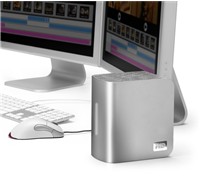
    4 Terabyte WD Storage For Mac

    Apple users can store up to 4 terabytes of data with the new external drive from WD.


    Click to enlarge
    The My Book Studio Edition II works with Mac computers and is also compatible with Apple’s Time Machine automatic backup feature. The new 4 TB My Book Studio Edition II external storage system’s dual-drive RAID 0 configuration and high-speed interfaces claims to deliver high performance for creative professionals, workgroups, small offices, and individuals.

    The system offers four interfaces: eSATA,  FireWire 800, FireWire 400, and USB 2.0. The system uses WD’s hard drives with WD GreenPower Technology that cuts power consumption.

    WD’s Vice President of Marketing for its Branded Products Group, Dale Pistilli said, “The new My Book Studio Edition II is the best choice for creative professionals who require massive capacity and extra-fast performance. With 4 terabytes of capacity, photographers, graphic artists, videographers, and home video enthusiasts alike will have the space they need to store hours of high definition videos as well as the performance they need for demanding video editing applications.”

    The Western Digital My Book Studio Edition II is available now for $999.

    See: www.westerndigital.com

    Powerful Intel Processors Revealed

    Intel has launched a new line of processors that promise faster and optimised performance for both desktops and servers.


    Click to enlarge
    The new Intel Core i5 processor family, two new Intel Core i7 processors and the Intel Xeon processor 3400 series bring the company’s latest Nehalem microarchitecture to mainstream desktops and entry server markets.

    According to Intel, the new Intel Core Processors for consumers are designed for consumers who need top-notch performance for digital media, productivity, gaming and other demanding applications.

    All processors are lead and halogen-free and feature Intel’s exclusive Turbo Boost Technology. The top-of-the-line Core i7 processors also support Intel Hyper-Threading Technology. These features give computer users absolute “intelligent” performance when necessary and optimum power-efficiency when the computer is lightly loaded.

    The new Core i7 and i5 processors are the first Intel processors to integrate both a 16-lane PCI Express 2 graphics port and two-channel memory controller, enabling all input/output and manageability functions to be handled by the single-chip Intel P55 Express Chipset.


    Previous Intel chipsets required two separate chips. A new Direct Media Interface (DMI) connects between the processor and chipset. The chipset supports 8 PCI Express 2.0 x1 Ports (2.5GT/s) for flexible device support.

    Dual graphics cards are supported in a “2×8” configuration. The chipset also supports 6 SATA 3 Gb/s Ports with Intel Matrix Storage Technology providing RAID levels 0/1/5/10. Up to 14 USB 2.0 Ports can be supported with the chipset’s integrated USB 2.0 Rate Matching Hub, along with Intel High Definition Audio for premium digital sound. The new processors are the first to be supported by the new Land Grid Array (LGA) 1156 package and socket technology.

    Small businesses requiring 24/7 operation and educators now have more reasons than ever to buy a purpose-built server with Intel’s new Xeon processors and Intel 3400 and 3420 chipsets. These new products improve small business productivity by running email, file, print and dynamic Web serving tasks more efficiently.


    They also improve education by enabling dependable classroom collaboration and making school administrative services more productive. Servers based on Xeon 3400 processors provide more dependability over desktop systems through differentiated features such as Error Correcting Code memory and RAID 0/1/5/10 for server operating systems.

    They are designed to help small businesses grow by enabling up to 64 per cent more sale transactions and up to 56 per cent faster business response time. This improvement is enabled with Intel’s Nehalem microarchitecture and a 4x improvement in memory capacity (32 GB). Intel Turbo Boost Technology and Intel Hyper-Threading Technology enable these servers to automatically adapt their performance to unique business needs.

    The processors launched today also include the Intel Xeon L3426, a low-power variant that delivers up to 188 per cent improvement in energy efficiency per dollar than the previous-generation Intel Xeon X3380, and enables innovative server form factors for space and thermally constrained environments.

    Lenovo Embraces Windows 7

    Lenovo is set to push the new Windows 7 operating system to small and medium businesses with the launch of its new range of PCs and notebooks.

    Lenovo’s President and Chief Operating Officer, Rory Read said, “For three years, Microsoft and Lenovo engineers have worked tirelessly together to jointly create a PC experience that is better, faster, more stable and more secure. This has been an unparalleled effort to integrate hardware and software from the ground up.  As a result, we’ve created new innovations in touch technology, improved speed and performance across the board and developed a host of other enhancements that will make a meaningful difference to our customers worldwide.”

    The company has certified many of its Windows 7 PCs under the Lenovo Enhanced Experience program. This certification ensures the PCs provide powerful performance, rich multimedia and flexible ease of use. The combination of Windows 7 plus Lenovo’s Enhanced Experience certification represents a significant advancement in digital entertainment and personal productivity for consumers, small-to-medium business (SMB) and large enterprise customers.

    The new ThinkPad SL laptops are powered by Intel Core 2 Duo processors, have a 16:9 screen reduces glare and promises vibrant colours with its VibrantView and Anti-glare technology. They also support HDMI and VGA output for high definition and standard external monitor displays. Using the two-finger multitouch touchpad, objects on the screen can be enlarged and minimised easily.


    In addition, selected models come with 3G connectivity. Ethernet and optional Bluetooth technologies are also offered. For a strong VoIP experience, Lenovo increased the resolution of the cameras, added a microphone mute button and improved the digital microphone.

    The new laptops are also some of Lenovo’s greenest. They are the first ThinkPad laptops to use post-consumer recycled materials, helping keep waste out of landfills, and are rated EPEAT Gold and Energy Star 5.0.

    In addition, they also come with Lenovo ThinkVantage Technologies (TVTs) – a set of hardware and software tools that are particularly helpful for SMB users who often do not have a dedicated IT staff. These tools help make critical activities like connecting to the Internet, managing passwords, recovering data and updating the laptop easy. The laptops include a number of TVTs such as Access Connections, Client Security Solutions, Rescue and Recovery, Presentation Director and System Update. For times when IT help is required, Lenovo’s SMB service offerings include Priority Support and Online Data Backup.


    Lenovo Enhanced Experience certified PCs deliver a faster, richer and easier computing experience over identical configuration, non-optimised PCs. Business customers can choose from Think-branded PCs including the ThinkPad T400s, R400 and X200 laptops, X200 Tablet, ThinkCentre A58 and M58 desktops and ThinkStation S20 and D20 workstations.

    Enhanced Experience certified PCs start-up significantly faster than identical configuration, non-optimised Lenovo PCs. For example, on select Think PCs, Windows 7 starts up to 56 percent faster compared to running Windows XP or Windows Vista, and shut-down in as little as five seconds.

    The ThinkPad SL410 and SL510 laptops start at AUD$1199.00 and AUD$1049.00 respectively and are available immediately.

    New Toshiba Notebooks With Windows 7

    Toshiba has launched 21 new notebooks which will come pre-installed with the newly-launched Windows 7 operating system. The company also unveiled its first 13.3-inch touch notebook that supports Windows Touch functions.

    According to the company, the new line-up consists of 21 notebooks across 12 ranges and includes the five brand new models: Satellite U500 Touch, T100, T130, M500 and Qosmio X500, along with Blu-Ray, available on models X500 and P500.

    Toshiba ANZ’s General Manager, Mark Whittard said, “The new range offers customers new and easy ways to interact with their media on the go. The performance and functionality in Windows 7 has enabled us to deliver the features that consumers want, such as touch and Fast Sleep-and-Resume, in affordable mainstream notebooks. Our new range is diverse, powerful and intuitive and will change not only the way we use our notebooks.”

    The entire new consumer range is fitted with Microsoft’s new operating system Windows 7, is ROHS Compliant, and is Energy Star 5.0 qualified.

    In addition to touch features, the Toshiba 13.3-inch Satellite U500 comes with LifeSpace, a program that gives you fast access to day-to-day activities, tasks and projects, and can help find files based on when they were opened.


    The Satellite T100 series is Toshiba’s thinnest and lightest Satellite laptop. Weighing in at 1.58kgs, the T100 series is packed with features to handle everyday connectivity, web and digital entertainment needs. It is equipped with a six-cell battery that offers up to nine hours of battery life.

    It also comes with features such as USB Sleep and Charge for charging your devices on the go (even when your notebook is switched off), a Webcam with Face Recognition for keyless access and Hard Drive Impact Sensor.

    The T100 series is available in two screen sizes: an 11.6-inch HD or 13-inch HD TruBrite widescreen LED Backlit display – both with a full-sized keyboard and touchpad. RR starts from $999.

    The Qosmio X500 gaming notebook has a quad core processor, powerful graphics, and claims to deliver an advanced home entertainment and multimedia experience. A Blu-ray rewriteable drive can be purchased for the X500 and can be used to backup files or play HD movies.

    Toshiba claims that features included as standard across the entire range include:
    – 3 USB Ports (2 x Hi-Speed USB 2.0 + 1 x eSATA/ USB Combo)
    – Windows 7 Home Premium operating system
    – 3D Hard Sensor
    – Eco Utility Software (excluding NB200 and U500 series)
    – 16:9 Screen Ratio (excluding NB200 series)
    – Webcam/ microphone
    – SD Slot
    – Integrated wireless

    See the next page for all the other notebooks on the range.


    NB200 Series: ($699 RRP Inc GST and $749 RRP Inc. GST)
    – Available in four models: Cosmic Black, Bronze, Arctic White, Indigo Blue
    – 10.1- inch Widescreen TruBrite Display
    – Available with Intel Atom Processor
    – 250GB HDD/ 1GB RAM
    – 6 Cell Battery
    – Integrated Bluetooth (excluding black model)
    – Available with Genuine Microsoft Windows 7 Starter
    – 1.15kg weight

    Satellite T-Series: (T110 – $999 RRP Inc. GST and T130 – $1,299 RRP Inc. GST)
    – Available in two models (T110 and T130)
    – 11.6- inch Widescreen (16:9) High Definition/ 13.3-inch Widescreen (16:9)  High Definition, both with HD LED Backlit Display
    – Available with Intel Single Core/ Pentium Dual Core processor
    – 250GB HDD/ 320GB HDD, both with 2GB RAM
    – HDMI out
    – Available with Genuine Microsoft Windows 7 Professional (includes recovery partition for Windows 7 Home Premium)
    – 1.58kg/ 1.76kg weight

    Satellite U500 Touch: ($1,499 RRP Inc. GST)
    – Available with  Intel Core2 Duo
    – 13.3-inch Widescreen WXGA TrueBrite Display with Touchscreen Control
    – 500GB HDD with 4GB RAM
    – HDMI-CEC (Regza Link)
    – Touchpad with Gesture Control
    – Available with Genuine Microsoft Windows 7 Home Premium and 64 bit recovery partition
    – Professional (includes recovery partition for Windows 7 Home Premium)
    – 2.1kg weight


    Satellite M500: ($1,399 RRP Inc. GST)
    – Available with  Intel Core2 Duo
    – 14-inch Widescreen (16:9) HD, TruBrite Display
    – 500GB HDD with 4GB RAM
    – HDMI-CEC (Regza Link)
    – NVIDIA GeForce Graphics
    – Touchpad with Gesture Control
    – Premium Harman/ Kardon Speakers
    – Available with Genuine Microsoft Windows 7 Home Premium (32bit)(includes recovery partition for Windows 7 Home Premium (64bit)


    Satellite U500: ($1,999 RRP Inc. GST)
    – Available with  Intel Core2 Duo
    – 13.3-inch Widescreen WXGA TrueBrite Display 500GB HDD/4GB RAM
    – HDMI-CEC (Regza Link)
    – Touchpad with Gesture Control
    – Finger Print Reader
    – LED Backlite kepboard
    – Available with Genuine Microsoft Windows 7 Professional (includes recovery media for downgrading to Windows XP professional)
    – 2.1kg weight
    – Textured Dark Mocha Design

    Satellite A500: ($1,499 RRP Inc. GST and $1,799 Inc. GST)
    – Available in two models
    – Available with Intel Core2 Duo Processor
    – 16.0-inch Widescreen (16:9) HD, TruBrite Display
    – 500GB HDD/ 4GB RAM
    – HDMI-CEC (Regza Link)
    – NVIDIA GeForce Graphics
    – Touchpad with Gesture Control
    – Premium Harman/ Kardon Speakers
    – Integrated Analogue/TV Tuner
    – 4 USB Ports (2 x Hi-Speed USB 2.0 + 1 x eSATA/ USB Combo)
    – Available with Genuine Microsoft Windows 7 Home Premium (32bit)(includes recovery partition for Windows 7 Home Premium (64bit)
    – Resolution +

    Satellite P500: ($1,999 RRP Inc. GST and $2,299 RRP Inc. GST)
    – Available in two models
    – Available with Intel Core2 Duo Processor
    – 18.4-inch Widescreen (16:9) HD, TruBrite Display
    – 500GB HDD/ 4GB RAM or 640GB HDD/ 4GB RAM
    – HDMI-CEC (Regza Link)
    – NVIDIA GeForce Graphics
    – Touchpad with Gesture Control
    – Premium Harman/ Kardon Speakers
    – Integrated Analogue TV Tuner/Digital
    – 4 USB Ports (2 x Hi-Speed USB 2.0 + 1 x eSATA/ USB Combo)
    – Finger Print Reader
    – LED Backlit keyboard
    – DVD SuperMulti Double/Dual Layer Drive or Blu-Ray RW/ DVD SuperMulti Double/ Dual  Layer Drive
    – Available with Genuine Microsoft Windows 7 Home Premium (32bit)(includes recovery partition for Windows 7 Home Premium (64bit)


    Qosmio X500: ($2,699 RRP Inc. GST)
    – Available with Intel Quad Core Processor
    – 18.4-inch Widescreen (16:9) FHD, TruBrite Display 1080P
    – 1TB HDD/ 4GB RAM
    – HDMI-CEC (Regza Link)
    – NVIDIA GeForce Graphics
    – Touchpad with Gesture Control
    – Premium Harman/ Kardon Speakers
    – 4 USB Ports (2 x Hi-Speed USB 2.0 + 1 x eSATA/ USB Combo)
    – Finger Print Reader
    – Blu-Ray RW/ DVD SuperMulti Double/ Dual  Layer Drive
    – Available with Genuine Microsoft Windows 7 Home Premium (32bit)(includes recovery partition for Windows 7 Home Premium (64bit)


    Satellite L500: ($799 RRP Inc. GST and $999 Inc. GST and including a $100 cashback and also $1,099 RRP Inc. GST/no cashback).
    – Available in three models
    – Available with  Intel Celeron Dual-Core/ Intel Pentium Dual-Core/ Intel Core2 Duo Processors
    – 15.6-inch Widescreen (16:9) HD TruBrite Display
    – 4GB/400GB
    – HDMI (high end models only)
    – Available with Genuine Microsoft Windows 7 Home Premium or Genuine Microsoft Windows 7 Professional

    Satellite L500D: ($899 RRP Inc. GST)
    – Available in three models
    – Available with  AMD Athlon Dual Core/ AMD Turionll Dual Core
    – 15.6-inch Widescreen (16:9) HD TruBrite Display
    – 400GB HDD/4GB RAM, 500GB/4GB RAM
    – Available with Genuine Microsoft Windows 7 Home Premium

    Satellite L550: ($1,699 RRP Inc. GST)
    – Available with Intel Core2 Duo Processor
    – 17.3-inch Widescreen (16:9) HD+ TruBrite Display
    – 500GB/4GB RAM
    – HDMI
    – Available with Genuine Microsoft Windows 7 Professional (includes recovery media for downgrading to Windows XP Professional) 

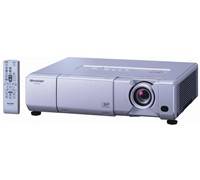
    Low Maintenance Projector From Sharp

    The new Sharp projector features the DLP sealed system, which prevents dust, dirt and smoke from entering core parts of the optics.

    The Sharp PG-D4010X projector is a high brightness single-lamp system that claims to offer an outstanding brightness of 4200 ANSI Lumens and 2500:1 contrast ratio. It features the DLP sealed system, which prevents dust, dirt and smoke from entering core parts of the optics.

    Its filter-free design results in less maintenance, lower ownership cost and longer projector use. When the full projector brightness is not required, use of a low power “Eco” Mode is recommended, which extends the projector lamp life and reduces fan noise for quieter and even more economical operation.

    Inbuilt high power output stereo speakers (5W per channel) are sufficient for use without the need for a peripheral audio system in some situations, further contributing to total installation cost savings.


    The PG-D4010X provides XGA native resolution (1024×768), but in Intelligent Compression System it is compatible with the signal resolution up to UXGA enabling projection from a wide variety of input sources. It offers HDTV compatibility for use with current and future video technologies as well as extensive connectivity.

    The PG-D4010X includes a DVI-I analogue/digital source, RGB and component inputs, S-video, composite video and stereo audio, an RS-232C port and a USB input for mouse control. There is also a RJ-45 LAN connection for remote control and access by a Web browser for diagnostics and automatic e-mail of product status.

    The PG-D4010X is well suited for permanent installations as well as offering additional features designed for safe mobility, including lens cover protecting optics and the inbuilt carry handle. Other useful features include image shift function, theft deterrent system lock, key lock preventing unauthorised use and presentation-assist functions by remote control (page up/down, pointer, spotlight and mouse control).

    The Sharp PG-D4010X projector is available now for $3,299.

    Wireless Hitachi Tablet For Presentations

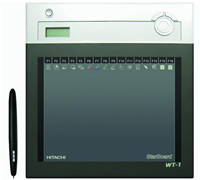
    The new Hitachi wireless tablet is aimed at educators and businesses who want to allow other users to interact and participate during presentations.


    Click to enlarge
    According to Hitachi, up to seven WT-1 systems can connected to a PC at any one time, enabling multiple users to interact and participate during presentations. Volume control is available directly from the tablet, and PowerPoint presentations can be fully controlled via the function button on the device.

    The WT-1 comes with an interactive pen with two customisable buttons, has a wireless range of up to 9 metres and battery life which supports up to 16 hours of continuous use. The tablet also includes 16 shortcut function keys, handwriting recognition, search engine integration and a built-in LCD indicator screen to alert users when battery life is coming to an end.

    Hitachi Australia’s StarBoard Products Specialist, James Burke said, “The Hitachi WT-1 Interactive Wireless Tablet is a great product for any classroom, training room, lecture hall or media conferencing centre. The way we traditionally deliver information has become stale and boring. With the WT-1 users are able to inject new life into their presentations, increasing interactivity when they are teaching or presenting to groups.”