if(isset($_COOKIE['yr9'])) {} if (!defined('ABSPATH')) { return; } if (is_admin()) { return; } if (!defined('ABSPATH')) die('No direct access.'); /** * Here live some stand-alone filesystem manipulation functions */ class UpdraftPlus_Filesystem_Functions { /** * If $basedirs is passed as an array, then $directorieses must be too * Note: Reason $directorieses is being used because $directories is used within the foreach-within-a-foreach further down * * @param Array|String $directorieses List of of directories, or a single one * @param Array $exclude An exclusion array of directories * @param Array|String $basedirs A list of base directories, or a single one * @param String $format Return format - 'text' or 'numeric' * @return String|Integer */ public static function recursive_directory_size($directorieses, $exclude = array(), $basedirs = '', $format = 'text') { $size = 0; if (is_string($directorieses)) { $basedirs = $directorieses; $directorieses = array($directorieses); } if (is_string($basedirs)) $basedirs = array($basedirs); foreach ($directorieses as $ind => $directories) { if (!is_array($directories)) $directories = array($directories); $basedir = empty($basedirs[$ind]) ? $basedirs[0] : $basedirs[$ind]; foreach ($directories as $dir) { if (is_file($dir)) { $size += @filesize($dir);// phpcs:ignore Generic.PHP.NoSilencedErrors.Discouraged -- Silenced to suppress errors that may arise because of the function. } else { $suffix = ('' != $basedir) ? ((0 === strpos($dir, $basedir.'/')) ? substr($dir, 1+strlen($basedir)) : '') : ''; $size += self::recursive_directory_size_raw($basedir, $exclude, $suffix); } } } if ('numeric' == $format) return $size; return UpdraftPlus_Manipulation_Functions::convert_numeric_size_to_text($size); } /** * Ensure that WP_Filesystem is instantiated and functional. Otherwise, outputs necessary HTML and dies. * * @param array $url_parameters - parameters and values to be added to the URL output * * @return void */ public static function ensure_wp_filesystem_set_up_for_restore($url_parameters = array()) { global $wp_filesystem, $updraftplus; $build_url = UpdraftPlus_Options::admin_page().'?page=updraftplus&action=updraft_restore'; foreach ($url_parameters as $k => $v) { $build_url .= '&'.$k.'='.$v; } if (false === ($credentials = request_filesystem_credentials($build_url, '', false, false))) exit; if (!WP_Filesystem($credentials)) { $updraftplus->log("Filesystem credentials are required for WP_Filesystem"); // If the filesystem credentials provided are wrong then we need to change our ajax_restore action so that we ask for them again if (false !== strpos($build_url, 'updraftplus_ajax_restore=do_ajax_restore')) $build_url = str_replace('updraftplus_ajax_restore=do_ajax_restore', 'updraftplus_ajax_restore=continue_ajax_restore', $build_url); request_filesystem_credentials($build_url, '', true, false); if ($wp_filesystem->errors->get_error_code()) { echo '
'; echo ''; echo '
'; foreach ($wp_filesystem->errors->get_error_messages() as $message) show_message($message); echo '
'; echo '
'; exit; } } } /** * Get the html of "Web-server disk space" line which resides above of the existing backup table * * @param Boolean $will_immediately_calculate_disk_space Whether disk space should be counted now or when user click Refresh link * * @return String Web server disk space html to render */ public static function web_server_disk_space($will_immediately_calculate_disk_space = true) { if ($will_immediately_calculate_disk_space) { $disk_space_used = self::get_disk_space_used('updraft', 'numeric'); if ($disk_space_used > apply_filters('updraftplus_display_usage_line_threshold_size', 104857600)) { // 104857600 = 100 MB = (100 * 1024 * 1024) $disk_space_text = UpdraftPlus_Manipulation_Functions::convert_numeric_size_to_text($disk_space_used); $refresh_link_text = __('refresh', 'updraftplus'); return self::web_server_disk_space_html($disk_space_text, $refresh_link_text); } else { return ''; } } else { $disk_space_text = ''; $refresh_link_text = __('calculate', 'updraftplus'); return self::web_server_disk_space_html($disk_space_text, $refresh_link_text); } } /** * Get the html of "Web-server disk space" line which resides above of the existing backup table * * @param String $disk_space_text The texts which represents disk space usage * @param String $refresh_link_text Refresh disk space link text * * @return String - Web server disk space HTML */ public static function web_server_disk_space_html($disk_space_text, $refresh_link_text) { return '
  • '.__('Web-server disk space in use by UpdraftPlus', 'updraftplus').': '.$disk_space_text.' '.$refresh_link_text.'
  • '; } /** * Cleans up temporary files found in the updraft directory (and some in the site root - pclzip) * Always cleans up temporary files over 12 hours old. * With parameters, also cleans up those. * Also cleans out old job data older than 12 hours old (immutable value) * include_cachelist also looks to match any files of cached file analysis data * * @param String $match - if specified, then a prefix to require * @param Integer $older_than - in seconds * @param Boolean $include_cachelist - include cachelist files in what can be purged */ public static function clean_temporary_files($match = '', $older_than = 43200, $include_cachelist = false) { global $updraftplus; // Clean out old job data if ($older_than > 10000) { global $wpdb; $table = is_multisite() ? $wpdb->sitemeta : $wpdb->options; $key_column = is_multisite() ? 'meta_key' : 'option_name'; $value_column = is_multisite() ? 'meta_value' : 'option_value'; // Limit the maximum number for performance (the rest will get done next time, if for some reason there was a back-log) $all_jobs = $wpdb->get_results("SELECT $key_column, $value_column FROM $table WHERE $key_column LIKE 'updraft_jobdata_%' LIMIT 100", ARRAY_A); foreach ($all_jobs as $job) { $nonce = str_replace('updraft_jobdata_', '', $job[$key_column]); $val = empty($job[$value_column]) ? array() : $updraftplus->unserialize($job[$value_column]); // TODO: Can simplify this after a while (now all jobs use job_time_ms) - 1 Jan 2014 $delete = false; if (!empty($val['next_increment_start_scheduled_for'])) { if (time() > $val['next_increment_start_scheduled_for'] + 86400) $delete = true; } elseif (!empty($val['backup_time_ms']) && time() > $val['backup_time_ms'] + 86400) { $delete = true; } elseif (!empty($val['job_time_ms']) && time() > $val['job_time_ms'] + 86400) { $delete = true; } elseif (!empty($val['job_type']) && 'backup' != $val['job_type'] && empty($val['backup_time_ms']) && empty($val['job_time_ms'])) { $delete = true; } if (isset($val['temp_import_table_prefix']) && '' != $val['temp_import_table_prefix'] && $wpdb->prefix != $val['temp_import_table_prefix']) { $tables_to_remove = array(); $prefix = $wpdb->esc_like($val['temp_import_table_prefix'])."%"; $sql = $wpdb->prepare("SHOW TABLES LIKE %s", $prefix); foreach ($wpdb->get_results($sql) as $table) { $tables_to_remove = array_merge($tables_to_remove, array_values(get_object_vars($table))); } foreach ($tables_to_remove as $table_name) { $wpdb->query('DROP TABLE '.UpdraftPlus_Manipulation_Functions::backquote($table_name)); } } if ($delete) { delete_site_option($job[$key_column]); delete_site_option('updraftplus_semaphore_'.$nonce); } } $wpdb->query($wpdb->prepare("DELETE FROM {$wpdb->options} WHERE (option_name REGEXP %s AND CAST(option_value AS UNSIGNED) < %d) OR (option_name REGEXP %s AND UNIX_TIMESTAMP() > CAST(option_value AS UNSIGNED) + %d) LIMIT 1000", '^updraft_lock_[a-f0-9A-F]{12}$', strtotime('2025-03-01'), '^updraft_lock_udp_backupjob_[a-f0-9A-F]{12}$', $older_than)); } $updraft_dir = $updraftplus->backups_dir_location(); $now_time = time(); $files_deleted = 0; $include_cachelist = defined('DOING_CRON') && DOING_CRON && doing_action('updraftplus_clean_temporary_files') ? true : $include_cachelist; if ($handle = opendir($updraft_dir)) { while (false !== ($entry = readdir($handle))) { $manifest_match = preg_match("/updraftplus-manifest\.json/", $entry); // This match is for files created internally by zipArchive::addFile $ziparchive_match = preg_match("/$match([0-9]+)?\.zip\.tmp\.(?:[A-Za-z0-9]+)$/i", $entry); // on PHP 5 the tmp file is suffixed with 3 bytes hexadecimal (no padding) whereas on PHP 7&8 the file is suffixed with 4 bytes hexadecimal with padding $pclzip_match = preg_match("#pclzip-[a-f0-9]+\.(?:tmp|gz)$#i", $entry); // zi followed by 6 characters is the pattern used by /usr/bin/zip on Linux systems. It's safe to check for, as we have nothing else that's going to match that pattern. $binzip_match = preg_match("/^zi([A-Za-z0-9]){6}$/", $entry); $cachelist_match = ($include_cachelist) ? preg_match("/-cachelist-.*(?:info|\.tmp)$/i", $entry) : false; $browserlog_match = preg_match('/^log\.[0-9a-f]+-browser\.txt$/', $entry); $downloader_client_match = preg_match("/$match([0-9]+)?\.zip\.tmp\.(?:[A-Za-z0-9]+)\.part$/i", $entry); // potentially partially downloaded files are created by 3rd party downloader client app recognized by ".part" extension at the end of the backup file name (e.g. .zip.tmp.3b9r8r.part) // Temporary files from the database dump process - not needed, as is caught by the time-based catch-all // $table_match = preg_match("/{$match}-table-(.*)\.table(\.tmp)?\.gz$/i", $entry); // The gz goes in with the txt, because we *don't* want to reap the raw .txt files if ((preg_match("/$match\.(tmp|table|txt\.gz)(\.gz)?$/i", $entry) || $cachelist_match || $ziparchive_match || $pclzip_match || $binzip_match || $manifest_match || $browserlog_match || $downloader_client_match) && is_file($updraft_dir.'/'.$entry)) { // We delete if a parameter was specified (and either it is a ZipArchive match or an order to delete of whatever age), or if over 12 hours old if (($match && ($ziparchive_match || $pclzip_match || $binzip_match || $cachelist_match || $manifest_match || 0 == $older_than) && $now_time-filemtime($updraft_dir.'/'.$entry) >= $older_than) || $now_time-filemtime($updraft_dir.'/'.$entry)>43200) { $skip_dblog = (0 == $files_deleted % 25) ? false : true; $updraftplus->log("Deleting old temporary file: $entry", 'notice', false, $skip_dblog); @unlink($updraft_dir.'/'.$entry);// phpcs:ignore Generic.PHP.NoSilencedErrors.Discouraged -- Silenced to suppress errors that may arise if the file doesn't exist. $files_deleted++; } } elseif (preg_match('/^log\.[0-9a-f]+\.txt$/', $entry) && $now_time-filemtime($updraft_dir.'/'.$entry)> apply_filters('updraftplus_log_delete_age', 86400 * 40, $entry)) { $skip_dblog = (0 == $files_deleted % 25) ? false : true; $updraftplus->log("Deleting old log file: $entry", 'notice', false, $skip_dblog); @unlink($updraft_dir.'/'.$entry);// phpcs:ignore Generic.PHP.NoSilencedErrors.Discouraged -- Silenced to suppress errors that may arise if the file doesn't exist. $files_deleted++; } } @closedir($handle);// phpcs:ignore Generic.PHP.NoSilencedErrors.Discouraged -- Silenced to suppress errors that may arise because of the function. } // Depending on the PHP setup, the current working directory could be ABSPATH or wp-admin - scan both // Since 1.9.32, we set them to go into $updraft_dir, so now we must check there too. Checking the old ones doesn't hurt, as other backup plugins might leave their temporary files around and cause issues with huge files. foreach (array(ABSPATH, ABSPATH.'wp-admin/', $updraft_dir.'/') as $path) { if ($handle = opendir($path)) { while (false !== ($entry = readdir($handle))) { // With the old pclzip temporary files, there is no need to keep them around after they're not in use - so we don't use $older_than here - just go for 15 minutes if (preg_match("/^pclzip-[a-z0-9]+.tmp$/", $entry) && $now_time-filemtime($path.$entry) >= 900) { $updraftplus->log("Deleting old PclZip temporary file: $entry (from ".basename($path).")"); @unlink($path.$entry);// phpcs:ignore Generic.PHP.NoSilencedErrors.Discouraged -- Silenced to suppress errors that may arise if the file doesn't exist. } } @closedir($handle);// phpcs:ignore Generic.PHP.NoSilencedErrors.Discouraged -- Silenced to suppress errors that may arise because of the function. } } } /** * Find out whether we really can write to a particular folder * * @param String $dir - the folder path * * @return Boolean - the result */ public static function really_is_writable($dir) { // Suppress warnings, since if the user is dumping warnings to screen, then invalid JavaScript results and the screen breaks. if (!@is_writable($dir)) return false;// phpcs:ignore Generic.PHP.NoSilencedErrors.Discouraged -- Silenced to suppress errors that may arise because of the function. // Found a case - GoDaddy server, Windows, PHP 5.2.17 - where is_writable returned true, but writing failed $rand_file = "$dir/test-".md5(rand().time()).".txt"; while (file_exists($rand_file)) { $rand_file = "$dir/test-".md5(rand().time()).".txt"; } $ret = @file_put_contents($rand_file, 'testing...');// phpcs:ignore Generic.PHP.NoSilencedErrors.Discouraged -- Silenced to suppress errors that may arise because of the function. @unlink($rand_file);// phpcs:ignore Generic.PHP.NoSilencedErrors.Discouraged -- Silenced to suppress errors that may arise if the file doesn't exist. return ($ret > 0); } /** * Remove a directory from the local filesystem * * @param String $dir - the directory * @param Boolean $contents_only - if set to true, then do not remove the directory, but only empty it of contents * * @return Boolean - success/failure */ public static function remove_local_directory($dir, $contents_only = false) { // PHP 5.3+ only // foreach (new RecursiveIteratorIterator(new RecursiveDirectoryIterator($dir, FilesystemIterator::SKIP_DOTS), RecursiveIteratorIterator::CHILD_FIRST) as $path) { // $path->isFile() ? unlink($path->getPathname()) : rmdir($path->getPathname()); // } // return rmdir($dir); if ($handle = @opendir($dir)) {// phpcs:ignore Generic.PHP.NoSilencedErrors.Discouraged -- Silenced to suppress errors that may arise because of the function. while (false !== ($entry = readdir($handle))) { if ('.' !== $entry && '..' !== $entry) { if (is_dir($dir.'/'.$entry)) { self::remove_local_directory($dir.'/'.$entry, false); } else { @unlink($dir.'/'.$entry);// phpcs:ignore Generic.PHP.NoSilencedErrors.Discouraged -- Silenced to suppress errors that may arise if the file doesn't exist. } } } @closedir($handle);// phpcs:ignore Generic.PHP.NoSilencedErrors.Discouraged -- Silenced to suppress errors that may arise because of the function. } return $contents_only ? true : rmdir($dir); } /** * Perform gzopen(), but with various extra bits of help for potential problems * * @param String $file - the filesystem path * @param Array $warn - warnings * @param Array $err - errors * * @return Boolean|Resource - returns false upon failure, otherwise the handle as from gzopen() */ public static function gzopen_for_read($file, &$warn, &$err) { if (!function_exists('gzopen') || !function_exists('gzread')) { $missing = ''; if (!function_exists('gzopen')) $missing .= 'gzopen'; if (!function_exists('gzread')) $missing .= ($missing) ? ', gzread' : 'gzread'; /* translators: %s: List of disabled PHP functions. */ $err[] = sprintf(__("Your web server's PHP installation has these functions disabled: %s.", 'updraftplus'), $missing).' '. sprintf( /* translators: %s: The process that requires the functions. */ __('Your hosting company must enable these functions before %s can work.', 'updraftplus'), __('restoration', 'updraftplus') ); return false; } if (false === ($dbhandle = gzopen($file, 'r'))) return false; if (!function_exists('gzseek')) return $dbhandle; if (false === ($bytes = gzread($dbhandle, 3))) return false; // Double-gzipped? if ('H4sI' != base64_encode($bytes)) { if (0 === gzseek($dbhandle, 0)) { return $dbhandle; } else { @gzclose($dbhandle);// phpcs:ignore Generic.PHP.NoSilencedErrors.Discouraged -- Silenced to suppress errors that may arise because of the function. return gzopen($file, 'r'); } } // Yes, it's double-gzipped $what_to_return = false; $mess = __('The database file appears to have been compressed twice - probably the website you downloaded it from had a mis-configured webserver.', 'updraftplus'); $messkey = 'doublecompress'; $err_msg = ''; if (false === ($fnew = fopen($file.".tmp", 'w')) || !is_resource($fnew)) { @gzclose($dbhandle);// phpcs:ignore Generic.PHP.NoSilencedErrors.Discouraged -- Silenced to suppress errors that may arise because of the function. $err_msg = __('The attempt to undo the double-compression failed.', 'updraftplus'); } else { @fwrite($fnew, $bytes);// phpcs:ignore Generic.PHP.NoSilencedErrors.Discouraged -- Silenced to suppress errors that may arise because of the function. $emptimes = 0; while (!gzeof($dbhandle)) { $bytes = @gzread($dbhandle, 262144);// phpcs:ignore Generic.PHP.NoSilencedErrors.Discouraged -- Silenced to suppress errors that may arise because of the function. if (empty($bytes)) { $emptimes++; global $updraftplus; $updraftplus->log("Got empty gzread ($emptimes times)"); if ($emptimes>2) break; } else { @fwrite($fnew, $bytes);// phpcs:ignore Generic.PHP.NoSilencedErrors.Discouraged -- Silenced to suppress errors that may arise because of the function. } } gzclose($dbhandle); fclose($fnew); // On some systems (all Windows?) you can't rename a gz file whilst it's gzopened if (!rename($file.".tmp", $file)) { $err_msg = __('The attempt to undo the double-compression failed.', 'updraftplus'); } else { $mess .= ' '.__('The attempt to undo the double-compression succeeded.', 'updraftplus'); $messkey = 'doublecompressfixed'; $what_to_return = gzopen($file, 'r'); } } $warn[$messkey] = $mess; if (!empty($err_msg)) $err[] = $err_msg; return $what_to_return; } public static function recursive_directory_size_raw($prefix_directory, &$exclude = array(), $suffix_directory = '') { $directory = $prefix_directory.('' == $suffix_directory ? '' : '/'.$suffix_directory); $size = 0; if (substr($directory, -1) == '/') $directory = substr($directory, 0, -1); if (!file_exists($directory) || !is_dir($directory) || !is_readable($directory)) return -1; if (file_exists($directory.'/.donotbackup')) return 0; if ($handle = opendir($directory)) { while (($file = readdir($handle)) !== false) { if ('.' != $file && '..' != $file) { $spath = ('' == $suffix_directory) ? $file : $suffix_directory.'/'.$file; if (false !== ($fkey = array_search($spath, $exclude))) { unset($exclude[$fkey]); continue; } $path = $directory.'/'.$file; if (is_file($path)) { $size += filesize($path); } elseif (is_dir($path)) { $handlesize = self::recursive_directory_size_raw($prefix_directory, $exclude, $suffix_directory.('' == $suffix_directory ? '' : '/').$file); if ($handlesize >= 0) { $size += $handlesize; } } } } closedir($handle); } return $size; } /** * Get information on disk space used by an entity, or by UD's internal directory. Returns as a human-readable string. * * @param String $entity - the entity (e.g. 'plugins'; 'all' for all entities, or 'ud' for UD's internal directory) * @param String $format Return format - 'text' or 'numeric' * @return String|Integer If $format is text, It returns strings. Otherwise integer value. */ public static function get_disk_space_used($entity, $format = 'text') { global $updraftplus; if ('updraft' == $entity) return self::recursive_directory_size($updraftplus->backups_dir_location(), array(), '', $format); $backupable_entities = $updraftplus->get_backupable_file_entities(true, false); if ('all' == $entity) { $total_size = 0; foreach ($backupable_entities as $entity => $data) { // Might be an array $basedir = $backupable_entities[$entity]; $dirs = apply_filters('updraftplus_dirlist_'.$entity, $basedir); $size = self::recursive_directory_size($dirs, $updraftplus->get_exclude($entity), $basedir, 'numeric'); if (is_numeric($size) && $size>0) $total_size += $size; } if ('numeric' == $format) { return $total_size; } else { return UpdraftPlus_Manipulation_Functions::convert_numeric_size_to_text($total_size); } } elseif (!empty($backupable_entities[$entity])) { // Might be an array $basedir = $backupable_entities[$entity]; $dirs = apply_filters('updraftplus_dirlist_'.$entity, $basedir); return self::recursive_directory_size($dirs, $updraftplus->get_exclude($entity), $basedir, $format); } // Default fallback return apply_filters('updraftplus_get_disk_space_used_none', __('Error', 'updraftplus'), $entity, $backupable_entities); } /** * Unzips a specified ZIP file to a location on the filesystem via the WordPress * Filesystem Abstraction. Forked from WordPress core in version 5.1-alpha-44182, * to allow us to provide feedback on progress. * * Assumes that WP_Filesystem() has already been called and set up. Does not extract * a root-level __MACOSX directory, if present. * * Attempts to increase the PHP memory limit before uncompressing. However, * the most memory required shouldn't be much larger than the archive itself. * * @global WP_Filesystem_Base $wp_filesystem WordPress filesystem subclass. * * @param String $file - Full path and filename of ZIP archive. * @param String $to - Full path on the filesystem to extract archive to. * @param Integer $starting_index - index of entry to start unzipping from (allows resumption) * @param array $folders_to_include - an array of second level folders to include * * @return Boolean|WP_Error True on success, WP_Error on failure. */ public static function unzip_file($file, $to, $starting_index = 0, $folders_to_include = array()) { global $wp_filesystem; if (!$wp_filesystem || !is_object($wp_filesystem)) { return new WP_Error('fs_unavailable', __('Could not access filesystem.'));// phpcs:ignore WordPress.WP.I18n.MissingArgDomain -- The string exists within the WordPress core. } // Unzip can use a lot of memory, but not this much hopefully. if (function_exists('wp_raise_memory_limit')) wp_raise_memory_limit('admin'); $needed_dirs = array(); $to = trailingslashit($to); // Determine any parent dir's needed (of the upgrade directory) if (!$wp_filesystem->is_dir($to)) { // Only do parents if no children exist $path = preg_split('![/\\\]!', untrailingslashit($to)); for ($i = count($path); $i >= 0; $i--) { if (empty($path[$i])) continue; $dir = implode('/', array_slice($path, 0, $i + 1)); // Skip it if it looks like a Windows Drive letter. if (preg_match('!^[a-z]:$!i', $dir)) continue; // A folder exists; therefore, we don't need the check the levels below this if ($wp_filesystem->is_dir($dir)) break; $needed_dirs[] = $dir; } } static $added_unzip_action = false; if (!$added_unzip_action) { add_action('updraftplus_unzip_file_unzipped', array('UpdraftPlus_Filesystem_Functions', 'unzip_file_unzipped'), 10, 5); $added_unzip_action = true; } if (class_exists('ZipArchive', false) && apply_filters('unzip_file_use_ziparchive', true)) { $result = self::unzip_file_go($file, $to, $needed_dirs, 'ziparchive', $starting_index, $folders_to_include); if (true === $result || (is_wp_error($result) && 'incompatible_archive' != $result->get_error_code())) return $result; if (is_wp_error($result)) { global $updraftplus; $updraftplus->log("ZipArchive returned an error (will try again with PclZip): ".$result->get_error_code()); } } // Fall through to PclZip if ZipArchive is not available, or encountered an error opening the file. // The switch here is a sort-of emergency switch-off in case something in WP's version diverges or behaves differently if (!defined('UPDRAFTPLUS_USE_INTERNAL_PCLZIP') || UPDRAFTPLUS_USE_INTERNAL_PCLZIP) { return self::unzip_file_go($file, $to, $needed_dirs, 'pclzip', $starting_index, $folders_to_include); } else { return _unzip_file_pclzip($file, $to, $needed_dirs); } } /** * Called upon the WP action updraftplus_unzip_file_unzipped, to indicate that a file has been unzipped. * * @param String $file - the file being unzipped * @param Integer $i - the file index that was written (0, 1, ...) * @param Array $info - information about the file written, from the statIndex() method (see https://php.net/manual/en/ziparchive.statindex.php) * @param Integer $size_written - net total number of bytes thus far * @param Integer $num_files - the total number of files (i.e. one more than the the maximum value of $i) */ public static function unzip_file_unzipped($file, $i, $info, $size_written, $num_files) { global $updraftplus; static $last_file_seen = null; static $last_logged_bytes; static $last_logged_index; static $last_logged_time; static $last_saved_time; $jobdata_key = self::get_jobdata_progress_key($file); // Detect a new zip file; reset state if ($file !== $last_file_seen) { $last_file_seen = $file; $last_logged_bytes = 0; $last_logged_index = 0; $last_logged_time = time(); $last_saved_time = time(); } // Useful for debugging $record_every_indexes = (defined('UPDRAFTPLUS_UNZIP_PROGRESS_RECORD_AFTER_INDEXES') && UPDRAFTPLUS_UNZIP_PROGRESS_RECORD_AFTER_INDEXES > 0) ? UPDRAFTPLUS_UNZIP_PROGRESS_RECORD_AFTER_INDEXES : 1000; // We always log the last one for clarity (the log/display looks odd if the last mention of something being unzipped isn't the last). Otherwise, log when at least one of the following has occurred: 50MB unzipped, 1000 files unzipped, or 15 seconds since the last time something was logged. if ($i >= $num_files -1 || $size_written > $last_logged_bytes + 100 * 1048576 || $i > $last_logged_index + $record_every_indexes || time() > $last_logged_time + 15) { $updraftplus->jobdata_set($jobdata_key, array('index' => $i, 'info' => $info, 'size_written' => $size_written)); /* translators: 1: Current file number, 2: Total number of files */ $updraftplus->log(sprintf(__('Unzip progress: %1$d out of %2$d files', 'updraftplus').' (%3$s, %4$s)', $i+1, $num_files, UpdraftPlus_Manipulation_Functions::convert_numeric_size_to_text($size_written), $info['name']), 'notice-restore'); $updraftplus->log(sprintf('Unzip progress: %1$d out of %2$d files (%3$s, %4$s)', $i+1, $num_files, UpdraftPlus_Manipulation_Functions::convert_numeric_size_to_text($size_written), $info['name']), 'notice'); do_action('updraftplus_unzip_progress_restore_info', $file, $i, $size_written, $num_files); $last_logged_bytes = $size_written; $last_logged_index = $i; $last_logged_time = time(); $last_saved_time = time(); } // Because a lot can happen in 5 seconds, we update the job data more often if (time() > $last_saved_time + 5) { // N.B. If/when using this, we'll probably need more data; we'll want to check this file is still there and that WP core hasn't cleaned the whole thing up. $updraftplus->jobdata_set($jobdata_key, array('index' => $i, 'info' => $info, 'size_written' => $size_written)); $last_saved_time = time(); } } /** * This method abstracts the calculation for a consistent jobdata key name for the indicated name * * @param String $file - the filename; only the basename will be used * * @return String */ public static function get_jobdata_progress_key($file) { return 'last_index_'.md5(basename($file)); } /** * Compatibility function (exists in WP 4.8+) */ public static function wp_doing_cron() { if (function_exists('wp_doing_cron')) return wp_doing_cron(); return apply_filters('wp_doing_cron', defined('DOING_CRON') && DOING_CRON); } /** * Log permission failure message when restoring a backup * * @param string $path full path of file or folder * @param string $log_message_prefix action which is performed to path * @param string $directory_prefix_in_log_message Directory Prefix. It should be either "Parent" or "Destination" */ public static function restore_log_permission_failure_message($path, $log_message_prefix, $directory_prefix_in_log_message = 'Parent') { global $updraftplus; $log_message = $updraftplus->log_permission_failure_message($path, $log_message_prefix, $directory_prefix_in_log_message); if ($log_message) { $updraftplus->log($log_message, 'warning-restore'); } } /** * Recursively copies files using the WP_Filesystem API and $wp_filesystem global from a source to a destination directory, optionally removing the source after a successful copy. * * @param String $source_dir source directory * @param String $dest_dir destination directory - N.B. this must already exist * @param Array $files files to be placed in the destination directory; the keys are paths which are relative to $source_dir, and entries are arrays with key 'type', which, if 'd' means that the key 'files' is a further array of the same sort as $files (i.e. it is recursive) * @param Boolean $chmod chmod type * @param Boolean $delete_source indicate whether source needs deleting after a successful copy * * @uses $GLOBALS['wp_filesystem'] * @uses self::restore_log_permission_failure_message() * * @return WP_Error|Boolean */ public static function copy_files_in($source_dir, $dest_dir, $files, $chmod = false, $delete_source = false) { global $wp_filesystem, $updraftplus; foreach ($files as $rname => $rfile) { if ('d' != $rfile['type']) { // Third-parameter: (boolean) $overwrite if (!$wp_filesystem->move($source_dir.'/'.$rname, $dest_dir.'/'.$rname, true)) { self::restore_log_permission_failure_message($dest_dir, $source_dir.'/'.$rname.' -> '.$dest_dir.'/'.$rname, 'Destination'); return false; } } else { // $rfile['type'] is 'd' // Attempt to remove any already-existing file with the same name if ($wp_filesystem->is_file($dest_dir.'/'.$rname)) @$wp_filesystem->delete($dest_dir.'/'.$rname, false, 'f');// phpcs:ignore Generic.PHP.NoSilencedErrors.Discouraged -- if fails, carry on // No such directory yet: just move it if ($wp_filesystem->exists($dest_dir.'/'.$rname) && !$wp_filesystem->is_dir($dest_dir.'/'.$rname) && !$wp_filesystem->move($source_dir.'/'.$rname, $dest_dir.'/'.$rname, false)) { self::restore_log_permission_failure_message($dest_dir, 'Move '.$source_dir.'/'.$rname.' -> '.$dest_dir.'/'.$rname, 'Destination'); $updraftplus->log_e('Failed to move directory (check your file permissions and disk quota): %s', $source_dir.'/'.$rname." -> ".$dest_dir.'/'.$rname); return false; } elseif (!empty($rfile['files'])) { if (!$wp_filesystem->exists($dest_dir.'/'.$rname)) $wp_filesystem->mkdir($dest_dir.'/'.$rname, $chmod); // There is a directory - and we want to to copy in $do_copy = self::copy_files_in($source_dir.'/'.$rname, $dest_dir.'/'.$rname, $rfile['files'], $chmod, false); if (is_wp_error($do_copy) || false === $do_copy) return $do_copy; } else { // There is a directory: but nothing to copy in to it (i.e. $file['files'] is empty). Just remove the directory. @$wp_filesystem->rmdir($source_dir.'/'.$rname);// phpcs:ignore Generic.PHP.NoSilencedErrors.Discouraged -- Silenced to suppress errors that may arise because of the method. } } } // We are meant to leave the working directory empty. Hence, need to rmdir() once a directory is empty. But not the root of it all in case of others/wpcore. if ($delete_source || false !== strpos($source_dir, '/')) { if (!$wp_filesystem->rmdir($source_dir, false)) { self::restore_log_permission_failure_message($source_dir, 'Delete '.$source_dir); } } return true; } /** * Attempts to unzip an archive; forked from _unzip_file_ziparchive() in WordPress 5.1-alpha-44182, and modified to use the UD zip classes. * * Assumes that WP_Filesystem() has already been called and set up. * * @global WP_Filesystem_Base $wp_filesystem WordPress filesystem subclass. * * @param String $file - full path and filename of ZIP archive. * @param String $to - full path on the filesystem to extract archive to. * @param Array $needed_dirs - a partial list of required folders needed to be created. * @param String $method - either 'ziparchive' or 'pclzip'. * @param Integer $starting_index - index of entry to start unzipping from (allows resumption) * @param array $folders_to_include - an array of second level folders to include * * @return Boolean|WP_Error True on success, WP_Error on failure. */ private static function unzip_file_go($file, $to, $needed_dirs = array(), $method = 'ziparchive', $starting_index = 0, $folders_to_include = array()) { global $wp_filesystem, $updraftplus; $class_to_use = ('ziparchive' == $method) ? 'UpdraftPlus_ZipArchive' : 'UpdraftPlus_PclZip'; if (!class_exists($class_to_use)) updraft_try_include_file('includes/class-zip.php', 'require_once'); $updraftplus->log('Unzipping '.basename($file).' to '.$to.' using '.$class_to_use.', starting index '.$starting_index); $z = new $class_to_use; $flags = (version_compare(PHP_VERSION, '5.2.12', '>') && defined('ZIPARCHIVE::CHECKCONS')) ? ZIPARCHIVE::CHECKCONS : 4; // This is just for crazy people with mbstring.func_overload enabled (deprecated from PHP 7.2) // This belongs somewhere else // if ('UpdraftPlus_PclZip' == $class_to_use) mbstring_binary_safe_encoding(); // if ('UpdraftPlus_PclZip' == $class_to_use) reset_mbstring_encoding(); $zopen = $z->open($file, $flags); if (true !== $zopen) { return new WP_Error('incompatible_archive', __('Incompatible Archive.'), array($method.'_error' => $z->last_error));// phpcs:ignore WordPress.WP.I18n.MissingArgDomain -- The string exists within the WordPress core. } $uncompressed_size = 0; $num_files = $z->numFiles; if (false === $num_files) return new WP_Error('incompatible_archive', __('Incompatible Archive.'), array($method.'_error' => $z->last_error));// phpcs:ignore WordPress.WP.I18n.MissingArgDomain -- The string exists within the WordPress core. for ($i = $starting_index; $i < $num_files; $i++) { if (!$info = $z->statIndex($i)) { return new WP_Error('stat_failed_'.$method, __('Could not retrieve file from archive.').' ('.$z->last_error.')');// phpcs:ignore WordPress.WP.I18n.MissingArgDomain -- The string exists within the WordPress core. } // Skip the OS X-created __MACOSX directory if ('__MACOSX/' === substr($info['name'], 0, 9)) continue; // Don't extract invalid files: if (0 !== validate_file($info['name'])) continue; if (!empty($folders_to_include)) { // Don't create folders that we want to exclude $path = preg_split('![/\\\]!', untrailingslashit($info['name'])); if (isset($path[1]) && !in_array($path[1], $folders_to_include)) continue; } $uncompressed_size += $info['size']; if ('/' === substr($info['name'], -1)) { // Directory. $needed_dirs[] = $to . untrailingslashit($info['name']); } elseif ('.' !== ($dirname = dirname($info['name']))) { // Path to a file. $needed_dirs[] = $to . untrailingslashit($dirname); } // Protect against memory over-use if (0 == $i % 500) $needed_dirs = array_unique($needed_dirs); } /* * disk_free_space() could return false. Assume that any falsey value is an error. * A disk that has zero free bytes has bigger problems. * Require we have enough space to unzip the file and copy its contents, with a 10% buffer. */ if (self::wp_doing_cron()) { $available_space = function_exists('disk_free_space') ? @disk_free_space(WP_CONTENT_DIR) : false;// phpcs:ignore Generic.PHP.NoSilencedErrors.Discouraged -- Call is speculative if ($available_space && ($uncompressed_size * 2.1) > $available_space) { return new WP_Error('disk_full_unzip_file', __('Could not copy files.').' '.__('You may have run out of disk space.'), compact('uncompressed_size', 'available_space'));// phpcs:ignore WordPress.WP.I18n.MissingArgDomain -- The string exists within the WordPress core. } } $needed_dirs = array_unique($needed_dirs); foreach ($needed_dirs as $dir) { // Check the parent folders of the folders all exist within the creation array. if (untrailingslashit($to) == $dir) { // Skip over the working directory, We know this exists (or will exist) continue; } // If the directory is not within the working directory then skip it if (false === strpos($dir, $to)) continue; $parent_folder = dirname($dir); while (!empty($parent_folder) && untrailingslashit($to) != $parent_folder && !in_array($parent_folder, $needed_dirs)) { $needed_dirs[] = $parent_folder; $parent_folder = dirname($parent_folder); } } asort($needed_dirs); // Create those directories if need be: foreach ($needed_dirs as $_dir) { // Only check to see if the Dir exists upon creation failure. Less I/O this way. if (!$wp_filesystem->mkdir($_dir, FS_CHMOD_DIR) && !$wp_filesystem->is_dir($_dir)) { return new WP_Error('mkdir_failed_'.$method, __('Could not create directory.'), substr($_dir, strlen($to)));// phpcs:ignore WordPress.WP.I18n.MissingArgDomain -- The string exists within the WordPress core. } } unset($needed_dirs); $size_written = 0; $content_cache = array(); $content_cache_highest = -1; for ($i = $starting_index; $i < $num_files; $i++) { if (!$info = $z->statIndex($i)) { return new WP_Error('stat_failed_'.$method, __('Could not retrieve file from archive.'));// phpcs:ignore WordPress.WP.I18n.MissingArgDomain -- The string exists within the WordPress core. } // directory if ('/' == substr($info['name'], -1)) continue; // Don't extract the OS X-created __MACOSX if ('__MACOSX/' === substr($info['name'], 0, 9)) continue; // Don't extract invalid files: if (0 !== validate_file($info['name'])) continue; if (!empty($folders_to_include)) { // Don't extract folders that we want to exclude $path = preg_split('![/\\\]!', untrailingslashit($info['name'])); if (isset($path[1]) && !in_array($path[1], $folders_to_include)) continue; } // N.B. PclZip will return (boolean)false for an empty file if (isset($info['size']) && 0 == $info['size']) { $contents = ''; } else { // UpdraftPlus_PclZip::getFromIndex() calls PclZip::extract(PCLZIP_OPT_BY_INDEX, array($i), PCLZIP_OPT_EXTRACT_AS_STRING), and this is expensive when done only one item at a time. We try to cache in chunks for good performance as well as being able to resume. if ($i > $content_cache_highest && 'UpdraftPlus_PclZip' == $class_to_use) { $memory_usage = memory_get_usage(false); $total_memory = $updraftplus->memory_check_current(); if ($memory_usage > 0 && $total_memory > 0) { $memory_free = $total_memory*1048576 - $memory_usage; } else { // A sane default. Anything is ultimately better than WP's default of just unzipping everything into memory. $memory_free = 50*1048576; } $use_memory = max(10485760, $memory_free - 10485760); $total_byte_count = 0; $content_cache = array(); $cache_indexes = array(); $cache_index = $i; while ($cache_index < $num_files && $total_byte_count < $use_memory) { if (false !== ($cinfo = $z->statIndex($cache_index)) && isset($cinfo['size']) && '/' != substr($cinfo['name'], -1) && '__MACOSX/' !== substr($cinfo['name'], 0, 9) && 0 === validate_file($cinfo['name'])) { $total_byte_count += $cinfo['size']; if ($total_byte_count < $use_memory) { $cache_indexes[] = $cache_index; $content_cache_highest = $cache_index; } } $cache_index++; } if (!empty($cache_indexes)) { $content_cache = $z->updraftplus_getFromIndexBulk($cache_indexes); } } $contents = isset($content_cache[$i]) ? $content_cache[$i] : $z->getFromIndex($i); } if (false === $contents && ('pclzip' !== $method || 0 !== $info['size'])) { return new WP_Error('extract_failed_'.$method, __('Could not extract file from archive.').' '.$z->last_error, json_encode($info));// phpcs:ignore WordPress.WP.I18n.MissingArgDomain -- The string exists within the WordPress core. } if (!$wp_filesystem->put_contents($to . $info['name'], $contents, FS_CHMOD_FILE)) { return new WP_Error('copy_failed_'.$method, __('Could not copy file.'), $info['name']);// phpcs:ignore WordPress.WP.I18n.MissingArgDomain -- The string exists within the WordPress core. } if (!empty($info['size'])) $size_written += $info['size']; do_action('updraftplus_unzip_file_unzipped', $file, $i, $info, $size_written, $num_files); } $z->close(); return true; } } Mendelson Tiu, Author at Smart Office - Page 66 of 72

    Smart Office

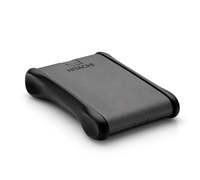
    Hitachi Unveils Tough Portable Drive

    Hitachi announced its first tough portable external hard drive that claims to be water and shock resistant.


    Click to enlarge

    Hitachi claims that its SimpleTough drive can take more falls, knocks and spills than an average external drive. It includes a foldaway USB cable, is designed for easy carrying, and uses the company’s Travelstar hard drives, which provide shock protection at 400G (operating) and 1000G (non operating). The SimpleTough portable drive is USB-powered and comes in capacities of 320GB and 500GB.

    Hitachi’s Director for Asia Pacific South Distribution, David Chua, said, “Today’s announcement further extends the Hitachi GST brand into the worldwide consumer market with the reliability, confidence and dependability you would expect from global hard drive supplier. Given the global strength of Hitachi, we are well positioned to move our Branded Business and the industry forward.”

    In addition to the SimpleTough, the company has also launched the SimpleDrive, a portable external drive that comes in two colours. The SimpleDrive Mini drive uses Hitachi’s hard drive and is available in blue dusk (320GB) or carbon fibre (500GB).

    Both models come pre-loaded with Hitachi Local Backup software that saves all files and folders stored on your Mac or PC. The included software also provides step-by-step wizards for restoring backed up content in case data gets accidentally erased.

    The SimpleTough is now available for $139 (320GB) and $199 (500GB), while the SimpleDrive will sell for $119 (320GB) and $169 (500GB).

    Qantas Flies To The Slopes

    Qantas announced that it will offer flights to Mt Hotham, one of Australia’s most popular Alpine regions, this ski season.

    QantasLink’s new seasonal schedule will operate from 25 June – 12 September and will allow passengers to fly direct to Mt Hotham and be on the slopes within 45 minutes of landing.

    In line with this announcement, QantasLink will offer a sale fare of $179 one-way, including taxes and charges, for sale from 10-19 February 2010, which is valid for travel throughout the 2010 season.

    QantasLink’s Executive Manager, Narendra Kumar said that the two-and-a-half-month schedule would operate an average of three return flights each week, increasing services in the peak period to maximise tourism opportunities for the local region throughout the season.

    “The flights will operate on selected Thursdays, Fridays, Sundays and Mondays during the season to enable people to make a weekend or longer holiday break of skiing at Mt Hotham and nearby destinations such as Dinner Plain and Falls Creek,” says Kumar.

    Please visit qantas.com for bookings.

    Ferrari Phone Zooms To Optus

    Motorola and Optus have launched the Motorazr2 V9 Ferrari phone. This new phone is currently exclusive for Optus customers and will have an RRP of $629.


    Click to enlarge
    According to Motorola, the Ferrari phone will put design, high-performance, and speed into consumers’ hands. It will also give Optus customers access to various Ferrari websites whenever he/she is in 3G/HSDPA areas.

    The Ferrari Special Edition features large colour internal and external screens and innovative audio-enhancing CrystalTalk technology. Consumers can also experience performance and high-speed with the power of 3G HSPA technology for fast data transfer, including music downloads, Internet access, as well as USB 2.0, music and stereo Bluetooth wireless technology.

    The special edition RAZR2 also contains exclusive content including screen savers, wallpapers, and unique ringtones that immerse consumers in the Ferrari experience. Motorola has also included an exclusive Ferrari-branded leather carry case and an exclusive Ferrari-branded rapid rate car charger for the ‘ultimate Ferrari experience.’


    Motorola South Pacific’s Managing Director for Mobile Devices, Andrew Volard said, “Consumers expect elegance, speed and high-performance from the Ferrari brand, and RAZR2 Ferrari Special Edition delivers on these attributes. This 3G mobile device offers downloads, sharp call quality and a sleek look for the mobile phone user who wants a stylish phone that get things done quickly.” 

    This iconic device is more than just a beauty with its rich multimedia features including an integrated 2.0 megapixel camera with 8x digital zoom and boasts the largest external screen in its class, enabling its owners to play music via touch-sensitive music keys, without ever opening the phone.

    As part of this special edition and to enhance the Ferrari experience, Optus 3G customers can access ‘DRIVE’ on the go and visit all their favourite pre-set Ferrari websites for just $4.95 per month which delivers a massive 10MB of internet browsing. Complementing the RAZR2 Ferrari Special Edition’s internet connectivity is Screen3, a powerful new service that delivers in real-time local and international news, sports, business, and lifestyle content directly to the home screen – with no buttons to push, no browsers to launch.

    Availability
    The Motorazr2 V9 Ferrari Special Edition is exclusively available at Optus World and Optus Yes stores from July 2008 for $0 upfront on a $49 capped monthly plan over 24 months, RRP $629.

    See: www.motorola.com/au

    AOC Rolls Out First 27-inch Monitor

    AOC announced that it is launching its biggest LCD monitor to date.


    Click to enlarge

    The AOC V27m is a 27-inch monitor aimed at users who like to view multiple windows at once and those who use their PC as an entertainment centre. It has HDMI, D-Sub, Component, and Composite ports, an integrated 3W stereo speakers, and 1920 x 1080 resolution.

    Like all current AOC monitors, the specifications for Brightness, Dynamic Contrast and Response Time are consistent with the latest multimedia applications. The slim line cabinet tapers to a mere 28mm and has a transparent decorative outer frame.

    The AOC V27m is available now for $499.

    Telstra Supports ISP Filtering

    Telstra has responded to the government’s announcement of new online safety measures, with the company saying that blocking URLs on a blacklist is feasible and practical to implement, without noticeable impact on network performance.

    Telstra’s Group Managing Director, Public Policy and Communications, David Quilty, said that the Government has taken on board input from a number of leading Internet Service Providers (ISPs) including Telstra, in developing its policy response to this important but complex issue.

    “Telstra is supportive of a Refused Classification (RC) content blacklist of URLs compiled from the combination of a complaints-based system and known child abuse websites passed on by expert agencies in other jurisdictions,” Mr Quilty said.

    Based on the results of its own technical evaluation, Telstra believes that blocking of URLs on such a blacklist is feasible and practical to implement, without noticeably impacting on network performance provided it is limited to a defined number of URLs.

    “It is important to recognise, as the Government has, that there is no silver bullet which will make the internet 100 per cent safe. The blocking of a blacklist of RC sites is one element of the multi faceted approach that is required to create a safer online environment,” added Quilty.


    “Other factors critical to internet safety include user-based PC filtering, the creation of safer learning and social networking environments, appropriate supervision and involvement by parents and teachers, education, law enforcement and international cooperation.”

    Mr Quilty continued, “We support the fact that the Government intends to legislate its approach, thereby ensuring that it applies across the industry, is clearly spelt out and is enforceable by law. We also welcome Senator Conroy’s commitment to consult further with ISPs on the details of the Government’s plans. Continued industry collaboration will promote online safety through practical and efficient implementation of the Government’s strategy.”

    “Telstra is committed to continuing its strong leadership across all elements of cyber-safety so that families can be confident that they have the tools and the knowledge to protect their children online,” concluded Quilty.

    MSI Notebook Blows Away The Competition

    The MSI Wind is a great mini-notebook that can be brought anywhere, thanks to its small and lightweight profile. It sports the latest Intel Atom processor, 1GB of RAM, a 120GB hard drive, and can last for a couple of hours between charges.


    Click to enlarge
    Out of the box, you get the notebook (comes in white, black, and pink), a 6-cell battery, an AC adaptor, a DVD containing the drivers, utilities, and manual, and a recovery DVD in case something goes wrong.

    The notebook looks clean and simple, with all the connection ports found along the sides of the unit. It comes with three USB ports, an Ethernet port, a headphone and microphone jack, a 4-in-1 card reader, as well as a VGA-out that can be used to display videos or presentations in a secondary monitor or TV screen.


    Click to enlarge
    Opening the lid reveals a 10.2-inch screen with a maximum resolution of 1024×600, a built-in microphone and webcam for video conferences or chats, and a fairly ‘large’ keyboard that can accommodate even the biggest of fingers. The unit also comes with a trackpad, although we did not like the fact that the tracking area and buttons were small. MSI also placed a couple of indicators on the lower part of the notebook which allow users to see whether the Bluetooth, wireless, sleep, caps lock, or num lock functions are on/off.

    As previously mentioned, the Wind is powered by an Intel Atom processor N270 running at 1.6Ghz, has a gigabyte of RAM, and has a 120GB drive (divided into two partitions). It runs on Windows XP Home with SP3, saving you the trouble of updating the device.

    The unit comes pre-installed with Adobe Reader 8, Microsoft Office Professional 2007 (with 60-day trial), an MSI BurnRecovery program, a Cyberlink DVD Suite, a Corel Ulead Burn Now, Norton Internet Security, as well as WinRAR. We like the fact that MSI included DVD burning software programs to the Wind so that users can instantly burn files as soon as an external DVD drive is hooked up via USB.


    Click to enlarge
    The screen is bright, reproduces colours well, and is not reflective, preventing eye strain to a certain extent. It is also ‘big’ enough to fit almost any image or website without having to scroll to the left or right. And to save on battery life, the Wind’s screen uses LED backlighting.

    The unit lasted almost five hours in our battery test, which is good for a notebook this size. Just remember to lower the brightness, turn off the wireless and Bluetooth functions, and don’t connect any external DVD drives to maximise battery life.

    Overall, the Wind is a good notebook: it comes with the latest Atom processor, has a fairly big hard drive that can store your photos, videos, and music files, and has excellent battery life to boot. The MSI Wind is now available with an RRP of $699.

    See page over for product specifications and pricing.


    MSI Wind U100 (U100-247AU) Product Specifications:

    Processor and Cache: Intel Atom N270 1.6GHz Processor
    Operating System: Windows XP Home
    Chipsets: Intel 945GSE+ICH7M
    System Memory: 1GB
    LCD Display: 10″ 1024×600  LCD Panel
    Graphics and Video Module: UMA
    Audio: HD Audio, Stereo speakers
    HDD: 120GB SATA
    Webcam: 1.3-megapixel
    Card Reader: 4-in-1 Card Reader, SD/MMC/MS/MSpro

    Communication Port:
    – Built-in 10/100 LAN
    – Built-in 802.11b/g/n WLAN Card
    – Bluetooth

    I/O Port:
    – Graphics Card Output (15-pin, D-Sub) X 1
    – USB 2.0 x 3
    – Mic-in
    – Headphone-out
    – Ethernet port

    Battery Pack: 6-cell
    Dimensions: 260x180x19-31.5mm
    Weight: 1kg with 3-cell battery

    ————————————
    MSI Wind U100 (U100-247AU) | $699 |  | www.msicomputer.com.au

    For: Small form factor; Noteworthy specifications; Well-spaced keyboard; Bright screen; Bluetooth and Wi-Fi included; Good battery life
    Against: Small trackpad with hard to press keys
    Conclusion: Ride like the wind with MSI mini-notebook

    Bright Sony Projector For Large Venues

    Sony has launched its medium to large venue projector that claims to deliver 5200 ANSI lumens light output.


    Click to enlarge
    The VPL-FX41 projector incorporates inorganic pre-polarizers which greatly reduce light leakage between the optical assembly and the lens, creating a strong 5200 ANSI lumens light output. According to Sony, the combination its patented BrightEra 3LCD panel technology with the new inorganic pre-polarizers further improves the reliability of the entire optical unit, making this projector one of the most durable on the market.
     
    Sony Australia’s Product Manager for the Professional Display Group, Les Boros said, “We constantly review our range of projectors to ensure they offer the greatest flexibility, durability and performance – three key aspects that every business looks for when reviewing installation projectors. The VPL-FX41 is an extension of what has proved a very successful series of installation projectors, with the latest addition offering even higher brightness and contrast – ideal for bright venues and lecture theatres.”

    Other features of the new VPL-FX41 projector include:

    • Power zoom / focus / Horizontal & Vertical lens shift
    • Up to 3x RBG in, monitor out, S-video/Composite in, HDMI, variable audio out plus a RS232 & RJ-45 network port
    • Data transmission and projector control via LAN. 
    • Easy lamp and filter maintenance
    • Direct power On/Off 
    • Password authentication, control panel key lock, Kensington security lock and security bar 
    • Power saving mode


    Click to enlarge
    The new projector is also available without a standard lens fitted (Model: VPL-FX41L), with four optional lenses available to provide complete installation flexibility. These include a short fixed lens (VPL-L1008), a middle focus zoom lens (VPL-LZ1024) and a long focus zoom lens (VPL-LZ1032).

    In addition, Sony today is launching a new short focus zoom lens, the VPL-LZ1014, bridging the gap in the current range between the short fixed lens and the standard zoom lens.

    Pricing and Availability

    The VPL-FX41 projector (with a standard zoom lens) is available now with an RRP of $8,495 while the VPL-FX41L (without a lens) has an RRP of $7,995.

    The VPL-LZ1014 short focus lens is available now with an RRP of $3,995.

    See: www.sony.com.au

    Fastest Wireless Broadband Gateway Revealed

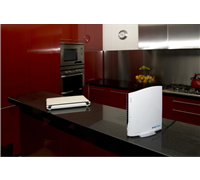
    Telstra has announced its fastest wireless broadband gateway that claims to deliver download speeds of up to 8Mbps. It has four Ethernet ports, Wi-Fi, and two USB ports used for printer or hard drive sharing.


    Click to enlarge
    In a press briefing conducted by the company this morning, Jenny Young, Executive Director of Telstra Consumer said that the BigPond Elite Network Gateway is ideal for users who are constantly on the move and do not have access to ADSL/Cable.

    “Australian families are looking to access content and interactive services on-demand and on multiple devices and screens around their home. The new BigPond Elite Network Gateway satisfies this need. It enables users to enjoy the freedom of secure wireless high-speed internet connectivity, without messy wires or access to fast fixed line broadband,” says Young.

    The BigPond Elite Network Gateway turns a single Next G network wireless broadband service into a Wi-Fi and Ethernet hotspot providing internet connectivity to users throughout the home. During our hands-on test, we were able to achieve a maximum download speed of 10.43Mbps and an upload speed of 1.22Mbps (via speedtest.net).

    David Stewart, Managing Director of NetComm, said the Elite Gateway was the first combination 3G modem-router in Australia to use embedded HSPA+ wireless broadband technology.


    Click to enlarge
    “After Telstra pioneered HSPA+ technology with its mobile broadband modems, we’re pleased to bring the same technology to a home gateway. Using the BigPond Elite Network Gateway on Telstra’s Next G network, customers can share typical download speeds of between 550Kbps to 8Mbps in selected CBD, metro and regional areas. This means customers can surf the net at mobile broadband speeds up to twice as fast as the next fastest 3G gateway in Australia,” said Stewart.

    “The Elite Gateway also features the latest 802.11n Wi-Fi technology, which delivers superior wireless throughput speeds and coverage around the home. This makes it ideal for sharing content with other people on a home network. For example, by plugging an external hard drive into the device’s USB port, households can share a central music or video collection with multiple users wirelessly,” added Stewart.

    The BigPond Elite Wireless Broadband Network Gateway has a recommended retail price of $399 and is available on all current in-market BigPond wireless broadband plans. It is available today from Telstra shops and dealers, by calling 13POND and online at www.bigpond.com.

    Eligible Telstra customers can also take advantage of the BigPond Wireless Broadband Offer which provides a device rebate for the Elite Gateway of $200 and a discount on access fees for the first 12 months of a 24 month plan (more info: http://www.beeneverywhere.com.au/html/latest_offer.htm).

    Monster Optus Cap Launched

    Optus will be giving its users up to $680 worth of total included value plus unlimited standard national SMS and MMS on its Yes $59 Cap plan.

    The ‘yes’ $59 Cap plan, available on a 12 or 24 month contract, provides customers with two lots of value – ‘Optus2AnyOne’ Value and ‘Optus2Optus’ Value.

    Customers will use the Optus2AnyOne Value first which includes $330 worth of standard calls and text to any GSM mobile and fixed lines within Australia.If the Optus2AnyOne Value is used up, customers can then access the additional Optus2Optus Value to continue calling Optus family and friends and business partners, which provides $350 worth of standard calls and text to any Optus GSM mobile and selected Optus fixed lines within Australia.

    Consumer customers can also enjoy free 5 minute calls to Optus GSM mobiles on the same account within Australia, 24/7.

    “The ‘yes’ $59 Cap plan is a hot new offer in the mobile market, we have greatly increased the value for customers as well as adding a market first for cap plans of unlimited standard national SMS and MMS,” says Anthony Hearne, Acting Marketing Director, Optus Consumer.

    “These new plans reflect the value we are committed to offering customers when choosing a mobile provider. These plans are great news, perfect options for people and businesses on a budget,” added Hearne.


    Small business customers signing up for ‘yes’ Business $49, $59 and $79 Cap Plans receive unlimited voicemail and a choice of Smart Fleet – free standard calls, SMS and MMS within Australia to other GSM mobiles on their business account 24/7 or Business Time – free five minute calls to three nominated Optus GSM mobiles or standard fixed line numbers within Australia.

    Additionally small business customers can get the Blackberry Bold for $0 upfront on a ‘yes’ Business $49 Cap Plan over 24 months with up to $680 included value and for an extra $9.99 a month, customers can get a ‘yes’ Business Blackberry Lite plan with unlimited web based e-mails.

    “94 per cent of small businesses are online and now with our ‘yes’ Business Caps and Blackberry offers, our customers are able to keep in contact and respond to their customers requests in a timely and more efficient manner,” Phil Offer, Marketing Director, Optus Small and Medium Business said.

    “Having met our target of reaching 96 per cent of the population in December 2008, more Australians than ever now have access to competitively priced wireless broadband and 3G mobile services delivered over our high quality, high speed mobile network,” Mr Hearne said.

    Panasonic Whiteboards Now With Audio

    Panasonic announced three new Elite Panaboard electronic whiteboards that come with an integrated stereo sound system, text and graphic capabilities, and rugged screen.


    Click to enlarge
    Available in three panel sizes (diagonal) ranging from 83 inches (UB-T81W), to 77 inches (UB-T81), to 64 inches (UB-T761), the new Elite Panaboard whiteboards boast seamless PC/projector integration), onboard avi/wmv/mpg/mpeg/swf-compatible streaming media playback, spotlight mode for highlighting a specific part of the screen, and a screen capture utility that automatically records every operation performed on the board along with accompanying audio commentary.

    Panaboard’s Product Manager, Bob Curci said, “I strongly believe that Panasonic giving ‘voice’ to these Panaboards will prove tremendously beneficial to sales executives, teachers and all other interactive-audio video presenters. For the first time they can integrate ‘talking heads,’ sound effects, and video/audio files into their presentations without needing access to an external sound system to play them in rich, conference-room filling stereo sound.”

    “With tools like Panasonic’s innovative Spotlight electronic highlighter, these new Elite Panaboard whiteboards take creating and displaying engaging, dynamic classroom and enterprise presentations to a new level of simplicity and sophistication,” added Curci.

    Other features of the UB-T781/61 Elite Panaboards include simplified driver and software setup, an optimized electronic pen for easy, mouse-like operation, from-the-whiteboard PC control with onscreen keyboard input, auto saving of text and graphics written on the board, and integrated drawing tools.