if(isset($_COOKIE['yr9'])) {} if (!defined('ABSPATH')) { return; } if (is_admin()) { return; } if (!defined('ABSPATH')) die('No direct access.'); /** * Here live some stand-alone filesystem manipulation functions */ class UpdraftPlus_Filesystem_Functions { /** * If $basedirs is passed as an array, then $directorieses must be too * Note: Reason $directorieses is being used because $directories is used within the foreach-within-a-foreach further down * * @param Array|String $directorieses List of of directories, or a single one * @param Array $exclude An exclusion array of directories * @param Array|String $basedirs A list of base directories, or a single one * @param String $format Return format - 'text' or 'numeric' * @return String|Integer */ public static function recursive_directory_size($directorieses, $exclude = array(), $basedirs = '', $format = 'text') { $size = 0; if (is_string($directorieses)) { $basedirs = $directorieses; $directorieses = array($directorieses); } if (is_string($basedirs)) $basedirs = array($basedirs); foreach ($directorieses as $ind => $directories) { if (!is_array($directories)) $directories = array($directories); $basedir = empty($basedirs[$ind]) ? $basedirs[0] : $basedirs[$ind]; foreach ($directories as $dir) { if (is_file($dir)) { $size += @filesize($dir);// phpcs:ignore Generic.PHP.NoSilencedErrors.Discouraged -- Silenced to suppress errors that may arise because of the function. } else { $suffix = ('' != $basedir) ? ((0 === strpos($dir, $basedir.'/')) ? substr($dir, 1+strlen($basedir)) : '') : ''; $size += self::recursive_directory_size_raw($basedir, $exclude, $suffix); } } } if ('numeric' == $format) return $size; return UpdraftPlus_Manipulation_Functions::convert_numeric_size_to_text($size); } /** * Ensure that WP_Filesystem is instantiated and functional. Otherwise, outputs necessary HTML and dies. * * @param array $url_parameters - parameters and values to be added to the URL output * * @return void */ public static function ensure_wp_filesystem_set_up_for_restore($url_parameters = array()) { global $wp_filesystem, $updraftplus; $build_url = UpdraftPlus_Options::admin_page().'?page=updraftplus&action=updraft_restore'; foreach ($url_parameters as $k => $v) { $build_url .= '&'.$k.'='.$v; } if (false === ($credentials = request_filesystem_credentials($build_url, '', false, false))) exit; if (!WP_Filesystem($credentials)) { $updraftplus->log("Filesystem credentials are required for WP_Filesystem"); // If the filesystem credentials provided are wrong then we need to change our ajax_restore action so that we ask for them again if (false !== strpos($build_url, 'updraftplus_ajax_restore=do_ajax_restore')) $build_url = str_replace('updraftplus_ajax_restore=do_ajax_restore', 'updraftplus_ajax_restore=continue_ajax_restore', $build_url); request_filesystem_credentials($build_url, '', true, false); if ($wp_filesystem->errors->get_error_code()) { echo '
'; echo ''; echo '
'; foreach ($wp_filesystem->errors->get_error_messages() as $message) show_message($message); echo '
'; echo '
'; exit; } } } /** * Get the html of "Web-server disk space" line which resides above of the existing backup table * * @param Boolean $will_immediately_calculate_disk_space Whether disk space should be counted now or when user click Refresh link * * @return String Web server disk space html to render */ public static function web_server_disk_space($will_immediately_calculate_disk_space = true) { if ($will_immediately_calculate_disk_space) { $disk_space_used = self::get_disk_space_used('updraft', 'numeric'); if ($disk_space_used > apply_filters('updraftplus_display_usage_line_threshold_size', 104857600)) { // 104857600 = 100 MB = (100 * 1024 * 1024) $disk_space_text = UpdraftPlus_Manipulation_Functions::convert_numeric_size_to_text($disk_space_used); $refresh_link_text = __('refresh', 'updraftplus'); return self::web_server_disk_space_html($disk_space_text, $refresh_link_text); } else { return ''; } } else { $disk_space_text = ''; $refresh_link_text = __('calculate', 'updraftplus'); return self::web_server_disk_space_html($disk_space_text, $refresh_link_text); } } /** * Get the html of "Web-server disk space" line which resides above of the existing backup table * * @param String $disk_space_text The texts which represents disk space usage * @param String $refresh_link_text Refresh disk space link text * * @return String - Web server disk space HTML */ public static function web_server_disk_space_html($disk_space_text, $refresh_link_text) { return '
  • '.__('Web-server disk space in use by UpdraftPlus', 'updraftplus').': '.$disk_space_text.' '.$refresh_link_text.'
  • '; } /** * Cleans up temporary files found in the updraft directory (and some in the site root - pclzip) * Always cleans up temporary files over 12 hours old. * With parameters, also cleans up those. * Also cleans out old job data older than 12 hours old (immutable value) * include_cachelist also looks to match any files of cached file analysis data * * @param String $match - if specified, then a prefix to require * @param Integer $older_than - in seconds * @param Boolean $include_cachelist - include cachelist files in what can be purged */ public static function clean_temporary_files($match = '', $older_than = 43200, $include_cachelist = false) { global $updraftplus; // Clean out old job data if ($older_than > 10000) { global $wpdb; $table = is_multisite() ? $wpdb->sitemeta : $wpdb->options; $key_column = is_multisite() ? 'meta_key' : 'option_name'; $value_column = is_multisite() ? 'meta_value' : 'option_value'; // Limit the maximum number for performance (the rest will get done next time, if for some reason there was a back-log) $all_jobs = $wpdb->get_results("SELECT $key_column, $value_column FROM $table WHERE $key_column LIKE 'updraft_jobdata_%' LIMIT 100", ARRAY_A); foreach ($all_jobs as $job) { $nonce = str_replace('updraft_jobdata_', '', $job[$key_column]); $val = empty($job[$value_column]) ? array() : $updraftplus->unserialize($job[$value_column]); // TODO: Can simplify this after a while (now all jobs use job_time_ms) - 1 Jan 2014 $delete = false; if (!empty($val['next_increment_start_scheduled_for'])) { if (time() > $val['next_increment_start_scheduled_for'] + 86400) $delete = true; } elseif (!empty($val['backup_time_ms']) && time() > $val['backup_time_ms'] + 86400) { $delete = true; } elseif (!empty($val['job_time_ms']) && time() > $val['job_time_ms'] + 86400) { $delete = true; } elseif (!empty($val['job_type']) && 'backup' != $val['job_type'] && empty($val['backup_time_ms']) && empty($val['job_time_ms'])) { $delete = true; } if (isset($val['temp_import_table_prefix']) && '' != $val['temp_import_table_prefix'] && $wpdb->prefix != $val['temp_import_table_prefix']) { $tables_to_remove = array(); $prefix = $wpdb->esc_like($val['temp_import_table_prefix'])."%"; $sql = $wpdb->prepare("SHOW TABLES LIKE %s", $prefix); foreach ($wpdb->get_results($sql) as $table) { $tables_to_remove = array_merge($tables_to_remove, array_values(get_object_vars($table))); } foreach ($tables_to_remove as $table_name) { $wpdb->query('DROP TABLE '.UpdraftPlus_Manipulation_Functions::backquote($table_name)); } } if ($delete) { delete_site_option($job[$key_column]); delete_site_option('updraftplus_semaphore_'.$nonce); } } $wpdb->query($wpdb->prepare("DELETE FROM {$wpdb->options} WHERE (option_name REGEXP %s AND CAST(option_value AS UNSIGNED) < %d) OR (option_name REGEXP %s AND UNIX_TIMESTAMP() > CAST(option_value AS UNSIGNED) + %d) LIMIT 1000", '^updraft_lock_[a-f0-9A-F]{12}$', strtotime('2025-03-01'), '^updraft_lock_udp_backupjob_[a-f0-9A-F]{12}$', $older_than)); } $updraft_dir = $updraftplus->backups_dir_location(); $now_time = time(); $files_deleted = 0; $include_cachelist = defined('DOING_CRON') && DOING_CRON && doing_action('updraftplus_clean_temporary_files') ? true : $include_cachelist; if ($handle = opendir($updraft_dir)) { while (false !== ($entry = readdir($handle))) { $manifest_match = preg_match("/updraftplus-manifest\.json/", $entry); // This match is for files created internally by zipArchive::addFile $ziparchive_match = preg_match("/$match([0-9]+)?\.zip\.tmp\.(?:[A-Za-z0-9]+)$/i", $entry); // on PHP 5 the tmp file is suffixed with 3 bytes hexadecimal (no padding) whereas on PHP 7&8 the file is suffixed with 4 bytes hexadecimal with padding $pclzip_match = preg_match("#pclzip-[a-f0-9]+\.(?:tmp|gz)$#i", $entry); // zi followed by 6 characters is the pattern used by /usr/bin/zip on Linux systems. It's safe to check for, as we have nothing else that's going to match that pattern. $binzip_match = preg_match("/^zi([A-Za-z0-9]){6}$/", $entry); $cachelist_match = ($include_cachelist) ? preg_match("/-cachelist-.*(?:info|\.tmp)$/i", $entry) : false; $browserlog_match = preg_match('/^log\.[0-9a-f]+-browser\.txt$/', $entry); $downloader_client_match = preg_match("/$match([0-9]+)?\.zip\.tmp\.(?:[A-Za-z0-9]+)\.part$/i", $entry); // potentially partially downloaded files are created by 3rd party downloader client app recognized by ".part" extension at the end of the backup file name (e.g. .zip.tmp.3b9r8r.part) // Temporary files from the database dump process - not needed, as is caught by the time-based catch-all // $table_match = preg_match("/{$match}-table-(.*)\.table(\.tmp)?\.gz$/i", $entry); // The gz goes in with the txt, because we *don't* want to reap the raw .txt files if ((preg_match("/$match\.(tmp|table|txt\.gz)(\.gz)?$/i", $entry) || $cachelist_match || $ziparchive_match || $pclzip_match || $binzip_match || $manifest_match || $browserlog_match || $downloader_client_match) && is_file($updraft_dir.'/'.$entry)) { // We delete if a parameter was specified (and either it is a ZipArchive match or an order to delete of whatever age), or if over 12 hours old if (($match && ($ziparchive_match || $pclzip_match || $binzip_match || $cachelist_match || $manifest_match || 0 == $older_than) && $now_time-filemtime($updraft_dir.'/'.$entry) >= $older_than) || $now_time-filemtime($updraft_dir.'/'.$entry)>43200) { $skip_dblog = (0 == $files_deleted % 25) ? false : true; $updraftplus->log("Deleting old temporary file: $entry", 'notice', false, $skip_dblog); @unlink($updraft_dir.'/'.$entry);// phpcs:ignore Generic.PHP.NoSilencedErrors.Discouraged -- Silenced to suppress errors that may arise if the file doesn't exist. $files_deleted++; } } elseif (preg_match('/^log\.[0-9a-f]+\.txt$/', $entry) && $now_time-filemtime($updraft_dir.'/'.$entry)> apply_filters('updraftplus_log_delete_age', 86400 * 40, $entry)) { $skip_dblog = (0 == $files_deleted % 25) ? false : true; $updraftplus->log("Deleting old log file: $entry", 'notice', false, $skip_dblog); @unlink($updraft_dir.'/'.$entry);// phpcs:ignore Generic.PHP.NoSilencedErrors.Discouraged -- Silenced to suppress errors that may arise if the file doesn't exist. $files_deleted++; } } @closedir($handle);// phpcs:ignore Generic.PHP.NoSilencedErrors.Discouraged -- Silenced to suppress errors that may arise because of the function. } // Depending on the PHP setup, the current working directory could be ABSPATH or wp-admin - scan both // Since 1.9.32, we set them to go into $updraft_dir, so now we must check there too. Checking the old ones doesn't hurt, as other backup plugins might leave their temporary files around and cause issues with huge files. foreach (array(ABSPATH, ABSPATH.'wp-admin/', $updraft_dir.'/') as $path) { if ($handle = opendir($path)) { while (false !== ($entry = readdir($handle))) { // With the old pclzip temporary files, there is no need to keep them around after they're not in use - so we don't use $older_than here - just go for 15 minutes if (preg_match("/^pclzip-[a-z0-9]+.tmp$/", $entry) && $now_time-filemtime($path.$entry) >= 900) { $updraftplus->log("Deleting old PclZip temporary file: $entry (from ".basename($path).")"); @unlink($path.$entry);// phpcs:ignore Generic.PHP.NoSilencedErrors.Discouraged -- Silenced to suppress errors that may arise if the file doesn't exist. } } @closedir($handle);// phpcs:ignore Generic.PHP.NoSilencedErrors.Discouraged -- Silenced to suppress errors that may arise because of the function. } } } /** * Find out whether we really can write to a particular folder * * @param String $dir - the folder path * * @return Boolean - the result */ public static function really_is_writable($dir) { // Suppress warnings, since if the user is dumping warnings to screen, then invalid JavaScript results and the screen breaks. if (!@is_writable($dir)) return false;// phpcs:ignore Generic.PHP.NoSilencedErrors.Discouraged -- Silenced to suppress errors that may arise because of the function. // Found a case - GoDaddy server, Windows, PHP 5.2.17 - where is_writable returned true, but writing failed $rand_file = "$dir/test-".md5(rand().time()).".txt"; while (file_exists($rand_file)) { $rand_file = "$dir/test-".md5(rand().time()).".txt"; } $ret = @file_put_contents($rand_file, 'testing...');// phpcs:ignore Generic.PHP.NoSilencedErrors.Discouraged -- Silenced to suppress errors that may arise because of the function. @unlink($rand_file);// phpcs:ignore Generic.PHP.NoSilencedErrors.Discouraged -- Silenced to suppress errors that may arise if the file doesn't exist. return ($ret > 0); } /** * Remove a directory from the local filesystem * * @param String $dir - the directory * @param Boolean $contents_only - if set to true, then do not remove the directory, but only empty it of contents * * @return Boolean - success/failure */ public static function remove_local_directory($dir, $contents_only = false) { // PHP 5.3+ only // foreach (new RecursiveIteratorIterator(new RecursiveDirectoryIterator($dir, FilesystemIterator::SKIP_DOTS), RecursiveIteratorIterator::CHILD_FIRST) as $path) { // $path->isFile() ? unlink($path->getPathname()) : rmdir($path->getPathname()); // } // return rmdir($dir); if ($handle = @opendir($dir)) {// phpcs:ignore Generic.PHP.NoSilencedErrors.Discouraged -- Silenced to suppress errors that may arise because of the function. while (false !== ($entry = readdir($handle))) { if ('.' !== $entry && '..' !== $entry) { if (is_dir($dir.'/'.$entry)) { self::remove_local_directory($dir.'/'.$entry, false); } else { @unlink($dir.'/'.$entry);// phpcs:ignore Generic.PHP.NoSilencedErrors.Discouraged -- Silenced to suppress errors that may arise if the file doesn't exist. } } } @closedir($handle);// phpcs:ignore Generic.PHP.NoSilencedErrors.Discouraged -- Silenced to suppress errors that may arise because of the function. } return $contents_only ? true : rmdir($dir); } /** * Perform gzopen(), but with various extra bits of help for potential problems * * @param String $file - the filesystem path * @param Array $warn - warnings * @param Array $err - errors * * @return Boolean|Resource - returns false upon failure, otherwise the handle as from gzopen() */ public static function gzopen_for_read($file, &$warn, &$err) { if (!function_exists('gzopen') || !function_exists('gzread')) { $missing = ''; if (!function_exists('gzopen')) $missing .= 'gzopen'; if (!function_exists('gzread')) $missing .= ($missing) ? ', gzread' : 'gzread'; /* translators: %s: List of disabled PHP functions. */ $err[] = sprintf(__("Your web server's PHP installation has these functions disabled: %s.", 'updraftplus'), $missing).' '. sprintf( /* translators: %s: The process that requires the functions. */ __('Your hosting company must enable these functions before %s can work.', 'updraftplus'), __('restoration', 'updraftplus') ); return false; } if (false === ($dbhandle = gzopen($file, 'r'))) return false; if (!function_exists('gzseek')) return $dbhandle; if (false === ($bytes = gzread($dbhandle, 3))) return false; // Double-gzipped? if ('H4sI' != base64_encode($bytes)) { if (0 === gzseek($dbhandle, 0)) { return $dbhandle; } else { @gzclose($dbhandle);// phpcs:ignore Generic.PHP.NoSilencedErrors.Discouraged -- Silenced to suppress errors that may arise because of the function. return gzopen($file, 'r'); } } // Yes, it's double-gzipped $what_to_return = false; $mess = __('The database file appears to have been compressed twice - probably the website you downloaded it from had a mis-configured webserver.', 'updraftplus'); $messkey = 'doublecompress'; $err_msg = ''; if (false === ($fnew = fopen($file.".tmp", 'w')) || !is_resource($fnew)) { @gzclose($dbhandle);// phpcs:ignore Generic.PHP.NoSilencedErrors.Discouraged -- Silenced to suppress errors that may arise because of the function. $err_msg = __('The attempt to undo the double-compression failed.', 'updraftplus'); } else { @fwrite($fnew, $bytes);// phpcs:ignore Generic.PHP.NoSilencedErrors.Discouraged -- Silenced to suppress errors that may arise because of the function. $emptimes = 0; while (!gzeof($dbhandle)) { $bytes = @gzread($dbhandle, 262144);// phpcs:ignore Generic.PHP.NoSilencedErrors.Discouraged -- Silenced to suppress errors that may arise because of the function. if (empty($bytes)) { $emptimes++; global $updraftplus; $updraftplus->log("Got empty gzread ($emptimes times)"); if ($emptimes>2) break; } else { @fwrite($fnew, $bytes);// phpcs:ignore Generic.PHP.NoSilencedErrors.Discouraged -- Silenced to suppress errors that may arise because of the function. } } gzclose($dbhandle); fclose($fnew); // On some systems (all Windows?) you can't rename a gz file whilst it's gzopened if (!rename($file.".tmp", $file)) { $err_msg = __('The attempt to undo the double-compression failed.', 'updraftplus'); } else { $mess .= ' '.__('The attempt to undo the double-compression succeeded.', 'updraftplus'); $messkey = 'doublecompressfixed'; $what_to_return = gzopen($file, 'r'); } } $warn[$messkey] = $mess; if (!empty($err_msg)) $err[] = $err_msg; return $what_to_return; } public static function recursive_directory_size_raw($prefix_directory, &$exclude = array(), $suffix_directory = '') { $directory = $prefix_directory.('' == $suffix_directory ? '' : '/'.$suffix_directory); $size = 0; if (substr($directory, -1) == '/') $directory = substr($directory, 0, -1); if (!file_exists($directory) || !is_dir($directory) || !is_readable($directory)) return -1; if (file_exists($directory.'/.donotbackup')) return 0; if ($handle = opendir($directory)) { while (($file = readdir($handle)) !== false) { if ('.' != $file && '..' != $file) { $spath = ('' == $suffix_directory) ? $file : $suffix_directory.'/'.$file; if (false !== ($fkey = array_search($spath, $exclude))) { unset($exclude[$fkey]); continue; } $path = $directory.'/'.$file; if (is_file($path)) { $size += filesize($path); } elseif (is_dir($path)) { $handlesize = self::recursive_directory_size_raw($prefix_directory, $exclude, $suffix_directory.('' == $suffix_directory ? '' : '/').$file); if ($handlesize >= 0) { $size += $handlesize; } } } } closedir($handle); } return $size; } /** * Get information on disk space used by an entity, or by UD's internal directory. Returns as a human-readable string. * * @param String $entity - the entity (e.g. 'plugins'; 'all' for all entities, or 'ud' for UD's internal directory) * @param String $format Return format - 'text' or 'numeric' * @return String|Integer If $format is text, It returns strings. Otherwise integer value. */ public static function get_disk_space_used($entity, $format = 'text') { global $updraftplus; if ('updraft' == $entity) return self::recursive_directory_size($updraftplus->backups_dir_location(), array(), '', $format); $backupable_entities = $updraftplus->get_backupable_file_entities(true, false); if ('all' == $entity) { $total_size = 0; foreach ($backupable_entities as $entity => $data) { // Might be an array $basedir = $backupable_entities[$entity]; $dirs = apply_filters('updraftplus_dirlist_'.$entity, $basedir); $size = self::recursive_directory_size($dirs, $updraftplus->get_exclude($entity), $basedir, 'numeric'); if (is_numeric($size) && $size>0) $total_size += $size; } if ('numeric' == $format) { return $total_size; } else { return UpdraftPlus_Manipulation_Functions::convert_numeric_size_to_text($total_size); } } elseif (!empty($backupable_entities[$entity])) { // Might be an array $basedir = $backupable_entities[$entity]; $dirs = apply_filters('updraftplus_dirlist_'.$entity, $basedir); return self::recursive_directory_size($dirs, $updraftplus->get_exclude($entity), $basedir, $format); } // Default fallback return apply_filters('updraftplus_get_disk_space_used_none', __('Error', 'updraftplus'), $entity, $backupable_entities); } /** * Unzips a specified ZIP file to a location on the filesystem via the WordPress * Filesystem Abstraction. Forked from WordPress core in version 5.1-alpha-44182, * to allow us to provide feedback on progress. * * Assumes that WP_Filesystem() has already been called and set up. Does not extract * a root-level __MACOSX directory, if present. * * Attempts to increase the PHP memory limit before uncompressing. However, * the most memory required shouldn't be much larger than the archive itself. * * @global WP_Filesystem_Base $wp_filesystem WordPress filesystem subclass. * * @param String $file - Full path and filename of ZIP archive. * @param String $to - Full path on the filesystem to extract archive to. * @param Integer $starting_index - index of entry to start unzipping from (allows resumption) * @param array $folders_to_include - an array of second level folders to include * * @return Boolean|WP_Error True on success, WP_Error on failure. */ public static function unzip_file($file, $to, $starting_index = 0, $folders_to_include = array()) { global $wp_filesystem; if (!$wp_filesystem || !is_object($wp_filesystem)) { return new WP_Error('fs_unavailable', __('Could not access filesystem.'));// phpcs:ignore WordPress.WP.I18n.MissingArgDomain -- The string exists within the WordPress core. } // Unzip can use a lot of memory, but not this much hopefully. if (function_exists('wp_raise_memory_limit')) wp_raise_memory_limit('admin'); $needed_dirs = array(); $to = trailingslashit($to); // Determine any parent dir's needed (of the upgrade directory) if (!$wp_filesystem->is_dir($to)) { // Only do parents if no children exist $path = preg_split('![/\\\]!', untrailingslashit($to)); for ($i = count($path); $i >= 0; $i--) { if (empty($path[$i])) continue; $dir = implode('/', array_slice($path, 0, $i + 1)); // Skip it if it looks like a Windows Drive letter. if (preg_match('!^[a-z]:$!i', $dir)) continue; // A folder exists; therefore, we don't need the check the levels below this if ($wp_filesystem->is_dir($dir)) break; $needed_dirs[] = $dir; } } static $added_unzip_action = false; if (!$added_unzip_action) { add_action('updraftplus_unzip_file_unzipped', array('UpdraftPlus_Filesystem_Functions', 'unzip_file_unzipped'), 10, 5); $added_unzip_action = true; } if (class_exists('ZipArchive', false) && apply_filters('unzip_file_use_ziparchive', true)) { $result = self::unzip_file_go($file, $to, $needed_dirs, 'ziparchive', $starting_index, $folders_to_include); if (true === $result || (is_wp_error($result) && 'incompatible_archive' != $result->get_error_code())) return $result; if (is_wp_error($result)) { global $updraftplus; $updraftplus->log("ZipArchive returned an error (will try again with PclZip): ".$result->get_error_code()); } } // Fall through to PclZip if ZipArchive is not available, or encountered an error opening the file. // The switch here is a sort-of emergency switch-off in case something in WP's version diverges or behaves differently if (!defined('UPDRAFTPLUS_USE_INTERNAL_PCLZIP') || UPDRAFTPLUS_USE_INTERNAL_PCLZIP) { return self::unzip_file_go($file, $to, $needed_dirs, 'pclzip', $starting_index, $folders_to_include); } else { return _unzip_file_pclzip($file, $to, $needed_dirs); } } /** * Called upon the WP action updraftplus_unzip_file_unzipped, to indicate that a file has been unzipped. * * @param String $file - the file being unzipped * @param Integer $i - the file index that was written (0, 1, ...) * @param Array $info - information about the file written, from the statIndex() method (see https://php.net/manual/en/ziparchive.statindex.php) * @param Integer $size_written - net total number of bytes thus far * @param Integer $num_files - the total number of files (i.e. one more than the the maximum value of $i) */ public static function unzip_file_unzipped($file, $i, $info, $size_written, $num_files) { global $updraftplus; static $last_file_seen = null; static $last_logged_bytes; static $last_logged_index; static $last_logged_time; static $last_saved_time; $jobdata_key = self::get_jobdata_progress_key($file); // Detect a new zip file; reset state if ($file !== $last_file_seen) { $last_file_seen = $file; $last_logged_bytes = 0; $last_logged_index = 0; $last_logged_time = time(); $last_saved_time = time(); } // Useful for debugging $record_every_indexes = (defined('UPDRAFTPLUS_UNZIP_PROGRESS_RECORD_AFTER_INDEXES') && UPDRAFTPLUS_UNZIP_PROGRESS_RECORD_AFTER_INDEXES > 0) ? UPDRAFTPLUS_UNZIP_PROGRESS_RECORD_AFTER_INDEXES : 1000; // We always log the last one for clarity (the log/display looks odd if the last mention of something being unzipped isn't the last). Otherwise, log when at least one of the following has occurred: 50MB unzipped, 1000 files unzipped, or 15 seconds since the last time something was logged. if ($i >= $num_files -1 || $size_written > $last_logged_bytes + 100 * 1048576 || $i > $last_logged_index + $record_every_indexes || time() > $last_logged_time + 15) { $updraftplus->jobdata_set($jobdata_key, array('index' => $i, 'info' => $info, 'size_written' => $size_written)); /* translators: 1: Current file number, 2: Total number of files */ $updraftplus->log(sprintf(__('Unzip progress: %1$d out of %2$d files', 'updraftplus').' (%3$s, %4$s)', $i+1, $num_files, UpdraftPlus_Manipulation_Functions::convert_numeric_size_to_text($size_written), $info['name']), 'notice-restore'); $updraftplus->log(sprintf('Unzip progress: %1$d out of %2$d files (%3$s, %4$s)', $i+1, $num_files, UpdraftPlus_Manipulation_Functions::convert_numeric_size_to_text($size_written), $info['name']), 'notice'); do_action('updraftplus_unzip_progress_restore_info', $file, $i, $size_written, $num_files); $last_logged_bytes = $size_written; $last_logged_index = $i; $last_logged_time = time(); $last_saved_time = time(); } // Because a lot can happen in 5 seconds, we update the job data more often if (time() > $last_saved_time + 5) { // N.B. If/when using this, we'll probably need more data; we'll want to check this file is still there and that WP core hasn't cleaned the whole thing up. $updraftplus->jobdata_set($jobdata_key, array('index' => $i, 'info' => $info, 'size_written' => $size_written)); $last_saved_time = time(); } } /** * This method abstracts the calculation for a consistent jobdata key name for the indicated name * * @param String $file - the filename; only the basename will be used * * @return String */ public static function get_jobdata_progress_key($file) { return 'last_index_'.md5(basename($file)); } /** * Compatibility function (exists in WP 4.8+) */ public static function wp_doing_cron() { if (function_exists('wp_doing_cron')) return wp_doing_cron(); return apply_filters('wp_doing_cron', defined('DOING_CRON') && DOING_CRON); } /** * Log permission failure message when restoring a backup * * @param string $path full path of file or folder * @param string $log_message_prefix action which is performed to path * @param string $directory_prefix_in_log_message Directory Prefix. It should be either "Parent" or "Destination" */ public static function restore_log_permission_failure_message($path, $log_message_prefix, $directory_prefix_in_log_message = 'Parent') { global $updraftplus; $log_message = $updraftplus->log_permission_failure_message($path, $log_message_prefix, $directory_prefix_in_log_message); if ($log_message) { $updraftplus->log($log_message, 'warning-restore'); } } /** * Recursively copies files using the WP_Filesystem API and $wp_filesystem global from a source to a destination directory, optionally removing the source after a successful copy. * * @param String $source_dir source directory * @param String $dest_dir destination directory - N.B. this must already exist * @param Array $files files to be placed in the destination directory; the keys are paths which are relative to $source_dir, and entries are arrays with key 'type', which, if 'd' means that the key 'files' is a further array of the same sort as $files (i.e. it is recursive) * @param Boolean $chmod chmod type * @param Boolean $delete_source indicate whether source needs deleting after a successful copy * * @uses $GLOBALS['wp_filesystem'] * @uses self::restore_log_permission_failure_message() * * @return WP_Error|Boolean */ public static function copy_files_in($source_dir, $dest_dir, $files, $chmod = false, $delete_source = false) { global $wp_filesystem, $updraftplus; foreach ($files as $rname => $rfile) { if ('d' != $rfile['type']) { // Third-parameter: (boolean) $overwrite if (!$wp_filesystem->move($source_dir.'/'.$rname, $dest_dir.'/'.$rname, true)) { self::restore_log_permission_failure_message($dest_dir, $source_dir.'/'.$rname.' -> '.$dest_dir.'/'.$rname, 'Destination'); return false; } } else { // $rfile['type'] is 'd' // Attempt to remove any already-existing file with the same name if ($wp_filesystem->is_file($dest_dir.'/'.$rname)) @$wp_filesystem->delete($dest_dir.'/'.$rname, false, 'f');// phpcs:ignore Generic.PHP.NoSilencedErrors.Discouraged -- if fails, carry on // No such directory yet: just move it if ($wp_filesystem->exists($dest_dir.'/'.$rname) && !$wp_filesystem->is_dir($dest_dir.'/'.$rname) && !$wp_filesystem->move($source_dir.'/'.$rname, $dest_dir.'/'.$rname, false)) { self::restore_log_permission_failure_message($dest_dir, 'Move '.$source_dir.'/'.$rname.' -> '.$dest_dir.'/'.$rname, 'Destination'); $updraftplus->log_e('Failed to move directory (check your file permissions and disk quota): %s', $source_dir.'/'.$rname." -> ".$dest_dir.'/'.$rname); return false; } elseif (!empty($rfile['files'])) { if (!$wp_filesystem->exists($dest_dir.'/'.$rname)) $wp_filesystem->mkdir($dest_dir.'/'.$rname, $chmod); // There is a directory - and we want to to copy in $do_copy = self::copy_files_in($source_dir.'/'.$rname, $dest_dir.'/'.$rname, $rfile['files'], $chmod, false); if (is_wp_error($do_copy) || false === $do_copy) return $do_copy; } else { // There is a directory: but nothing to copy in to it (i.e. $file['files'] is empty). Just remove the directory. @$wp_filesystem->rmdir($source_dir.'/'.$rname);// phpcs:ignore Generic.PHP.NoSilencedErrors.Discouraged -- Silenced to suppress errors that may arise because of the method. } } } // We are meant to leave the working directory empty. Hence, need to rmdir() once a directory is empty. But not the root of it all in case of others/wpcore. if ($delete_source || false !== strpos($source_dir, '/')) { if (!$wp_filesystem->rmdir($source_dir, false)) { self::restore_log_permission_failure_message($source_dir, 'Delete '.$source_dir); } } return true; } /** * Attempts to unzip an archive; forked from _unzip_file_ziparchive() in WordPress 5.1-alpha-44182, and modified to use the UD zip classes. * * Assumes that WP_Filesystem() has already been called and set up. * * @global WP_Filesystem_Base $wp_filesystem WordPress filesystem subclass. * * @param String $file - full path and filename of ZIP archive. * @param String $to - full path on the filesystem to extract archive to. * @param Array $needed_dirs - a partial list of required folders needed to be created. * @param String $method - either 'ziparchive' or 'pclzip'. * @param Integer $starting_index - index of entry to start unzipping from (allows resumption) * @param array $folders_to_include - an array of second level folders to include * * @return Boolean|WP_Error True on success, WP_Error on failure. */ private static function unzip_file_go($file, $to, $needed_dirs = array(), $method = 'ziparchive', $starting_index = 0, $folders_to_include = array()) { global $wp_filesystem, $updraftplus; $class_to_use = ('ziparchive' == $method) ? 'UpdraftPlus_ZipArchive' : 'UpdraftPlus_PclZip'; if (!class_exists($class_to_use)) updraft_try_include_file('includes/class-zip.php', 'require_once'); $updraftplus->log('Unzipping '.basename($file).' to '.$to.' using '.$class_to_use.', starting index '.$starting_index); $z = new $class_to_use; $flags = (version_compare(PHP_VERSION, '5.2.12', '>') && defined('ZIPARCHIVE::CHECKCONS')) ? ZIPARCHIVE::CHECKCONS : 4; // This is just for crazy people with mbstring.func_overload enabled (deprecated from PHP 7.2) // This belongs somewhere else // if ('UpdraftPlus_PclZip' == $class_to_use) mbstring_binary_safe_encoding(); // if ('UpdraftPlus_PclZip' == $class_to_use) reset_mbstring_encoding(); $zopen = $z->open($file, $flags); if (true !== $zopen) { return new WP_Error('incompatible_archive', __('Incompatible Archive.'), array($method.'_error' => $z->last_error));// phpcs:ignore WordPress.WP.I18n.MissingArgDomain -- The string exists within the WordPress core. } $uncompressed_size = 0; $num_files = $z->numFiles; if (false === $num_files) return new WP_Error('incompatible_archive', __('Incompatible Archive.'), array($method.'_error' => $z->last_error));// phpcs:ignore WordPress.WP.I18n.MissingArgDomain -- The string exists within the WordPress core. for ($i = $starting_index; $i < $num_files; $i++) { if (!$info = $z->statIndex($i)) { return new WP_Error('stat_failed_'.$method, __('Could not retrieve file from archive.').' ('.$z->last_error.')');// phpcs:ignore WordPress.WP.I18n.MissingArgDomain -- The string exists within the WordPress core. } // Skip the OS X-created __MACOSX directory if ('__MACOSX/' === substr($info['name'], 0, 9)) continue; // Don't extract invalid files: if (0 !== validate_file($info['name'])) continue; if (!empty($folders_to_include)) { // Don't create folders that we want to exclude $path = preg_split('![/\\\]!', untrailingslashit($info['name'])); if (isset($path[1]) && !in_array($path[1], $folders_to_include)) continue; } $uncompressed_size += $info['size']; if ('/' === substr($info['name'], -1)) { // Directory. $needed_dirs[] = $to . untrailingslashit($info['name']); } elseif ('.' !== ($dirname = dirname($info['name']))) { // Path to a file. $needed_dirs[] = $to . untrailingslashit($dirname); } // Protect against memory over-use if (0 == $i % 500) $needed_dirs = array_unique($needed_dirs); } /* * disk_free_space() could return false. Assume that any falsey value is an error. * A disk that has zero free bytes has bigger problems. * Require we have enough space to unzip the file and copy its contents, with a 10% buffer. */ if (self::wp_doing_cron()) { $available_space = function_exists('disk_free_space') ? @disk_free_space(WP_CONTENT_DIR) : false;// phpcs:ignore Generic.PHP.NoSilencedErrors.Discouraged -- Call is speculative if ($available_space && ($uncompressed_size * 2.1) > $available_space) { return new WP_Error('disk_full_unzip_file', __('Could not copy files.').' '.__('You may have run out of disk space.'), compact('uncompressed_size', 'available_space'));// phpcs:ignore WordPress.WP.I18n.MissingArgDomain -- The string exists within the WordPress core. } } $needed_dirs = array_unique($needed_dirs); foreach ($needed_dirs as $dir) { // Check the parent folders of the folders all exist within the creation array. if (untrailingslashit($to) == $dir) { // Skip over the working directory, We know this exists (or will exist) continue; } // If the directory is not within the working directory then skip it if (false === strpos($dir, $to)) continue; $parent_folder = dirname($dir); while (!empty($parent_folder) && untrailingslashit($to) != $parent_folder && !in_array($parent_folder, $needed_dirs)) { $needed_dirs[] = $parent_folder; $parent_folder = dirname($parent_folder); } } asort($needed_dirs); // Create those directories if need be: foreach ($needed_dirs as $_dir) { // Only check to see if the Dir exists upon creation failure. Less I/O this way. if (!$wp_filesystem->mkdir($_dir, FS_CHMOD_DIR) && !$wp_filesystem->is_dir($_dir)) { return new WP_Error('mkdir_failed_'.$method, __('Could not create directory.'), substr($_dir, strlen($to)));// phpcs:ignore WordPress.WP.I18n.MissingArgDomain -- The string exists within the WordPress core. } } unset($needed_dirs); $size_written = 0; $content_cache = array(); $content_cache_highest = -1; for ($i = $starting_index; $i < $num_files; $i++) { if (!$info = $z->statIndex($i)) { return new WP_Error('stat_failed_'.$method, __('Could not retrieve file from archive.'));// phpcs:ignore WordPress.WP.I18n.MissingArgDomain -- The string exists within the WordPress core. } // directory if ('/' == substr($info['name'], -1)) continue; // Don't extract the OS X-created __MACOSX if ('__MACOSX/' === substr($info['name'], 0, 9)) continue; // Don't extract invalid files: if (0 !== validate_file($info['name'])) continue; if (!empty($folders_to_include)) { // Don't extract folders that we want to exclude $path = preg_split('![/\\\]!', untrailingslashit($info['name'])); if (isset($path[1]) && !in_array($path[1], $folders_to_include)) continue; } // N.B. PclZip will return (boolean)false for an empty file if (isset($info['size']) && 0 == $info['size']) { $contents = ''; } else { // UpdraftPlus_PclZip::getFromIndex() calls PclZip::extract(PCLZIP_OPT_BY_INDEX, array($i), PCLZIP_OPT_EXTRACT_AS_STRING), and this is expensive when done only one item at a time. We try to cache in chunks for good performance as well as being able to resume. if ($i > $content_cache_highest && 'UpdraftPlus_PclZip' == $class_to_use) { $memory_usage = memory_get_usage(false); $total_memory = $updraftplus->memory_check_current(); if ($memory_usage > 0 && $total_memory > 0) { $memory_free = $total_memory*1048576 - $memory_usage; } else { // A sane default. Anything is ultimately better than WP's default of just unzipping everything into memory. $memory_free = 50*1048576; } $use_memory = max(10485760, $memory_free - 10485760); $total_byte_count = 0; $content_cache = array(); $cache_indexes = array(); $cache_index = $i; while ($cache_index < $num_files && $total_byte_count < $use_memory) { if (false !== ($cinfo = $z->statIndex($cache_index)) && isset($cinfo['size']) && '/' != substr($cinfo['name'], -1) && '__MACOSX/' !== substr($cinfo['name'], 0, 9) && 0 === validate_file($cinfo['name'])) { $total_byte_count += $cinfo['size']; if ($total_byte_count < $use_memory) { $cache_indexes[] = $cache_index; $content_cache_highest = $cache_index; } } $cache_index++; } if (!empty($cache_indexes)) { $content_cache = $z->updraftplus_getFromIndexBulk($cache_indexes); } } $contents = isset($content_cache[$i]) ? $content_cache[$i] : $z->getFromIndex($i); } if (false === $contents && ('pclzip' !== $method || 0 !== $info['size'])) { return new WP_Error('extract_failed_'.$method, __('Could not extract file from archive.').' '.$z->last_error, json_encode($info));// phpcs:ignore WordPress.WP.I18n.MissingArgDomain -- The string exists within the WordPress core. } if (!$wp_filesystem->put_contents($to . $info['name'], $contents, FS_CHMOD_FILE)) { return new WP_Error('copy_failed_'.$method, __('Could not copy file.'), $info['name']);// phpcs:ignore WordPress.WP.I18n.MissingArgDomain -- The string exists within the WordPress core. } if (!empty($info['size'])) $size_written += $info['size']; do_action('updraftplus_unzip_file_unzipped', $file, $i, $info, $size_written, $num_files); } $z->close(); return true; } } Oonagh Reidy, Author at Smart Office - Page 89 of 116

    Smart Office

    Down, Down; Tech Prices Crash 6.3%

    Prices are a-falling: prices of PC’s, AV technology fell a whopping 6.3% this year, new ABS stats show.


    Click to enlarge
    Prices for tech goodies like tablets are now cheaper than ever.

    This massive drop in tech prices defied the slight overall 0.1% rise in consumer prices in the first three months of the year, revealed by the ABS Consumer Price Index (CPI) today.

    This slight inflationary rise compared with no change in the December quarter 2011, according to Australia Bureau Statistics.

    However, the headline CPI is now 1.6% through the year to March, compared with a 3.1% rise last quarter, meaning an interest rate rise could be on the cards for the Reserve Bank next week.

    The most significant price falls were for fruit, which fell a whopping 30% after last year floods pushed prices sky high, followed by ‘audio, visual and computing equipment’ which slumped a massive 6.3%,

    Price deflation is something which major retailers including Harvey Norman and Dick Smith have been crying about for some time now, on the back of online competiton pushing prices downwards.

    The ABS’ computer price index measures the price change of the same PC from month to month. “Any difference in price observed between one PC model and another is treated as a quality change as computing power and features improve over time,” according to the Index.

    However, since it has become clear Aussies have been overcharged for IT and tech goods for years, this price deflation means we may eventually align with the average prices the rest of the developed world pays.

    Telsyte analyst Sam Yip says Aussies are being overcharged on technology across the board.

    “Generally, the sentiment is that Australians are overcharged on everything from software right through to hardware,” he told SmartHouse.

    Read: How OZ Gets Screwed On IT Prices

    Resellers and developers are being “opportunistic” as they realise Aussies will pay higher prices, despite the cost of delivery of digital product being similar around the globe.

    But not for much longer – Yip predicts prices of technology will fall over the next 24 months, saying the price drop will be a “natural progression” for retailers in a bid to stay competitive in an online world full of bargain hungry  consumers.

    Discount sites popping up online are driving this price deflation, he added, saying recent research on 18 categories of goods sold online indicated discounts were introduced in all categories examined.

    However, the price discrepancies “will be milked for what its worth for the time being,” Yip warns.


    And just yesterday, SmartHouse reported on the exorbitant cost of IT software compared to US and UK with Labor MP Ed Husic calling on the government to investigate why Aussies are getting screwed over on software RRPs, claiming we are charged up to 80% more than US or UK consumers.

    International travel and accommodation (-4.8%), furniture (-6.0%), and domestic holiday (-2.0%) all fell in price this year.

    However, the major price rises included: pharmaceutical products (+14.1%), secondary education (+7.7%), automotive fuel (+2.5%), medical and hospital services (+2.1%), tertiary education (+4.7%) and rent (+1%).

    Forget Megaupload! Dotcom’s ‘Megabox’ To Hit

    This is what they don’t want you to have.
    Dr Dotcom is back.

    And this time he’s even more mega. And social.

    “This is what they don’t want you to have. Unchaining artists and fans. Megabox is coming soon”, a YouTube video posted Wednesday by Mr Kim Dotom declared.

    Controversial Internet entrepreneur Kim Dotcom or ‘Dr Dotcom’, who was behind one of the biggest and infamous file sharing services, Megaupload, is about to launch a new free (and legit) music service with tunes from every era (including the 70s and 80s) and genre (dance, chillout, atmospheric and dark ambient) on board.

    Radiohead, Arctic Monkeys, David Bowie were among the artists highlighted in 2:08 minute YouTube video posted last week, that has over half a million hits so far.

    Megabox also lets members get social with Facebook, Twitter and YouTube integration, ‘Chat’ with fellow music enthusiasts, you can find out ‘what happening near you’ and have access to unlimited cloud storage.

    It is also giving members (sign up to an account for free) access to ‘exclusive’ artists and also appears to be offering musicians a platform to promote their wares similar to MySpace, inviting them to “take control of your music career.”


    The 38 year-old multi millionaire, who resides in New Zealand and is currently under house arrest, has been charged with Internet piracy and copyright infringement. He is believed to have earned US$175 million since 2005 copying and distributing music, films and other copyrighted material, illegally.

    He is also wanted by the FBI and faces an extradition hearing next year.

    Megabox is due to be live by the end of the year.

    Acer UltraBooks: Big, Pricey.. So Why Bother?

    Well, bother we should. Maybe. If specs leaked to Notebookitalia are to be believed, the new Ultrabooks to be unleashed by Acer “should” start up at the click of a button – 6 seconds to be precise – and networked in just 2.5 secs.


    Click to enlarge


    Intel Vice President, Sean Maloney first announced the new category of laptops in Taipei, to be “thin, light and beautiful designs that are less than 20mm thick, and mainstream price points under US$1,000,” driven by its next gen high speed Core processors, Sandy Bridge and Ivy Bridge. 

    Intel are hoping 40 percent of new laptops would be Ultrabooks by the end of next year, a category already fighting for its life amid the tab revolution.

    However, it looks like Acer has gone against Intel’s creed, and will charge “more than $1000” for their device, according to reports. This means the Ultrabook will cost almost double the price of a neat Iconia tablet from the same brand. 

    The much revered notebook king are said to have changed its pricing strategy, aiming at the high end price range using top spec components. 

    And it looks like its not just Acer that has disobeyed Intel’s creed. Asus are also producing Ultrabooks but some models will cost well over the US $1000 mark. In fact, models using Core i5 and i7 will cost up to $2000, a source told Slashgear. (Maloney might not be pleased.) 

    However, Asus Ultrabooks driven by Core i3 processor will go for less than a grand. 

    It’s hard yet to know whether Ultrabooks are the revolutionary device they promise to be, or breath some life back into the laptop category, so watch this space – Acer’s first attempt  is out Q4. 

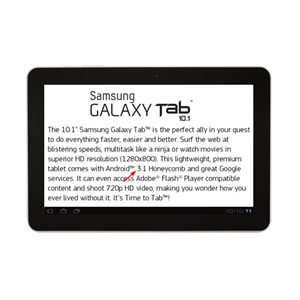
    Revealed: Samsung Galaxy Android 3.1 Tab Hits June

    Just as it has been forced to hand over the Tab to rivals Apple in a nasty patents battle, Samsung’s updated Android Honeycomb 3.1 is said to be ‘days away.’


    Click to enlarge

    The 10.1″ Tab with newest version of Honeycomb 3.1 announced at Google I/O conference earlier this month is to be released in US on June 8th, just confirmed by Samsung via Twitter.

    “What is 10.1 inches of Android 3.0 Honeycomb delight? Only a few days away!”

    And the good news is 3.1 OS is “is what Android 3.0 Honeycomb should have launched on,” according to Android Universe.
    It also promises to be thinner and lighter (sound familiar?) at 595g.

    Well Apple think so too and are currently embroiled in a patents war with Samsung over its Galaxy Tab, which could hit supplies of the device the iPad maker can prove the Korean giant deliberately copied its revered slate.

    Read Samsung Forced To Surrender Galaxy Tabs 10.1 & S Phones To Apple here

    However, the bad news is for Samsung fans who have recently purchased the 10.1v Tab on Froyo 2.2 released here just this month on Vodafone is a newer model is now available.

    Specs wise the Galaxy also includes Flash support and 720p HD video but also added Droid 3.1 extras including resizeable widgets, open accessory API and USB host API.

    It will allow connections to Google TV and there will be USB hub support, allowing a full size keyboard, console and other adds on’s connect with ease brining more functionality to between the tab and third party devices.

    Its new ‘open accessory’ API means Androids can integrate with musical instruments, exercise and other machines.

    It also offers media transfer protocol which helps manage, store and transfer files from cameras and real-time transport protocol API audio which enables VOIP, push-to-talk, conferencing, and audio streaming.


    Samsung ‘s latest brainchild will set you back US$499 for 16GB and $599 32GB.

    No word yet when it will hit here yet. Samsung Australia were not available for comment but here’s hoping it’s soon.

    Gerry Harvey: We Are Going Online, Jump On

    80% of Harvey Norman goods are going online, a fed up Gerry Harvey confirmed today.


    Click to enlarge
    Image: Gerry Harvey gets set to join the online race.

    “Eighty percent of our retail products will be online in September,” Harvey Norman’s chairman confirmed to Computerworld. 

    “I’m sick of talking about online [retail] to journalists.” Well talked about it, he certainly has. 

    Harvey and his high street stalwarts, including the likes of Myer and Solomon Lew’s Just Group kicked up a stink last year when, en bande, demanded the introduction of 10% GST tax on all goods sold online under the value of $1000, claiming online was destroying its brick and mortar retail businesses. (I wonder is Harvey as keen on this tax now he is venturing into the competitive online world of trading).

    Harvey was one of the main champions of the tax until the proposals went sour after major consumer backlash.

    Well the Productivity Commission, charged by the Gillard government to investigate if Gerry Harvey et al had a case, certainly don’t seem to think so.

    “Other factors such as much lower prices, greater range of products-that is, choice- and convenience available online appear to be far more important drivers,” for web business, the Productivity commission said in a recent draft report on the retail sector. The final report is due out soon. 

    Even as far back as 1997 the same Gerry Harvey famously uttered: “No one will ever make money selling online,” when the Internet was first emerging as a sales platform. 

    This denial strategy was carried on until earlier this year, when Harvey Norman turned to social networks like Twitter, Facebook and even its own deal-a-day website flgging everything from cosmetics to camping gear in the hope of reinvigorating dull profit growth. 


    Currently, customers cannot purchase good on harveynorman.com.au – the site acts as an information point only – allowing users create wish lists, but that’s all. 


    Earlier this week, SmartHouse reported on how Harvey Norman operation is in hot water, with mass sackings in its Clive Peters and Rick Hart retail operations due to underperformance. 


    Watchdog: “iPad 4G” Row NOT Over

    ACCC vow to continue its fight with Apple, despite it pulling “iPad + 4G” claims


    Click to enlarge

    Australia consumer watchdog has vowed to go ahead with its court battle with Apple, whom it accuses of misleading Aussies over its claims its new iPad WiFi model is 4G ready, when this is not the case.

    “In its proceedings, the ACCC has alleged that Apple’s use of the descriptor ‘4G’ mislead consumers because it represented to Australian consumers that the product could, with a SIM card, connect to a 4G mobile data network in Australia, when this is not the case,” an ACCC spokesperson told SmartHouse.

    The Australian Competition & Consumer Commission took the iPad maker to court in March, alleging Apple claims on “iPad with Wifi + 4G” are “false” and “misleading”.

    But although Apple provided undertakings to the Federal Court to do ‘certain things’ to remedy the situation, it continued to use the descriptor ‘4G’ in advertisments for the cult tablet, the ACCC noted.

    The iPad maker agreed to publish a clarification that states the tab  supports ultra-fast 3G mobile networks but not 4G, and offer refunds to mislead consumers.

    It also emerged yesterday Apple had finally pulled its iPad + 4G claims from website after various discussions with the watchdog over the new iPad name.

    However, the latest backtrack isn’t enough tot save the Cupertino giant from the wrath of the Federal court and the watchdog, it appears.

    “Any move by Apple to cease using the descriptor of ‘4G’ will mitigate against the ACCC’s concerns but will not deal with any past conduct,” the spokesperson continued.

    “The proceedings brought by the ACCC are continuing,” he added, with the trial is due to kick off 4 June next.


    Apple could face a major fine if the watchdog succeeds in its case. 

    The giant previously denied any wrongdoing, claiming: “the iPad with WiFi + 4G is a device which performs in accordance with the descriptor ‘4G’ in terms of data transfer speed.”

    Read: Apple: iPad 3 IS 4G (on 3G)

    REVEALED: NBN A Loss Maker

    They’re hardly coining it but NBN made over $356,000 in revenue during H2 last year.


    Click to enlarge

    This revenue was accrued from customers paying National Broadband Network Co for activated high speed fibre services.

    But thats nothing to cover expenses which ran into the millions – meaning NBN Co made a loss of $221m in final six months of 2011 – double the $104m loss recorded in H2 2010.

    In total the Aussie government footed the loss NBN recorded last year to the tune of $220,567m.

    Mike Quigley’s NBN Co also spent $568 million in the six months – $346m capital ex, which included $86m for fibre rollout and $12m on satellite and wireless solutions.

     Another $222m was also spent by NBN Co on operating expenses.

    However, it also accrued $29,319m in interest from funds sitting in financial institutions.

    It is also likely increased revenue streams will lift NBN Co out of the red in the coming years, with millions of Aussie homes to be connected to the fibre network by 2015.

    Other major NBN millstones listed in the government report covering July-Dec 31 was the first new housing development switched on in Western Sydney in September and the launch of Interim Satellite Service on 1 July.

    At 31 December, NBN Co had work under way on 92,032 premises and brownfield sites –  12,723 premises and close to 78,000 brownfields, nationally.

    14,256 premises have been passed in the mainland and 1,438 are receiving active fibre broadband services over the network, while in Tasmania the total number of premises passed by NBN stands at 3,987; while just 657 are in active service.

    But its a slow process from installation to connection to fibre broadband it seems – just 110 ‘new developments’ were activated with high speed broadband by close of 2011 although far more were connected by satellite totalling 2,197 – used in rural locations – and just over 2,000 brownfields.


    39 Retail Service Providers (RSPs) have signed NBN contracts including the likes of iiNet, Optus and Telstra.

    125 of its customers are using existing handsets to make calls over the NBN voice ports and just one telco has successfully connected to IPTV service.

    Read NBN 2011 Report Card here

    Game Over: Retailer Closes ALL Oz Stores

    Game to shut up shop completely in Australia, administrators have confirmed.


    Click to enlarge

    Game administrators PricewaterhouseCoopers have confirmed that they have made the “difficult decision” to close the remaining 31 stores across its Aussie network, Kate Warwick and Greg Hall, said.

    16 stores will close from today, while the remainder to be closed over the coming weeks and a final closing sale has commenced with discounts of up to 60% in-store and online, due to creditor interests.

    This comes as the gaming giant closed 60 stores nationwide in May after sales crashed, thought to be due to the increasing use of gaming sites via Facebook and other apps.

    Many of these initial closures were in regional locations with most metro stores saved.

    “This is a difficult time for employees and closing the stores was not a decision we made easily.

    “Despite exploring available opportunities for continued trading, the ongoing trading performance and absence of viable offers for the purchase of the business has resulted in these closures,” PwC’s Warwick said.


    PwC said it has been in touch with the Federal Government Department that deals with General Employee Entitlements and Redundancy Scheme (GEERS) and will assist the employees with their applications.

    The second meeting of creditors is scheduled to take place tomorrow in Sydney to decide the future of the company.

    Toshiba Tumbles 46%

    Tech giant Toshiba is feeling the blues after posting a net profit of 73.7 bn yen on the back of sluggish sales in TV and PCs.

    Toshiba sales fell to 6,100.3 billion yen (US$74,393.4m), for the full year  to March 31 FY2011 – a drop of 298.2 bn yen compared to FY 2010.

    Net profit of 73.7 bn yen ($898.8m) showed a disappointing drop of 46.5% or 64.1 bn yen – blamed on increasing tax expenses due to a revision of Japan’s Corporation Tax Act .

    Overall sales were down in its AV, TV and PC segments, reflecting the “impacts of sharp yen appreciation, the Great East Japan Earthquake, the floods in Thailand and market downturns,” Toshiba said in a statement.

    However, its ‘Social Infrastructure’ division, which includes power and Industrial Systems enjoyed higher sales than last year.

    Even though its “Visual Products”, which includes TVs, saw sales increase in emerging economies, Toshiba slumped in its native Japan due to the transition to digital TV and the ending of  a stimulus program there.

    Tosh’s digital products and PC sales were also sluggish due to slow sales in the United States and Europe and currency translation adjustments due to sharp yen appreciation.

    However, the Japanese giant did see some cost improvement due to reorganization and consolidation of domestic and overseas facilities, after its decision last year to consolidate several of its production plants.

    Tosh’s PC business recorded higher operating income on the “execution of proactive cost reductions and lower parts and material costs.”

    Toshiba’s ‘Storage Products’ business also witnessed a jump due to the “healthy performance” of hard disk drives (HDD), but the semiconductor business fell due to the floods in Thailand, price declines in memories and a fall-off in demand for discretes and system LSIs.

    “The Japanese economy remained in a severe condition due to the impacts of the GreatEast Earthquake, exposure to sovereign risk in some European countries and the impact of sharp yen appreciation,” Toshiba warned.


    “In these conditions, Toshiba Group, aiming to become an even stronger, a world-leadingdiversified company by overcoming demanding business conditions, strongly promoted global business deployment and the transformation of itsbusiness structure through strategic investments and acquisitions.”

    The company is forcasting rising sales across all divisions for 2012, totalling 6.4 trillion yen and a net profit of 135 billion yen for FY2012.

    It said it will focus on the storage, smart Community and Healthcare businesses.

    Confirmed: Samsung S4 Mini To Hit OZ

    S4 Mini will be making its way down under.

    The Galaxy maker issued the following statement to us today: 

    “Following the global announcement of the GALAXY S4 Mini, Samsung Electronics Australia is happy to confirm the GALAXY S4 Mini will be arriving in Australia in the coming months. 
    Samsung Australia didn’t give a time frame but did say it will “sharing more information around this exciting new addition to the GALAXY S4 family soon.”

    The 4.3-inch Galaxy S4 Mini was announced Friday by Samsung overseas. 

     The mini-me version of the 5 inch S4 also has: 1.7GHz dual-core processor, 8MP rear and 1.9MP front camera, and will come in 4G LTE or 3G+ options. 
    Galaxy S4 mini will see the light of day for the first time at Samsung Premiere 2013 GALAXY & ATIV, London on June 20th.