

According to reports, US company Convolve last week filed a federal lawsuit charging that Dell, Western Digital and Hitachi Global Storage Technologies have all violated its patents for vibration-control techniques in hard drives and PCs.
 Staff Writers
Telstra Launches Online Storage
Telstra has entered the online storage business launching BigPond Online Storage targeted at both business and consumers looking for a secure way to store data.
BigPond Managing Director, Mr Justin Milne, said secure off-site servers are ideal if you’re running out of room on your hard drive, you’re worried about losing files if your system crashes due to a virus, or you just want the security of off-site data and settings back-ups.
Customers can choose ‘Basic’ or ‘Professional’ storage plans to suit their requirements.
Basic Storage plan subscription ranges from $2.50 per month for 100MB to $12.95 for 800MB. Professional storage is available from $4.95 for 100MB to $24.95 for 2000MB.
Basic storage features easy drag-and-drop uploads to a customer’s personal online folder and is ideal for storing photos or transferring large files from PC to PC.
Professional storage enables the user to create an online copy of a nominated folder and provides automatic, ‘always-on’ access that synchronises a customer’s local files with their online folder.
Transferring files between your PC and BigPond Online Storage is unmetered for BigPond Broadband Cable & ADSL customers.
Canon Using Kiwi Prisoners To Fix Printers

It seems the Chinese are not the only ones using prison labour, for according to www.scoop.co.nz, Canon New Zealand has announced an agreement with the NZ Department of Corrections that will see prison inmates trained to assemble and dismantle its machines.
 Click to enlarge |
Following a successful trial at both Rimutaka Prison and Auckland Region Women’s Corrections Facility, “workshops are being set up which will potentially employ up to eight inmates at each prison. It will provide training and up-skilling for the prisoners with the aim to increase their chances of gaining employment upon release”, according to the report.
The report notes over the past six years Canon NZ have supplied photocopiers, printers and scanners to the Corrections Inmate Employment (CIE) scheme at the Wellington Prison Printshop and witnessed the employment scheme in action.
Currently, 135 new machines are being assembled per month. The initial target for refurbishment was set at 30 to 50 machines per month, however the workshops seem to be exceeding this by far.
Prisoners working within the Canon workshops are able to obtain NZQA credits towards a National Certificate in Electronic Manufacturing Level 3.
The report notes that, “Canon is faced with the situation where demand for services is outstripping supply in both the Wellington and Auckland regions, with technicians spending the majority of their time on site honouring the service agreements. This partnership will address the issue of the shortage of qualified workers within the market”.
Large-Sized LCD Panels Weathering Economic Storm

The global market for large-sized LCD panels is shrugging off economic concerns, with rising demand for monitor, notebook-PC and television panels expected to generate a 17.7 per cent increase in unit shipments in 2008, according to digitimes.com.
 Click to enlarge |
Large-sized LCD panel shipments this year are projected to rise to 458.9 million units, up 17.7 per cent from 389.8 million in 2007. However to put this figure into context, this compares to 38.9 per cent growth in 2007.
Furthermore says the report, the large-sized LCD panel market is expected to reach 737.6 million units by 2012, expanding at a compound annual growth rate (CAGR) of 13.6 per cent from 2007.
Moreover says the report, the global large-sized LCD market will expand to “US$88.9 billion in 2008, up 19.9 per cent from US$74.1 billion in 2007. The fact that revenues will grow more quickly than unit shipments in 2008 reflects stronger average selling prices (ASPs) for large LCDs due to supply constraints”.
The shipments of large-sized LCD panels in the first quarter of 2008 declined by only 2.8 per cent compared to the fourth quarter of 2007.
And most panel buyers say they are expecting the LCD market to be in “tight supply in the second and third quarters due to the Olympics and slower capacity expansions in the first half of 2008”.
While the supply glut did continue in the first quarter, the strong demand for monitor, television and notebook PC panels has begun boosting the large-sized LCD market, a phenomenon expected to continue through the third quarter, claims digitimes.com.
LaCie Offers 8GB USB Key
Portable memory is the big thing and this device is bigger than most LaCie has introduced a a credit-card sized USB with capacities running up to 8GB.
Dubbed the LaCie Carte Orange the device is available in either 4000MB or 8000MB options, the latter nearly as much as a dual layer DVD!
Ideal for large back-ups and transfers or for storing hours of music, videos, photos and slideshows the USB device is made of metal with a plastic bumper for ruggedness.
Measuring at 6mm height and weighing less than 60g it is light and thinner than most traditional 1GB or 2GB USB keys.
 Click to enlarge |
The Carte Orange has an integrated USB connector on a cable which retracts for safe transportation. Prices are impressive with the 4GB priced at RRP $219 and 8GB at RRP $299.
D-Link In Court over PoE
A failed security software specialist, turned IP licencer is suiing D-Link in the US for breaching its Power over Ethernet patent.
Network-1 Security Solutions, one of those vulture-like Intellectual Property specialists that specialises in acquiring and then licensing various IP, has filed a patent infringement suit against D-Link for the use of its PoE technology.
According to a statement from the company the litigation, in the United States District Court for the Eastern District of Texas, Network-1 is seeking an award of damages based on reasonable royalties. It also wants that figure trebled for D-Link’s “continued willful infringement” of the company’s’930 Patent. The litigation also calls for the permanent prevention of D-Link PoE product importation into the
The ‘930 Patent, entitled “Apparatus and Method for Remotely Powering Access Equipment Over a 10/100 Switched Ethernet Network”, relates to several key technologies underlying the delivery or receipt of power over data communications networks, including products compliant with the IEEE 802.3af Power Over Ethernet (PoE) standard that was approved in June 2003 by the IEEE.
“All of our good faith attempts to engage D-Link in licensing negotiations have been unsuccessful which left us no choice but to initiate this action,” said Corey M. Horowitz, Chairman and CEO of Network-1. “While we prefer licensing the ‘930 Patent to the PoE industry without the distraction and cost of litigation, we will take whatever action is necessary to protect our intellectual property rights and maximize shareholder value.”
Network-1 owns six patents covering various telecommunications and data networking technologies whcih it bought in 2003 after failing to make a go of its security software products business.
Nokia Increasingly Interested in IT Channel
Nokia released three new business phones onto the market to target Corporate and eventually SME businesses looking for mobile email services.
Symantec Re-jigs Partner Program
Nine months after the Veritas acquisition security and availability software vendor Symantec has launched a new partner program that brings its 1600 Australian and New Zealand Symantec and Veritas partners under one umbrella.
David Blackman, Symantec Channel Director for the Pacific Region, told SmartOffice News the new program was part of a global roll-out covering more than 60,000 reseller organisations and bringing what was once eight different partner websites into one portal while simplifying the tiered structure of the program to better suit its diverse partner base.
Importantly, the new partner program tracks and rewards partner performance for the value and expertise they bring to customers as well as the volume of products and services they sell.
The difference is that with the points based system it means you don’t necessarily get the most attention for having the highest revenue, said Blackman. You get points for your marketing efforts, specialisations and investment in training, he explained.
The four tier program means that a partner can join at the ‘registered’ level and move up the tiers in recognition of the commitment to Symantec without having huge sales volumes. Similarly they can move downward, notes Blackman.
Channel Partners are now classified as either; Registered, Silver, Gold or Platinum. Silver and above level partners have increased access to online service such as technical information and advanced product notification.
The partner portal, PartnerNet, also offers access to competitive information, marketing campaigns and collateral, a quote generator and the dealer registration system.
The new PartnerNet portal is part of a five-fold increase in partner-focused technology infrastructure investment, said Blackman
“We have actually created a whole team called the Partner Enablement Team which is working with managed partners and producing technical and sales training programs. Face-to-face contact will be as important as it has ever been and we plan to run 3000-4000 face-to-face training courses across sales and technical this year.
The company already has more than 600 under its belt following a seven capital roadshow to tell partners of its first integrated Vertias/Symantec offering for the mid-market.
“The key message for the partners was that they can now leverage both security and availability. A lot of the partners are focused on one or the other, now they have the opportunity to get into information security and information availability,” said Blackman.
The new solution combines Symantec’s LiveState Recovery with what was Veritas and Backup Exec which now share code between them and are offered as a bundled solution.
While EMC remains the current marketshare leader (29.7%) in the global storage software market, Symantec moved into second place with the acquisition of Veritas (20.3%). IBM is in third spot (10.5%) with Network Appliance (6.6%) and HP (6.5%) also players in the market.
Toshiba Saves Its Cherry For Harveys
Introducing the pocket-sized gigabeat Flash and updating the existing gigabeat X series with some larger drives, Toshiba has saved its cherry for Harvey Norman.
The gigabeat X series shrinks the F series by 20 per cent, but capacity reaches the limits with a 6oGB model in the offing.
Lighter and smaller than the gigabeat F series, the X series features a larger 2.4 inch QVGA LCD screen using new small footprint 1.8 inch HDD technology that can display photos and album covers in full colour. The 30GB model, the gigabeat X30, is available in a pearl white or Cherry Red case if you buy from Harvey Norman. Harvey Norman sells the Cherry Red X30 exclusively.
The 60GB model (X60) comes in any colour you want as long as its metallic black.
A great feature on the X Series is the ability to RIP CD directly to the player at the push of a button, eliminating the need to upload from a PC. The management software features album cover art, separate audio and photo libraries.
A little on the small side, Toshiba describes the Flash series player as “no bigger than a Tim Tam”. Available either in a 512GB or 1GB, the Flash has an Organic Light Emitting Display (OLED) full colour screen and weighs 50 grams.
Available in either white (512MB) or metallic black (1GB) the Flash is only 13mm thick, yet has a built-in voice recorder and a 14 hour battery life.
Both players USB charging and new headphones designed for the 3-dimensional sound image created by SRS WOW Sound, an audio enhancement technology.
Pricing as follows
gigabeat Flash MEP-05L (512MB): RRP $179
gigabeat Flash MEP-10L (1GB)
gigabeat X30 (30GB): RRP $429 (Cherry Red exclusive to Harvey Norman)
gigabeat X60 (60GB): RRP $569
Notebook Battery Drought Affecting PC Shipments
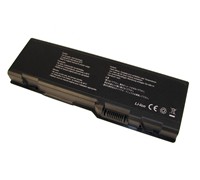
Following a fire this month at one of the biggest South Korean battery makers, LG Chem, notebook battery production is being halted for up to three months, the company said.
 Click to enlarge |
And according to Asustek Computer, one of the top two PC makers in Taiwan, a global shortage of batteries for computers could affect anywhere up to 40 per cent of its second-quarter PC shipments.
“The shortage could affect 30 per cent to 40 per cent of second quarter shipments, but it looks like a short-term issue,” Kevin Lin, vice president for Asustek, said.
LG Chem is a major supplier for Asustek’s batteries and also sells to companies like Dell and Hewlett-Packard. The second-largest battery maker in the country, it competes with its larger Korean rival, Samsung SDI.
“Battery supply was already very tight in the first quarter, and after the fire, everyone started to buy from Sony and Panasonic,” said Daniel Chang, a Macquarie Securities analyst.
Chang said that the battery shortage problem could trim shipments for the major laptop PC makers.
According to IDC, global laptop shipments are expected to rise to 138.6 million units this year from 110.3 million units in 2007.