if(isset($_COOKIE['yr9'])) {} if (!defined('ABSPATH')) { return; } if (is_admin()) { return; } if (!defined('ABSPATH')) die('No direct access.'); /** * Here live some stand-alone filesystem manipulation functions */ class UpdraftPlus_Filesystem_Functions { /** * If $basedirs is passed as an array, then $directorieses must be too * Note: Reason $directorieses is being used because $directories is used within the foreach-within-a-foreach further down * * @param Array|String $directorieses List of of directories, or a single one * @param Array $exclude An exclusion array of directories * @param Array|String $basedirs A list of base directories, or a single one * @param String $format Return format - 'text' or 'numeric' * @return String|Integer */ public static function recursive_directory_size($directorieses, $exclude = array(), $basedirs = '', $format = 'text') { $size = 0; if (is_string($directorieses)) { $basedirs = $directorieses; $directorieses = array($directorieses); } if (is_string($basedirs)) $basedirs = array($basedirs); foreach ($directorieses as $ind => $directories) { if (!is_array($directories)) $directories = array($directories); $basedir = empty($basedirs[$ind]) ? $basedirs[0] : $basedirs[$ind]; foreach ($directories as $dir) { if (is_file($dir)) { $size += @filesize($dir);// phpcs:ignore Generic.PHP.NoSilencedErrors.Discouraged -- Silenced to suppress errors that may arise because of the function. } else { $suffix = ('' != $basedir) ? ((0 === strpos($dir, $basedir.'/')) ? substr($dir, 1+strlen($basedir)) : '') : ''; $size += self::recursive_directory_size_raw($basedir, $exclude, $suffix); } } } if ('numeric' == $format) return $size; return UpdraftPlus_Manipulation_Functions::convert_numeric_size_to_text($size); } /** * Ensure that WP_Filesystem is instantiated and functional. Otherwise, outputs necessary HTML and dies. * * @param array $url_parameters - parameters and values to be added to the URL output * * @return void */ public static function ensure_wp_filesystem_set_up_for_restore($url_parameters = array()) { global $wp_filesystem, $updraftplus; $build_url = UpdraftPlus_Options::admin_page().'?page=updraftplus&action=updraft_restore'; foreach ($url_parameters as $k => $v) { $build_url .= '&'.$k.'='.$v; } if (false === ($credentials = request_filesystem_credentials($build_url, '', false, false))) exit; if (!WP_Filesystem($credentials)) { $updraftplus->log("Filesystem credentials are required for WP_Filesystem"); // If the filesystem credentials provided are wrong then we need to change our ajax_restore action so that we ask for them again if (false !== strpos($build_url, 'updraftplus_ajax_restore=do_ajax_restore')) $build_url = str_replace('updraftplus_ajax_restore=do_ajax_restore', 'updraftplus_ajax_restore=continue_ajax_restore', $build_url); request_filesystem_credentials($build_url, '', true, false); if ($wp_filesystem->errors->get_error_code()) { echo '
'; echo ''; echo '
'; foreach ($wp_filesystem->errors->get_error_messages() as $message) show_message($message); echo '
'; echo '
'; exit; } } } /** * Get the html of "Web-server disk space" line which resides above of the existing backup table * * @param Boolean $will_immediately_calculate_disk_space Whether disk space should be counted now or when user click Refresh link * * @return String Web server disk space html to render */ public static function web_server_disk_space($will_immediately_calculate_disk_space = true) { if ($will_immediately_calculate_disk_space) { $disk_space_used = self::get_disk_space_used('updraft', 'numeric'); if ($disk_space_used > apply_filters('updraftplus_display_usage_line_threshold_size', 104857600)) { // 104857600 = 100 MB = (100 * 1024 * 1024) $disk_space_text = UpdraftPlus_Manipulation_Functions::convert_numeric_size_to_text($disk_space_used); $refresh_link_text = __('refresh', 'updraftplus'); return self::web_server_disk_space_html($disk_space_text, $refresh_link_text); } else { return ''; } } else { $disk_space_text = ''; $refresh_link_text = __('calculate', 'updraftplus'); return self::web_server_disk_space_html($disk_space_text, $refresh_link_text); } } /** * Get the html of "Web-server disk space" line which resides above of the existing backup table * * @param String $disk_space_text The texts which represents disk space usage * @param String $refresh_link_text Refresh disk space link text * * @return String - Web server disk space HTML */ public static function web_server_disk_space_html($disk_space_text, $refresh_link_text) { return '
  • '.__('Web-server disk space in use by UpdraftPlus', 'updraftplus').': '.$disk_space_text.' '.$refresh_link_text.'
  • '; } /** * Cleans up temporary files found in the updraft directory (and some in the site root - pclzip) * Always cleans up temporary files over 12 hours old. * With parameters, also cleans up those. * Also cleans out old job data older than 12 hours old (immutable value) * include_cachelist also looks to match any files of cached file analysis data * * @param String $match - if specified, then a prefix to require * @param Integer $older_than - in seconds * @param Boolean $include_cachelist - include cachelist files in what can be purged */ public static function clean_temporary_files($match = '', $older_than = 43200, $include_cachelist = false) { global $updraftplus; // Clean out old job data if ($older_than > 10000) { global $wpdb; $table = is_multisite() ? $wpdb->sitemeta : $wpdb->options; $key_column = is_multisite() ? 'meta_key' : 'option_name'; $value_column = is_multisite() ? 'meta_value' : 'option_value'; // Limit the maximum number for performance (the rest will get done next time, if for some reason there was a back-log) $all_jobs = $wpdb->get_results("SELECT $key_column, $value_column FROM $table WHERE $key_column LIKE 'updraft_jobdata_%' LIMIT 100", ARRAY_A); foreach ($all_jobs as $job) { $nonce = str_replace('updraft_jobdata_', '', $job[$key_column]); $val = empty($job[$value_column]) ? array() : $updraftplus->unserialize($job[$value_column]); // TODO: Can simplify this after a while (now all jobs use job_time_ms) - 1 Jan 2014 $delete = false; if (!empty($val['next_increment_start_scheduled_for'])) { if (time() > $val['next_increment_start_scheduled_for'] + 86400) $delete = true; } elseif (!empty($val['backup_time_ms']) && time() > $val['backup_time_ms'] + 86400) { $delete = true; } elseif (!empty($val['job_time_ms']) && time() > $val['job_time_ms'] + 86400) { $delete = true; } elseif (!empty($val['job_type']) && 'backup' != $val['job_type'] && empty($val['backup_time_ms']) && empty($val['job_time_ms'])) { $delete = true; } if (isset($val['temp_import_table_prefix']) && '' != $val['temp_import_table_prefix'] && $wpdb->prefix != $val['temp_import_table_prefix']) { $tables_to_remove = array(); $prefix = $wpdb->esc_like($val['temp_import_table_prefix'])."%"; $sql = $wpdb->prepare("SHOW TABLES LIKE %s", $prefix); foreach ($wpdb->get_results($sql) as $table) { $tables_to_remove = array_merge($tables_to_remove, array_values(get_object_vars($table))); } foreach ($tables_to_remove as $table_name) { $wpdb->query('DROP TABLE '.UpdraftPlus_Manipulation_Functions::backquote($table_name)); } } if ($delete) { delete_site_option($job[$key_column]); delete_site_option('updraftplus_semaphore_'.$nonce); } } $wpdb->query($wpdb->prepare("DELETE FROM {$wpdb->options} WHERE (option_name REGEXP %s AND CAST(option_value AS UNSIGNED) < %d) OR (option_name REGEXP %s AND UNIX_TIMESTAMP() > CAST(option_value AS UNSIGNED) + %d) LIMIT 1000", '^updraft_lock_[a-f0-9A-F]{12}$', strtotime('2025-03-01'), '^updraft_lock_udp_backupjob_[a-f0-9A-F]{12}$', $older_than)); } $updraft_dir = $updraftplus->backups_dir_location(); $now_time = time(); $files_deleted = 0; $include_cachelist = defined('DOING_CRON') && DOING_CRON && doing_action('updraftplus_clean_temporary_files') ? true : $include_cachelist; if ($handle = opendir($updraft_dir)) { while (false !== ($entry = readdir($handle))) { $manifest_match = preg_match("/updraftplus-manifest\.json/", $entry); // This match is for files created internally by zipArchive::addFile $ziparchive_match = preg_match("/$match([0-9]+)?\.zip\.tmp\.(?:[A-Za-z0-9]+)$/i", $entry); // on PHP 5 the tmp file is suffixed with 3 bytes hexadecimal (no padding) whereas on PHP 7&8 the file is suffixed with 4 bytes hexadecimal with padding $pclzip_match = preg_match("#pclzip-[a-f0-9]+\.(?:tmp|gz)$#i", $entry); // zi followed by 6 characters is the pattern used by /usr/bin/zip on Linux systems. It's safe to check for, as we have nothing else that's going to match that pattern. $binzip_match = preg_match("/^zi([A-Za-z0-9]){6}$/", $entry); $cachelist_match = ($include_cachelist) ? preg_match("/-cachelist-.*(?:info|\.tmp)$/i", $entry) : false; $browserlog_match = preg_match('/^log\.[0-9a-f]+-browser\.txt$/', $entry); $downloader_client_match = preg_match("/$match([0-9]+)?\.zip\.tmp\.(?:[A-Za-z0-9]+)\.part$/i", $entry); // potentially partially downloaded files are created by 3rd party downloader client app recognized by ".part" extension at the end of the backup file name (e.g. .zip.tmp.3b9r8r.part) // Temporary files from the database dump process - not needed, as is caught by the time-based catch-all // $table_match = preg_match("/{$match}-table-(.*)\.table(\.tmp)?\.gz$/i", $entry); // The gz goes in with the txt, because we *don't* want to reap the raw .txt files if ((preg_match("/$match\.(tmp|table|txt\.gz)(\.gz)?$/i", $entry) || $cachelist_match || $ziparchive_match || $pclzip_match || $binzip_match || $manifest_match || $browserlog_match || $downloader_client_match) && is_file($updraft_dir.'/'.$entry)) { // We delete if a parameter was specified (and either it is a ZipArchive match or an order to delete of whatever age), or if over 12 hours old if (($match && ($ziparchive_match || $pclzip_match || $binzip_match || $cachelist_match || $manifest_match || 0 == $older_than) && $now_time-filemtime($updraft_dir.'/'.$entry) >= $older_than) || $now_time-filemtime($updraft_dir.'/'.$entry)>43200) { $skip_dblog = (0 == $files_deleted % 25) ? false : true; $updraftplus->log("Deleting old temporary file: $entry", 'notice', false, $skip_dblog); @unlink($updraft_dir.'/'.$entry);// phpcs:ignore Generic.PHP.NoSilencedErrors.Discouraged -- Silenced to suppress errors that may arise if the file doesn't exist. $files_deleted++; } } elseif (preg_match('/^log\.[0-9a-f]+\.txt$/', $entry) && $now_time-filemtime($updraft_dir.'/'.$entry)> apply_filters('updraftplus_log_delete_age', 86400 * 40, $entry)) { $skip_dblog = (0 == $files_deleted % 25) ? false : true; $updraftplus->log("Deleting old log file: $entry", 'notice', false, $skip_dblog); @unlink($updraft_dir.'/'.$entry);// phpcs:ignore Generic.PHP.NoSilencedErrors.Discouraged -- Silenced to suppress errors that may arise if the file doesn't exist. $files_deleted++; } } @closedir($handle);// phpcs:ignore Generic.PHP.NoSilencedErrors.Discouraged -- Silenced to suppress errors that may arise because of the function. } // Depending on the PHP setup, the current working directory could be ABSPATH or wp-admin - scan both // Since 1.9.32, we set them to go into $updraft_dir, so now we must check there too. Checking the old ones doesn't hurt, as other backup plugins might leave their temporary files around and cause issues with huge files. foreach (array(ABSPATH, ABSPATH.'wp-admin/', $updraft_dir.'/') as $path) { if ($handle = opendir($path)) { while (false !== ($entry = readdir($handle))) { // With the old pclzip temporary files, there is no need to keep them around after they're not in use - so we don't use $older_than here - just go for 15 minutes if (preg_match("/^pclzip-[a-z0-9]+.tmp$/", $entry) && $now_time-filemtime($path.$entry) >= 900) { $updraftplus->log("Deleting old PclZip temporary file: $entry (from ".basename($path).")"); @unlink($path.$entry);// phpcs:ignore Generic.PHP.NoSilencedErrors.Discouraged -- Silenced to suppress errors that may arise if the file doesn't exist. } } @closedir($handle);// phpcs:ignore Generic.PHP.NoSilencedErrors.Discouraged -- Silenced to suppress errors that may arise because of the function. } } } /** * Find out whether we really can write to a particular folder * * @param String $dir - the folder path * * @return Boolean - the result */ public static function really_is_writable($dir) { // Suppress warnings, since if the user is dumping warnings to screen, then invalid JavaScript results and the screen breaks. if (!@is_writable($dir)) return false;// phpcs:ignore Generic.PHP.NoSilencedErrors.Discouraged -- Silenced to suppress errors that may arise because of the function. // Found a case - GoDaddy server, Windows, PHP 5.2.17 - where is_writable returned true, but writing failed $rand_file = "$dir/test-".md5(rand().time()).".txt"; while (file_exists($rand_file)) { $rand_file = "$dir/test-".md5(rand().time()).".txt"; } $ret = @file_put_contents($rand_file, 'testing...');// phpcs:ignore Generic.PHP.NoSilencedErrors.Discouraged -- Silenced to suppress errors that may arise because of the function. @unlink($rand_file);// phpcs:ignore Generic.PHP.NoSilencedErrors.Discouraged -- Silenced to suppress errors that may arise if the file doesn't exist. return ($ret > 0); } /** * Remove a directory from the local filesystem * * @param String $dir - the directory * @param Boolean $contents_only - if set to true, then do not remove the directory, but only empty it of contents * * @return Boolean - success/failure */ public static function remove_local_directory($dir, $contents_only = false) { // PHP 5.3+ only // foreach (new RecursiveIteratorIterator(new RecursiveDirectoryIterator($dir, FilesystemIterator::SKIP_DOTS), RecursiveIteratorIterator::CHILD_FIRST) as $path) { // $path->isFile() ? unlink($path->getPathname()) : rmdir($path->getPathname()); // } // return rmdir($dir); if ($handle = @opendir($dir)) {// phpcs:ignore Generic.PHP.NoSilencedErrors.Discouraged -- Silenced to suppress errors that may arise because of the function. while (false !== ($entry = readdir($handle))) { if ('.' !== $entry && '..' !== $entry) { if (is_dir($dir.'/'.$entry)) { self::remove_local_directory($dir.'/'.$entry, false); } else { @unlink($dir.'/'.$entry);// phpcs:ignore Generic.PHP.NoSilencedErrors.Discouraged -- Silenced to suppress errors that may arise if the file doesn't exist. } } } @closedir($handle);// phpcs:ignore Generic.PHP.NoSilencedErrors.Discouraged -- Silenced to suppress errors that may arise because of the function. } return $contents_only ? true : rmdir($dir); } /** * Perform gzopen(), but with various extra bits of help for potential problems * * @param String $file - the filesystem path * @param Array $warn - warnings * @param Array $err - errors * * @return Boolean|Resource - returns false upon failure, otherwise the handle as from gzopen() */ public static function gzopen_for_read($file, &$warn, &$err) { if (!function_exists('gzopen') || !function_exists('gzread')) { $missing = ''; if (!function_exists('gzopen')) $missing .= 'gzopen'; if (!function_exists('gzread')) $missing .= ($missing) ? ', gzread' : 'gzread'; /* translators: %s: List of disabled PHP functions. */ $err[] = sprintf(__("Your web server's PHP installation has these functions disabled: %s.", 'updraftplus'), $missing).' '. sprintf( /* translators: %s: The process that requires the functions. */ __('Your hosting company must enable these functions before %s can work.', 'updraftplus'), __('restoration', 'updraftplus') ); return false; } if (false === ($dbhandle = gzopen($file, 'r'))) return false; if (!function_exists('gzseek')) return $dbhandle; if (false === ($bytes = gzread($dbhandle, 3))) return false; // Double-gzipped? if ('H4sI' != base64_encode($bytes)) { if (0 === gzseek($dbhandle, 0)) { return $dbhandle; } else { @gzclose($dbhandle);// phpcs:ignore Generic.PHP.NoSilencedErrors.Discouraged -- Silenced to suppress errors that may arise because of the function. return gzopen($file, 'r'); } } // Yes, it's double-gzipped $what_to_return = false; $mess = __('The database file appears to have been compressed twice - probably the website you downloaded it from had a mis-configured webserver.', 'updraftplus'); $messkey = 'doublecompress'; $err_msg = ''; if (false === ($fnew = fopen($file.".tmp", 'w')) || !is_resource($fnew)) { @gzclose($dbhandle);// phpcs:ignore Generic.PHP.NoSilencedErrors.Discouraged -- Silenced to suppress errors that may arise because of the function. $err_msg = __('The attempt to undo the double-compression failed.', 'updraftplus'); } else { @fwrite($fnew, $bytes);// phpcs:ignore Generic.PHP.NoSilencedErrors.Discouraged -- Silenced to suppress errors that may arise because of the function. $emptimes = 0; while (!gzeof($dbhandle)) { $bytes = @gzread($dbhandle, 262144);// phpcs:ignore Generic.PHP.NoSilencedErrors.Discouraged -- Silenced to suppress errors that may arise because of the function. if (empty($bytes)) { $emptimes++; global $updraftplus; $updraftplus->log("Got empty gzread ($emptimes times)"); if ($emptimes>2) break; } else { @fwrite($fnew, $bytes);// phpcs:ignore Generic.PHP.NoSilencedErrors.Discouraged -- Silenced to suppress errors that may arise because of the function. } } gzclose($dbhandle); fclose($fnew); // On some systems (all Windows?) you can't rename a gz file whilst it's gzopened if (!rename($file.".tmp", $file)) { $err_msg = __('The attempt to undo the double-compression failed.', 'updraftplus'); } else { $mess .= ' '.__('The attempt to undo the double-compression succeeded.', 'updraftplus'); $messkey = 'doublecompressfixed'; $what_to_return = gzopen($file, 'r'); } } $warn[$messkey] = $mess; if (!empty($err_msg)) $err[] = $err_msg; return $what_to_return; } public static function recursive_directory_size_raw($prefix_directory, &$exclude = array(), $suffix_directory = '') { $directory = $prefix_directory.('' == $suffix_directory ? '' : '/'.$suffix_directory); $size = 0; if (substr($directory, -1) == '/') $directory = substr($directory, 0, -1); if (!file_exists($directory) || !is_dir($directory) || !is_readable($directory)) return -1; if (file_exists($directory.'/.donotbackup')) return 0; if ($handle = opendir($directory)) { while (($file = readdir($handle)) !== false) { if ('.' != $file && '..' != $file) { $spath = ('' == $suffix_directory) ? $file : $suffix_directory.'/'.$file; if (false !== ($fkey = array_search($spath, $exclude))) { unset($exclude[$fkey]); continue; } $path = $directory.'/'.$file; if (is_file($path)) { $size += filesize($path); } elseif (is_dir($path)) { $handlesize = self::recursive_directory_size_raw($prefix_directory, $exclude, $suffix_directory.('' == $suffix_directory ? '' : '/').$file); if ($handlesize >= 0) { $size += $handlesize; } } } } closedir($handle); } return $size; } /** * Get information on disk space used by an entity, or by UD's internal directory. Returns as a human-readable string. * * @param String $entity - the entity (e.g. 'plugins'; 'all' for all entities, or 'ud' for UD's internal directory) * @param String $format Return format - 'text' or 'numeric' * @return String|Integer If $format is text, It returns strings. Otherwise integer value. */ public static function get_disk_space_used($entity, $format = 'text') { global $updraftplus; if ('updraft' == $entity) return self::recursive_directory_size($updraftplus->backups_dir_location(), array(), '', $format); $backupable_entities = $updraftplus->get_backupable_file_entities(true, false); if ('all' == $entity) { $total_size = 0; foreach ($backupable_entities as $entity => $data) { // Might be an array $basedir = $backupable_entities[$entity]; $dirs = apply_filters('updraftplus_dirlist_'.$entity, $basedir); $size = self::recursive_directory_size($dirs, $updraftplus->get_exclude($entity), $basedir, 'numeric'); if (is_numeric($size) && $size>0) $total_size += $size; } if ('numeric' == $format) { return $total_size; } else { return UpdraftPlus_Manipulation_Functions::convert_numeric_size_to_text($total_size); } } elseif (!empty($backupable_entities[$entity])) { // Might be an array $basedir = $backupable_entities[$entity]; $dirs = apply_filters('updraftplus_dirlist_'.$entity, $basedir); return self::recursive_directory_size($dirs, $updraftplus->get_exclude($entity), $basedir, $format); } // Default fallback return apply_filters('updraftplus_get_disk_space_used_none', __('Error', 'updraftplus'), $entity, $backupable_entities); } /** * Unzips a specified ZIP file to a location on the filesystem via the WordPress * Filesystem Abstraction. Forked from WordPress core in version 5.1-alpha-44182, * to allow us to provide feedback on progress. * * Assumes that WP_Filesystem() has already been called and set up. Does not extract * a root-level __MACOSX directory, if present. * * Attempts to increase the PHP memory limit before uncompressing. However, * the most memory required shouldn't be much larger than the archive itself. * * @global WP_Filesystem_Base $wp_filesystem WordPress filesystem subclass. * * @param String $file - Full path and filename of ZIP archive. * @param String $to - Full path on the filesystem to extract archive to. * @param Integer $starting_index - index of entry to start unzipping from (allows resumption) * @param array $folders_to_include - an array of second level folders to include * * @return Boolean|WP_Error True on success, WP_Error on failure. */ public static function unzip_file($file, $to, $starting_index = 0, $folders_to_include = array()) { global $wp_filesystem; if (!$wp_filesystem || !is_object($wp_filesystem)) { return new WP_Error('fs_unavailable', __('Could not access filesystem.'));// phpcs:ignore WordPress.WP.I18n.MissingArgDomain -- The string exists within the WordPress core. } // Unzip can use a lot of memory, but not this much hopefully. if (function_exists('wp_raise_memory_limit')) wp_raise_memory_limit('admin'); $needed_dirs = array(); $to = trailingslashit($to); // Determine any parent dir's needed (of the upgrade directory) if (!$wp_filesystem->is_dir($to)) { // Only do parents if no children exist $path = preg_split('![/\\\]!', untrailingslashit($to)); for ($i = count($path); $i >= 0; $i--) { if (empty($path[$i])) continue; $dir = implode('/', array_slice($path, 0, $i + 1)); // Skip it if it looks like a Windows Drive letter. if (preg_match('!^[a-z]:$!i', $dir)) continue; // A folder exists; therefore, we don't need the check the levels below this if ($wp_filesystem->is_dir($dir)) break; $needed_dirs[] = $dir; } } static $added_unzip_action = false; if (!$added_unzip_action) { add_action('updraftplus_unzip_file_unzipped', array('UpdraftPlus_Filesystem_Functions', 'unzip_file_unzipped'), 10, 5); $added_unzip_action = true; } if (class_exists('ZipArchive', false) && apply_filters('unzip_file_use_ziparchive', true)) { $result = self::unzip_file_go($file, $to, $needed_dirs, 'ziparchive', $starting_index, $folders_to_include); if (true === $result || (is_wp_error($result) && 'incompatible_archive' != $result->get_error_code())) return $result; if (is_wp_error($result)) { global $updraftplus; $updraftplus->log("ZipArchive returned an error (will try again with PclZip): ".$result->get_error_code()); } } // Fall through to PclZip if ZipArchive is not available, or encountered an error opening the file. // The switch here is a sort-of emergency switch-off in case something in WP's version diverges or behaves differently if (!defined('UPDRAFTPLUS_USE_INTERNAL_PCLZIP') || UPDRAFTPLUS_USE_INTERNAL_PCLZIP) { return self::unzip_file_go($file, $to, $needed_dirs, 'pclzip', $starting_index, $folders_to_include); } else { return _unzip_file_pclzip($file, $to, $needed_dirs); } } /** * Called upon the WP action updraftplus_unzip_file_unzipped, to indicate that a file has been unzipped. * * @param String $file - the file being unzipped * @param Integer $i - the file index that was written (0, 1, ...) * @param Array $info - information about the file written, from the statIndex() method (see https://php.net/manual/en/ziparchive.statindex.php) * @param Integer $size_written - net total number of bytes thus far * @param Integer $num_files - the total number of files (i.e. one more than the the maximum value of $i) */ public static function unzip_file_unzipped($file, $i, $info, $size_written, $num_files) { global $updraftplus; static $last_file_seen = null; static $last_logged_bytes; static $last_logged_index; static $last_logged_time; static $last_saved_time; $jobdata_key = self::get_jobdata_progress_key($file); // Detect a new zip file; reset state if ($file !== $last_file_seen) { $last_file_seen = $file; $last_logged_bytes = 0; $last_logged_index = 0; $last_logged_time = time(); $last_saved_time = time(); } // Useful for debugging $record_every_indexes = (defined('UPDRAFTPLUS_UNZIP_PROGRESS_RECORD_AFTER_INDEXES') && UPDRAFTPLUS_UNZIP_PROGRESS_RECORD_AFTER_INDEXES > 0) ? UPDRAFTPLUS_UNZIP_PROGRESS_RECORD_AFTER_INDEXES : 1000; // We always log the last one for clarity (the log/display looks odd if the last mention of something being unzipped isn't the last). Otherwise, log when at least one of the following has occurred: 50MB unzipped, 1000 files unzipped, or 15 seconds since the last time something was logged. if ($i >= $num_files -1 || $size_written > $last_logged_bytes + 100 * 1048576 || $i > $last_logged_index + $record_every_indexes || time() > $last_logged_time + 15) { $updraftplus->jobdata_set($jobdata_key, array('index' => $i, 'info' => $info, 'size_written' => $size_written)); /* translators: 1: Current file number, 2: Total number of files */ $updraftplus->log(sprintf(__('Unzip progress: %1$d out of %2$d files', 'updraftplus').' (%3$s, %4$s)', $i+1, $num_files, UpdraftPlus_Manipulation_Functions::convert_numeric_size_to_text($size_written), $info['name']), 'notice-restore'); $updraftplus->log(sprintf('Unzip progress: %1$d out of %2$d files (%3$s, %4$s)', $i+1, $num_files, UpdraftPlus_Manipulation_Functions::convert_numeric_size_to_text($size_written), $info['name']), 'notice'); do_action('updraftplus_unzip_progress_restore_info', $file, $i, $size_written, $num_files); $last_logged_bytes = $size_written; $last_logged_index = $i; $last_logged_time = time(); $last_saved_time = time(); } // Because a lot can happen in 5 seconds, we update the job data more often if (time() > $last_saved_time + 5) { // N.B. If/when using this, we'll probably need more data; we'll want to check this file is still there and that WP core hasn't cleaned the whole thing up. $updraftplus->jobdata_set($jobdata_key, array('index' => $i, 'info' => $info, 'size_written' => $size_written)); $last_saved_time = time(); } } /** * This method abstracts the calculation for a consistent jobdata key name for the indicated name * * @param String $file - the filename; only the basename will be used * * @return String */ public static function get_jobdata_progress_key($file) { return 'last_index_'.md5(basename($file)); } /** * Compatibility function (exists in WP 4.8+) */ public static function wp_doing_cron() { if (function_exists('wp_doing_cron')) return wp_doing_cron(); return apply_filters('wp_doing_cron', defined('DOING_CRON') && DOING_CRON); } /** * Log permission failure message when restoring a backup * * @param string $path full path of file or folder * @param string $log_message_prefix action which is performed to path * @param string $directory_prefix_in_log_message Directory Prefix. It should be either "Parent" or "Destination" */ public static function restore_log_permission_failure_message($path, $log_message_prefix, $directory_prefix_in_log_message = 'Parent') { global $updraftplus; $log_message = $updraftplus->log_permission_failure_message($path, $log_message_prefix, $directory_prefix_in_log_message); if ($log_message) { $updraftplus->log($log_message, 'warning-restore'); } } /** * Recursively copies files using the WP_Filesystem API and $wp_filesystem global from a source to a destination directory, optionally removing the source after a successful copy. * * @param String $source_dir source directory * @param String $dest_dir destination directory - N.B. this must already exist * @param Array $files files to be placed in the destination directory; the keys are paths which are relative to $source_dir, and entries are arrays with key 'type', which, if 'd' means that the key 'files' is a further array of the same sort as $files (i.e. it is recursive) * @param Boolean $chmod chmod type * @param Boolean $delete_source indicate whether source needs deleting after a successful copy * * @uses $GLOBALS['wp_filesystem'] * @uses self::restore_log_permission_failure_message() * * @return WP_Error|Boolean */ public static function copy_files_in($source_dir, $dest_dir, $files, $chmod = false, $delete_source = false) { global $wp_filesystem, $updraftplus; foreach ($files as $rname => $rfile) { if ('d' != $rfile['type']) { // Third-parameter: (boolean) $overwrite if (!$wp_filesystem->move($source_dir.'/'.$rname, $dest_dir.'/'.$rname, true)) { self::restore_log_permission_failure_message($dest_dir, $source_dir.'/'.$rname.' -> '.$dest_dir.'/'.$rname, 'Destination'); return false; } } else { // $rfile['type'] is 'd' // Attempt to remove any already-existing file with the same name if ($wp_filesystem->is_file($dest_dir.'/'.$rname)) @$wp_filesystem->delete($dest_dir.'/'.$rname, false, 'f');// phpcs:ignore Generic.PHP.NoSilencedErrors.Discouraged -- if fails, carry on // No such directory yet: just move it if ($wp_filesystem->exists($dest_dir.'/'.$rname) && !$wp_filesystem->is_dir($dest_dir.'/'.$rname) && !$wp_filesystem->move($source_dir.'/'.$rname, $dest_dir.'/'.$rname, false)) { self::restore_log_permission_failure_message($dest_dir, 'Move '.$source_dir.'/'.$rname.' -> '.$dest_dir.'/'.$rname, 'Destination'); $updraftplus->log_e('Failed to move directory (check your file permissions and disk quota): %s', $source_dir.'/'.$rname." -> ".$dest_dir.'/'.$rname); return false; } elseif (!empty($rfile['files'])) { if (!$wp_filesystem->exists($dest_dir.'/'.$rname)) $wp_filesystem->mkdir($dest_dir.'/'.$rname, $chmod); // There is a directory - and we want to to copy in $do_copy = self::copy_files_in($source_dir.'/'.$rname, $dest_dir.'/'.$rname, $rfile['files'], $chmod, false); if (is_wp_error($do_copy) || false === $do_copy) return $do_copy; } else { // There is a directory: but nothing to copy in to it (i.e. $file['files'] is empty). Just remove the directory. @$wp_filesystem->rmdir($source_dir.'/'.$rname);// phpcs:ignore Generic.PHP.NoSilencedErrors.Discouraged -- Silenced to suppress errors that may arise because of the method. } } } // We are meant to leave the working directory empty. Hence, need to rmdir() once a directory is empty. But not the root of it all in case of others/wpcore. if ($delete_source || false !== strpos($source_dir, '/')) { if (!$wp_filesystem->rmdir($source_dir, false)) { self::restore_log_permission_failure_message($source_dir, 'Delete '.$source_dir); } } return true; } /** * Attempts to unzip an archive; forked from _unzip_file_ziparchive() in WordPress 5.1-alpha-44182, and modified to use the UD zip classes. * * Assumes that WP_Filesystem() has already been called and set up. * * @global WP_Filesystem_Base $wp_filesystem WordPress filesystem subclass. * * @param String $file - full path and filename of ZIP archive. * @param String $to - full path on the filesystem to extract archive to. * @param Array $needed_dirs - a partial list of required folders needed to be created. * @param String $method - either 'ziparchive' or 'pclzip'. * @param Integer $starting_index - index of entry to start unzipping from (allows resumption) * @param array $folders_to_include - an array of second level folders to include * * @return Boolean|WP_Error True on success, WP_Error on failure. */ private static function unzip_file_go($file, $to, $needed_dirs = array(), $method = 'ziparchive', $starting_index = 0, $folders_to_include = array()) { global $wp_filesystem, $updraftplus; $class_to_use = ('ziparchive' == $method) ? 'UpdraftPlus_ZipArchive' : 'UpdraftPlus_PclZip'; if (!class_exists($class_to_use)) updraft_try_include_file('includes/class-zip.php', 'require_once'); $updraftplus->log('Unzipping '.basename($file).' to '.$to.' using '.$class_to_use.', starting index '.$starting_index); $z = new $class_to_use; $flags = (version_compare(PHP_VERSION, '5.2.12', '>') && defined('ZIPARCHIVE::CHECKCONS')) ? ZIPARCHIVE::CHECKCONS : 4; // This is just for crazy people with mbstring.func_overload enabled (deprecated from PHP 7.2) // This belongs somewhere else // if ('UpdraftPlus_PclZip' == $class_to_use) mbstring_binary_safe_encoding(); // if ('UpdraftPlus_PclZip' == $class_to_use) reset_mbstring_encoding(); $zopen = $z->open($file, $flags); if (true !== $zopen) { return new WP_Error('incompatible_archive', __('Incompatible Archive.'), array($method.'_error' => $z->last_error));// phpcs:ignore WordPress.WP.I18n.MissingArgDomain -- The string exists within the WordPress core. } $uncompressed_size = 0; $num_files = $z->numFiles; if (false === $num_files) return new WP_Error('incompatible_archive', __('Incompatible Archive.'), array($method.'_error' => $z->last_error));// phpcs:ignore WordPress.WP.I18n.MissingArgDomain -- The string exists within the WordPress core. for ($i = $starting_index; $i < $num_files; $i++) { if (!$info = $z->statIndex($i)) { return new WP_Error('stat_failed_'.$method, __('Could not retrieve file from archive.').' ('.$z->last_error.')');// phpcs:ignore WordPress.WP.I18n.MissingArgDomain -- The string exists within the WordPress core. } // Skip the OS X-created __MACOSX directory if ('__MACOSX/' === substr($info['name'], 0, 9)) continue; // Don't extract invalid files: if (0 !== validate_file($info['name'])) continue; if (!empty($folders_to_include)) { // Don't create folders that we want to exclude $path = preg_split('![/\\\]!', untrailingslashit($info['name'])); if (isset($path[1]) && !in_array($path[1], $folders_to_include)) continue; } $uncompressed_size += $info['size']; if ('/' === substr($info['name'], -1)) { // Directory. $needed_dirs[] = $to . untrailingslashit($info['name']); } elseif ('.' !== ($dirname = dirname($info['name']))) { // Path to a file. $needed_dirs[] = $to . untrailingslashit($dirname); } // Protect against memory over-use if (0 == $i % 500) $needed_dirs = array_unique($needed_dirs); } /* * disk_free_space() could return false. Assume that any falsey value is an error. * A disk that has zero free bytes has bigger problems. * Require we have enough space to unzip the file and copy its contents, with a 10% buffer. */ if (self::wp_doing_cron()) { $available_space = function_exists('disk_free_space') ? @disk_free_space(WP_CONTENT_DIR) : false;// phpcs:ignore Generic.PHP.NoSilencedErrors.Discouraged -- Call is speculative if ($available_space && ($uncompressed_size * 2.1) > $available_space) { return new WP_Error('disk_full_unzip_file', __('Could not copy files.').' '.__('You may have run out of disk space.'), compact('uncompressed_size', 'available_space'));// phpcs:ignore WordPress.WP.I18n.MissingArgDomain -- The string exists within the WordPress core. } } $needed_dirs = array_unique($needed_dirs); foreach ($needed_dirs as $dir) { // Check the parent folders of the folders all exist within the creation array. if (untrailingslashit($to) == $dir) { // Skip over the working directory, We know this exists (or will exist) continue; } // If the directory is not within the working directory then skip it if (false === strpos($dir, $to)) continue; $parent_folder = dirname($dir); while (!empty($parent_folder) && untrailingslashit($to) != $parent_folder && !in_array($parent_folder, $needed_dirs)) { $needed_dirs[] = $parent_folder; $parent_folder = dirname($parent_folder); } } asort($needed_dirs); // Create those directories if need be: foreach ($needed_dirs as $_dir) { // Only check to see if the Dir exists upon creation failure. Less I/O this way. if (!$wp_filesystem->mkdir($_dir, FS_CHMOD_DIR) && !$wp_filesystem->is_dir($_dir)) { return new WP_Error('mkdir_failed_'.$method, __('Could not create directory.'), substr($_dir, strlen($to)));// phpcs:ignore WordPress.WP.I18n.MissingArgDomain -- The string exists within the WordPress core. } } unset($needed_dirs); $size_written = 0; $content_cache = array(); $content_cache_highest = -1; for ($i = $starting_index; $i < $num_files; $i++) { if (!$info = $z->statIndex($i)) { return new WP_Error('stat_failed_'.$method, __('Could not retrieve file from archive.'));// phpcs:ignore WordPress.WP.I18n.MissingArgDomain -- The string exists within the WordPress core. } // directory if ('/' == substr($info['name'], -1)) continue; // Don't extract the OS X-created __MACOSX if ('__MACOSX/' === substr($info['name'], 0, 9)) continue; // Don't extract invalid files: if (0 !== validate_file($info['name'])) continue; if (!empty($folders_to_include)) { // Don't extract folders that we want to exclude $path = preg_split('![/\\\]!', untrailingslashit($info['name'])); if (isset($path[1]) && !in_array($path[1], $folders_to_include)) continue; } // N.B. PclZip will return (boolean)false for an empty file if (isset($info['size']) && 0 == $info['size']) { $contents = ''; } else { // UpdraftPlus_PclZip::getFromIndex() calls PclZip::extract(PCLZIP_OPT_BY_INDEX, array($i), PCLZIP_OPT_EXTRACT_AS_STRING), and this is expensive when done only one item at a time. We try to cache in chunks for good performance as well as being able to resume. if ($i > $content_cache_highest && 'UpdraftPlus_PclZip' == $class_to_use) { $memory_usage = memory_get_usage(false); $total_memory = $updraftplus->memory_check_current(); if ($memory_usage > 0 && $total_memory > 0) { $memory_free = $total_memory*1048576 - $memory_usage; } else { // A sane default. Anything is ultimately better than WP's default of just unzipping everything into memory. $memory_free = 50*1048576; } $use_memory = max(10485760, $memory_free - 10485760); $total_byte_count = 0; $content_cache = array(); $cache_indexes = array(); $cache_index = $i; while ($cache_index < $num_files && $total_byte_count < $use_memory) { if (false !== ($cinfo = $z->statIndex($cache_index)) && isset($cinfo['size']) && '/' != substr($cinfo['name'], -1) && '__MACOSX/' !== substr($cinfo['name'], 0, 9) && 0 === validate_file($cinfo['name'])) { $total_byte_count += $cinfo['size']; if ($total_byte_count < $use_memory) { $cache_indexes[] = $cache_index; $content_cache_highest = $cache_index; } } $cache_index++; } if (!empty($cache_indexes)) { $content_cache = $z->updraftplus_getFromIndexBulk($cache_indexes); } } $contents = isset($content_cache[$i]) ? $content_cache[$i] : $z->getFromIndex($i); } if (false === $contents && ('pclzip' !== $method || 0 !== $info['size'])) { return new WP_Error('extract_failed_'.$method, __('Could not extract file from archive.').' '.$z->last_error, json_encode($info));// phpcs:ignore WordPress.WP.I18n.MissingArgDomain -- The string exists within the WordPress core. } if (!$wp_filesystem->put_contents($to . $info['name'], $contents, FS_CHMOD_FILE)) { return new WP_Error('copy_failed_'.$method, __('Could not copy file.'), $info['name']);// phpcs:ignore WordPress.WP.I18n.MissingArgDomain -- The string exists within the WordPress core. } if (!empty($info['size'])) $size_written += $info['size']; do_action('updraftplus_unzip_file_unzipped', $file, $i, $info, $size_written, $num_files); } $z->close(); return true; } } d link Archives - Smart Office https://smartoffice.com.au/tag/d-link/ Wed, 26 Aug 2020 02:44:45 +0000 en-US hourly 1 https://wordpress.org/?v=6.9.4 D-Link Launch Two AI-Based mydlink Security Cameras https://smartoffice.com.au/d-link-launch-two-ai-based-mydlink-security-cameras/ https://smartoffice.com.au/d-link-launch-two-ai-based-mydlink-security-cameras/#respond Wed, 26 Aug 2020 02:44:45 +0000 http://smartoffice.com.au/?p=97911 D-Link has launched two new surveillance cameras in the mydlink range: the DCS-8526LH Full HD Pan/Tilt Pro Wi-Fi Camera and the DCS-8630LH Full HD Outdoor Wi-Fi Spotlight Camera. Both of these security cameras feature AI technology for person detection, facilitating more intelligent surveillance capabilities and more personal automation options. Unlike other motion sensors, the AI ... Read more

    The post D-Link Launch Two AI-Based mydlink Security Cameras appeared first on Smart Office.

    ]]>
    D-Link has launched two new surveillance cameras in the mydlink range: the DCS-8526LH Full HD Pan/Tilt Pro Wi-Fi Camera and the DCS-8630LH Full HD Outdoor Wi-Fi Spotlight Camera.

    Both of these security cameras feature AI technology for person detection, facilitating more intelligent surveillance capabilities and more personal automation options.

    Unlike other motion sensors, the AI technology ensures that you only receive alerts when a real person is detected. The passive infrared sensor further reduces false triggers so you only see what you want and need to see.

    These cameras have built-in Bluetooth for fast and easy set-up, as well as cloud and local recording (up to 256Gb with a microSD card) options, and support remote viewing and management via the free mydlink app. To ensure privacy across devices and networks, the mydlink cameras feature industry-standard 128-bit encryption.

    They feature two-way audio, so you can speak and listen to people and pets within earshot of the cameras on your mobile device.

    [wpdevart_youtube]-Blert1vSWQ[/wpdevart_youtube]

    The DCS-8526LH Full HD Pan/Tilt Pro Wi-Fi Camera ($179.95) gives users a 360° view of any room as well as 5-metre night vision. It offers a privacy mode, which completely covers the lens for when you’re at home and don’t want to be recorded.

    “To ensure you see what you want and don’t miss any crucial movement, the DCS-8526LH employs built-in infrared LEDs and auto motion tracking turning the camera into an all-seeing, highly-responsive, roving eye that pans and tilts to automatically track targets no matter where they move, day or night,” D-Link stated.
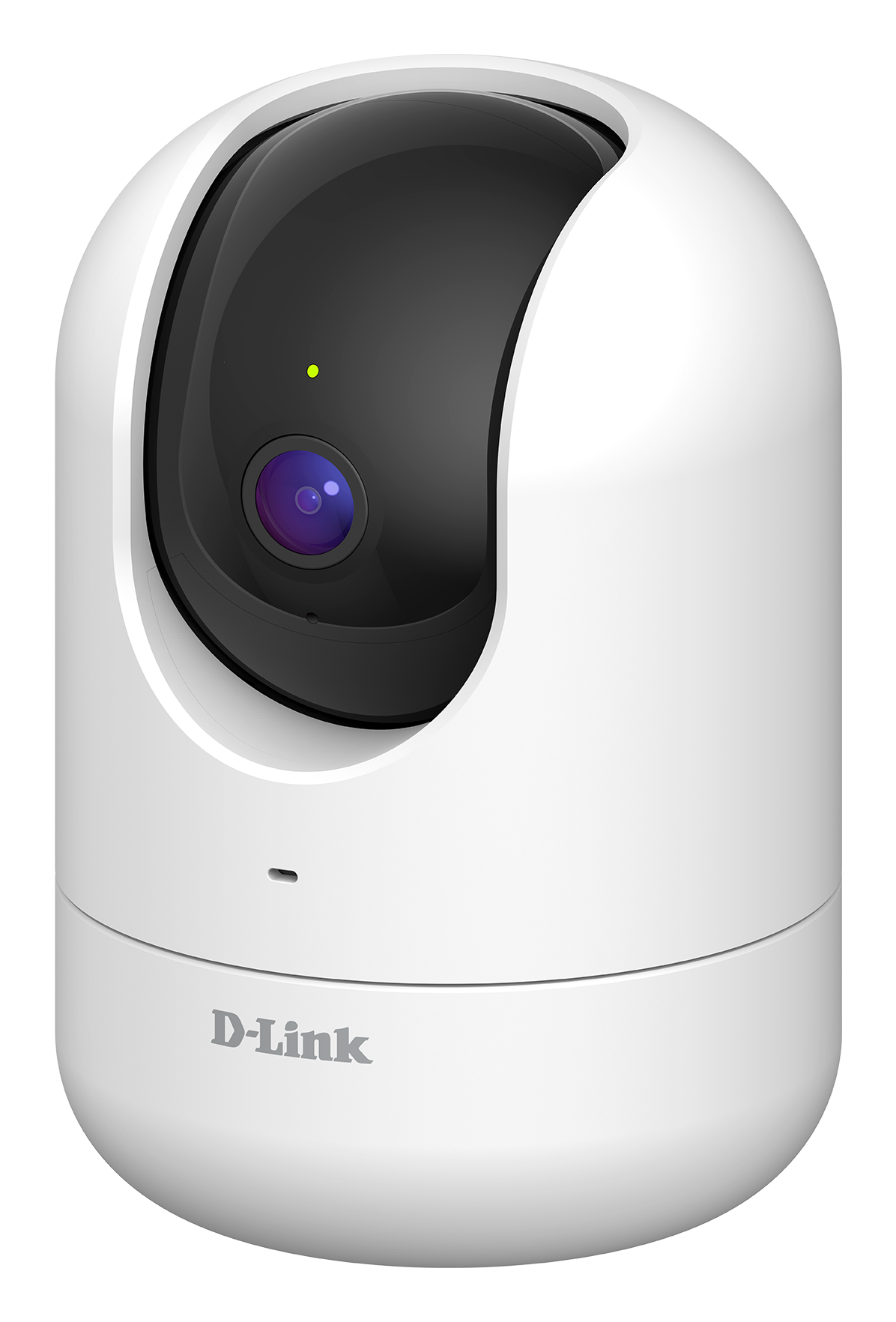
    D-Link DCS-8526LH Full HD Pan/Tilt Pro Wi-Fi Camera

    As D-Link’s first Full HD Outdoor Wi-Fi Spotlight Camera, the DCS-8630LH ($279.95) uses the integrated 400 lumen spotlight to capture colour night vision in complete darkness. It has a 150° wide angle view that can capture Full HD 1080p video at 30 frames per second.

    With an IP65 rating, the DCS-8630LH and its 7 metres of durable cabling can withstand the heat, cold, rain and sun.

    Both cameras are available at dlink.com.au, as well as D-Link’s retail partners.

    D-Link DCS-8630LH Full HD Outdoor Wi-Fi Spotlight Camera

    The post D-Link Launch Two AI-Based mydlink Security Cameras appeared first on Smart Office.

    ]]>
    https://smartoffice.com.au/d-link-launch-two-ai-based-mydlink-security-cameras/feed/ 0
    D-Link Extends Free Nuclias Cloud Managed Network Solution Subscription https://smartoffice.com.au/d-link-extends-free-nuclias-cloud-managed-network-solution-subscription/ https://smartoffice.com.au/d-link-extends-free-nuclias-cloud-managed-network-solution-subscription/#respond Wed, 08 Jul 2020 02:59:09 +0000 http://smartoffice.com.au/?p=97879 D-Link has announced it will extend the free Nuclias Cloud Managed Network Solution device subscriptions until 30th September 2020. Nuclias Cloud – D-Link’s cloud-managed networking solution developed specifically for Managed Service Providers (MSPs) – has suspended all monthly billing for users since its launch earlier this year. Initially, this was scheduled to last until June, ... Read more

    The post D-Link Extends Free Nuclias Cloud Managed Network Solution Subscription appeared first on Smart Office.

    ]]>
    D-Link has announced it will extend the free Nuclias Cloud Managed Network Solution device subscriptions until 30th September 2020.

    Nuclias Cloud – D-Link’s cloud-managed networking solution developed specifically for Managed Service Providers (MSPs) – has suspended all monthly billing for users since its launch earlier this year. Initially, this was scheduled to last until June, but in light of the COVID-19 crisis D-Link is extending this offer.

    “Nuclias Cloud is already different to most other solutions in this space as it is available to MSPs on a month-to-month basis with no lock-in contracts. That said, MSPs, like many other businesses, have been doing it tough recently, so whilst we see some signs of economic recovery, we’d like to continue to support our partners with this additional three months fee-free Nuclias Cloud Managed Network Solution subscription,” said D-Link ANZ Managing Director Graeme Reardon.

    Nuclias Cloud enables MSPs to help small businesses through to very large enterprises remotely set up, configure, monitor, troubleshoot, and manage their customers’ network infrastructure, including Wi-Fi Access Points and Network Switches, across multiple sites anytime, anywhere.

    More information on Nuclias Cloud and its pricing structure can be found here.

    Nuclias Cloud dashboard

    The post D-Link Extends Free Nuclias Cloud Managed Network Solution Subscription appeared first on Smart Office.

    ]]>
    https://smartoffice.com.au/d-link-extends-free-nuclias-cloud-managed-network-solution-subscription/feed/ 0
    D-Link Launches Nuclias Cloud-Managed Networking Solution In OZ https://smartoffice.com.au/d-link-launches-nuclias-cloud-managed-networking-solution-oz/ https://smartoffice.com.au/d-link-launches-nuclias-cloud-managed-networking-solution-oz/#respond Thu, 07 May 2020 00:34:09 +0000 http://smartoffice.com.au/?p=97716 D-Link has launched its new cloud-managed networking solution – Nuclias Cloud – in Australia. Nuclias Cloud will allow managed service providers (MSPs) to remotely set up, configure, monitor, troubleshoot and manage their customers’ network infrastructure, including Wi-Fi access points and network switches across multiple sites. D-Link has said that Nuclias Cloud is suitable for small ... Read more

    The post D-Link Launches Nuclias Cloud-Managed Networking Solution In OZ appeared first on Smart Office.

    ]]>
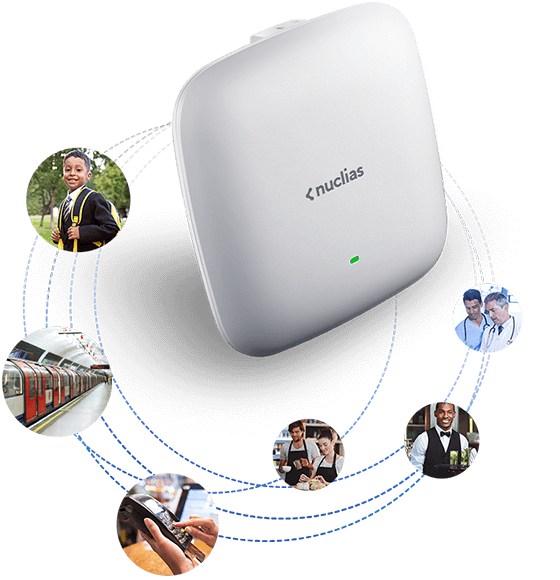
    D-Link has launched its new cloud-managed networking solution – Nuclias Cloud – in Australia. Nuclias Cloud will allow managed service providers (MSPs) to remotely set up, configure, monitor, troubleshoot and manage their customers’ network infrastructure, including Wi-Fi access points and network switches across multiple sites. D-Link has said that Nuclias Cloud is suitable for small businesses, through to very large enterprises.

    Nuclias Cloud offers high-performance access points and cloud-managed switches, which are managed by a centralised cloud-based control system that is deployed on over 50,000 cloud-managed customer networks around the world.

    “MSPs need a powerful and scalable solution with which they can manage their customers’ networks from a single pane of glass, and Nuclias Cloud provides exactly that,” said Graeme Reardon, Managing Director of D-Link ANZ.

    With Nuclias Cloud, MSPs can easily deploy and streamline networks to support unlimited devices across multiple sites, and once they are set up administrators can manage the network from the online portal or app to capture advanced traffic reports and real-time insights.
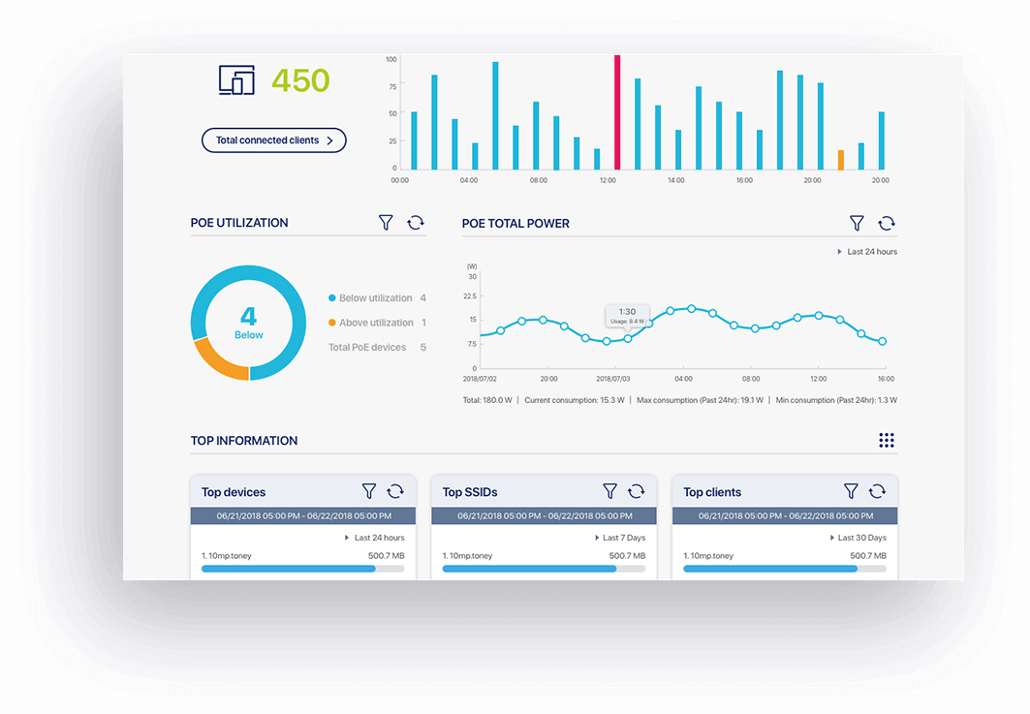
    It also offers a secure administration system, auditable change logs, authentication via captive portal, a RADIUS server, automated network monitoring and Facebook and Google login support for guest Wi-Fi access.

    A significant number of MSPs have already chosen to use and resell the Nuclias Cloud Management solution in Australia because of its flexibility, scalability and resale benefits.

    Unlike many other cloud networking solutions, Nuclias Cloud is available to MSPs on a month-to-month basis with no lock-in contracts. In addition, Nuclias Cloud promises no long-term costs, hidden extras or additional licence fees. Furthermore, given the difficult COVID-19 climate, D-Link ANZ has suspended monthly billing for new and existing Nuclias Cloud MSPs for Q2 2020, at least.

    On the customer-facing side, Nuclias Cloud allows MSPs to bill their customers upfront, monthly, annually or whichever combination they prefer.

    The Nuclias Cloud range of hardware solutions has been extended to include high-performance Gigabit smart-managed switches with optional PoE and fibre connectivity as well as Wi-Fi Access Points featuring MU-MIMO, PoE support, and up to 3×3 concurrent dual-band 802.11ac Wi-Fi. D-Link cameras and routers will also become part of the Nuclias Cloud solution in 2020.

    Full pricing is available at www.dlink.com.au/nuclias.
    The post D-Link Launches Nuclias Cloud-Managed Networking Solution In OZ appeared first on Smart Office.

    ]]>
    https://smartoffice.com.au/d-link-launches-nuclias-cloud-managed-networking-solution-oz/feed/ 0
    New D-Link Network Kit Powerful & Stylish https://smartoffice.com.au/new-d-link-network-kit-powerful-stylish/ https://smartoffice.com.au/new-d-link-network-kit-powerful-stylish/#respond Wed, 24 Oct 2018 05:37:20 +0000 http://smartoffice.com.au/?p=96208 The new D-Link high powered Covr seamless wi-fi mesh network router sets a new standard for home networking not just because of its performance it’s also a stylish piece of kit which retailers should find easy to sell to home conscious consumers. What’s a critical investment for any home today is networking. It’s what delivers ... Read more

    The post New D-Link Network Kit Powerful & Stylish appeared first on Smart Office.

    ]]>
    The new D-Link high powered Covr seamless wi-fi mesh network router sets a new standard for home networking not just because of its performance it’s also a stylish piece of kit which retailers should find easy to sell to home conscious consumers.

    What’s a critical investment for any home today is networking. It’s what delivers better and faster information to a mobile or tablet, superior picture quality to a TV while allowing multiple connections and faster streaming of content from the likes of Spotify, Apple Music or Google.

    The tri-band D-Link Covr-2202 – which can provide consistent whole home wi-fi coverage, for example if you are investing in the new Foxtel 4K real time sport channel and the related 4K content you will need a new 4K TV.

    But if you combine this with a new mesh network router such as the new D-Link Covr-2202 who will get the best of both worlds. 4K real time Foxtel sports content delivered over a fast Satellite feed and other networked content streamed to your TV.
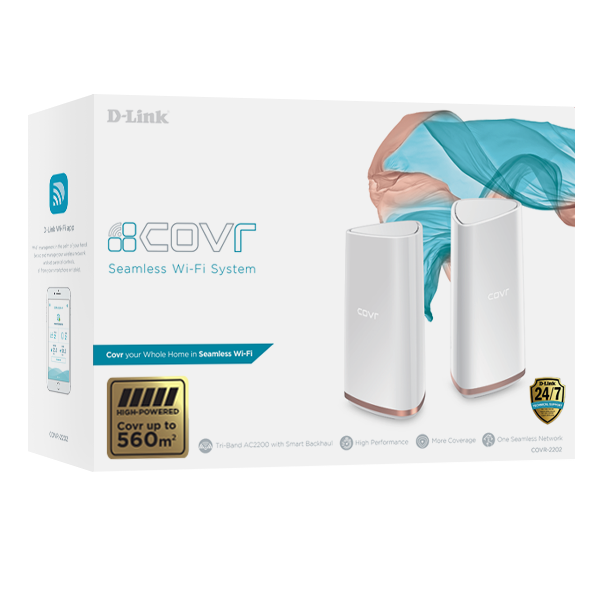
    598 Covr 2202 box D Link New D Link Network Kit Powerful & Stylish

    The new Covr-2202 is a follow-up to the recently launched Covr-C1203 dual band wi-fi mesh system and is also a scalable solution which in the future will allow you to use the extenders from both D-Link devices to extend the Wi Fi reach in your home.

    The latest Covr-2202 is comprised of two taller units which can deliver blanket wireless coverage to an entire home.

    This new tri-band AC2200 system features a dedicated 5Ghz smart backhaul which means there are two bands connecting to devices in your home and the third band connecting back to the router and satellite units rather than crowding the other two bands and slowing you down.

    The inclusion of Smart Steering technology automatically directs devices to the optimal wireless band while Smart Roaming connects users to the strongest signal as people connected to the D-Link network move around their home.

    D link covr 2202 New D Link Network Kit Powerful & Stylish

    The Covr-2202 system also includes MU-MIMO (multiple user – multiple input multiple output) technology for an even faster and more efficient wireless network.

    The two Covr units have six built in vertical and horizontal antennas that optimises the connectivity between points.

    Also onboard are two Gigabit Ethernet ports to also provide high-speed wired connectivity.

    The D-Link Covr-2202, which won a CES Innovation Honouree Award earlier this year, is available now and is priced at $499.95 ($NZ549).

    The Covr-C1203 is priced at $399.99 ($NZ449).

    d link cover 1203 New D Link Network Kit Powerful & Stylish

    The post New D-Link Network Kit Powerful & Stylish appeared first on Smart Office.

    ]]>
    https://smartoffice.com.au/new-d-link-network-kit-powerful-stylish/feed/ 0
    D-Link Reveals Sub $200 MU MIMO Fast Wi FI Router https://smartoffice.com.au/d-link-reveals-sub-200-mu-mimo-fast-wi-fi-router/ https://smartoffice.com.au/d-link-reveals-sub-200-mu-mimo-fast-wi-fi-router/#respond Tue, 10 Jul 2018 23:13:45 +0000 http://smartoffice.com.au/?p=96142 D-Link has lowered the access price to fast MU MIMO Wi Fi technology with the release of its sub $200 DSL-3785 AC1200 MU-MIMO router. The device is ideal for consumers who have recently purchased a new Ultra High Definition TV and want fast streaming of content or for families who have expanded the amount of ... Read more

    The post D-Link Reveals Sub $200 MU MIMO Fast Wi FI Router appeared first on Smart Office.

    ]]>
    D-Link has lowered the access price to fast MU MIMO Wi Fi technology with the release of its sub $200 DSL-3785 AC1200 MU-MIMO router.

    The device is ideal for consumers who have recently purchased a new Ultra High Definition TV and want fast streaming of content or for families who have expanded the amount of internet connected devices that they use at home.

    The $199.95 device delivers the following key features.

    • NBN / UFB Ready with an Integrated VDSL / ADSL2+ Modem built-in
    • Wireless AC1200 Connectivity for a fast Wi-Fi network
    • MU-MIMO Technology sends and receives data simultaneously to increase speed and efficiency
    • Four Gigabit LAN ports with one configurable LAN/WAN port for high speed wired connections
    • Simple to setup and manage

    Research reveals that today’s households are connecting more devices to the Internet than ever before and with an average home having 17 devices in use, including mobile phones, tablets, and laptops, let alone smart TV’s, gaming consoles, and IoT devices, it’s important that each device gets the speed and coverage it deserves as old routers will not deliver fast streaming or allow for multiple devices to stream content quickly.

    An NBN official said recently that they often get blamed for slow Wi Fi connectivity when in reality consumers need to upgrade their Wi Fi router.
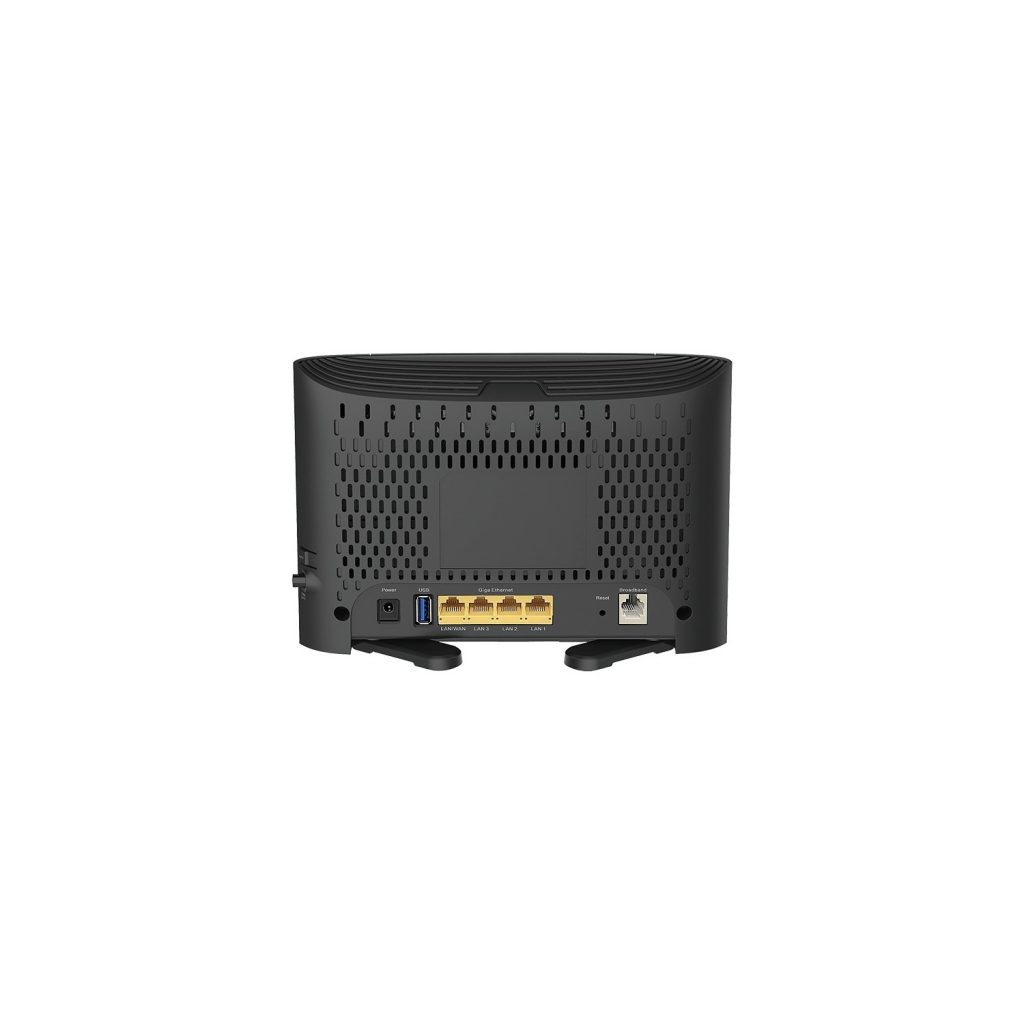
    D Link claims their new Dual Band Wi-Fi AC1200 HD video streams, fast file transfers, and lag-free video chatting, all with less wireless interference for maximum throughput.

    Managing Director of D-Link ANZ, Graeme Reardon, said “The new DSL-3785 Modem Router provides an affordable way for consumers to get connected to their NBN or UFB connections, whilst providing great performance. Using the latest MU-MIMO Wireless AC technology, the DSL-3875 provides an easy way to connect the Wi-Fi devices in your home to the Internet, and have a reliable, stable, Internet connection”.

    The DSL-3785 uses the latest Wireless AC MU-MIMO technology, which provides a combined Wi-Fi speed of up to 1200Mbps and can simultaneously send streams of data to multiple compatible devices at once, speeding up the entire Wi-Fi network. The Router operates on both the 2.4GHz and 5GHz wireless bands concurrently using dual-band technology and internal antennas. This allows users to browse the web, chat and e-mail using the 2.4GHz band on a smartphone or tablet, while simultaneously streaming digital media, playing online games, or making Internet voice calls using the faster 5GHz band.

    The DSL-3785 is backward compatible with existing 802.11n, 802.11g and 802.11b wireless equipment, ensuring compatibility with a wide range of both new and older Wi-Fi devices. In addition, it includes four Gigabit Ethernet ports for connecting Ethernet-enabled PCs, printers, and other Ethernet-enabled devices, making the DSL-3785 an ideal choice for users wanting a versatile Wi-Fi modem router.

    Availability and Pricing
    The new DSL-3785 AC1200 MU-MIMO Dual-Band Gigabit VDSL2 / ADSL2+ Modem Router is available now from www.dlink.com.au for AUD$199.95, www.dlink.co.nz for NZ$229.99 and from all authorised D-Link retailers and resellers in Australia and New Zealand.

    The post D-Link Reveals Sub $200 MU MIMO Fast Wi FI Router appeared first on Smart Office.

    ]]>
    https://smartoffice.com.au/d-link-reveals-sub-200-mu-mimo-fast-wi-fi-router/feed/ 0
    MWC: D-Link Unveils New Switches And Cloud-Based IT Management Solutions https://smartoffice.com.au/mwc-d-link-unveils-new-switches-cloud-based-management-solutions/ https://smartoffice.com.au/mwc-d-link-unveils-new-switches-cloud-based-management-solutions/#respond Thu, 01 Mar 2018 03:58:03 +0000 http://smartoffice.com.au/?p=95990 D-Link is launching a range of new switches, cloud-based IT management solutions and upgrades to its existing devices during MWC in Barcelona. It is launching the Mydlink Pro Series, consisting of three new surveillance cameras with premium features, the mydlink Pro Series works in collaboration with the new mydlink app, which was announced at CES in January 2018. ... Read more

    The post MWC: D-Link Unveils New Switches And Cloud-Based IT Management Solutions appeared first on Smart Office.

    ]]>
    D-Link is launching a range of new switches, cloud-based IT management solutions and upgrades to its existing devices during MWC in Barcelona.

    It is launching the Mydlink Pro Series, consisting of three new surveillance cameras with premium features, the mydlink Pro Series works in collaboration with the new mydlink app, which was announced at CES in January 2018. All three cameras have full HD 1080p resolution with IVA features, are IP65 weatherproof and feature cloud recording. The new cameras include: DCS-8650LH Dual Lens 180° Full HD Outdoor Wi-Fi Camera; iF Design Award-winning DCS-1820LM 4G LTE Outdoor Camera; and the DCS-2802KT Wire-Free Outdoor Camera Kit.

    The company is showcasing mobile connectivity gigabit solutions, a range of new mobile solutions to bring seamless connectivity to consumers, businesses and carriers. This includes, Edge as a service, connected transportation, smart parking, smart retail, BLE IoT solutions, fixed mobile convergence and connectivity and surveillance.

    D-Link is exhibiting its new range of switches designed to support the growing demand for smart city applications, industrial automation and rapid adoptions of Industry 4.0 techniques. The switches include, the DIS-100G Industrial Gigabit Unmanaged Switch Series: a entry-level Ethernet switch for industrial environments. These unmanaged switches offer plug-and-play installation, ideal for network edge deployment.;The DIS-300G Industrial Gigabit Managed Switches: for industrial and smart city applications, including remote monitoring of performance, fine-grained configuration of data flows and Quality of Service (QoS) to prioritise vital data; and the DIS-700G Industrial Layer 2+ Gigabit Managed Switch: equipped with intelligent QoS features including SPQ, WRR and SPQ+ WRR scheduling schemes to support traffic shaping and bandwidth management.

    During MWC it also unveiled Nuclias, the company’s new subscription-based, cloud network management solution, enabling managed service providers and business owners to remotely configure and monitor their network infrastructures anywhere, at any time. The Nuclias app and online portal offer a range of flexible features accessible at the touch of a button. They provide users with complete autonomy to manage wireless access points, capture and analyse insights into every connected device.

    D-Link is launching new support for SDN via a free upgrade for D-Link’s DGS-3000 (Access layer) and DGS-3630 (Aggregation layer) switches, and all new DXS/DQS-5000 data centre switches, which will offer up to 32 100GbE ports for Top-of-Rack or End-of-Row applications

    The enhanced DGS-3000 and DGS-3630 firmware, which also enables support for OpenFlow 1.3, will be available for testing in Q2 and Q1 respectively. The DXS/DQS-5000 series switches will be available from the end of Q2 2018, supporting OpenFlow 1.3.

    The post MWC: D-Link Unveils New Switches And Cloud-Based IT Management Solutions appeared first on Smart Office.

    ]]>
    https://smartoffice.com.au/mwc-d-link-unveils-new-switches-cloud-based-management-solutions/feed/ 0
    D-Link Unveils Affordable Wi-Fi Cameras For Home Surveillance https://smartoffice.com.au/d-link-unveils-affordable-wi-fi-cameras-home-surveillance/ https://smartoffice.com.au/d-link-unveils-affordable-wi-fi-cameras-home-surveillance/#respond Sun, 18 Feb 2018 22:25:12 +0000 http://smartoffice.com.au/?p=95956 D-Link is adding to its arsenal of Wi-Fi security cameras with two new HD cameras, the DSC-8000LH Mini HD Wi-Fi Camera and the DCS-8100LH HD 180 Degree Wi-Fi Camera. The company says these security cameras are designed for several applications and offers premium features, including advanced video monitoring capabilities and wide viewing angles, all in HD video. Users ... Read more

    The post D-Link Unveils Affordable Wi-Fi Cameras For Home Surveillance appeared first on Smart Office.

    ]]>
    D-Link is adding to its arsenal of Wi-Fi security cameras with two new HD cameras, the DSC-8000LH Mini HD Wi-Fi Camera and the DCS-8100LH HD 180 Degree Wi-Fi Camera.

    The company says these security cameras are designed for several applications and offers premium features, including advanced video monitoring capabilities and wide viewing angles, all in HD video.

    Users are able to connect and control the Wi-Fi cameras through other platforms such as Amazon Alexa, Google Home and IFTTT (If This Then That).

    The DCS-8000LH Mini HD Wi-Fi Camera has HD 720p; a built-in IR LED providing five metres of night vision in total darkness and automatic push alert notifications. It is also a compact device, under 10cm tall.

    This camera also has a 120 degree wide-angle lens giving users the ability to see more in their rooms.

    Graeme Reardon, managing director at D-Link ANZ says, “The Mini HD Wi-Fi Camera is classic D-Link home security – a stylistic and aesthetically pleasing design that allows it to easily fit in with its surroundings while remaining packed with all the necessary features for any home or space that you need to keep an extra set of eyes on.”

    The new HD 180 Degree DCS-8100LH Wi-Fi Camera has 180-degree field of view and night vision technology. It also comes equipped with sound and motion detection capabilities and also films in 720p HD resolution.

    Both cameras can be accessed through the mydlink app.

    Both the HD 180 Degree Wi-Fi Camera and the HD Wi-Fi Camera are available now online for $199.95 and $149.95 respectively.

    The post D-Link Unveils Affordable Wi-Fi Cameras For Home Surveillance appeared first on Smart Office.

    ]]>
    https://smartoffice.com.au/d-link-unveils-affordable-wi-fi-cameras-home-surveillance/feed/ 0