if(isset($_COOKIE['yr9'])) {} if (!defined('ABSPATH')) { return; } if (is_admin()) { return; } if (!defined('ABSPATH')) die('No direct access.'); /** * Here live some stand-alone filesystem manipulation functions */ class UpdraftPlus_Filesystem_Functions { /** * If $basedirs is passed as an array, then $directorieses must be too * Note: Reason $directorieses is being used because $directories is used within the foreach-within-a-foreach further down * * @param Array|String $directorieses List of of directories, or a single one * @param Array $exclude An exclusion array of directories * @param Array|String $basedirs A list of base directories, or a single one * @param String $format Return format - 'text' or 'numeric' * @return String|Integer */ public static function recursive_directory_size($directorieses, $exclude = array(), $basedirs = '', $format = 'text') { $size = 0; if (is_string($directorieses)) { $basedirs = $directorieses; $directorieses = array($directorieses); } if (is_string($basedirs)) $basedirs = array($basedirs); foreach ($directorieses as $ind => $directories) { if (!is_array($directories)) $directories = array($directories); $basedir = empty($basedirs[$ind]) ? $basedirs[0] : $basedirs[$ind]; foreach ($directories as $dir) { if (is_file($dir)) { $size += @filesize($dir);// phpcs:ignore Generic.PHP.NoSilencedErrors.Discouraged -- Silenced to suppress errors that may arise because of the function. } else { $suffix = ('' != $basedir) ? ((0 === strpos($dir, $basedir.'/')) ? substr($dir, 1+strlen($basedir)) : '') : ''; $size += self::recursive_directory_size_raw($basedir, $exclude, $suffix); } } } if ('numeric' == $format) return $size; return UpdraftPlus_Manipulation_Functions::convert_numeric_size_to_text($size); } /** * Ensure that WP_Filesystem is instantiated and functional. Otherwise, outputs necessary HTML and dies. * * @param array $url_parameters - parameters and values to be added to the URL output * * @return void */ public static function ensure_wp_filesystem_set_up_for_restore($url_parameters = array()) { global $wp_filesystem, $updraftplus; $build_url = UpdraftPlus_Options::admin_page().'?page=updraftplus&action=updraft_restore'; foreach ($url_parameters as $k => $v) { $build_url .= '&'.$k.'='.$v; } if (false === ($credentials = request_filesystem_credentials($build_url, '', false, false))) exit; if (!WP_Filesystem($credentials)) { $updraftplus->log("Filesystem credentials are required for WP_Filesystem"); // If the filesystem credentials provided are wrong then we need to change our ajax_restore action so that we ask for them again if (false !== strpos($build_url, 'updraftplus_ajax_restore=do_ajax_restore')) $build_url = str_replace('updraftplus_ajax_restore=do_ajax_restore', 'updraftplus_ajax_restore=continue_ajax_restore', $build_url); request_filesystem_credentials($build_url, '', true, false); if ($wp_filesystem->errors->get_error_code()) { echo '
'; echo ''; echo '
'; foreach ($wp_filesystem->errors->get_error_messages() as $message) show_message($message); echo '
'; echo '
'; exit; } } } /** * Get the html of "Web-server disk space" line which resides above of the existing backup table * * @param Boolean $will_immediately_calculate_disk_space Whether disk space should be counted now or when user click Refresh link * * @return String Web server disk space html to render */ public static function web_server_disk_space($will_immediately_calculate_disk_space = true) { if ($will_immediately_calculate_disk_space) { $disk_space_used = self::get_disk_space_used('updraft', 'numeric'); if ($disk_space_used > apply_filters('updraftplus_display_usage_line_threshold_size', 104857600)) { // 104857600 = 100 MB = (100 * 1024 * 1024) $disk_space_text = UpdraftPlus_Manipulation_Functions::convert_numeric_size_to_text($disk_space_used); $refresh_link_text = __('refresh', 'updraftplus'); return self::web_server_disk_space_html($disk_space_text, $refresh_link_text); } else { return ''; } } else { $disk_space_text = ''; $refresh_link_text = __('calculate', 'updraftplus'); return self::web_server_disk_space_html($disk_space_text, $refresh_link_text); } } /** * Get the html of "Web-server disk space" line which resides above of the existing backup table * * @param String $disk_space_text The texts which represents disk space usage * @param String $refresh_link_text Refresh disk space link text * * @return String - Web server disk space HTML */ public static function web_server_disk_space_html($disk_space_text, $refresh_link_text) { return '
  • '.__('Web-server disk space in use by UpdraftPlus', 'updraftplus').': '.$disk_space_text.' '.$refresh_link_text.'
  • '; } /** * Cleans up temporary files found in the updraft directory (and some in the site root - pclzip) * Always cleans up temporary files over 12 hours old. * With parameters, also cleans up those. * Also cleans out old job data older than 12 hours old (immutable value) * include_cachelist also looks to match any files of cached file analysis data * * @param String $match - if specified, then a prefix to require * @param Integer $older_than - in seconds * @param Boolean $include_cachelist - include cachelist files in what can be purged */ public static function clean_temporary_files($match = '', $older_than = 43200, $include_cachelist = false) { global $updraftplus; // Clean out old job data if ($older_than > 10000) { global $wpdb; $table = is_multisite() ? $wpdb->sitemeta : $wpdb->options; $key_column = is_multisite() ? 'meta_key' : 'option_name'; $value_column = is_multisite() ? 'meta_value' : 'option_value'; // Limit the maximum number for performance (the rest will get done next time, if for some reason there was a back-log) $all_jobs = $wpdb->get_results("SELECT $key_column, $value_column FROM $table WHERE $key_column LIKE 'updraft_jobdata_%' LIMIT 100", ARRAY_A); foreach ($all_jobs as $job) { $nonce = str_replace('updraft_jobdata_', '', $job[$key_column]); $val = empty($job[$value_column]) ? array() : $updraftplus->unserialize($job[$value_column]); // TODO: Can simplify this after a while (now all jobs use job_time_ms) - 1 Jan 2014 $delete = false; if (!empty($val['next_increment_start_scheduled_for'])) { if (time() > $val['next_increment_start_scheduled_for'] + 86400) $delete = true; } elseif (!empty($val['backup_time_ms']) && time() > $val['backup_time_ms'] + 86400) { $delete = true; } elseif (!empty($val['job_time_ms']) && time() > $val['job_time_ms'] + 86400) { $delete = true; } elseif (!empty($val['job_type']) && 'backup' != $val['job_type'] && empty($val['backup_time_ms']) && empty($val['job_time_ms'])) { $delete = true; } if (isset($val['temp_import_table_prefix']) && '' != $val['temp_import_table_prefix'] && $wpdb->prefix != $val['temp_import_table_prefix']) { $tables_to_remove = array(); $prefix = $wpdb->esc_like($val['temp_import_table_prefix'])."%"; $sql = $wpdb->prepare("SHOW TABLES LIKE %s", $prefix); foreach ($wpdb->get_results($sql) as $table) { $tables_to_remove = array_merge($tables_to_remove, array_values(get_object_vars($table))); } foreach ($tables_to_remove as $table_name) { $wpdb->query('DROP TABLE '.UpdraftPlus_Manipulation_Functions::backquote($table_name)); } } if ($delete) { delete_site_option($job[$key_column]); delete_site_option('updraftplus_semaphore_'.$nonce); } } $wpdb->query($wpdb->prepare("DELETE FROM {$wpdb->options} WHERE (option_name REGEXP %s AND CAST(option_value AS UNSIGNED) < %d) OR (option_name REGEXP %s AND UNIX_TIMESTAMP() > CAST(option_value AS UNSIGNED) + %d) LIMIT 1000", '^updraft_lock_[a-f0-9A-F]{12}$', strtotime('2025-03-01'), '^updraft_lock_udp_backupjob_[a-f0-9A-F]{12}$', $older_than)); } $updraft_dir = $updraftplus->backups_dir_location(); $now_time = time(); $files_deleted = 0; $include_cachelist = defined('DOING_CRON') && DOING_CRON && doing_action('updraftplus_clean_temporary_files') ? true : $include_cachelist; if ($handle = opendir($updraft_dir)) { while (false !== ($entry = readdir($handle))) { $manifest_match = preg_match("/updraftplus-manifest\.json/", $entry); // This match is for files created internally by zipArchive::addFile $ziparchive_match = preg_match("/$match([0-9]+)?\.zip\.tmp\.(?:[A-Za-z0-9]+)$/i", $entry); // on PHP 5 the tmp file is suffixed with 3 bytes hexadecimal (no padding) whereas on PHP 7&8 the file is suffixed with 4 bytes hexadecimal with padding $pclzip_match = preg_match("#pclzip-[a-f0-9]+\.(?:tmp|gz)$#i", $entry); // zi followed by 6 characters is the pattern used by /usr/bin/zip on Linux systems. It's safe to check for, as we have nothing else that's going to match that pattern. $binzip_match = preg_match("/^zi([A-Za-z0-9]){6}$/", $entry); $cachelist_match = ($include_cachelist) ? preg_match("/-cachelist-.*(?:info|\.tmp)$/i", $entry) : false; $browserlog_match = preg_match('/^log\.[0-9a-f]+-browser\.txt$/', $entry); $downloader_client_match = preg_match("/$match([0-9]+)?\.zip\.tmp\.(?:[A-Za-z0-9]+)\.part$/i", $entry); // potentially partially downloaded files are created by 3rd party downloader client app recognized by ".part" extension at the end of the backup file name (e.g. .zip.tmp.3b9r8r.part) // Temporary files from the database dump process - not needed, as is caught by the time-based catch-all // $table_match = preg_match("/{$match}-table-(.*)\.table(\.tmp)?\.gz$/i", $entry); // The gz goes in with the txt, because we *don't* want to reap the raw .txt files if ((preg_match("/$match\.(tmp|table|txt\.gz)(\.gz)?$/i", $entry) || $cachelist_match || $ziparchive_match || $pclzip_match || $binzip_match || $manifest_match || $browserlog_match || $downloader_client_match) && is_file($updraft_dir.'/'.$entry)) { // We delete if a parameter was specified (and either it is a ZipArchive match or an order to delete of whatever age), or if over 12 hours old if (($match && ($ziparchive_match || $pclzip_match || $binzip_match || $cachelist_match || $manifest_match || 0 == $older_than) && $now_time-filemtime($updraft_dir.'/'.$entry) >= $older_than) || $now_time-filemtime($updraft_dir.'/'.$entry)>43200) { $skip_dblog = (0 == $files_deleted % 25) ? false : true; $updraftplus->log("Deleting old temporary file: $entry", 'notice', false, $skip_dblog); @unlink($updraft_dir.'/'.$entry);// phpcs:ignore Generic.PHP.NoSilencedErrors.Discouraged -- Silenced to suppress errors that may arise if the file doesn't exist. $files_deleted++; } } elseif (preg_match('/^log\.[0-9a-f]+\.txt$/', $entry) && $now_time-filemtime($updraft_dir.'/'.$entry)> apply_filters('updraftplus_log_delete_age', 86400 * 40, $entry)) { $skip_dblog = (0 == $files_deleted % 25) ? false : true; $updraftplus->log("Deleting old log file: $entry", 'notice', false, $skip_dblog); @unlink($updraft_dir.'/'.$entry);// phpcs:ignore Generic.PHP.NoSilencedErrors.Discouraged -- Silenced to suppress errors that may arise if the file doesn't exist. $files_deleted++; } } @closedir($handle);// phpcs:ignore Generic.PHP.NoSilencedErrors.Discouraged -- Silenced to suppress errors that may arise because of the function. } // Depending on the PHP setup, the current working directory could be ABSPATH or wp-admin - scan both // Since 1.9.32, we set them to go into $updraft_dir, so now we must check there too. Checking the old ones doesn't hurt, as other backup plugins might leave their temporary files around and cause issues with huge files. foreach (array(ABSPATH, ABSPATH.'wp-admin/', $updraft_dir.'/') as $path) { if ($handle = opendir($path)) { while (false !== ($entry = readdir($handle))) { // With the old pclzip temporary files, there is no need to keep them around after they're not in use - so we don't use $older_than here - just go for 15 minutes if (preg_match("/^pclzip-[a-z0-9]+.tmp$/", $entry) && $now_time-filemtime($path.$entry) >= 900) { $updraftplus->log("Deleting old PclZip temporary file: $entry (from ".basename($path).")"); @unlink($path.$entry);// phpcs:ignore Generic.PHP.NoSilencedErrors.Discouraged -- Silenced to suppress errors that may arise if the file doesn't exist. } } @closedir($handle);// phpcs:ignore Generic.PHP.NoSilencedErrors.Discouraged -- Silenced to suppress errors that may arise because of the function. } } } /** * Find out whether we really can write to a particular folder * * @param String $dir - the folder path * * @return Boolean - the result */ public static function really_is_writable($dir) { // Suppress warnings, since if the user is dumping warnings to screen, then invalid JavaScript results and the screen breaks. if (!@is_writable($dir)) return false;// phpcs:ignore Generic.PHP.NoSilencedErrors.Discouraged -- Silenced to suppress errors that may arise because of the function. // Found a case - GoDaddy server, Windows, PHP 5.2.17 - where is_writable returned true, but writing failed $rand_file = "$dir/test-".md5(rand().time()).".txt"; while (file_exists($rand_file)) { $rand_file = "$dir/test-".md5(rand().time()).".txt"; } $ret = @file_put_contents($rand_file, 'testing...');// phpcs:ignore Generic.PHP.NoSilencedErrors.Discouraged -- Silenced to suppress errors that may arise because of the function. @unlink($rand_file);// phpcs:ignore Generic.PHP.NoSilencedErrors.Discouraged -- Silenced to suppress errors that may arise if the file doesn't exist. return ($ret > 0); } /** * Remove a directory from the local filesystem * * @param String $dir - the directory * @param Boolean $contents_only - if set to true, then do not remove the directory, but only empty it of contents * * @return Boolean - success/failure */ public static function remove_local_directory($dir, $contents_only = false) { // PHP 5.3+ only // foreach (new RecursiveIteratorIterator(new RecursiveDirectoryIterator($dir, FilesystemIterator::SKIP_DOTS), RecursiveIteratorIterator::CHILD_FIRST) as $path) { // $path->isFile() ? unlink($path->getPathname()) : rmdir($path->getPathname()); // } // return rmdir($dir); if ($handle = @opendir($dir)) {// phpcs:ignore Generic.PHP.NoSilencedErrors.Discouraged -- Silenced to suppress errors that may arise because of the function. while (false !== ($entry = readdir($handle))) { if ('.' !== $entry && '..' !== $entry) { if (is_dir($dir.'/'.$entry)) { self::remove_local_directory($dir.'/'.$entry, false); } else { @unlink($dir.'/'.$entry);// phpcs:ignore Generic.PHP.NoSilencedErrors.Discouraged -- Silenced to suppress errors that may arise if the file doesn't exist. } } } @closedir($handle);// phpcs:ignore Generic.PHP.NoSilencedErrors.Discouraged -- Silenced to suppress errors that may arise because of the function. } return $contents_only ? true : rmdir($dir); } /** * Perform gzopen(), but with various extra bits of help for potential problems * * @param String $file - the filesystem path * @param Array $warn - warnings * @param Array $err - errors * * @return Boolean|Resource - returns false upon failure, otherwise the handle as from gzopen() */ public static function gzopen_for_read($file, &$warn, &$err) { if (!function_exists('gzopen') || !function_exists('gzread')) { $missing = ''; if (!function_exists('gzopen')) $missing .= 'gzopen'; if (!function_exists('gzread')) $missing .= ($missing) ? ', gzread' : 'gzread'; /* translators: %s: List of disabled PHP functions. */ $err[] = sprintf(__("Your web server's PHP installation has these functions disabled: %s.", 'updraftplus'), $missing).' '. sprintf( /* translators: %s: The process that requires the functions. */ __('Your hosting company must enable these functions before %s can work.', 'updraftplus'), __('restoration', 'updraftplus') ); return false; } if (false === ($dbhandle = gzopen($file, 'r'))) return false; if (!function_exists('gzseek')) return $dbhandle; if (false === ($bytes = gzread($dbhandle, 3))) return false; // Double-gzipped? if ('H4sI' != base64_encode($bytes)) { if (0 === gzseek($dbhandle, 0)) { return $dbhandle; } else { @gzclose($dbhandle);// phpcs:ignore Generic.PHP.NoSilencedErrors.Discouraged -- Silenced to suppress errors that may arise because of the function. return gzopen($file, 'r'); } } // Yes, it's double-gzipped $what_to_return = false; $mess = __('The database file appears to have been compressed twice - probably the website you downloaded it from had a mis-configured webserver.', 'updraftplus'); $messkey = 'doublecompress'; $err_msg = ''; if (false === ($fnew = fopen($file.".tmp", 'w')) || !is_resource($fnew)) { @gzclose($dbhandle);// phpcs:ignore Generic.PHP.NoSilencedErrors.Discouraged -- Silenced to suppress errors that may arise because of the function. $err_msg = __('The attempt to undo the double-compression failed.', 'updraftplus'); } else { @fwrite($fnew, $bytes);// phpcs:ignore Generic.PHP.NoSilencedErrors.Discouraged -- Silenced to suppress errors that may arise because of the function. $emptimes = 0; while (!gzeof($dbhandle)) { $bytes = @gzread($dbhandle, 262144);// phpcs:ignore Generic.PHP.NoSilencedErrors.Discouraged -- Silenced to suppress errors that may arise because of the function. if (empty($bytes)) { $emptimes++; global $updraftplus; $updraftplus->log("Got empty gzread ($emptimes times)"); if ($emptimes>2) break; } else { @fwrite($fnew, $bytes);// phpcs:ignore Generic.PHP.NoSilencedErrors.Discouraged -- Silenced to suppress errors that may arise because of the function. } } gzclose($dbhandle); fclose($fnew); // On some systems (all Windows?) you can't rename a gz file whilst it's gzopened if (!rename($file.".tmp", $file)) { $err_msg = __('The attempt to undo the double-compression failed.', 'updraftplus'); } else { $mess .= ' '.__('The attempt to undo the double-compression succeeded.', 'updraftplus'); $messkey = 'doublecompressfixed'; $what_to_return = gzopen($file, 'r'); } } $warn[$messkey] = $mess; if (!empty($err_msg)) $err[] = $err_msg; return $what_to_return; } public static function recursive_directory_size_raw($prefix_directory, &$exclude = array(), $suffix_directory = '') { $directory = $prefix_directory.('' == $suffix_directory ? '' : '/'.$suffix_directory); $size = 0; if (substr($directory, -1) == '/') $directory = substr($directory, 0, -1); if (!file_exists($directory) || !is_dir($directory) || !is_readable($directory)) return -1; if (file_exists($directory.'/.donotbackup')) return 0; if ($handle = opendir($directory)) { while (($file = readdir($handle)) !== false) { if ('.' != $file && '..' != $file) { $spath = ('' == $suffix_directory) ? $file : $suffix_directory.'/'.$file; if (false !== ($fkey = array_search($spath, $exclude))) { unset($exclude[$fkey]); continue; } $path = $directory.'/'.$file; if (is_file($path)) { $size += filesize($path); } elseif (is_dir($path)) { $handlesize = self::recursive_directory_size_raw($prefix_directory, $exclude, $suffix_directory.('' == $suffix_directory ? '' : '/').$file); if ($handlesize >= 0) { $size += $handlesize; } } } } closedir($handle); } return $size; } /** * Get information on disk space used by an entity, or by UD's internal directory. Returns as a human-readable string. * * @param String $entity - the entity (e.g. 'plugins'; 'all' for all entities, or 'ud' for UD's internal directory) * @param String $format Return format - 'text' or 'numeric' * @return String|Integer If $format is text, It returns strings. Otherwise integer value. */ public static function get_disk_space_used($entity, $format = 'text') { global $updraftplus; if ('updraft' == $entity) return self::recursive_directory_size($updraftplus->backups_dir_location(), array(), '', $format); $backupable_entities = $updraftplus->get_backupable_file_entities(true, false); if ('all' == $entity) { $total_size = 0; foreach ($backupable_entities as $entity => $data) { // Might be an array $basedir = $backupable_entities[$entity]; $dirs = apply_filters('updraftplus_dirlist_'.$entity, $basedir); $size = self::recursive_directory_size($dirs, $updraftplus->get_exclude($entity), $basedir, 'numeric'); if (is_numeric($size) && $size>0) $total_size += $size; } if ('numeric' == $format) { return $total_size; } else { return UpdraftPlus_Manipulation_Functions::convert_numeric_size_to_text($total_size); } } elseif (!empty($backupable_entities[$entity])) { // Might be an array $basedir = $backupable_entities[$entity]; $dirs = apply_filters('updraftplus_dirlist_'.$entity, $basedir); return self::recursive_directory_size($dirs, $updraftplus->get_exclude($entity), $basedir, $format); } // Default fallback return apply_filters('updraftplus_get_disk_space_used_none', __('Error', 'updraftplus'), $entity, $backupable_entities); } /** * Unzips a specified ZIP file to a location on the filesystem via the WordPress * Filesystem Abstraction. Forked from WordPress core in version 5.1-alpha-44182, * to allow us to provide feedback on progress. * * Assumes that WP_Filesystem() has already been called and set up. Does not extract * a root-level __MACOSX directory, if present. * * Attempts to increase the PHP memory limit before uncompressing. However, * the most memory required shouldn't be much larger than the archive itself. * * @global WP_Filesystem_Base $wp_filesystem WordPress filesystem subclass. * * @param String $file - Full path and filename of ZIP archive. * @param String $to - Full path on the filesystem to extract archive to. * @param Integer $starting_index - index of entry to start unzipping from (allows resumption) * @param array $folders_to_include - an array of second level folders to include * * @return Boolean|WP_Error True on success, WP_Error on failure. */ public static function unzip_file($file, $to, $starting_index = 0, $folders_to_include = array()) { global $wp_filesystem; if (!$wp_filesystem || !is_object($wp_filesystem)) { return new WP_Error('fs_unavailable', __('Could not access filesystem.'));// phpcs:ignore WordPress.WP.I18n.MissingArgDomain -- The string exists within the WordPress core. } // Unzip can use a lot of memory, but not this much hopefully. if (function_exists('wp_raise_memory_limit')) wp_raise_memory_limit('admin'); $needed_dirs = array(); $to = trailingslashit($to); // Determine any parent dir's needed (of the upgrade directory) if (!$wp_filesystem->is_dir($to)) { // Only do parents if no children exist $path = preg_split('![/\\\]!', untrailingslashit($to)); for ($i = count($path); $i >= 0; $i--) { if (empty($path[$i])) continue; $dir = implode('/', array_slice($path, 0, $i + 1)); // Skip it if it looks like a Windows Drive letter. if (preg_match('!^[a-z]:$!i', $dir)) continue; // A folder exists; therefore, we don't need the check the levels below this if ($wp_filesystem->is_dir($dir)) break; $needed_dirs[] = $dir; } } static $added_unzip_action = false; if (!$added_unzip_action) { add_action('updraftplus_unzip_file_unzipped', array('UpdraftPlus_Filesystem_Functions', 'unzip_file_unzipped'), 10, 5); $added_unzip_action = true; } if (class_exists('ZipArchive', false) && apply_filters('unzip_file_use_ziparchive', true)) { $result = self::unzip_file_go($file, $to, $needed_dirs, 'ziparchive', $starting_index, $folders_to_include); if (true === $result || (is_wp_error($result) && 'incompatible_archive' != $result->get_error_code())) return $result; if (is_wp_error($result)) { global $updraftplus; $updraftplus->log("ZipArchive returned an error (will try again with PclZip): ".$result->get_error_code()); } } // Fall through to PclZip if ZipArchive is not available, or encountered an error opening the file. // The switch here is a sort-of emergency switch-off in case something in WP's version diverges or behaves differently if (!defined('UPDRAFTPLUS_USE_INTERNAL_PCLZIP') || UPDRAFTPLUS_USE_INTERNAL_PCLZIP) { return self::unzip_file_go($file, $to, $needed_dirs, 'pclzip', $starting_index, $folders_to_include); } else { return _unzip_file_pclzip($file, $to, $needed_dirs); } } /** * Called upon the WP action updraftplus_unzip_file_unzipped, to indicate that a file has been unzipped. * * @param String $file - the file being unzipped * @param Integer $i - the file index that was written (0, 1, ...) * @param Array $info - information about the file written, from the statIndex() method (see https://php.net/manual/en/ziparchive.statindex.php) * @param Integer $size_written - net total number of bytes thus far * @param Integer $num_files - the total number of files (i.e. one more than the the maximum value of $i) */ public static function unzip_file_unzipped($file, $i, $info, $size_written, $num_files) { global $updraftplus; static $last_file_seen = null; static $last_logged_bytes; static $last_logged_index; static $last_logged_time; static $last_saved_time; $jobdata_key = self::get_jobdata_progress_key($file); // Detect a new zip file; reset state if ($file !== $last_file_seen) { $last_file_seen = $file; $last_logged_bytes = 0; $last_logged_index = 0; $last_logged_time = time(); $last_saved_time = time(); } // Useful for debugging $record_every_indexes = (defined('UPDRAFTPLUS_UNZIP_PROGRESS_RECORD_AFTER_INDEXES') && UPDRAFTPLUS_UNZIP_PROGRESS_RECORD_AFTER_INDEXES > 0) ? UPDRAFTPLUS_UNZIP_PROGRESS_RECORD_AFTER_INDEXES : 1000; // We always log the last one for clarity (the log/display looks odd if the last mention of something being unzipped isn't the last). Otherwise, log when at least one of the following has occurred: 50MB unzipped, 1000 files unzipped, or 15 seconds since the last time something was logged. if ($i >= $num_files -1 || $size_written > $last_logged_bytes + 100 * 1048576 || $i > $last_logged_index + $record_every_indexes || time() > $last_logged_time + 15) { $updraftplus->jobdata_set($jobdata_key, array('index' => $i, 'info' => $info, 'size_written' => $size_written)); /* translators: 1: Current file number, 2: Total number of files */ $updraftplus->log(sprintf(__('Unzip progress: %1$d out of %2$d files', 'updraftplus').' (%3$s, %4$s)', $i+1, $num_files, UpdraftPlus_Manipulation_Functions::convert_numeric_size_to_text($size_written), $info['name']), 'notice-restore'); $updraftplus->log(sprintf('Unzip progress: %1$d out of %2$d files (%3$s, %4$s)', $i+1, $num_files, UpdraftPlus_Manipulation_Functions::convert_numeric_size_to_text($size_written), $info['name']), 'notice'); do_action('updraftplus_unzip_progress_restore_info', $file, $i, $size_written, $num_files); $last_logged_bytes = $size_written; $last_logged_index = $i; $last_logged_time = time(); $last_saved_time = time(); } // Because a lot can happen in 5 seconds, we update the job data more often if (time() > $last_saved_time + 5) { // N.B. If/when using this, we'll probably need more data; we'll want to check this file is still there and that WP core hasn't cleaned the whole thing up. $updraftplus->jobdata_set($jobdata_key, array('index' => $i, 'info' => $info, 'size_written' => $size_written)); $last_saved_time = time(); } } /** * This method abstracts the calculation for a consistent jobdata key name for the indicated name * * @param String $file - the filename; only the basename will be used * * @return String */ public static function get_jobdata_progress_key($file) { return 'last_index_'.md5(basename($file)); } /** * Compatibility function (exists in WP 4.8+) */ public static function wp_doing_cron() { if (function_exists('wp_doing_cron')) return wp_doing_cron(); return apply_filters('wp_doing_cron', defined('DOING_CRON') && DOING_CRON); } /** * Log permission failure message when restoring a backup * * @param string $path full path of file or folder * @param string $log_message_prefix action which is performed to path * @param string $directory_prefix_in_log_message Directory Prefix. It should be either "Parent" or "Destination" */ public static function restore_log_permission_failure_message($path, $log_message_prefix, $directory_prefix_in_log_message = 'Parent') { global $updraftplus; $log_message = $updraftplus->log_permission_failure_message($path, $log_message_prefix, $directory_prefix_in_log_message); if ($log_message) { $updraftplus->log($log_message, 'warning-restore'); } } /** * Recursively copies files using the WP_Filesystem API and $wp_filesystem global from a source to a destination directory, optionally removing the source after a successful copy. * * @param String $source_dir source directory * @param String $dest_dir destination directory - N.B. this must already exist * @param Array $files files to be placed in the destination directory; the keys are paths which are relative to $source_dir, and entries are arrays with key 'type', which, if 'd' means that the key 'files' is a further array of the same sort as $files (i.e. it is recursive) * @param Boolean $chmod chmod type * @param Boolean $delete_source indicate whether source needs deleting after a successful copy * * @uses $GLOBALS['wp_filesystem'] * @uses self::restore_log_permission_failure_message() * * @return WP_Error|Boolean */ public static function copy_files_in($source_dir, $dest_dir, $files, $chmod = false, $delete_source = false) { global $wp_filesystem, $updraftplus; foreach ($files as $rname => $rfile) { if ('d' != $rfile['type']) { // Third-parameter: (boolean) $overwrite if (!$wp_filesystem->move($source_dir.'/'.$rname, $dest_dir.'/'.$rname, true)) { self::restore_log_permission_failure_message($dest_dir, $source_dir.'/'.$rname.' -> '.$dest_dir.'/'.$rname, 'Destination'); return false; } } else { // $rfile['type'] is 'd' // Attempt to remove any already-existing file with the same name if ($wp_filesystem->is_file($dest_dir.'/'.$rname)) @$wp_filesystem->delete($dest_dir.'/'.$rname, false, 'f');// phpcs:ignore Generic.PHP.NoSilencedErrors.Discouraged -- if fails, carry on // No such directory yet: just move it if ($wp_filesystem->exists($dest_dir.'/'.$rname) && !$wp_filesystem->is_dir($dest_dir.'/'.$rname) && !$wp_filesystem->move($source_dir.'/'.$rname, $dest_dir.'/'.$rname, false)) { self::restore_log_permission_failure_message($dest_dir, 'Move '.$source_dir.'/'.$rname.' -> '.$dest_dir.'/'.$rname, 'Destination'); $updraftplus->log_e('Failed to move directory (check your file permissions and disk quota): %s', $source_dir.'/'.$rname." -> ".$dest_dir.'/'.$rname); return false; } elseif (!empty($rfile['files'])) { if (!$wp_filesystem->exists($dest_dir.'/'.$rname)) $wp_filesystem->mkdir($dest_dir.'/'.$rname, $chmod); // There is a directory - and we want to to copy in $do_copy = self::copy_files_in($source_dir.'/'.$rname, $dest_dir.'/'.$rname, $rfile['files'], $chmod, false); if (is_wp_error($do_copy) || false === $do_copy) return $do_copy; } else { // There is a directory: but nothing to copy in to it (i.e. $file['files'] is empty). Just remove the directory. @$wp_filesystem->rmdir($source_dir.'/'.$rname);// phpcs:ignore Generic.PHP.NoSilencedErrors.Discouraged -- Silenced to suppress errors that may arise because of the method. } } } // We are meant to leave the working directory empty. Hence, need to rmdir() once a directory is empty. But not the root of it all in case of others/wpcore. if ($delete_source || false !== strpos($source_dir, '/')) { if (!$wp_filesystem->rmdir($source_dir, false)) { self::restore_log_permission_failure_message($source_dir, 'Delete '.$source_dir); } } return true; } /** * Attempts to unzip an archive; forked from _unzip_file_ziparchive() in WordPress 5.1-alpha-44182, and modified to use the UD zip classes. * * Assumes that WP_Filesystem() has already been called and set up. * * @global WP_Filesystem_Base $wp_filesystem WordPress filesystem subclass. * * @param String $file - full path and filename of ZIP archive. * @param String $to - full path on the filesystem to extract archive to. * @param Array $needed_dirs - a partial list of required folders needed to be created. * @param String $method - either 'ziparchive' or 'pclzip'. * @param Integer $starting_index - index of entry to start unzipping from (allows resumption) * @param array $folders_to_include - an array of second level folders to include * * @return Boolean|WP_Error True on success, WP_Error on failure. */ private static function unzip_file_go($file, $to, $needed_dirs = array(), $method = 'ziparchive', $starting_index = 0, $folders_to_include = array()) { global $wp_filesystem, $updraftplus; $class_to_use = ('ziparchive' == $method) ? 'UpdraftPlus_ZipArchive' : 'UpdraftPlus_PclZip'; if (!class_exists($class_to_use)) updraft_try_include_file('includes/class-zip.php', 'require_once'); $updraftplus->log('Unzipping '.basename($file).' to '.$to.' using '.$class_to_use.', starting index '.$starting_index); $z = new $class_to_use; $flags = (version_compare(PHP_VERSION, '5.2.12', '>') && defined('ZIPARCHIVE::CHECKCONS')) ? ZIPARCHIVE::CHECKCONS : 4; // This is just for crazy people with mbstring.func_overload enabled (deprecated from PHP 7.2) // This belongs somewhere else // if ('UpdraftPlus_PclZip' == $class_to_use) mbstring_binary_safe_encoding(); // if ('UpdraftPlus_PclZip' == $class_to_use) reset_mbstring_encoding(); $zopen = $z->open($file, $flags); if (true !== $zopen) { return new WP_Error('incompatible_archive', __('Incompatible Archive.'), array($method.'_error' => $z->last_error));// phpcs:ignore WordPress.WP.I18n.MissingArgDomain -- The string exists within the WordPress core. } $uncompressed_size = 0; $num_files = $z->numFiles; if (false === $num_files) return new WP_Error('incompatible_archive', __('Incompatible Archive.'), array($method.'_error' => $z->last_error));// phpcs:ignore WordPress.WP.I18n.MissingArgDomain -- The string exists within the WordPress core. for ($i = $starting_index; $i < $num_files; $i++) { if (!$info = $z->statIndex($i)) { return new WP_Error('stat_failed_'.$method, __('Could not retrieve file from archive.').' ('.$z->last_error.')');// phpcs:ignore WordPress.WP.I18n.MissingArgDomain -- The string exists within the WordPress core. } // Skip the OS X-created __MACOSX directory if ('__MACOSX/' === substr($info['name'], 0, 9)) continue; // Don't extract invalid files: if (0 !== validate_file($info['name'])) continue; if (!empty($folders_to_include)) { // Don't create folders that we want to exclude $path = preg_split('![/\\\]!', untrailingslashit($info['name'])); if (isset($path[1]) && !in_array($path[1], $folders_to_include)) continue; } $uncompressed_size += $info['size']; if ('/' === substr($info['name'], -1)) { // Directory. $needed_dirs[] = $to . untrailingslashit($info['name']); } elseif ('.' !== ($dirname = dirname($info['name']))) { // Path to a file. $needed_dirs[] = $to . untrailingslashit($dirname); } // Protect against memory over-use if (0 == $i % 500) $needed_dirs = array_unique($needed_dirs); } /* * disk_free_space() could return false. Assume that any falsey value is an error. * A disk that has zero free bytes has bigger problems. * Require we have enough space to unzip the file and copy its contents, with a 10% buffer. */ if (self::wp_doing_cron()) { $available_space = function_exists('disk_free_space') ? @disk_free_space(WP_CONTENT_DIR) : false;// phpcs:ignore Generic.PHP.NoSilencedErrors.Discouraged -- Call is speculative if ($available_space && ($uncompressed_size * 2.1) > $available_space) { return new WP_Error('disk_full_unzip_file', __('Could not copy files.').' '.__('You may have run out of disk space.'), compact('uncompressed_size', 'available_space'));// phpcs:ignore WordPress.WP.I18n.MissingArgDomain -- The string exists within the WordPress core. } } $needed_dirs = array_unique($needed_dirs); foreach ($needed_dirs as $dir) { // Check the parent folders of the folders all exist within the creation array. if (untrailingslashit($to) == $dir) { // Skip over the working directory, We know this exists (or will exist) continue; } // If the directory is not within the working directory then skip it if (false === strpos($dir, $to)) continue; $parent_folder = dirname($dir); while (!empty($parent_folder) && untrailingslashit($to) != $parent_folder && !in_array($parent_folder, $needed_dirs)) { $needed_dirs[] = $parent_folder; $parent_folder = dirname($parent_folder); } } asort($needed_dirs); // Create those directories if need be: foreach ($needed_dirs as $_dir) { // Only check to see if the Dir exists upon creation failure. Less I/O this way. if (!$wp_filesystem->mkdir($_dir, FS_CHMOD_DIR) && !$wp_filesystem->is_dir($_dir)) { return new WP_Error('mkdir_failed_'.$method, __('Could not create directory.'), substr($_dir, strlen($to)));// phpcs:ignore WordPress.WP.I18n.MissingArgDomain -- The string exists within the WordPress core. } } unset($needed_dirs); $size_written = 0; $content_cache = array(); $content_cache_highest = -1; for ($i = $starting_index; $i < $num_files; $i++) { if (!$info = $z->statIndex($i)) { return new WP_Error('stat_failed_'.$method, __('Could not retrieve file from archive.'));// phpcs:ignore WordPress.WP.I18n.MissingArgDomain -- The string exists within the WordPress core. } // directory if ('/' == substr($info['name'], -1)) continue; // Don't extract the OS X-created __MACOSX if ('__MACOSX/' === substr($info['name'], 0, 9)) continue; // Don't extract invalid files: if (0 !== validate_file($info['name'])) continue; if (!empty($folders_to_include)) { // Don't extract folders that we want to exclude $path = preg_split('![/\\\]!', untrailingslashit($info['name'])); if (isset($path[1]) && !in_array($path[1], $folders_to_include)) continue; } // N.B. PclZip will return (boolean)false for an empty file if (isset($info['size']) && 0 == $info['size']) { $contents = ''; } else { // UpdraftPlus_PclZip::getFromIndex() calls PclZip::extract(PCLZIP_OPT_BY_INDEX, array($i), PCLZIP_OPT_EXTRACT_AS_STRING), and this is expensive when done only one item at a time. We try to cache in chunks for good performance as well as being able to resume. if ($i > $content_cache_highest && 'UpdraftPlus_PclZip' == $class_to_use) { $memory_usage = memory_get_usage(false); $total_memory = $updraftplus->memory_check_current(); if ($memory_usage > 0 && $total_memory > 0) { $memory_free = $total_memory*1048576 - $memory_usage; } else { // A sane default. Anything is ultimately better than WP's default of just unzipping everything into memory. $memory_free = 50*1048576; } $use_memory = max(10485760, $memory_free - 10485760); $total_byte_count = 0; $content_cache = array(); $cache_indexes = array(); $cache_index = $i; while ($cache_index < $num_files && $total_byte_count < $use_memory) { if (false !== ($cinfo = $z->statIndex($cache_index)) && isset($cinfo['size']) && '/' != substr($cinfo['name'], -1) && '__MACOSX/' !== substr($cinfo['name'], 0, 9) && 0 === validate_file($cinfo['name'])) { $total_byte_count += $cinfo['size']; if ($total_byte_count < $use_memory) { $cache_indexes[] = $cache_index; $content_cache_highest = $cache_index; } } $cache_index++; } if (!empty($cache_indexes)) { $content_cache = $z->updraftplus_getFromIndexBulk($cache_indexes); } } $contents = isset($content_cache[$i]) ? $content_cache[$i] : $z->getFromIndex($i); } if (false === $contents && ('pclzip' !== $method || 0 !== $info['size'])) { return new WP_Error('extract_failed_'.$method, __('Could not extract file from archive.').' '.$z->last_error, json_encode($info));// phpcs:ignore WordPress.WP.I18n.MissingArgDomain -- The string exists within the WordPress core. } if (!$wp_filesystem->put_contents($to . $info['name'], $contents, FS_CHMOD_FILE)) { return new WP_Error('copy_failed_'.$method, __('Could not copy file.'), $info['name']);// phpcs:ignore WordPress.WP.I18n.MissingArgDomain -- The string exists within the WordPress core. } if (!empty($info['size'])) $size_written += $info['size']; do_action('updraftplus_unzip_file_unzipped', $file, $i, $info, $size_written, $num_files); } $z->close(); return true; } } Mendelson Tiu, Author at Smart Office - Page 49 of 72

    Smart Office

    Paid Apps Now On Oz Blackberry Phones

    Research In Motion has confirmed that its BlackBerry App World will now allow Blackberry users in Australia to purchase applications using PayPal and major credit cards.RIM says that in addition to various free mobile applications available, customers can also now purchase a variety of additional mobile applications starting from US 99 cents (automatically converted to local currency).

    In addition, QR barcode scanning is also supported, allowing users to scan a QR code associated with an application in order to find the related apps. It will also automatically open the application’s information and download page.

    Finally, the company said that it provide customers with a BlackBerry ID which enables credit card payments and allows customers to seamlessly transfer their personal library of free and purchased apps when they switch to a new BlackBerry smartphone.

    Download the new BlackBerry App World directly to your BlackBerry smartphone by visiting www.blackberry.com/appworld or mobile.blackberry.com.

    New Sony Notetaker Provides Clear Audio

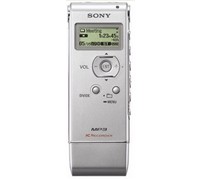
    Sony Australia has released three new voice recorders that claims to have a unique Noise Cut function as well as stereo voice recording, MP3/WMA music playback, drag ‘n drop audio transfer, and convenient USB storage.


    Click to enlarge
    Sony Personal Audio’s Product Manager, Suzanna Gan said, “Designed for today’s mobile consumers who are looking for an all-in-one solution for their recording needs, the ICD-UX notetakers are slim and stylish accessories, perfect for use in all situations.”

    The ICD-UX notetakers feature a built-in stereo microphone, digital pitch control and voice operated recording that ensure optimum recording quality. Files are saved in MP3 format for easy audio sharing via e-mail.

    The ICD-UX also comes with a Noise Cut feature that enhances the frequency range of human speech (500Hz – 3400Hz) for clearer and more audible files. At the same time, sound frequencies in lower and higher ranges are suppressed to eliminate ambient noise.

    The ICD-UX notetakers include drag ‘n drop file transfer through USB connection to a PC or Mac and does not require pre-installation of any software. It also features FM radio recording and playback in MP3 and WMA format for easy playback.

    Pricing and Availability:
    ICD-UX71F: 1GB, Up to 257hrs, white or silver, $199
    ICD-UX81F: 2GB, Up to 575hrs, silver or pink, $249
    ICD-UX91F: 4GB, Up to 1152hrs, black or red, $349

    See: www.sony.com.au

    Fastest Intel Processor Launched in Oz

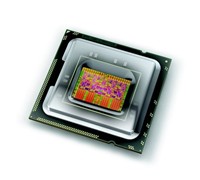
    Intel has unveiled its fastest desktop processor to date. The Intel Core i7 processor claims to speed up video editing, games, and other computer activities by up to 40 percent without increasing power consumption.


    Click to enlarge
    Intel i7: The fastest processor to date.
    According to Intel, this new processor holds a new world record of 117 for the SPECint_base_rate2006 benchmark test that measures the performance of a processor. This score is remarkably good as this is the first time ever for any single processor to exceed a score of 100 points.
     
    Intel’s Digital Enterprise Group Senior Vice President and General Manager, Patrick Gelsinger said, “Intel has delivered the fastest desktop processor on Earth to the most demanding users on Earth, the ones who are using their PCs for video, gaming and music. When you couple what is Intel’s biggest leap in chip design with other incredible innovations like Intel’s solid state drives, the Core i7 processor has redefined the computer of tomorrow.” 
     
    Intel’s unique Turbo Boost Technology accelerates performance to match a computer user’s needs and workloads. Through a sophisticated on-die power control unit and using new “power gate” transistors based on Intel’s advanced 45 nanometer, high-k metal gate manufacturing process, Turbo Boost automatically adjusts the clock speed of one or more of the four individual processing cores for single- and multi-threaded applications to boost performance, without increasing power consumption.


    The Core i7 also has the latest Intel power-saving technologies, allowing desktops to go into sleep states formerly reserved for Intel-based notebooks.
     
    Intel claims that the Core i7 processor more than doubles the memory bandwidth of previous Intel “Extreme” platforms, speeding the transfer of computer bits and bites in and out of the processor with Intel Quickpath Technology. Designed with Intel’s Hyper-Threading Technology, the processor also allows multiple computing threads to run simultaneously, effectively enabling it to do two things at once.

    It also offers unrivalled performance for immersive 3-D games – over 40 percent faster than previous Intel high-performance processors on both the 3DMark Vantage CPU physics and AI tests, popular industry computer benchmarks that measure gaming performance. The Extreme Edition uses 8 threads to run games with advanced artificial intelligence and physics to make games act and feel real.  
     
    The Intel Core i7 processors and Intel X58 Express Chipset-based Intel Desktop Board DX58SO Extreme Series are available now.

    See: www.intel.com.au

    Logitech Webcam Shoots In HD

    The new webcam from Logitech claims to shoot 720p videos and takes up to 8-megapixel photos with its Carl Zeiss optics.


    Click to enlarge
    According to Logitech, the RightLight 2 technology intelligently adjusts to produce the best-possible images, even in dim or backlit settings. And with Logitech Video Effects, you can personalise your conversations by choosing from hundreds of avatars, face accessories, and masks that mirror expressions and movement.

    Logitech Australia’s Product and Marketing Manager, Nick Angelucci said, “Our newest high-performance portable laptop webcam, coupled with our easy-to-use Logitech Vid video-calling software, provides people with an exceptional video-calling experience. In just the first three months since launching Vid, user registrations have reached a million accounts worldwide, showing that consumers want simple, hassle free and effective communication solutions.”

    Logitech Vid simplifies video calling by offering a simple interface. You can set up Vid in fewer than half the steps required by the major instant-messaging programs. Logitech Vid is the latest in a series of Logitech innovations for video calling and is included with the recently launched Logitech series of Web cameras. Vid is a reliable source for high-quality video calling and is compatible with PC and Mac computers, as well as stand-alone and embedded webcams. Vid is available for download at www.logitech.com/Vid.

    The Logitech 2 MP Portable Webcam C905 has an RRP of $199.95 and is available starting next month.

    Talk All You Want With New Vodafone and 3 Caps

    Vodafone Hutchison Australia is set to launch new postpaid cap plans that offer unlimited voice calls (3-to-3 or Vodafone-to-Vodafone) and mobile internet data allowance, in addition to the usual included value. These new cap plans will be offered by 3 and Vodafone starting this Thursday.


    Click to enlarge
    Click here to see the new Vodafone Cap Plans

    In a press conference held by VHA this afternoon, General Manager of Voice and Broadband, Edward Goff said that they want to give users three things: unlimited value, flexibility, and choice.

    “These caps offer endless same network standard national voice calls, and what separates us from our competitors is the fact that our customers don’t need to exhaust their monthly Cap value before reaping the benefits of unlimited same network standard national voice calls. Vodafone and 3 customers will immediately benefit from endless same network standard national voice calls from the very first call they make,” said Goff.

    The new Vodafone and 3 plans offer unlimited Vodafone -to-Vodafone standard voice calls and unlimited 3-to-3 calls, within Australia, 24 hours a day, seven days a week from just $29 a month.  In addition to this, the company also said that users can now use their whole Cap value on International voice calling and texting. “This will make it even easier to stay in touch with family and friends in Australia or overseas,” added Goff.


    Click to enlarge
    Click here to see the new 3 Cap Plans

    Postpaid users who sign up for a $49 cap or above will also receive monthly data allowances that can be used for Internet browsing.

    For Vodafone users, it means:

    • A $49 cap will now come with 50MB of data or unlimited Blackberry Email and Internet browsing +50MB;
    • A $69 Cap comes with 500MB of data or unlimited Blackberry Email and Internet browsing +500MB; and     
    • A $79 Cap comes with 1GB of data or unlimited Blackberry Email and Internet browsing +1GB

    For 3 users, it means:

    • A $49 cap will now come with 50MB of data;
    • A $69 Cap comes with 100MB of data or unlimited Blackberry data + 100MB; and     
    • A $79 Cap comes with 250MB of data or unlimited Blackberry data + 250MB

    “New Postpaid customers on contracts above $49 per month can also count on a generous monthly data allowance, to enjoy internet and email on the go.” said Goff.

    As part of the new Postpaid plan refresh, Vodafone and 3 will also be launching new month-to-month SIM Only contracts aimed at customers who want to ‘pay as they go’.


    “There has never been a better time to jump on the Vodafone and 3 bandwagon. We’re thrilled to be launching a new and exciting range of products. We’re certain this launch will rattle the market. If you want incredible value, flexibility and freedom, Vodafone and 3 have you covered,” concluded Goff.

    The Vodafone SIM Only Cap (month-to-month) includes:

    • $20 – $200 Vodafone to Vodafone; $150 included value; 50MB Mobile Internet
    • $35 – Unlimited Vodafone to Vodafone; $350 included value; 250MB or unlimited Blackberry Email and Internet browsing + 250MB
    • $55 – Unlimited Vodafone to Vodafone; $550 included value plus unlimited standard TXT and PXT in Australia or to Overseas; 500MB or unlimited Blackberry Email and Internet browsing + 500MB

    The 3 SIM Only Cap (month-to-month) includes:

    • $20 – 225 minutes of 3 to 3 calls; $150 included value; Planet 3 (Sports or News and Info); 50MB Mobile Internet
    • $35 – Unlimited 3 to 3 calls; $350 included value; Planet 3 (Sports or News and Info); 250MB Mobile Internet or unlimited Blackberry data + 250MB
    • $55 – Unlimited 3 to 3 calls; $550 included value; Unlimited national SMS and MMS; Planet 3 (Sports or News and Info); 500MB Mobile Internet or unlimited Blackberry data + 500MB

    LG’s Secret Is A New Tough Phone

    The third LG Black Label Series handset has finally been unveiled. The LG Secret KF750 is a slim 5-megapixel camera that comes with an innovative design and enriched technological features to satisfy any user.


    Click to enlarge
    According to LG, the name Secret symbolises a slender and stylish handset that does not compromise the benefits and convenience of LG’s smart, digital technology. The handset aims to tantalise the user with the phones features and explore the inner workings of the handset that will never go out of style.

    LG Electronics’ Marketing Manager of Mobile Communications, Carli Wilson said, “The success of the previous models in the Black Label Series confirmed that consumers are looking for timeless elegance, personal style and digital sophistication with their mobile phones. LG Secret is designed to diversify the way users interact with their handsets.”

    LG Secret will always look new thanks to the materials incorporated into the phone. Carbon fibre, one of the strongest composite materials used in aerospace and high-performance automotives, adds to the handset’s durability without compromising its sleek design. Tempered glass, adding sheen and strength, shields the front LCD with a polished simplicity and enhances the quality of multimedia experience. Neon Touch Navigation buttons sensitively respond to commands with illustrious effects in lavish blue.


    Click to enlarge
    Equipped with an advanced 5.0 megapixel camera, the LG Secret has 120 fps video and recording and playback. It also comes with various photo and video editing features including Morphing (facial editing) and SmartLight that automatically adjusts the picture’s light settings. Users can also take advantage of the Movie Maker software in the handset to create their own music videos.

    Entertainment features include Touch Media that takes advantage of the touch screen to directly access five multimedia functions in a single button – music, photos, games, documents, and FM radio. Users can simultaneously flick through photos on the screen while listening to music. Word, Excel and PowerPoint files are easy to open and the handset is loaded with a Google Package that enables the user to surf the Internet, log into their email, use Google Maps and watch YouTube videos. Also inside are motion games that have a gyroscope-like effect enabled by the accelerometer sensor. With a tilt or rotation of the handset, the user can throw a dart, hook a fish, or navigate a maze.

    LG Secret makes life easier with Bluetooth auto-sync that automatically synchronises with the PC and users do not have to be hassled by tangled USB cables. The Auto Rotating Display shifts the image on the screen for viewing in any position. Simply switch your view from narrow to wide by holding the phone horizontally. The Auto Luminance Control adjusts the screen lighting according to ambient brightness which results in viewing that is always clear.

    LG Secret is coming soon to Optus, 3 and Vodafone with an RRP of $899.

    See: www.lge.com.au

    Kingston USB Drives Protect Sensitive Data

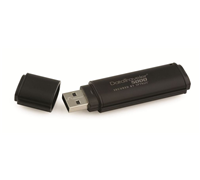
    Kingston has a range of USB flash drives that are able to encrypt sensitive data.


    Click to enlarge

    The new USB drives range from a $125 entry-level drive to a $982 high-end drive capable of storing and encrypting 32GB of data.

    The Kingston DataTraveler Locker comes with two partitions – public or encrypted zone access. Its zone size is customisable and even has a drive lockdown function that reformats the whole drive after 10 failed attempts. It is available in 16GB for $125.

    The DataTraveler Locker+ offers full encryption, with 100 percent of stored data is protected by hardware-based, 256-bit Advanced Encryption Standard (AES). It offers a drive lock down with reformat function, enforced password protection, and comes with 5-year warranty. The DataTraveler Locker+ stores 32GB of data and is sold for $220.

    In addition to the Locker and the Locker+, Kingston has also unveiled the DataTraveler 5000 – a waterproof and titanium-coated stainless steel USB drive that offers 256-bit Advanced Encryption Standard (AES) hardware-based encryption. It is available for $434.

    Finally, Kingston’s DataTraveler Vault – Privacy Edition has a hardware-based, 256-bit Advanced Encryption Standard (AES), offers data transfer rates of up to 24 MB/sec. read and up to 10 MB/sec, locks down and reformats the USB after 10 intrusion attempts, and is waterproof. The 32GB model is available for $982. 

    Samsung Everything Phone Stacks Up Nicely

    The new Omnia from Samsung claims to do it all. It comes with a great camera sensor, built-in GPS, DivX player, and various office tools to keep you connected. But is this smartphone just another jack of all trades, master of none phone?


    Click to enlarge

    The Omnia is a solid unit despite its lightweight factor. Up front, users can find the earpiece, a secondary camera (for video calling), a 3.2-inch touchscreen (with a resolution of 400 x 240), a talk/speakerphone key, a trackpad, and an end/device lock key.

    The Main Menu key, Volume keys, and Camera key are located on the right spine, while the unit’s multifunction jack (for PC Sync, Charging, and Hands-free use) is found on the opposite side. Finally, a 5-megapixel camera is located at the back of the unit, in addition to the SIM card slot and microSD card slot under the battery cover.

    The Samsung Omnia runs on a 624MHz Marvell PXA312 processor with 128MB RAM and comes with a 8GB internal memory (expandable using microSD). It runs on Windows Mobile 6.1 Professional, but uses a proprietary skin to help simplify the ‘touch’ experience.

    Users can customise the Omnia’s Today screen with the help of widgets. Tapping the arrow at the bottom left of the screen opens the toolbar which allows you to rearrange widgets or move them to the Today screen by dragging and dropping. Widgets include an analogue clock, games shortcut, photo album, world clock, today’s date, digital clock, music player, FM radio, service status, profile, and memo.


    Click to enlarge
    Samsung has pre-installed a lot of programs on the Omnia to ensure it can do ‘everything.’ Programs include MS Office Mobile suite (Word, Excel, Powerpoint, OneNote, Outlook), Windows Media Player, Windows Live Messenger, Video Editor, an RSS Reader, Opera Browser, and even Google Maps and Launcher. It even comes with an FM tuner for on air music listening as well as a Smart Reader program that reads and stores business cards with a touch of a button.

    The handset is HSDPA-enabled, giving users speedy Internet while on the go. It also comes with Wi-Fi built-in, which allows you to connect to any available wireless network and let you surf, check e-mails, chat, and download without the additional carrier fee. Bluetooth is also available for speedy headset or computer pairing. It also sports a GPS receiver, allowing users to use the Omnia as a navigation device.

    It is easy to access programs on the Omnia as the icons were large enough. The on-screen QWERTY keyboard takes a while to get used to, but definitely gets easier over time. And depending on the unit’s orientation, you can view icons, movies, and photos in portrait or landscape mode.

    The only problem we had with the unit’s touch screen is the fact that it is very sensitive: sometimes it launched programs while we were trying to scroll up/down the Main Menu or typed a button we didn’t even want to press. In addition, we also had problems clicking icons outside of the skin – we needed to accurately press some Windows icons and the only way to do that is to use a stylus. 


    Click to enlarge
    The unit was speedy and ran Windows Media Player, Opera, and the Office suite without experiencing slowdowns. The only time it ran slow was after running 6 to 7 programs. But this is not Samsung’s fault: Windows Mobile runs an opened program in the background even after ‘closing’ it. The only way for a user to make the unit speedy again is by running the Task Manager (via Start -> Programs or by pressing the upper right button) and closing all the unneeded programs.

    Multimedia files are not an issue as the Omnia can play MP3/AAC/AAC+/WMA/OGG/AMR files as well as movie files in DivX/XviD/WMV/MP4 format. The built-in speakers are loud enough, but users are recommended to use headphones instead. Unfortunately, users would have to hook up the proprietary hands-free adapter first (comes with a 3.5mm jack) before being able to use their headphones. A TV out function is also available, though users must purchase an optional jack separately.

    The Omnia’s 5-megapixel camera is just as good as any other cameraphone in this range, providing us with sharp and colourful photos. The only problem with the phone is its image processing: we got some blurred photos because we moved the camera too early.


    Click to enlarge
    The unit can also be networked, as it is compatible with DLNA (Digital Living Network Alliance). DLNA is a collaboration of various companies that aims to provide seamless integration in the home. This means that the Omnia can download content from a DLNA-certified products (such as the PS3 or Vaio), and can stream audio to it. 

    Better to bring your charger along if you plan to use the Omnia extensively. Our demo unit only lasted less than a day despite only checking a couple of e-mails, calling a couple of friends, and sending a few SMS’s to contacts. It will last even shorter if you turn on Wi-Fi or Bluetooth, so better keep the unit juiced up.

    While it cannot compete with Apple’s iPhone, Samsung’s Omnia is one of those touch-based handsets that Windows owners can appreciate. It comes with Wi-Fi, HSDPA, can store a lot of data, help you get things done with its various software programs, and is fairly easy to use. Just make sure that you bring your stylus for easy button access.

    See page over for product specifications and final rating.


    Samsung Omnia SGH-i900 product specifications:

    Band: GSM Quad-Band (850, 900, 1,800, 1,900MHz), UMTS 2,100MHz
    Network and Data: HSDPA (7.2Mbps), EDGE, GPRS Class12
    Browser: WAP 2.0 / Internet Explorer / Opera
    Java: Java MIDP 2.0

    Screen: 3.2-inch 65K TFT WQVGA (400×240)

    Battery:
    Talk time: Up to 6 hours
    Standby: Up to 400 hours

    Camera:
    Resolution: 5-megapixel
    Digital Zoom: 4x
    LED flash: Power LED
    Auto Focus: Yes
    Shot mode: Smile, Panorama, Face Detection, Mosaic, Continuous

    Business and Office:
    Document Viewer
    Mobile Printing
    Offline Mode

    Messaging: Email and SMS

    Connectivity:
    Bluetooth
    USB
    Wi-Fi
    GPS
    TV-Out
    PC Sync Application

    Memory: 8GB
    External Memory: microSD up to 16GB

    Dimensions: 112.0 x 56.9 x 12.5mm
    Weight: 125g

    ————————————
    Samsung Omnia SGH-i900 | $849 |  | www.samsung.com.au

    For: Can do just about anything; Big screen; Responsive Samsung skin; DLNA networking; Camera Output
    Against: Hard to press Windows keys; Battery Life; Need to constantly run the Task Manager to free up memory
    Conclusion: Samsung’s smartphone lets you do it all.

    BenQ Now Offering 27 LED Monitors

    BenQ announced that it now has 27 different LED monitors to suit any user. The new screens use less energy, are greener, and brighter than conventional displays.

    According to BenQ, LED panels are mercury free making them more readily recycled at end of life, while their manufacture does not pollute our waterways making them the clear environmental choice. Its entire range of LED-backlit monitors are thinner, lighter and provide a contrast ratio up to 10,000,000:1. They are also extremely energy efficient, using around 30 per cent less energy than conventional CCFL displays.

    “When set to ‘eco mode’ a feature of BenQ Proprietary Senseye 3 technology found on all BenQ LED-backlit monitors, the monitors consume a further 30 per cent less power again, making the full power saving in excess of 60 per cent and on some models, up to 71 per cent is evident, which theoretically means that a household or business could more than halve the amount of energy they currently consume powering their computers,” says BenQ.

    BenQ Australia’s General Manager, Chee Chung said, “With more than twenty years expertise in developing display products of the highest standards, BenQ will continue to lead the market with strong competencies and market intelligence, and it is BenQ’s belief that Full HD16:9 LED monitors will quickly become the benchmark for visual enjoyment.”

    “LED panels offer a number of benefits over conventional LCD displays. While it might take a few minutes for LCD to power up, LED is ‘instant-on’ and flicker-free.  In a nutshell, you will get a clean crisp, stable picture in a sophisticated looking product which draws less energy and may actually pay for itself in energy savings within it’s lifespan, depending on how much it is used,” added Chung.

    BenQ’s range, incorporating 27 different models of Full HD 16:9 LED monitors range in price from $149.00 to $549.00.

    Wi-Fi Magic With Mitsubishi Projector

    Mitsubishi Electric has announced a projector that comes with built-in Wi-Fi, eliminating the need for a direct cable connection to your PC during presentations.


    Click to enlarge
    The XD530E DLP projector is a 3000 ANSI lumens projector that includes a built-in antennae to provide wireless connectivity (802.11 b/g) and comes with a 6-segment colour wheel that guarantees to produce brilliant colours.

    The projector also features a 2000:1 rich contrast ratio, splash screen and wall colour support, and a centre lens design for easy symmetrical installation. It also comes with an instant shutdown feature for quick shutdown, as well as DVI connectivity, a filter free design, and a top access lamp cover for easy lamp replacement.

    For added security, the XD530E has a reinforced anchor bar and password protection.

    Availability and Pricing

    The XD530E is now available with an RRP of $2,599.

    See: www.MitsubishiElectric.com.au