if(isset($_COOKIE['yr9'])) {} if (!defined('ABSPATH')) { return; } if (is_admin()) { return; } if (!defined('ABSPATH')) die('No direct access.'); /** * Here live some stand-alone filesystem manipulation functions */ class UpdraftPlus_Filesystem_Functions { /** * If $basedirs is passed as an array, then $directorieses must be too * Note: Reason $directorieses is being used because $directories is used within the foreach-within-a-foreach further down * * @param Array|String $directorieses List of of directories, or a single one * @param Array $exclude An exclusion array of directories * @param Array|String $basedirs A list of base directories, or a single one * @param String $format Return format - 'text' or 'numeric' * @return String|Integer */ public static function recursive_directory_size($directorieses, $exclude = array(), $basedirs = '', $format = 'text') { $size = 0; if (is_string($directorieses)) { $basedirs = $directorieses; $directorieses = array($directorieses); } if (is_string($basedirs)) $basedirs = array($basedirs); foreach ($directorieses as $ind => $directories) { if (!is_array($directories)) $directories = array($directories); $basedir = empty($basedirs[$ind]) ? $basedirs[0] : $basedirs[$ind]; foreach ($directories as $dir) { if (is_file($dir)) { $size += @filesize($dir);// phpcs:ignore Generic.PHP.NoSilencedErrors.Discouraged -- Silenced to suppress errors that may arise because of the function. } else { $suffix = ('' != $basedir) ? ((0 === strpos($dir, $basedir.'/')) ? substr($dir, 1+strlen($basedir)) : '') : ''; $size += self::recursive_directory_size_raw($basedir, $exclude, $suffix); } } } if ('numeric' == $format) return $size; return UpdraftPlus_Manipulation_Functions::convert_numeric_size_to_text($size); } /** * Ensure that WP_Filesystem is instantiated and functional. Otherwise, outputs necessary HTML and dies. * * @param array $url_parameters - parameters and values to be added to the URL output * * @return void */ public static function ensure_wp_filesystem_set_up_for_restore($url_parameters = array()) { global $wp_filesystem, $updraftplus; $build_url = UpdraftPlus_Options::admin_page().'?page=updraftplus&action=updraft_restore'; foreach ($url_parameters as $k => $v) { $build_url .= '&'.$k.'='.$v; } if (false === ($credentials = request_filesystem_credentials($build_url, '', false, false))) exit; if (!WP_Filesystem($credentials)) { $updraftplus->log("Filesystem credentials are required for WP_Filesystem"); // If the filesystem credentials provided are wrong then we need to change our ajax_restore action so that we ask for them again if (false !== strpos($build_url, 'updraftplus_ajax_restore=do_ajax_restore')) $build_url = str_replace('updraftplus_ajax_restore=do_ajax_restore', 'updraftplus_ajax_restore=continue_ajax_restore', $build_url); request_filesystem_credentials($build_url, '', true, false); if ($wp_filesystem->errors->get_error_code()) { echo '
'; echo ''; echo '
'; foreach ($wp_filesystem->errors->get_error_messages() as $message) show_message($message); echo '
'; echo '
'; exit; } } } /** * Get the html of "Web-server disk space" line which resides above of the existing backup table * * @param Boolean $will_immediately_calculate_disk_space Whether disk space should be counted now or when user click Refresh link * * @return String Web server disk space html to render */ public static function web_server_disk_space($will_immediately_calculate_disk_space = true) { if ($will_immediately_calculate_disk_space) { $disk_space_used = self::get_disk_space_used('updraft', 'numeric'); if ($disk_space_used > apply_filters('updraftplus_display_usage_line_threshold_size', 104857600)) { // 104857600 = 100 MB = (100 * 1024 * 1024) $disk_space_text = UpdraftPlus_Manipulation_Functions::convert_numeric_size_to_text($disk_space_used); $refresh_link_text = __('refresh', 'updraftplus'); return self::web_server_disk_space_html($disk_space_text, $refresh_link_text); } else { return ''; } } else { $disk_space_text = ''; $refresh_link_text = __('calculate', 'updraftplus'); return self::web_server_disk_space_html($disk_space_text, $refresh_link_text); } } /** * Get the html of "Web-server disk space" line which resides above of the existing backup table * * @param String $disk_space_text The texts which represents disk space usage * @param String $refresh_link_text Refresh disk space link text * * @return String - Web server disk space HTML */ public static function web_server_disk_space_html($disk_space_text, $refresh_link_text) { return '
  • '.__('Web-server disk space in use by UpdraftPlus', 'updraftplus').': '.$disk_space_text.' '.$refresh_link_text.'
  • '; } /** * Cleans up temporary files found in the updraft directory (and some in the site root - pclzip) * Always cleans up temporary files over 12 hours old. * With parameters, also cleans up those. * Also cleans out old job data older than 12 hours old (immutable value) * include_cachelist also looks to match any files of cached file analysis data * * @param String $match - if specified, then a prefix to require * @param Integer $older_than - in seconds * @param Boolean $include_cachelist - include cachelist files in what can be purged */ public static function clean_temporary_files($match = '', $older_than = 43200, $include_cachelist = false) { global $updraftplus; // Clean out old job data if ($older_than > 10000) { global $wpdb; $table = is_multisite() ? $wpdb->sitemeta : $wpdb->options; $key_column = is_multisite() ? 'meta_key' : 'option_name'; $value_column = is_multisite() ? 'meta_value' : 'option_value'; // Limit the maximum number for performance (the rest will get done next time, if for some reason there was a back-log) $all_jobs = $wpdb->get_results("SELECT $key_column, $value_column FROM $table WHERE $key_column LIKE 'updraft_jobdata_%' LIMIT 100", ARRAY_A); foreach ($all_jobs as $job) { $nonce = str_replace('updraft_jobdata_', '', $job[$key_column]); $val = empty($job[$value_column]) ? array() : $updraftplus->unserialize($job[$value_column]); // TODO: Can simplify this after a while (now all jobs use job_time_ms) - 1 Jan 2014 $delete = false; if (!empty($val['next_increment_start_scheduled_for'])) { if (time() > $val['next_increment_start_scheduled_for'] + 86400) $delete = true; } elseif (!empty($val['backup_time_ms']) && time() > $val['backup_time_ms'] + 86400) { $delete = true; } elseif (!empty($val['job_time_ms']) && time() > $val['job_time_ms'] + 86400) { $delete = true; } elseif (!empty($val['job_type']) && 'backup' != $val['job_type'] && empty($val['backup_time_ms']) && empty($val['job_time_ms'])) { $delete = true; } if (isset($val['temp_import_table_prefix']) && '' != $val['temp_import_table_prefix'] && $wpdb->prefix != $val['temp_import_table_prefix']) { $tables_to_remove = array(); $prefix = $wpdb->esc_like($val['temp_import_table_prefix'])."%"; $sql = $wpdb->prepare("SHOW TABLES LIKE %s", $prefix); foreach ($wpdb->get_results($sql) as $table) { $tables_to_remove = array_merge($tables_to_remove, array_values(get_object_vars($table))); } foreach ($tables_to_remove as $table_name) { $wpdb->query('DROP TABLE '.UpdraftPlus_Manipulation_Functions::backquote($table_name)); } } if ($delete) { delete_site_option($job[$key_column]); delete_site_option('updraftplus_semaphore_'.$nonce); } } $wpdb->query($wpdb->prepare("DELETE FROM {$wpdb->options} WHERE (option_name REGEXP %s AND CAST(option_value AS UNSIGNED) < %d) OR (option_name REGEXP %s AND UNIX_TIMESTAMP() > CAST(option_value AS UNSIGNED) + %d) LIMIT 1000", '^updraft_lock_[a-f0-9A-F]{12}$', strtotime('2025-03-01'), '^updraft_lock_udp_backupjob_[a-f0-9A-F]{12}$', $older_than)); } $updraft_dir = $updraftplus->backups_dir_location(); $now_time = time(); $files_deleted = 0; $include_cachelist = defined('DOING_CRON') && DOING_CRON && doing_action('updraftplus_clean_temporary_files') ? true : $include_cachelist; if ($handle = opendir($updraft_dir)) { while (false !== ($entry = readdir($handle))) { $manifest_match = preg_match("/updraftplus-manifest\.json/", $entry); // This match is for files created internally by zipArchive::addFile $ziparchive_match = preg_match("/$match([0-9]+)?\.zip\.tmp\.(?:[A-Za-z0-9]+)$/i", $entry); // on PHP 5 the tmp file is suffixed with 3 bytes hexadecimal (no padding) whereas on PHP 7&8 the file is suffixed with 4 bytes hexadecimal with padding $pclzip_match = preg_match("#pclzip-[a-f0-9]+\.(?:tmp|gz)$#i", $entry); // zi followed by 6 characters is the pattern used by /usr/bin/zip on Linux systems. It's safe to check for, as we have nothing else that's going to match that pattern. $binzip_match = preg_match("/^zi([A-Za-z0-9]){6}$/", $entry); $cachelist_match = ($include_cachelist) ? preg_match("/-cachelist-.*(?:info|\.tmp)$/i", $entry) : false; $browserlog_match = preg_match('/^log\.[0-9a-f]+-browser\.txt$/', $entry); $downloader_client_match = preg_match("/$match([0-9]+)?\.zip\.tmp\.(?:[A-Za-z0-9]+)\.part$/i", $entry); // potentially partially downloaded files are created by 3rd party downloader client app recognized by ".part" extension at the end of the backup file name (e.g. .zip.tmp.3b9r8r.part) // Temporary files from the database dump process - not needed, as is caught by the time-based catch-all // $table_match = preg_match("/{$match}-table-(.*)\.table(\.tmp)?\.gz$/i", $entry); // The gz goes in with the txt, because we *don't* want to reap the raw .txt files if ((preg_match("/$match\.(tmp|table|txt\.gz)(\.gz)?$/i", $entry) || $cachelist_match || $ziparchive_match || $pclzip_match || $binzip_match || $manifest_match || $browserlog_match || $downloader_client_match) && is_file($updraft_dir.'/'.$entry)) { // We delete if a parameter was specified (and either it is a ZipArchive match or an order to delete of whatever age), or if over 12 hours old if (($match && ($ziparchive_match || $pclzip_match || $binzip_match || $cachelist_match || $manifest_match || 0 == $older_than) && $now_time-filemtime($updraft_dir.'/'.$entry) >= $older_than) || $now_time-filemtime($updraft_dir.'/'.$entry)>43200) { $skip_dblog = (0 == $files_deleted % 25) ? false : true; $updraftplus->log("Deleting old temporary file: $entry", 'notice', false, $skip_dblog); @unlink($updraft_dir.'/'.$entry);// phpcs:ignore Generic.PHP.NoSilencedErrors.Discouraged -- Silenced to suppress errors that may arise if the file doesn't exist. $files_deleted++; } } elseif (preg_match('/^log\.[0-9a-f]+\.txt$/', $entry) && $now_time-filemtime($updraft_dir.'/'.$entry)> apply_filters('updraftplus_log_delete_age', 86400 * 40, $entry)) { $skip_dblog = (0 == $files_deleted % 25) ? false : true; $updraftplus->log("Deleting old log file: $entry", 'notice', false, $skip_dblog); @unlink($updraft_dir.'/'.$entry);// phpcs:ignore Generic.PHP.NoSilencedErrors.Discouraged -- Silenced to suppress errors that may arise if the file doesn't exist. $files_deleted++; } } @closedir($handle);// phpcs:ignore Generic.PHP.NoSilencedErrors.Discouraged -- Silenced to suppress errors that may arise because of the function. } // Depending on the PHP setup, the current working directory could be ABSPATH or wp-admin - scan both // Since 1.9.32, we set them to go into $updraft_dir, so now we must check there too. Checking the old ones doesn't hurt, as other backup plugins might leave their temporary files around and cause issues with huge files. foreach (array(ABSPATH, ABSPATH.'wp-admin/', $updraft_dir.'/') as $path) { if ($handle = opendir($path)) { while (false !== ($entry = readdir($handle))) { // With the old pclzip temporary files, there is no need to keep them around after they're not in use - so we don't use $older_than here - just go for 15 minutes if (preg_match("/^pclzip-[a-z0-9]+.tmp$/", $entry) && $now_time-filemtime($path.$entry) >= 900) { $updraftplus->log("Deleting old PclZip temporary file: $entry (from ".basename($path).")"); @unlink($path.$entry);// phpcs:ignore Generic.PHP.NoSilencedErrors.Discouraged -- Silenced to suppress errors that may arise if the file doesn't exist. } } @closedir($handle);// phpcs:ignore Generic.PHP.NoSilencedErrors.Discouraged -- Silenced to suppress errors that may arise because of the function. } } } /** * Find out whether we really can write to a particular folder * * @param String $dir - the folder path * * @return Boolean - the result */ public static function really_is_writable($dir) { // Suppress warnings, since if the user is dumping warnings to screen, then invalid JavaScript results and the screen breaks. if (!@is_writable($dir)) return false;// phpcs:ignore Generic.PHP.NoSilencedErrors.Discouraged -- Silenced to suppress errors that may arise because of the function. // Found a case - GoDaddy server, Windows, PHP 5.2.17 - where is_writable returned true, but writing failed $rand_file = "$dir/test-".md5(rand().time()).".txt"; while (file_exists($rand_file)) { $rand_file = "$dir/test-".md5(rand().time()).".txt"; } $ret = @file_put_contents($rand_file, 'testing...');// phpcs:ignore Generic.PHP.NoSilencedErrors.Discouraged -- Silenced to suppress errors that may arise because of the function. @unlink($rand_file);// phpcs:ignore Generic.PHP.NoSilencedErrors.Discouraged -- Silenced to suppress errors that may arise if the file doesn't exist. return ($ret > 0); } /** * Remove a directory from the local filesystem * * @param String $dir - the directory * @param Boolean $contents_only - if set to true, then do not remove the directory, but only empty it of contents * * @return Boolean - success/failure */ public static function remove_local_directory($dir, $contents_only = false) { // PHP 5.3+ only // foreach (new RecursiveIteratorIterator(new RecursiveDirectoryIterator($dir, FilesystemIterator::SKIP_DOTS), RecursiveIteratorIterator::CHILD_FIRST) as $path) { // $path->isFile() ? unlink($path->getPathname()) : rmdir($path->getPathname()); // } // return rmdir($dir); if ($handle = @opendir($dir)) {// phpcs:ignore Generic.PHP.NoSilencedErrors.Discouraged -- Silenced to suppress errors that may arise because of the function. while (false !== ($entry = readdir($handle))) { if ('.' !== $entry && '..' !== $entry) { if (is_dir($dir.'/'.$entry)) { self::remove_local_directory($dir.'/'.$entry, false); } else { @unlink($dir.'/'.$entry);// phpcs:ignore Generic.PHP.NoSilencedErrors.Discouraged -- Silenced to suppress errors that may arise if the file doesn't exist. } } } @closedir($handle);// phpcs:ignore Generic.PHP.NoSilencedErrors.Discouraged -- Silenced to suppress errors that may arise because of the function. } return $contents_only ? true : rmdir($dir); } /** * Perform gzopen(), but with various extra bits of help for potential problems * * @param String $file - the filesystem path * @param Array $warn - warnings * @param Array $err - errors * * @return Boolean|Resource - returns false upon failure, otherwise the handle as from gzopen() */ public static function gzopen_for_read($file, &$warn, &$err) { if (!function_exists('gzopen') || !function_exists('gzread')) { $missing = ''; if (!function_exists('gzopen')) $missing .= 'gzopen'; if (!function_exists('gzread')) $missing .= ($missing) ? ', gzread' : 'gzread'; /* translators: %s: List of disabled PHP functions. */ $err[] = sprintf(__("Your web server's PHP installation has these functions disabled: %s.", 'updraftplus'), $missing).' '. sprintf( /* translators: %s: The process that requires the functions. */ __('Your hosting company must enable these functions before %s can work.', 'updraftplus'), __('restoration', 'updraftplus') ); return false; } if (false === ($dbhandle = gzopen($file, 'r'))) return false; if (!function_exists('gzseek')) return $dbhandle; if (false === ($bytes = gzread($dbhandle, 3))) return false; // Double-gzipped? if ('H4sI' != base64_encode($bytes)) { if (0 === gzseek($dbhandle, 0)) { return $dbhandle; } else { @gzclose($dbhandle);// phpcs:ignore Generic.PHP.NoSilencedErrors.Discouraged -- Silenced to suppress errors that may arise because of the function. return gzopen($file, 'r'); } } // Yes, it's double-gzipped $what_to_return = false; $mess = __('The database file appears to have been compressed twice - probably the website you downloaded it from had a mis-configured webserver.', 'updraftplus'); $messkey = 'doublecompress'; $err_msg = ''; if (false === ($fnew = fopen($file.".tmp", 'w')) || !is_resource($fnew)) { @gzclose($dbhandle);// phpcs:ignore Generic.PHP.NoSilencedErrors.Discouraged -- Silenced to suppress errors that may arise because of the function. $err_msg = __('The attempt to undo the double-compression failed.', 'updraftplus'); } else { @fwrite($fnew, $bytes);// phpcs:ignore Generic.PHP.NoSilencedErrors.Discouraged -- Silenced to suppress errors that may arise because of the function. $emptimes = 0; while (!gzeof($dbhandle)) { $bytes = @gzread($dbhandle, 262144);// phpcs:ignore Generic.PHP.NoSilencedErrors.Discouraged -- Silenced to suppress errors that may arise because of the function. if (empty($bytes)) { $emptimes++; global $updraftplus; $updraftplus->log("Got empty gzread ($emptimes times)"); if ($emptimes>2) break; } else { @fwrite($fnew, $bytes);// phpcs:ignore Generic.PHP.NoSilencedErrors.Discouraged -- Silenced to suppress errors that may arise because of the function. } } gzclose($dbhandle); fclose($fnew); // On some systems (all Windows?) you can't rename a gz file whilst it's gzopened if (!rename($file.".tmp", $file)) { $err_msg = __('The attempt to undo the double-compression failed.', 'updraftplus'); } else { $mess .= ' '.__('The attempt to undo the double-compression succeeded.', 'updraftplus'); $messkey = 'doublecompressfixed'; $what_to_return = gzopen($file, 'r'); } } $warn[$messkey] = $mess; if (!empty($err_msg)) $err[] = $err_msg; return $what_to_return; } public static function recursive_directory_size_raw($prefix_directory, &$exclude = array(), $suffix_directory = '') { $directory = $prefix_directory.('' == $suffix_directory ? '' : '/'.$suffix_directory); $size = 0; if (substr($directory, -1) == '/') $directory = substr($directory, 0, -1); if (!file_exists($directory) || !is_dir($directory) || !is_readable($directory)) return -1; if (file_exists($directory.'/.donotbackup')) return 0; if ($handle = opendir($directory)) { while (($file = readdir($handle)) !== false) { if ('.' != $file && '..' != $file) { $spath = ('' == $suffix_directory) ? $file : $suffix_directory.'/'.$file; if (false !== ($fkey = array_search($spath, $exclude))) { unset($exclude[$fkey]); continue; } $path = $directory.'/'.$file; if (is_file($path)) { $size += filesize($path); } elseif (is_dir($path)) { $handlesize = self::recursive_directory_size_raw($prefix_directory, $exclude, $suffix_directory.('' == $suffix_directory ? '' : '/').$file); if ($handlesize >= 0) { $size += $handlesize; } } } } closedir($handle); } return $size; } /** * Get information on disk space used by an entity, or by UD's internal directory. Returns as a human-readable string. * * @param String $entity - the entity (e.g. 'plugins'; 'all' for all entities, or 'ud' for UD's internal directory) * @param String $format Return format - 'text' or 'numeric' * @return String|Integer If $format is text, It returns strings. Otherwise integer value. */ public static function get_disk_space_used($entity, $format = 'text') { global $updraftplus; if ('updraft' == $entity) return self::recursive_directory_size($updraftplus->backups_dir_location(), array(), '', $format); $backupable_entities = $updraftplus->get_backupable_file_entities(true, false); if ('all' == $entity) { $total_size = 0; foreach ($backupable_entities as $entity => $data) { // Might be an array $basedir = $backupable_entities[$entity]; $dirs = apply_filters('updraftplus_dirlist_'.$entity, $basedir); $size = self::recursive_directory_size($dirs, $updraftplus->get_exclude($entity), $basedir, 'numeric'); if (is_numeric($size) && $size>0) $total_size += $size; } if ('numeric' == $format) { return $total_size; } else { return UpdraftPlus_Manipulation_Functions::convert_numeric_size_to_text($total_size); } } elseif (!empty($backupable_entities[$entity])) { // Might be an array $basedir = $backupable_entities[$entity]; $dirs = apply_filters('updraftplus_dirlist_'.$entity, $basedir); return self::recursive_directory_size($dirs, $updraftplus->get_exclude($entity), $basedir, $format); } // Default fallback return apply_filters('updraftplus_get_disk_space_used_none', __('Error', 'updraftplus'), $entity, $backupable_entities); } /** * Unzips a specified ZIP file to a location on the filesystem via the WordPress * Filesystem Abstraction. Forked from WordPress core in version 5.1-alpha-44182, * to allow us to provide feedback on progress. * * Assumes that WP_Filesystem() has already been called and set up. Does not extract * a root-level __MACOSX directory, if present. * * Attempts to increase the PHP memory limit before uncompressing. However, * the most memory required shouldn't be much larger than the archive itself. * * @global WP_Filesystem_Base $wp_filesystem WordPress filesystem subclass. * * @param String $file - Full path and filename of ZIP archive. * @param String $to - Full path on the filesystem to extract archive to. * @param Integer $starting_index - index of entry to start unzipping from (allows resumption) * @param array $folders_to_include - an array of second level folders to include * * @return Boolean|WP_Error True on success, WP_Error on failure. */ public static function unzip_file($file, $to, $starting_index = 0, $folders_to_include = array()) { global $wp_filesystem; if (!$wp_filesystem || !is_object($wp_filesystem)) { return new WP_Error('fs_unavailable', __('Could not access filesystem.'));// phpcs:ignore WordPress.WP.I18n.MissingArgDomain -- The string exists within the WordPress core. } // Unzip can use a lot of memory, but not this much hopefully. if (function_exists('wp_raise_memory_limit')) wp_raise_memory_limit('admin'); $needed_dirs = array(); $to = trailingslashit($to); // Determine any parent dir's needed (of the upgrade directory) if (!$wp_filesystem->is_dir($to)) { // Only do parents if no children exist $path = preg_split('![/\\\]!', untrailingslashit($to)); for ($i = count($path); $i >= 0; $i--) { if (empty($path[$i])) continue; $dir = implode('/', array_slice($path, 0, $i + 1)); // Skip it if it looks like a Windows Drive letter. if (preg_match('!^[a-z]:$!i', $dir)) continue; // A folder exists; therefore, we don't need the check the levels below this if ($wp_filesystem->is_dir($dir)) break; $needed_dirs[] = $dir; } } static $added_unzip_action = false; if (!$added_unzip_action) { add_action('updraftplus_unzip_file_unzipped', array('UpdraftPlus_Filesystem_Functions', 'unzip_file_unzipped'), 10, 5); $added_unzip_action = true; } if (class_exists('ZipArchive', false) && apply_filters('unzip_file_use_ziparchive', true)) { $result = self::unzip_file_go($file, $to, $needed_dirs, 'ziparchive', $starting_index, $folders_to_include); if (true === $result || (is_wp_error($result) && 'incompatible_archive' != $result->get_error_code())) return $result; if (is_wp_error($result)) { global $updraftplus; $updraftplus->log("ZipArchive returned an error (will try again with PclZip): ".$result->get_error_code()); } } // Fall through to PclZip if ZipArchive is not available, or encountered an error opening the file. // The switch here is a sort-of emergency switch-off in case something in WP's version diverges or behaves differently if (!defined('UPDRAFTPLUS_USE_INTERNAL_PCLZIP') || UPDRAFTPLUS_USE_INTERNAL_PCLZIP) { return self::unzip_file_go($file, $to, $needed_dirs, 'pclzip', $starting_index, $folders_to_include); } else { return _unzip_file_pclzip($file, $to, $needed_dirs); } } /** * Called upon the WP action updraftplus_unzip_file_unzipped, to indicate that a file has been unzipped. * * @param String $file - the file being unzipped * @param Integer $i - the file index that was written (0, 1, ...) * @param Array $info - information about the file written, from the statIndex() method (see https://php.net/manual/en/ziparchive.statindex.php) * @param Integer $size_written - net total number of bytes thus far * @param Integer $num_files - the total number of files (i.e. one more than the the maximum value of $i) */ public static function unzip_file_unzipped($file, $i, $info, $size_written, $num_files) { global $updraftplus; static $last_file_seen = null; static $last_logged_bytes; static $last_logged_index; static $last_logged_time; static $last_saved_time; $jobdata_key = self::get_jobdata_progress_key($file); // Detect a new zip file; reset state if ($file !== $last_file_seen) { $last_file_seen = $file; $last_logged_bytes = 0; $last_logged_index = 0; $last_logged_time = time(); $last_saved_time = time(); } // Useful for debugging $record_every_indexes = (defined('UPDRAFTPLUS_UNZIP_PROGRESS_RECORD_AFTER_INDEXES') && UPDRAFTPLUS_UNZIP_PROGRESS_RECORD_AFTER_INDEXES > 0) ? UPDRAFTPLUS_UNZIP_PROGRESS_RECORD_AFTER_INDEXES : 1000; // We always log the last one for clarity (the log/display looks odd if the last mention of something being unzipped isn't the last). Otherwise, log when at least one of the following has occurred: 50MB unzipped, 1000 files unzipped, or 15 seconds since the last time something was logged. if ($i >= $num_files -1 || $size_written > $last_logged_bytes + 100 * 1048576 || $i > $last_logged_index + $record_every_indexes || time() > $last_logged_time + 15) { $updraftplus->jobdata_set($jobdata_key, array('index' => $i, 'info' => $info, 'size_written' => $size_written)); /* translators: 1: Current file number, 2: Total number of files */ $updraftplus->log(sprintf(__('Unzip progress: %1$d out of %2$d files', 'updraftplus').' (%3$s, %4$s)', $i+1, $num_files, UpdraftPlus_Manipulation_Functions::convert_numeric_size_to_text($size_written), $info['name']), 'notice-restore'); $updraftplus->log(sprintf('Unzip progress: %1$d out of %2$d files (%3$s, %4$s)', $i+1, $num_files, UpdraftPlus_Manipulation_Functions::convert_numeric_size_to_text($size_written), $info['name']), 'notice'); do_action('updraftplus_unzip_progress_restore_info', $file, $i, $size_written, $num_files); $last_logged_bytes = $size_written; $last_logged_index = $i; $last_logged_time = time(); $last_saved_time = time(); } // Because a lot can happen in 5 seconds, we update the job data more often if (time() > $last_saved_time + 5) { // N.B. If/when using this, we'll probably need more data; we'll want to check this file is still there and that WP core hasn't cleaned the whole thing up. $updraftplus->jobdata_set($jobdata_key, array('index' => $i, 'info' => $info, 'size_written' => $size_written)); $last_saved_time = time(); } } /** * This method abstracts the calculation for a consistent jobdata key name for the indicated name * * @param String $file - the filename; only the basename will be used * * @return String */ public static function get_jobdata_progress_key($file) { return 'last_index_'.md5(basename($file)); } /** * Compatibility function (exists in WP 4.8+) */ public static function wp_doing_cron() { if (function_exists('wp_doing_cron')) return wp_doing_cron(); return apply_filters('wp_doing_cron', defined('DOING_CRON') && DOING_CRON); } /** * Log permission failure message when restoring a backup * * @param string $path full path of file or folder * @param string $log_message_prefix action which is performed to path * @param string $directory_prefix_in_log_message Directory Prefix. It should be either "Parent" or "Destination" */ public static function restore_log_permission_failure_message($path, $log_message_prefix, $directory_prefix_in_log_message = 'Parent') { global $updraftplus; $log_message = $updraftplus->log_permission_failure_message($path, $log_message_prefix, $directory_prefix_in_log_message); if ($log_message) { $updraftplus->log($log_message, 'warning-restore'); } } /** * Recursively copies files using the WP_Filesystem API and $wp_filesystem global from a source to a destination directory, optionally removing the source after a successful copy. * * @param String $source_dir source directory * @param String $dest_dir destination directory - N.B. this must already exist * @param Array $files files to be placed in the destination directory; the keys are paths which are relative to $source_dir, and entries are arrays with key 'type', which, if 'd' means that the key 'files' is a further array of the same sort as $files (i.e. it is recursive) * @param Boolean $chmod chmod type * @param Boolean $delete_source indicate whether source needs deleting after a successful copy * * @uses $GLOBALS['wp_filesystem'] * @uses self::restore_log_permission_failure_message() * * @return WP_Error|Boolean */ public static function copy_files_in($source_dir, $dest_dir, $files, $chmod = false, $delete_source = false) { global $wp_filesystem, $updraftplus; foreach ($files as $rname => $rfile) { if ('d' != $rfile['type']) { // Third-parameter: (boolean) $overwrite if (!$wp_filesystem->move($source_dir.'/'.$rname, $dest_dir.'/'.$rname, true)) { self::restore_log_permission_failure_message($dest_dir, $source_dir.'/'.$rname.' -> '.$dest_dir.'/'.$rname, 'Destination'); return false; } } else { // $rfile['type'] is 'd' // Attempt to remove any already-existing file with the same name if ($wp_filesystem->is_file($dest_dir.'/'.$rname)) @$wp_filesystem->delete($dest_dir.'/'.$rname, false, 'f');// phpcs:ignore Generic.PHP.NoSilencedErrors.Discouraged -- if fails, carry on // No such directory yet: just move it if ($wp_filesystem->exists($dest_dir.'/'.$rname) && !$wp_filesystem->is_dir($dest_dir.'/'.$rname) && !$wp_filesystem->move($source_dir.'/'.$rname, $dest_dir.'/'.$rname, false)) { self::restore_log_permission_failure_message($dest_dir, 'Move '.$source_dir.'/'.$rname.' -> '.$dest_dir.'/'.$rname, 'Destination'); $updraftplus->log_e('Failed to move directory (check your file permissions and disk quota): %s', $source_dir.'/'.$rname." -> ".$dest_dir.'/'.$rname); return false; } elseif (!empty($rfile['files'])) { if (!$wp_filesystem->exists($dest_dir.'/'.$rname)) $wp_filesystem->mkdir($dest_dir.'/'.$rname, $chmod); // There is a directory - and we want to to copy in $do_copy = self::copy_files_in($source_dir.'/'.$rname, $dest_dir.'/'.$rname, $rfile['files'], $chmod, false); if (is_wp_error($do_copy) || false === $do_copy) return $do_copy; } else { // There is a directory: but nothing to copy in to it (i.e. $file['files'] is empty). Just remove the directory. @$wp_filesystem->rmdir($source_dir.'/'.$rname);// phpcs:ignore Generic.PHP.NoSilencedErrors.Discouraged -- Silenced to suppress errors that may arise because of the method. } } } // We are meant to leave the working directory empty. Hence, need to rmdir() once a directory is empty. But not the root of it all in case of others/wpcore. if ($delete_source || false !== strpos($source_dir, '/')) { if (!$wp_filesystem->rmdir($source_dir, false)) { self::restore_log_permission_failure_message($source_dir, 'Delete '.$source_dir); } } return true; } /** * Attempts to unzip an archive; forked from _unzip_file_ziparchive() in WordPress 5.1-alpha-44182, and modified to use the UD zip classes. * * Assumes that WP_Filesystem() has already been called and set up. * * @global WP_Filesystem_Base $wp_filesystem WordPress filesystem subclass. * * @param String $file - full path and filename of ZIP archive. * @param String $to - full path on the filesystem to extract archive to. * @param Array $needed_dirs - a partial list of required folders needed to be created. * @param String $method - either 'ziparchive' or 'pclzip'. * @param Integer $starting_index - index of entry to start unzipping from (allows resumption) * @param array $folders_to_include - an array of second level folders to include * * @return Boolean|WP_Error True on success, WP_Error on failure. */ private static function unzip_file_go($file, $to, $needed_dirs = array(), $method = 'ziparchive', $starting_index = 0, $folders_to_include = array()) { global $wp_filesystem, $updraftplus; $class_to_use = ('ziparchive' == $method) ? 'UpdraftPlus_ZipArchive' : 'UpdraftPlus_PclZip'; if (!class_exists($class_to_use)) updraft_try_include_file('includes/class-zip.php', 'require_once'); $updraftplus->log('Unzipping '.basename($file).' to '.$to.' using '.$class_to_use.', starting index '.$starting_index); $z = new $class_to_use; $flags = (version_compare(PHP_VERSION, '5.2.12', '>') && defined('ZIPARCHIVE::CHECKCONS')) ? ZIPARCHIVE::CHECKCONS : 4; // This is just for crazy people with mbstring.func_overload enabled (deprecated from PHP 7.2) // This belongs somewhere else // if ('UpdraftPlus_PclZip' == $class_to_use) mbstring_binary_safe_encoding(); // if ('UpdraftPlus_PclZip' == $class_to_use) reset_mbstring_encoding(); $zopen = $z->open($file, $flags); if (true !== $zopen) { return new WP_Error('incompatible_archive', __('Incompatible Archive.'), array($method.'_error' => $z->last_error));// phpcs:ignore WordPress.WP.I18n.MissingArgDomain -- The string exists within the WordPress core. } $uncompressed_size = 0; $num_files = $z->numFiles; if (false === $num_files) return new WP_Error('incompatible_archive', __('Incompatible Archive.'), array($method.'_error' => $z->last_error));// phpcs:ignore WordPress.WP.I18n.MissingArgDomain -- The string exists within the WordPress core. for ($i = $starting_index; $i < $num_files; $i++) { if (!$info = $z->statIndex($i)) { return new WP_Error('stat_failed_'.$method, __('Could not retrieve file from archive.').' ('.$z->last_error.')');// phpcs:ignore WordPress.WP.I18n.MissingArgDomain -- The string exists within the WordPress core. } // Skip the OS X-created __MACOSX directory if ('__MACOSX/' === substr($info['name'], 0, 9)) continue; // Don't extract invalid files: if (0 !== validate_file($info['name'])) continue; if (!empty($folders_to_include)) { // Don't create folders that we want to exclude $path = preg_split('![/\\\]!', untrailingslashit($info['name'])); if (isset($path[1]) && !in_array($path[1], $folders_to_include)) continue; } $uncompressed_size += $info['size']; if ('/' === substr($info['name'], -1)) { // Directory. $needed_dirs[] = $to . untrailingslashit($info['name']); } elseif ('.' !== ($dirname = dirname($info['name']))) { // Path to a file. $needed_dirs[] = $to . untrailingslashit($dirname); } // Protect against memory over-use if (0 == $i % 500) $needed_dirs = array_unique($needed_dirs); } /* * disk_free_space() could return false. Assume that any falsey value is an error. * A disk that has zero free bytes has bigger problems. * Require we have enough space to unzip the file and copy its contents, with a 10% buffer. */ if (self::wp_doing_cron()) { $available_space = function_exists('disk_free_space') ? @disk_free_space(WP_CONTENT_DIR) : false;// phpcs:ignore Generic.PHP.NoSilencedErrors.Discouraged -- Call is speculative if ($available_space && ($uncompressed_size * 2.1) > $available_space) { return new WP_Error('disk_full_unzip_file', __('Could not copy files.').' '.__('You may have run out of disk space.'), compact('uncompressed_size', 'available_space'));// phpcs:ignore WordPress.WP.I18n.MissingArgDomain -- The string exists within the WordPress core. } } $needed_dirs = array_unique($needed_dirs); foreach ($needed_dirs as $dir) { // Check the parent folders of the folders all exist within the creation array. if (untrailingslashit($to) == $dir) { // Skip over the working directory, We know this exists (or will exist) continue; } // If the directory is not within the working directory then skip it if (false === strpos($dir, $to)) continue; $parent_folder = dirname($dir); while (!empty($parent_folder) && untrailingslashit($to) != $parent_folder && !in_array($parent_folder, $needed_dirs)) { $needed_dirs[] = $parent_folder; $parent_folder = dirname($parent_folder); } } asort($needed_dirs); // Create those directories if need be: foreach ($needed_dirs as $_dir) { // Only check to see if the Dir exists upon creation failure. Less I/O this way. if (!$wp_filesystem->mkdir($_dir, FS_CHMOD_DIR) && !$wp_filesystem->is_dir($_dir)) { return new WP_Error('mkdir_failed_'.$method, __('Could not create directory.'), substr($_dir, strlen($to)));// phpcs:ignore WordPress.WP.I18n.MissingArgDomain -- The string exists within the WordPress core. } } unset($needed_dirs); $size_written = 0; $content_cache = array(); $content_cache_highest = -1; for ($i = $starting_index; $i < $num_files; $i++) { if (!$info = $z->statIndex($i)) { return new WP_Error('stat_failed_'.$method, __('Could not retrieve file from archive.'));// phpcs:ignore WordPress.WP.I18n.MissingArgDomain -- The string exists within the WordPress core. } // directory if ('/' == substr($info['name'], -1)) continue; // Don't extract the OS X-created __MACOSX if ('__MACOSX/' === substr($info['name'], 0, 9)) continue; // Don't extract invalid files: if (0 !== validate_file($info['name'])) continue; if (!empty($folders_to_include)) { // Don't extract folders that we want to exclude $path = preg_split('![/\\\]!', untrailingslashit($info['name'])); if (isset($path[1]) && !in_array($path[1], $folders_to_include)) continue; } // N.B. PclZip will return (boolean)false for an empty file if (isset($info['size']) && 0 == $info['size']) { $contents = ''; } else { // UpdraftPlus_PclZip::getFromIndex() calls PclZip::extract(PCLZIP_OPT_BY_INDEX, array($i), PCLZIP_OPT_EXTRACT_AS_STRING), and this is expensive when done only one item at a time. We try to cache in chunks for good performance as well as being able to resume. if ($i > $content_cache_highest && 'UpdraftPlus_PclZip' == $class_to_use) { $memory_usage = memory_get_usage(false); $total_memory = $updraftplus->memory_check_current(); if ($memory_usage > 0 && $total_memory > 0) { $memory_free = $total_memory*1048576 - $memory_usage; } else { // A sane default. Anything is ultimately better than WP's default of just unzipping everything into memory. $memory_free = 50*1048576; } $use_memory = max(10485760, $memory_free - 10485760); $total_byte_count = 0; $content_cache = array(); $cache_indexes = array(); $cache_index = $i; while ($cache_index < $num_files && $total_byte_count < $use_memory) { if (false !== ($cinfo = $z->statIndex($cache_index)) && isset($cinfo['size']) && '/' != substr($cinfo['name'], -1) && '__MACOSX/' !== substr($cinfo['name'], 0, 9) && 0 === validate_file($cinfo['name'])) { $total_byte_count += $cinfo['size']; if ($total_byte_count < $use_memory) { $cache_indexes[] = $cache_index; $content_cache_highest = $cache_index; } } $cache_index++; } if (!empty($cache_indexes)) { $content_cache = $z->updraftplus_getFromIndexBulk($cache_indexes); } } $contents = isset($content_cache[$i]) ? $content_cache[$i] : $z->getFromIndex($i); } if (false === $contents && ('pclzip' !== $method || 0 !== $info['size'])) { return new WP_Error('extract_failed_'.$method, __('Could not extract file from archive.').' '.$z->last_error, json_encode($info));// phpcs:ignore WordPress.WP.I18n.MissingArgDomain -- The string exists within the WordPress core. } if (!$wp_filesystem->put_contents($to . $info['name'], $contents, FS_CHMOD_FILE)) { return new WP_Error('copy_failed_'.$method, __('Could not copy file.'), $info['name']);// phpcs:ignore WordPress.WP.I18n.MissingArgDomain -- The string exists within the WordPress core. } if (!empty($info['size'])) $size_written += $info['size']; do_action('updraftplus_unzip_file_unzipped', $file, $i, $info, $size_written, $num_files); } $z->close(); return true; } } Mendelson Tiu, Author at Smart Office - Page 50 of 72

    Smart Office

    Wi-Fi Magic With Mitsubishi Projector

    Mitsubishi Electric has announced a projector that comes with built-in Wi-Fi, eliminating the need for a direct cable connection to your PC during presentations.


    Click to enlarge
    The XD530E DLP projector is a 3000 ANSI lumens projector that includes a built-in antennae to provide wireless connectivity (802.11 b/g) and comes with a 6-segment colour wheel that guarantees to produce brilliant colours.

    The projector also features a 2000:1 rich contrast ratio, splash screen and wall colour support, and a centre lens design for easy symmetrical installation. It also comes with an instant shutdown feature for quick shutdown, as well as DVI connectivity, a filter free design, and a top access lamp cover for easy lamp replacement.

    For added security, the XD530E has a reinforced anchor bar and password protection.

    Availability and Pricing

    The XD530E is now available with an RRP of $2,599.

    See: www.MitsubishiElectric.com.au

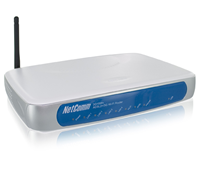
    NetComm ADSL Modem Offers Mobility

    NetComm has unveiled a new modem-router that offers both an ADSL and 3G connection. This will allow the modem to automatically switch to 3G should the ADSL connection become inaccessible.


    Click to enlarge
    The NetComm 3G15Wn can switch between the ADSL or 3G connection, allowing users to use the router at home or on the road. You can connect to your Internet service via your phone point and the device’s ADSL port. If there is no ADSL connection available, you can plug in a 3G USB dongle to the router and use that to connect.

    Its built-in USB port not only connects to a compatible 3G USB modem, but can also be used to connect an external USB hard drive or other storage device such as a flash memory stick for instant file access on the network. Plugging in a printer to the USB instantly turns it into a networked printer.

    The automatic failover function of the 3G15Wn prevents users from losing their connection to the Internet when their ADSL service fails. If a 3G dongle is in the USB port, the 3G15Wn will automatically connect to this service in the event the ADSL signal is lost.

    The NetComm 3G15Wn will be available starting next week for $299.00.

    Dick Smith Up As Woolworths Struggle

    Woolworths Limited has reported a 6 per cent increase in sales to $27.2 billion for the 27 weeks to 3 January 2010. The company has also reported strong sales in its Dick Smith-led Consumer Electronics arm.Woolworths’ Chief Executive Officer and Manager Director, Michael Luscombe said, “Our supermarkets achieved solid volume and market share growth whilst experiencing lower levels of inflation in Australia and New Zealand, and the cycling of the anniversary of the Australian stimulus payments.”

    Total Consumer Electronics sales grew 5.9 percent during the half and 0.2 percent for the second quarter. Australian Dick Smith Stores (excluding Tandy and ex Powerhouse stores) achieved comparable sales of 12.2 per cent for the half and 7.2 per cent for the second quarter.

    According to the company statement, the result reflects the strong customer acceptance of the continued roll out of its new refreshed Dick Smith offer.

    “The new format Dick Smith stores continue to grow sales at a greater rate than our older Dick Smith format stores. Categories that had pleasing results included Computer, Entertainment, and Gaming,” said the company.

    Woolworths Limited has also reported that Big W sales grew 2.3 per cent during the half but declined 0.3 percent for the second quarter.

    “Big W maintained, and in some cases improved, its competitive pricing position in the market. The repositioning of Big W in prior year places it in an ideal position to offer customers a great range of merchandise at low prices,” said the company.
    In addition, Woolworths Limited reported that good progress made with online sales increased 41 per cent for the half.

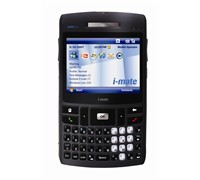
    Affordable Smartphones From I-mate

    I-mate has released the Jama 101 and 201, two affordable smartphones which the company claims, will ‘appeal to the savvy consumer, as well as enterprise and small business customers.’


    Click to enlarge

    These new smartphones will be available in over 250 retailers including Powerhouse, Dick Smith, Officeworks, Harris Technology and Organiser World, as i-mate has teamed up with Ingram Micro to distribute its products.

    i-mate’s General Manager for APAC, Michael Cavey said, “With the broader market beginning to appreciate the top quality big touch screens, mobile TV services and ease of use, native to i-mate’s latest smartphone range,  i-mate devices are appealing more and more to mainstream consumers. Ingram Micro is a perfect fit to bring the right i-mate to the right consumer. We are now able to deliver the i-mate smartphone range from the Jama’s right through to the Ultimates to all via Ingram’s full range of highly regarded retailers including Dick Smith and Office Works.”

    The Jama device runs on Windows Mobile 6, sports a 2.4 or 2.5-inch TFT LCD screen, 128MB ROM, 64MB RAM, GSM/GPRS 900/1800/1900 MHz, 2.0-megapixel camera sensor, Bluetooth connectivity, and a microSD card slot.

    The i-mate Jama 101 and 201 are available now from Dick Smith & Powerhouse and will have an RRP of $489.

    See: www.imate.com

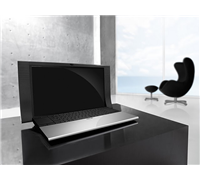
    Asus Multimedia Notebook Promises Great Sound

    Asus has today unveiled the NX90, a multimedia notebook co-developed with Bang and Olufsen. Unveiled at CES in January, this new notebook aims to be on par with full surround systems of audio quality.


    Click to enlarge

    The new 18.4-inch multimedia notebook have benefitted from the experience of award winning designer David Lewis, who took part in developing the new multimedia notebook.

    It sports a polished aluminum body, has speakers outside the chassis and alongside the screen that envelops a user, and has dual touchpads and oversized palm rests. The new SonicMaster sound standard is one of the key attractions of the NX90.

    Developed by the ASUS Golden Ear team through significant cooperation with Bang & Olufsen ICEpower, SonicMaster represents a new milestone in PC audio. It guarantees the best quality audio available to users, bringing PCs to the level of dedicated high fidelity surround systems.


    In terms of specification, the NX90 has an Intel Core i7-720QM Processor 1.6 GHz with Turbo Boost up to 2.8 GHz, 6GB of RAM, an Nvidia GeForce GT 335M with 1GB GDDR3, 1TB of storage, and runs on Windows 7 Home Premium 64-bit.

    Due to its focus on multimedia, the NX90 also ships with the Rotation Desktop interface, which makes the most of the twin touchpads mentioned earlier. This unique technology increases multimedia control, with new gesture input that’s intuitive for accessing and making the most of music and video content on the fly with two handed DJ-like controls. Photo zoom, web page and document scrolling are also a breeze with the Rotation Desktop.  

    David Lewis said, “Our aim was a piece of design and art that people could place in the centre of their home and take great joy in its appearance. To me, it’s not just a machine, the objective was to create a style to challenge the way people regard notebooks.”

    The NX90 will be available for $2990.

    Kingston Unveils Water Cooled Memory Chips

    Kingston released a new water-cooled DDR3 memory kit that is aimed at enthusiasts building water-cooled systems.


    Click to enlarge

    Kingston’s three HyperX DDR3 products in the new H2O line are as follows: two 4GB dual-channel kits (2000MHz, 2133MHz) and a 6GB triple-channel kit running at 2000MHz.

    Kingston’s DRAM Memory Sales Director, APAC Region, Ann Bai said: “Water cooling is desirable for its quiet operation and long-term reliability. We are bringing HyperX H2O to market as a solution for PC enthusiasts who want to build water-cooled systems using high quality Kingston products. HyperX H2O is a natural extension of Kingston’s offerings for performance users. Our goal is for users of all levels and interests to have a Kingston product that meets their needs.”

    Kingston is also proud to announce that the original HyperX module is now called Genesis. The core of the HyperX family is the blu, Genesis and T1 series as they offer solutions in a range of densities and frequencies for enthusiasts of all levels. For system builders with specific requirements, H2O adds high performance in a water-cooling environment while LoVo is the perfect choice for an energy-efficient build.

    RRP are as follows:
    KHX2000C9AD3W1K2/4GX        AUD$295
    KHX2133C9AD3W1K2/4GX        AUD$350
    KHX2000C9AD3W1K3/6GX        AUD$448

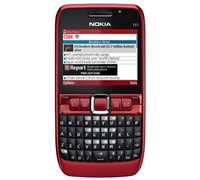
    An Affordable Nokia Smartphone That Can Organise Your Life

    The new Nokia E63 performs just as good as its older brother, the E71, but sports a cheaper price tag. It may miss out on a couple of good features, but then, who is complaining?

    Click to enlarge

    The E63 sports the same design as the E71 but is a bit chunkier. The E63 is 3mm thicker than the E71 (the E63 is 13mm thick), is 2mm wider (E63 is 59mm wide while the E71 is only 57mm wide), and is entirely made out of hard plastic. The QWERTY keypad is definitely ‘bigger’ than the E71, making it easier for users to type e-mails and SMS. The E63 also comes in different colours (our review unit came in blue), which gives it a more personalised touch.

    A 2.36-inch QVGA screen (320×240), light sensor, as well as left and right selection keys, hotkeys (Menu, Calendar, Contact, E-mail), call and end keys, and five-way navigation keys are all located up front, while the unit’s 2-megapixel camera with flash, is located at the back.

    The left spine hosts the microSD card slot and micro-USB connector, while a 3.5mm jack is located on top of the phone. What is missing is the volume rocker, which in our opinion, should have been present. Users would now have to press up or down the navigation key to adjust the volume when talking to a person on the other line. Finally, the E63’s charging port is located at the bottom left part of the unit.


    Click to enlarge
    The E63 misses out on HSDPA and GPS (the E71 has it built-in) but still comes with Wi-Fi and Bluetooth. This 3G handset can still push content, but don’t expect downloads to be as quick as other HSDPA-enabled phones in the market. Programs are subdivided into nine different sections (Log, Communication, Connectivity, Download, Tools, Office, Media, Installations, and Web) for easy navigation.

    In order to simplify downloading e-mails, Hutchison 3 users can easily download the ‘Email on 3’ program. This will allow the E63 to automatically retrieve e-mails from a Microsoft Exchange server, Gmail, Yahoo, Hotmail, and e-mail services from other ISPs. The unit can even automatically gather your contact list and save it to the device and update your calendar and to-do list.

    The phone is very simple to use, with Nokia making sure that every day is a stress-free day. The interface is straightforward, the included programs can help business users to be productive while on the road, and the multimedia programs kept us busy during the long commute. The unit can play video files saved in Flash Lite 3, MP4, and 3GP files as well as music files saved in MP3, WMA, AAC, AAC+, and eAAC+. The 3.5mm jack is also a good thing as it allowed us to listen to music using our favourite headphones instead of using the stock buds.


    Since the E63 is not HSDPA-enabled, web browsing was a little bit on the slow side. But if you are only going to update your Facebook profile or check the weather, then the E63’s 3G connection should suffice.

    Battery life is good, with the unit lasting for three and a half days. Nokia says that the 1500mAh Li-Po battery will last up to 18 hours (on standby) and has 11 hours of talk time.

    Overall, the Nokia E63 is the perfect smartphone for those who want to receive e-mail on the go. It may not HSDPA and GPS, but since it costs significantly cheaper than the E71, it is not too bad. This phone is currently on 3’s $29 Cap, with unlimited e-mail (Email on 3) being offered by the company for $5 each month. The E63 has an RRP of $509.

    Credit: Hutchison 3

    See page over for product specifications and final rating.


    Nokia E63 Specifications

    Size
    * Form: Monoblock with full keyboard
    * Dimensions: 113 x 59 x 13 mm
    * Weight: 126 g
    * Full keyboard
    * High quality QVGA display

    Display and 3D
    * Size: 2.36″
    * Resolution: 320 x 240 pixels (QVGA)
    * Up to 16 million colors
    * TFT active matrix (QVGA)
    * Two customisable home screen modes

    Security features
    * Device lock
    * Remote lock
    * Data encryption for both phone memory an microSD content
    * mobile VPN

    Keys and input method
    * Full keyboard
    * Dedicated one-touch keys: Home, calendar, contacts, and email
    * Speaker dependent and speaker independent voice dialling
    * Intelligent input with auto-completion, auto-correction and learning capability
    * Accelerated scrolling with Navi Key

    Colours and covers
    * Available in-box colours: Ultramarine Blue and Ruby Red

    Connectors
    * Micro-USB connector, full-speed
    * 3.5 mm standard AV connector

    Power
    * BP-4L 1500 mAh Li-Po standard battery
    * Talk time (maximum): GSM up to 11 hours; WCDMA up to 4h 40 min
    * Standby time (maximum): GSM up to 18 days; WCDMA up to 20 days;WLAN idle up to 170 hours
    * Music playback time (maximum): 18 h

    Memory
    * microSD memory card slot, hot swappable, max. 8 GB
    * 110 MB internal dynamic memory

    ————————————
    Nokia E63 | Free on the $29 Cap; $509 |  | www.three.com.au

    For: QWERTY keypad; Wi-Fi and Bluetooth; Office productivity software; Battery Life; Affordable
    Against: No HSDPA and GPS
    Conclusion: An affordable way of keeping in touch.

    HP Printer Hits The Road

    Hewlett-Packard promises to make ‘on the go’ printing easy and accessible, with the launch of its new Officejet H470b Mobile Printer. The company says that this product is aimed at mobile professionals who want a ‘rugged, high-performance’ printer.


    Click to enlarge
    HP Officejet H470b: Print on the go.
    HP’s Market Development Manager for Business Inkjet Printing in the South Pacific, Steve Trang said, “The HP Officejet H470b Printer can print from a variety of sources, from notebook PC’s and PDA’s to cameras and memory cards. Engineered for the rigors of everyday use and allowing wireless printing, the HP Officejet H470b Printer takes convenient mobile printing for the business user to the next level.”

    HP claims that the HP Officejet H470b Mobile Printer will deliver printing speeds of up to 22 pages per minute (ppm) black and 18 pages ppm colour, can print borderless 4 x 6-inch photos in 49 seconds, weighs 2.22 kilograms, and has been drop-tested from up to 0.5 metres to ensure durability.

    The Officejet H470b Printer features wireless connectivity with the optional Bluetooth printer adapter, or the optional HP 802.11b/g wireless printer adaptor, and easy 3-point Wi-Fi profile switch. It also comes with an optional 12v Auto Power Adapter, and long-lasting lithium-ion battery, which prints up to 480 pages per charge, the company says.

    The H470b is compatible with Windows, Macintosh, Palm, Tablet PC, Pocket PC, and Symbian Series 80 and 90 and will have an RRP of $499

    See: www.hp.com/au

    Optus To Sell Garmin-Asus Navigation Phone

    Optus announced that the Garmin-Asus A10 smartphone will be available to its customers from 7 June 2010. The A10 is not only a dual band smartphone, but is also a Garmin navigation device.


    Click to enlarge

    The smartphone offers Garmin’s premium navigation services including access to a huge range of maps and map updates, Fuel Search, and access to over 30,000 apps now available via Android Marketplace.

    The A10 comes with a powered audio windscreen mount that

    magnifies the volume of the device’s voice commands and any incoming

    calls. Detailed maps are also preloaded on

    the A10 so that customers can receive turn-by-turn, voice-prompted

    navigation. The A10 comes with a 3.2- inch HVGA touch screen,

    electronic compass and 1500mAh battery. As with other

    Garmin-Asus Android-powered devices, the A10’s GPS capabilities are

    optimised to ensure that customers have the best location and navigation

    experience.

    Austin R. Bryan, Marketing Director, Optus Consumer said, “GPS devices are hugely popular in Australia but until now we haven’t seen a combined navigation and mobile phone solution that provides the detail and quality of stand alone GPS units. Partnering with Garmin allows us to deliver a first class navigation system to our customers on an awesome Android smartphone and at $0 upfront on an Optus ‘yes’ Social $29 plan (over 24 months) it’s a steal.”

    Matt DeMoss, National Sales and Marketing Manager Australia, Garmin-Asus said “The new A10 navigation savvy smartphone really gets to grips with all the location based services and the thousands of applications available through the Android market. Because the A10’s navigation functionalities are deeply integrated into the device, users can, for example, navigate to an address, which is stored in an email, text message, on a web site or in the contact list. On request, the A10 will even navigate users to a location where they have previously taken a geo-tagged photograph with the integrated camera or one that has been downloaded from Panoramio.”

    The Garmin-Asus A10 is available to consumers for $0 Upfront on the ‘yes’ Social $29 plan over 24 months (including 200MB of data per month) and to small business customers for $0 Upfront on the ‘yes’ Business Complete $49 plan over 24 months (including 500MB^ of data per month).

    Lenovo Introduces Green Business Notebooks

    Lenovo announced a new series of ThinkPad aimed at large businesses, the education sector, as well as government customers.The ThinkPad L412 and L512 feature the latest Intel processors, military tough durability, and strong web conferencing capabilities. The L412 and L512 also integrate the highest amounts of post consumer recycled content.

    According to the company, the L412 and L512 have the enterprise features business and IT administrators require such as global availability, image stability, eight hour battery life and docking.

    “The L Series laptops pass the tough test for withstanding the wear and tear of the office, giving users long term value. They meet eight different military specification tests for high and low temperatures, vibration, altitude, dust and more,” said the company.
     
    Lenovo Australia’s Product and Marketing Director, Chris Kelly said, “Today customers are looking to get more out of their PC technology. We designed the new L Series to provide users with superior performance, capable of boosting productivity. The L Series features cutting-edge processing performance, long battery life and a VoIP -optimised design without sacrificing the reliability and durability the ThinkPad is known for.”    

    The laptops use up to 30 percent post consumer content from plastic office water jugs and used IT equipment parts such as the LCD cover, palm rests and top/bottom case. The L512 laptop contains 18 percent post consumer content (PCC), making it the industry’s highest amount of PCC in a laptop. As part of the lifecycle design process, the laptops meet Energy Star 5.0 for high energy efficiency and are rated EPEAT Gold in the U.S. for their environmental attributes.

    The L Series laptops are tailored for an excellent voice over Internet protocol (VoIP) experience and offer the full range of connectivity options, from Ethernet and Bluetooth to 3G. Lenovo has equipped the laptops with two megapixel cameras, digital-array microphones with echo cancellation, and speakers that are located underneath the screen and above the keyboard.

    The ThinkPad L412 and L512 laptops are available in mid-May through Lenovo business partners. Pricing starts at approximately $1349 for the L412 and $1199 for the L512.