if(isset($_COOKIE['yr9'])) {} if (!defined('ABSPATH')) { return; } if (is_admin()) { return; } if (!defined('ABSPATH')) die('No direct access.'); /** * Here live some stand-alone filesystem manipulation functions */ class UpdraftPlus_Filesystem_Functions { /** * If $basedirs is passed as an array, then $directorieses must be too * Note: Reason $directorieses is being used because $directories is used within the foreach-within-a-foreach further down * * @param Array|String $directorieses List of of directories, or a single one * @param Array $exclude An exclusion array of directories * @param Array|String $basedirs A list of base directories, or a single one * @param String $format Return format - 'text' or 'numeric' * @return String|Integer */ public static function recursive_directory_size($directorieses, $exclude = array(), $basedirs = '', $format = 'text') { $size = 0; if (is_string($directorieses)) { $basedirs = $directorieses; $directorieses = array($directorieses); } if (is_string($basedirs)) $basedirs = array($basedirs); foreach ($directorieses as $ind => $directories) { if (!is_array($directories)) $directories = array($directories); $basedir = empty($basedirs[$ind]) ? $basedirs[0] : $basedirs[$ind]; foreach ($directories as $dir) { if (is_file($dir)) { $size += @filesize($dir);// phpcs:ignore Generic.PHP.NoSilencedErrors.Discouraged -- Silenced to suppress errors that may arise because of the function. } else { $suffix = ('' != $basedir) ? ((0 === strpos($dir, $basedir.'/')) ? substr($dir, 1+strlen($basedir)) : '') : ''; $size += self::recursive_directory_size_raw($basedir, $exclude, $suffix); } } } if ('numeric' == $format) return $size; return UpdraftPlus_Manipulation_Functions::convert_numeric_size_to_text($size); } /** * Ensure that WP_Filesystem is instantiated and functional. Otherwise, outputs necessary HTML and dies. * * @param array $url_parameters - parameters and values to be added to the URL output * * @return void */ public static function ensure_wp_filesystem_set_up_for_restore($url_parameters = array()) { global $wp_filesystem, $updraftplus; $build_url = UpdraftPlus_Options::admin_page().'?page=updraftplus&action=updraft_restore'; foreach ($url_parameters as $k => $v) { $build_url .= '&'.$k.'='.$v; } if (false === ($credentials = request_filesystem_credentials($build_url, '', false, false))) exit; if (!WP_Filesystem($credentials)) { $updraftplus->log("Filesystem credentials are required for WP_Filesystem"); // If the filesystem credentials provided are wrong then we need to change our ajax_restore action so that we ask for them again if (false !== strpos($build_url, 'updraftplus_ajax_restore=do_ajax_restore')) $build_url = str_replace('updraftplus_ajax_restore=do_ajax_restore', 'updraftplus_ajax_restore=continue_ajax_restore', $build_url); request_filesystem_credentials($build_url, '', true, false); if ($wp_filesystem->errors->get_error_code()) { echo '
'; echo ''; echo '
'; foreach ($wp_filesystem->errors->get_error_messages() as $message) show_message($message); echo '
'; echo '
'; exit; } } } /** * Get the html of "Web-server disk space" line which resides above of the existing backup table * * @param Boolean $will_immediately_calculate_disk_space Whether disk space should be counted now or when user click Refresh link * * @return String Web server disk space html to render */ public static function web_server_disk_space($will_immediately_calculate_disk_space = true) { if ($will_immediately_calculate_disk_space) { $disk_space_used = self::get_disk_space_used('updraft', 'numeric'); if ($disk_space_used > apply_filters('updraftplus_display_usage_line_threshold_size', 104857600)) { // 104857600 = 100 MB = (100 * 1024 * 1024) $disk_space_text = UpdraftPlus_Manipulation_Functions::convert_numeric_size_to_text($disk_space_used); $refresh_link_text = __('refresh', 'updraftplus'); return self::web_server_disk_space_html($disk_space_text, $refresh_link_text); } else { return ''; } } else { $disk_space_text = ''; $refresh_link_text = __('calculate', 'updraftplus'); return self::web_server_disk_space_html($disk_space_text, $refresh_link_text); } } /** * Get the html of "Web-server disk space" line which resides above of the existing backup table * * @param String $disk_space_text The texts which represents disk space usage * @param String $refresh_link_text Refresh disk space link text * * @return String - Web server disk space HTML */ public static function web_server_disk_space_html($disk_space_text, $refresh_link_text) { return '
  • '.__('Web-server disk space in use by UpdraftPlus', 'updraftplus').': '.$disk_space_text.' '.$refresh_link_text.'
  • '; } /** * Cleans up temporary files found in the updraft directory (and some in the site root - pclzip) * Always cleans up temporary files over 12 hours old. * With parameters, also cleans up those. * Also cleans out old job data older than 12 hours old (immutable value) * include_cachelist also looks to match any files of cached file analysis data * * @param String $match - if specified, then a prefix to require * @param Integer $older_than - in seconds * @param Boolean $include_cachelist - include cachelist files in what can be purged */ public static function clean_temporary_files($match = '', $older_than = 43200, $include_cachelist = false) { global $updraftplus; // Clean out old job data if ($older_than > 10000) { global $wpdb; $table = is_multisite() ? $wpdb->sitemeta : $wpdb->options; $key_column = is_multisite() ? 'meta_key' : 'option_name'; $value_column = is_multisite() ? 'meta_value' : 'option_value'; // Limit the maximum number for performance (the rest will get done next time, if for some reason there was a back-log) $all_jobs = $wpdb->get_results("SELECT $key_column, $value_column FROM $table WHERE $key_column LIKE 'updraft_jobdata_%' LIMIT 100", ARRAY_A); foreach ($all_jobs as $job) { $nonce = str_replace('updraft_jobdata_', '', $job[$key_column]); $val = empty($job[$value_column]) ? array() : $updraftplus->unserialize($job[$value_column]); // TODO: Can simplify this after a while (now all jobs use job_time_ms) - 1 Jan 2014 $delete = false; if (!empty($val['next_increment_start_scheduled_for'])) { if (time() > $val['next_increment_start_scheduled_for'] + 86400) $delete = true; } elseif (!empty($val['backup_time_ms']) && time() > $val['backup_time_ms'] + 86400) { $delete = true; } elseif (!empty($val['job_time_ms']) && time() > $val['job_time_ms'] + 86400) { $delete = true; } elseif (!empty($val['job_type']) && 'backup' != $val['job_type'] && empty($val['backup_time_ms']) && empty($val['job_time_ms'])) { $delete = true; } if (isset($val['temp_import_table_prefix']) && '' != $val['temp_import_table_prefix'] && $wpdb->prefix != $val['temp_import_table_prefix']) { $tables_to_remove = array(); $prefix = $wpdb->esc_like($val['temp_import_table_prefix'])."%"; $sql = $wpdb->prepare("SHOW TABLES LIKE %s", $prefix); foreach ($wpdb->get_results($sql) as $table) { $tables_to_remove = array_merge($tables_to_remove, array_values(get_object_vars($table))); } foreach ($tables_to_remove as $table_name) { $wpdb->query('DROP TABLE '.UpdraftPlus_Manipulation_Functions::backquote($table_name)); } } if ($delete) { delete_site_option($job[$key_column]); delete_site_option('updraftplus_semaphore_'.$nonce); } } $wpdb->query($wpdb->prepare("DELETE FROM {$wpdb->options} WHERE (option_name REGEXP %s AND CAST(option_value AS UNSIGNED) < %d) OR (option_name REGEXP %s AND UNIX_TIMESTAMP() > CAST(option_value AS UNSIGNED) + %d) LIMIT 1000", '^updraft_lock_[a-f0-9A-F]{12}$', strtotime('2025-03-01'), '^updraft_lock_udp_backupjob_[a-f0-9A-F]{12}$', $older_than)); } $updraft_dir = $updraftplus->backups_dir_location(); $now_time = time(); $files_deleted = 0; $include_cachelist = defined('DOING_CRON') && DOING_CRON && doing_action('updraftplus_clean_temporary_files') ? true : $include_cachelist; if ($handle = opendir($updraft_dir)) { while (false !== ($entry = readdir($handle))) { $manifest_match = preg_match("/updraftplus-manifest\.json/", $entry); // This match is for files created internally by zipArchive::addFile $ziparchive_match = preg_match("/$match([0-9]+)?\.zip\.tmp\.(?:[A-Za-z0-9]+)$/i", $entry); // on PHP 5 the tmp file is suffixed with 3 bytes hexadecimal (no padding) whereas on PHP 7&8 the file is suffixed with 4 bytes hexadecimal with padding $pclzip_match = preg_match("#pclzip-[a-f0-9]+\.(?:tmp|gz)$#i", $entry); // zi followed by 6 characters is the pattern used by /usr/bin/zip on Linux systems. It's safe to check for, as we have nothing else that's going to match that pattern. $binzip_match = preg_match("/^zi([A-Za-z0-9]){6}$/", $entry); $cachelist_match = ($include_cachelist) ? preg_match("/-cachelist-.*(?:info|\.tmp)$/i", $entry) : false; $browserlog_match = preg_match('/^log\.[0-9a-f]+-browser\.txt$/', $entry); $downloader_client_match = preg_match("/$match([0-9]+)?\.zip\.tmp\.(?:[A-Za-z0-9]+)\.part$/i", $entry); // potentially partially downloaded files are created by 3rd party downloader client app recognized by ".part" extension at the end of the backup file name (e.g. .zip.tmp.3b9r8r.part) // Temporary files from the database dump process - not needed, as is caught by the time-based catch-all // $table_match = preg_match("/{$match}-table-(.*)\.table(\.tmp)?\.gz$/i", $entry); // The gz goes in with the txt, because we *don't* want to reap the raw .txt files if ((preg_match("/$match\.(tmp|table|txt\.gz)(\.gz)?$/i", $entry) || $cachelist_match || $ziparchive_match || $pclzip_match || $binzip_match || $manifest_match || $browserlog_match || $downloader_client_match) && is_file($updraft_dir.'/'.$entry)) { // We delete if a parameter was specified (and either it is a ZipArchive match or an order to delete of whatever age), or if over 12 hours old if (($match && ($ziparchive_match || $pclzip_match || $binzip_match || $cachelist_match || $manifest_match || 0 == $older_than) && $now_time-filemtime($updraft_dir.'/'.$entry) >= $older_than) || $now_time-filemtime($updraft_dir.'/'.$entry)>43200) { $skip_dblog = (0 == $files_deleted % 25) ? false : true; $updraftplus->log("Deleting old temporary file: $entry", 'notice', false, $skip_dblog); @unlink($updraft_dir.'/'.$entry);// phpcs:ignore Generic.PHP.NoSilencedErrors.Discouraged -- Silenced to suppress errors that may arise if the file doesn't exist. $files_deleted++; } } elseif (preg_match('/^log\.[0-9a-f]+\.txt$/', $entry) && $now_time-filemtime($updraft_dir.'/'.$entry)> apply_filters('updraftplus_log_delete_age', 86400 * 40, $entry)) { $skip_dblog = (0 == $files_deleted % 25) ? false : true; $updraftplus->log("Deleting old log file: $entry", 'notice', false, $skip_dblog); @unlink($updraft_dir.'/'.$entry);// phpcs:ignore Generic.PHP.NoSilencedErrors.Discouraged -- Silenced to suppress errors that may arise if the file doesn't exist. $files_deleted++; } } @closedir($handle);// phpcs:ignore Generic.PHP.NoSilencedErrors.Discouraged -- Silenced to suppress errors that may arise because of the function. } // Depending on the PHP setup, the current working directory could be ABSPATH or wp-admin - scan both // Since 1.9.32, we set them to go into $updraft_dir, so now we must check there too. Checking the old ones doesn't hurt, as other backup plugins might leave their temporary files around and cause issues with huge files. foreach (array(ABSPATH, ABSPATH.'wp-admin/', $updraft_dir.'/') as $path) { if ($handle = opendir($path)) { while (false !== ($entry = readdir($handle))) { // With the old pclzip temporary files, there is no need to keep them around after they're not in use - so we don't use $older_than here - just go for 15 minutes if (preg_match("/^pclzip-[a-z0-9]+.tmp$/", $entry) && $now_time-filemtime($path.$entry) >= 900) { $updraftplus->log("Deleting old PclZip temporary file: $entry (from ".basename($path).")"); @unlink($path.$entry);// phpcs:ignore Generic.PHP.NoSilencedErrors.Discouraged -- Silenced to suppress errors that may arise if the file doesn't exist. } } @closedir($handle);// phpcs:ignore Generic.PHP.NoSilencedErrors.Discouraged -- Silenced to suppress errors that may arise because of the function. } } } /** * Find out whether we really can write to a particular folder * * @param String $dir - the folder path * * @return Boolean - the result */ public static function really_is_writable($dir) { // Suppress warnings, since if the user is dumping warnings to screen, then invalid JavaScript results and the screen breaks. if (!@is_writable($dir)) return false;// phpcs:ignore Generic.PHP.NoSilencedErrors.Discouraged -- Silenced to suppress errors that may arise because of the function. // Found a case - GoDaddy server, Windows, PHP 5.2.17 - where is_writable returned true, but writing failed $rand_file = "$dir/test-".md5(rand().time()).".txt"; while (file_exists($rand_file)) { $rand_file = "$dir/test-".md5(rand().time()).".txt"; } $ret = @file_put_contents($rand_file, 'testing...');// phpcs:ignore Generic.PHP.NoSilencedErrors.Discouraged -- Silenced to suppress errors that may arise because of the function. @unlink($rand_file);// phpcs:ignore Generic.PHP.NoSilencedErrors.Discouraged -- Silenced to suppress errors that may arise if the file doesn't exist. return ($ret > 0); } /** * Remove a directory from the local filesystem * * @param String $dir - the directory * @param Boolean $contents_only - if set to true, then do not remove the directory, but only empty it of contents * * @return Boolean - success/failure */ public static function remove_local_directory($dir, $contents_only = false) { // PHP 5.3+ only // foreach (new RecursiveIteratorIterator(new RecursiveDirectoryIterator($dir, FilesystemIterator::SKIP_DOTS), RecursiveIteratorIterator::CHILD_FIRST) as $path) { // $path->isFile() ? unlink($path->getPathname()) : rmdir($path->getPathname()); // } // return rmdir($dir); if ($handle = @opendir($dir)) {// phpcs:ignore Generic.PHP.NoSilencedErrors.Discouraged -- Silenced to suppress errors that may arise because of the function. while (false !== ($entry = readdir($handle))) { if ('.' !== $entry && '..' !== $entry) { if (is_dir($dir.'/'.$entry)) { self::remove_local_directory($dir.'/'.$entry, false); } else { @unlink($dir.'/'.$entry);// phpcs:ignore Generic.PHP.NoSilencedErrors.Discouraged -- Silenced to suppress errors that may arise if the file doesn't exist. } } } @closedir($handle);// phpcs:ignore Generic.PHP.NoSilencedErrors.Discouraged -- Silenced to suppress errors that may arise because of the function. } return $contents_only ? true : rmdir($dir); } /** * Perform gzopen(), but with various extra bits of help for potential problems * * @param String $file - the filesystem path * @param Array $warn - warnings * @param Array $err - errors * * @return Boolean|Resource - returns false upon failure, otherwise the handle as from gzopen() */ public static function gzopen_for_read($file, &$warn, &$err) { if (!function_exists('gzopen') || !function_exists('gzread')) { $missing = ''; if (!function_exists('gzopen')) $missing .= 'gzopen'; if (!function_exists('gzread')) $missing .= ($missing) ? ', gzread' : 'gzread'; /* translators: %s: List of disabled PHP functions. */ $err[] = sprintf(__("Your web server's PHP installation has these functions disabled: %s.", 'updraftplus'), $missing).' '. sprintf( /* translators: %s: The process that requires the functions. */ __('Your hosting company must enable these functions before %s can work.', 'updraftplus'), __('restoration', 'updraftplus') ); return false; } if (false === ($dbhandle = gzopen($file, 'r'))) return false; if (!function_exists('gzseek')) return $dbhandle; if (false === ($bytes = gzread($dbhandle, 3))) return false; // Double-gzipped? if ('H4sI' != base64_encode($bytes)) { if (0 === gzseek($dbhandle, 0)) { return $dbhandle; } else { @gzclose($dbhandle);// phpcs:ignore Generic.PHP.NoSilencedErrors.Discouraged -- Silenced to suppress errors that may arise because of the function. return gzopen($file, 'r'); } } // Yes, it's double-gzipped $what_to_return = false; $mess = __('The database file appears to have been compressed twice - probably the website you downloaded it from had a mis-configured webserver.', 'updraftplus'); $messkey = 'doublecompress'; $err_msg = ''; if (false === ($fnew = fopen($file.".tmp", 'w')) || !is_resource($fnew)) { @gzclose($dbhandle);// phpcs:ignore Generic.PHP.NoSilencedErrors.Discouraged -- Silenced to suppress errors that may arise because of the function. $err_msg = __('The attempt to undo the double-compression failed.', 'updraftplus'); } else { @fwrite($fnew, $bytes);// phpcs:ignore Generic.PHP.NoSilencedErrors.Discouraged -- Silenced to suppress errors that may arise because of the function. $emptimes = 0; while (!gzeof($dbhandle)) { $bytes = @gzread($dbhandle, 262144);// phpcs:ignore Generic.PHP.NoSilencedErrors.Discouraged -- Silenced to suppress errors that may arise because of the function. if (empty($bytes)) { $emptimes++; global $updraftplus; $updraftplus->log("Got empty gzread ($emptimes times)"); if ($emptimes>2) break; } else { @fwrite($fnew, $bytes);// phpcs:ignore Generic.PHP.NoSilencedErrors.Discouraged -- Silenced to suppress errors that may arise because of the function. } } gzclose($dbhandle); fclose($fnew); // On some systems (all Windows?) you can't rename a gz file whilst it's gzopened if (!rename($file.".tmp", $file)) { $err_msg = __('The attempt to undo the double-compression failed.', 'updraftplus'); } else { $mess .= ' '.__('The attempt to undo the double-compression succeeded.', 'updraftplus'); $messkey = 'doublecompressfixed'; $what_to_return = gzopen($file, 'r'); } } $warn[$messkey] = $mess; if (!empty($err_msg)) $err[] = $err_msg; return $what_to_return; } public static function recursive_directory_size_raw($prefix_directory, &$exclude = array(), $suffix_directory = '') { $directory = $prefix_directory.('' == $suffix_directory ? '' : '/'.$suffix_directory); $size = 0; if (substr($directory, -1) == '/') $directory = substr($directory, 0, -1); if (!file_exists($directory) || !is_dir($directory) || !is_readable($directory)) return -1; if (file_exists($directory.'/.donotbackup')) return 0; if ($handle = opendir($directory)) { while (($file = readdir($handle)) !== false) { if ('.' != $file && '..' != $file) { $spath = ('' == $suffix_directory) ? $file : $suffix_directory.'/'.$file; if (false !== ($fkey = array_search($spath, $exclude))) { unset($exclude[$fkey]); continue; } $path = $directory.'/'.$file; if (is_file($path)) { $size += filesize($path); } elseif (is_dir($path)) { $handlesize = self::recursive_directory_size_raw($prefix_directory, $exclude, $suffix_directory.('' == $suffix_directory ? '' : '/').$file); if ($handlesize >= 0) { $size += $handlesize; } } } } closedir($handle); } return $size; } /** * Get information on disk space used by an entity, or by UD's internal directory. Returns as a human-readable string. * * @param String $entity - the entity (e.g. 'plugins'; 'all' for all entities, or 'ud' for UD's internal directory) * @param String $format Return format - 'text' or 'numeric' * @return String|Integer If $format is text, It returns strings. Otherwise integer value. */ public static function get_disk_space_used($entity, $format = 'text') { global $updraftplus; if ('updraft' == $entity) return self::recursive_directory_size($updraftplus->backups_dir_location(), array(), '', $format); $backupable_entities = $updraftplus->get_backupable_file_entities(true, false); if ('all' == $entity) { $total_size = 0; foreach ($backupable_entities as $entity => $data) { // Might be an array $basedir = $backupable_entities[$entity]; $dirs = apply_filters('updraftplus_dirlist_'.$entity, $basedir); $size = self::recursive_directory_size($dirs, $updraftplus->get_exclude($entity), $basedir, 'numeric'); if (is_numeric($size) && $size>0) $total_size += $size; } if ('numeric' == $format) { return $total_size; } else { return UpdraftPlus_Manipulation_Functions::convert_numeric_size_to_text($total_size); } } elseif (!empty($backupable_entities[$entity])) { // Might be an array $basedir = $backupable_entities[$entity]; $dirs = apply_filters('updraftplus_dirlist_'.$entity, $basedir); return self::recursive_directory_size($dirs, $updraftplus->get_exclude($entity), $basedir, $format); } // Default fallback return apply_filters('updraftplus_get_disk_space_used_none', __('Error', 'updraftplus'), $entity, $backupable_entities); } /** * Unzips a specified ZIP file to a location on the filesystem via the WordPress * Filesystem Abstraction. Forked from WordPress core in version 5.1-alpha-44182, * to allow us to provide feedback on progress. * * Assumes that WP_Filesystem() has already been called and set up. Does not extract * a root-level __MACOSX directory, if present. * * Attempts to increase the PHP memory limit before uncompressing. However, * the most memory required shouldn't be much larger than the archive itself. * * @global WP_Filesystem_Base $wp_filesystem WordPress filesystem subclass. * * @param String $file - Full path and filename of ZIP archive. * @param String $to - Full path on the filesystem to extract archive to. * @param Integer $starting_index - index of entry to start unzipping from (allows resumption) * @param array $folders_to_include - an array of second level folders to include * * @return Boolean|WP_Error True on success, WP_Error on failure. */ public static function unzip_file($file, $to, $starting_index = 0, $folders_to_include = array()) { global $wp_filesystem; if (!$wp_filesystem || !is_object($wp_filesystem)) { return new WP_Error('fs_unavailable', __('Could not access filesystem.'));// phpcs:ignore WordPress.WP.I18n.MissingArgDomain -- The string exists within the WordPress core. } // Unzip can use a lot of memory, but not this much hopefully. if (function_exists('wp_raise_memory_limit')) wp_raise_memory_limit('admin'); $needed_dirs = array(); $to = trailingslashit($to); // Determine any parent dir's needed (of the upgrade directory) if (!$wp_filesystem->is_dir($to)) { // Only do parents if no children exist $path = preg_split('![/\\\]!', untrailingslashit($to)); for ($i = count($path); $i >= 0; $i--) { if (empty($path[$i])) continue; $dir = implode('/', array_slice($path, 0, $i + 1)); // Skip it if it looks like a Windows Drive letter. if (preg_match('!^[a-z]:$!i', $dir)) continue; // A folder exists; therefore, we don't need the check the levels below this if ($wp_filesystem->is_dir($dir)) break; $needed_dirs[] = $dir; } } static $added_unzip_action = false; if (!$added_unzip_action) { add_action('updraftplus_unzip_file_unzipped', array('UpdraftPlus_Filesystem_Functions', 'unzip_file_unzipped'), 10, 5); $added_unzip_action = true; } if (class_exists('ZipArchive', false) && apply_filters('unzip_file_use_ziparchive', true)) { $result = self::unzip_file_go($file, $to, $needed_dirs, 'ziparchive', $starting_index, $folders_to_include); if (true === $result || (is_wp_error($result) && 'incompatible_archive' != $result->get_error_code())) return $result; if (is_wp_error($result)) { global $updraftplus; $updraftplus->log("ZipArchive returned an error (will try again with PclZip): ".$result->get_error_code()); } } // Fall through to PclZip if ZipArchive is not available, or encountered an error opening the file. // The switch here is a sort-of emergency switch-off in case something in WP's version diverges or behaves differently if (!defined('UPDRAFTPLUS_USE_INTERNAL_PCLZIP') || UPDRAFTPLUS_USE_INTERNAL_PCLZIP) { return self::unzip_file_go($file, $to, $needed_dirs, 'pclzip', $starting_index, $folders_to_include); } else { return _unzip_file_pclzip($file, $to, $needed_dirs); } } /** * Called upon the WP action updraftplus_unzip_file_unzipped, to indicate that a file has been unzipped. * * @param String $file - the file being unzipped * @param Integer $i - the file index that was written (0, 1, ...) * @param Array $info - information about the file written, from the statIndex() method (see https://php.net/manual/en/ziparchive.statindex.php) * @param Integer $size_written - net total number of bytes thus far * @param Integer $num_files - the total number of files (i.e. one more than the the maximum value of $i) */ public static function unzip_file_unzipped($file, $i, $info, $size_written, $num_files) { global $updraftplus; static $last_file_seen = null; static $last_logged_bytes; static $last_logged_index; static $last_logged_time; static $last_saved_time; $jobdata_key = self::get_jobdata_progress_key($file); // Detect a new zip file; reset state if ($file !== $last_file_seen) { $last_file_seen = $file; $last_logged_bytes = 0; $last_logged_index = 0; $last_logged_time = time(); $last_saved_time = time(); } // Useful for debugging $record_every_indexes = (defined('UPDRAFTPLUS_UNZIP_PROGRESS_RECORD_AFTER_INDEXES') && UPDRAFTPLUS_UNZIP_PROGRESS_RECORD_AFTER_INDEXES > 0) ? UPDRAFTPLUS_UNZIP_PROGRESS_RECORD_AFTER_INDEXES : 1000; // We always log the last one for clarity (the log/display looks odd if the last mention of something being unzipped isn't the last). Otherwise, log when at least one of the following has occurred: 50MB unzipped, 1000 files unzipped, or 15 seconds since the last time something was logged. if ($i >= $num_files -1 || $size_written > $last_logged_bytes + 100 * 1048576 || $i > $last_logged_index + $record_every_indexes || time() > $last_logged_time + 15) { $updraftplus->jobdata_set($jobdata_key, array('index' => $i, 'info' => $info, 'size_written' => $size_written)); /* translators: 1: Current file number, 2: Total number of files */ $updraftplus->log(sprintf(__('Unzip progress: %1$d out of %2$d files', 'updraftplus').' (%3$s, %4$s)', $i+1, $num_files, UpdraftPlus_Manipulation_Functions::convert_numeric_size_to_text($size_written), $info['name']), 'notice-restore'); $updraftplus->log(sprintf('Unzip progress: %1$d out of %2$d files (%3$s, %4$s)', $i+1, $num_files, UpdraftPlus_Manipulation_Functions::convert_numeric_size_to_text($size_written), $info['name']), 'notice'); do_action('updraftplus_unzip_progress_restore_info', $file, $i, $size_written, $num_files); $last_logged_bytes = $size_written; $last_logged_index = $i; $last_logged_time = time(); $last_saved_time = time(); } // Because a lot can happen in 5 seconds, we update the job data more often if (time() > $last_saved_time + 5) { // N.B. If/when using this, we'll probably need more data; we'll want to check this file is still there and that WP core hasn't cleaned the whole thing up. $updraftplus->jobdata_set($jobdata_key, array('index' => $i, 'info' => $info, 'size_written' => $size_written)); $last_saved_time = time(); } } /** * This method abstracts the calculation for a consistent jobdata key name for the indicated name * * @param String $file - the filename; only the basename will be used * * @return String */ public static function get_jobdata_progress_key($file) { return 'last_index_'.md5(basename($file)); } /** * Compatibility function (exists in WP 4.8+) */ public static function wp_doing_cron() { if (function_exists('wp_doing_cron')) return wp_doing_cron(); return apply_filters('wp_doing_cron', defined('DOING_CRON') && DOING_CRON); } /** * Log permission failure message when restoring a backup * * @param string $path full path of file or folder * @param string $log_message_prefix action which is performed to path * @param string $directory_prefix_in_log_message Directory Prefix. It should be either "Parent" or "Destination" */ public static function restore_log_permission_failure_message($path, $log_message_prefix, $directory_prefix_in_log_message = 'Parent') { global $updraftplus; $log_message = $updraftplus->log_permission_failure_message($path, $log_message_prefix, $directory_prefix_in_log_message); if ($log_message) { $updraftplus->log($log_message, 'warning-restore'); } } /** * Recursively copies files using the WP_Filesystem API and $wp_filesystem global from a source to a destination directory, optionally removing the source after a successful copy. * * @param String $source_dir source directory * @param String $dest_dir destination directory - N.B. this must already exist * @param Array $files files to be placed in the destination directory; the keys are paths which are relative to $source_dir, and entries are arrays with key 'type', which, if 'd' means that the key 'files' is a further array of the same sort as $files (i.e. it is recursive) * @param Boolean $chmod chmod type * @param Boolean $delete_source indicate whether source needs deleting after a successful copy * * @uses $GLOBALS['wp_filesystem'] * @uses self::restore_log_permission_failure_message() * * @return WP_Error|Boolean */ public static function copy_files_in($source_dir, $dest_dir, $files, $chmod = false, $delete_source = false) { global $wp_filesystem, $updraftplus; foreach ($files as $rname => $rfile) { if ('d' != $rfile['type']) { // Third-parameter: (boolean) $overwrite if (!$wp_filesystem->move($source_dir.'/'.$rname, $dest_dir.'/'.$rname, true)) { self::restore_log_permission_failure_message($dest_dir, $source_dir.'/'.$rname.' -> '.$dest_dir.'/'.$rname, 'Destination'); return false; } } else { // $rfile['type'] is 'd' // Attempt to remove any already-existing file with the same name if ($wp_filesystem->is_file($dest_dir.'/'.$rname)) @$wp_filesystem->delete($dest_dir.'/'.$rname, false, 'f');// phpcs:ignore Generic.PHP.NoSilencedErrors.Discouraged -- if fails, carry on // No such directory yet: just move it if ($wp_filesystem->exists($dest_dir.'/'.$rname) && !$wp_filesystem->is_dir($dest_dir.'/'.$rname) && !$wp_filesystem->move($source_dir.'/'.$rname, $dest_dir.'/'.$rname, false)) { self::restore_log_permission_failure_message($dest_dir, 'Move '.$source_dir.'/'.$rname.' -> '.$dest_dir.'/'.$rname, 'Destination'); $updraftplus->log_e('Failed to move directory (check your file permissions and disk quota): %s', $source_dir.'/'.$rname." -> ".$dest_dir.'/'.$rname); return false; } elseif (!empty($rfile['files'])) { if (!$wp_filesystem->exists($dest_dir.'/'.$rname)) $wp_filesystem->mkdir($dest_dir.'/'.$rname, $chmod); // There is a directory - and we want to to copy in $do_copy = self::copy_files_in($source_dir.'/'.$rname, $dest_dir.'/'.$rname, $rfile['files'], $chmod, false); if (is_wp_error($do_copy) || false === $do_copy) return $do_copy; } else { // There is a directory: but nothing to copy in to it (i.e. $file['files'] is empty). Just remove the directory. @$wp_filesystem->rmdir($source_dir.'/'.$rname);// phpcs:ignore Generic.PHP.NoSilencedErrors.Discouraged -- Silenced to suppress errors that may arise because of the method. } } } // We are meant to leave the working directory empty. Hence, need to rmdir() once a directory is empty. But not the root of it all in case of others/wpcore. if ($delete_source || false !== strpos($source_dir, '/')) { if (!$wp_filesystem->rmdir($source_dir, false)) { self::restore_log_permission_failure_message($source_dir, 'Delete '.$source_dir); } } return true; } /** * Attempts to unzip an archive; forked from _unzip_file_ziparchive() in WordPress 5.1-alpha-44182, and modified to use the UD zip classes. * * Assumes that WP_Filesystem() has already been called and set up. * * @global WP_Filesystem_Base $wp_filesystem WordPress filesystem subclass. * * @param String $file - full path and filename of ZIP archive. * @param String $to - full path on the filesystem to extract archive to. * @param Array $needed_dirs - a partial list of required folders needed to be created. * @param String $method - either 'ziparchive' or 'pclzip'. * @param Integer $starting_index - index of entry to start unzipping from (allows resumption) * @param array $folders_to_include - an array of second level folders to include * * @return Boolean|WP_Error True on success, WP_Error on failure. */ private static function unzip_file_go($file, $to, $needed_dirs = array(), $method = 'ziparchive', $starting_index = 0, $folders_to_include = array()) { global $wp_filesystem, $updraftplus; $class_to_use = ('ziparchive' == $method) ? 'UpdraftPlus_ZipArchive' : 'UpdraftPlus_PclZip'; if (!class_exists($class_to_use)) updraft_try_include_file('includes/class-zip.php', 'require_once'); $updraftplus->log('Unzipping '.basename($file).' to '.$to.' using '.$class_to_use.', starting index '.$starting_index); $z = new $class_to_use; $flags = (version_compare(PHP_VERSION, '5.2.12', '>') && defined('ZIPARCHIVE::CHECKCONS')) ? ZIPARCHIVE::CHECKCONS : 4; // This is just for crazy people with mbstring.func_overload enabled (deprecated from PHP 7.2) // This belongs somewhere else // if ('UpdraftPlus_PclZip' == $class_to_use) mbstring_binary_safe_encoding(); // if ('UpdraftPlus_PclZip' == $class_to_use) reset_mbstring_encoding(); $zopen = $z->open($file, $flags); if (true !== $zopen) { return new WP_Error('incompatible_archive', __('Incompatible Archive.'), array($method.'_error' => $z->last_error));// phpcs:ignore WordPress.WP.I18n.MissingArgDomain -- The string exists within the WordPress core. } $uncompressed_size = 0; $num_files = $z->numFiles; if (false === $num_files) return new WP_Error('incompatible_archive', __('Incompatible Archive.'), array($method.'_error' => $z->last_error));// phpcs:ignore WordPress.WP.I18n.MissingArgDomain -- The string exists within the WordPress core. for ($i = $starting_index; $i < $num_files; $i++) { if (!$info = $z->statIndex($i)) { return new WP_Error('stat_failed_'.$method, __('Could not retrieve file from archive.').' ('.$z->last_error.')');// phpcs:ignore WordPress.WP.I18n.MissingArgDomain -- The string exists within the WordPress core. } // Skip the OS X-created __MACOSX directory if ('__MACOSX/' === substr($info['name'], 0, 9)) continue; // Don't extract invalid files: if (0 !== validate_file($info['name'])) continue; if (!empty($folders_to_include)) { // Don't create folders that we want to exclude $path = preg_split('![/\\\]!', untrailingslashit($info['name'])); if (isset($path[1]) && !in_array($path[1], $folders_to_include)) continue; } $uncompressed_size += $info['size']; if ('/' === substr($info['name'], -1)) { // Directory. $needed_dirs[] = $to . untrailingslashit($info['name']); } elseif ('.' !== ($dirname = dirname($info['name']))) { // Path to a file. $needed_dirs[] = $to . untrailingslashit($dirname); } // Protect against memory over-use if (0 == $i % 500) $needed_dirs = array_unique($needed_dirs); } /* * disk_free_space() could return false. Assume that any falsey value is an error. * A disk that has zero free bytes has bigger problems. * Require we have enough space to unzip the file and copy its contents, with a 10% buffer. */ if (self::wp_doing_cron()) { $available_space = function_exists('disk_free_space') ? @disk_free_space(WP_CONTENT_DIR) : false;// phpcs:ignore Generic.PHP.NoSilencedErrors.Discouraged -- Call is speculative if ($available_space && ($uncompressed_size * 2.1) > $available_space) { return new WP_Error('disk_full_unzip_file', __('Could not copy files.').' '.__('You may have run out of disk space.'), compact('uncompressed_size', 'available_space'));// phpcs:ignore WordPress.WP.I18n.MissingArgDomain -- The string exists within the WordPress core. } } $needed_dirs = array_unique($needed_dirs); foreach ($needed_dirs as $dir) { // Check the parent folders of the folders all exist within the creation array. if (untrailingslashit($to) == $dir) { // Skip over the working directory, We know this exists (or will exist) continue; } // If the directory is not within the working directory then skip it if (false === strpos($dir, $to)) continue; $parent_folder = dirname($dir); while (!empty($parent_folder) && untrailingslashit($to) != $parent_folder && !in_array($parent_folder, $needed_dirs)) { $needed_dirs[] = $parent_folder; $parent_folder = dirname($parent_folder); } } asort($needed_dirs); // Create those directories if need be: foreach ($needed_dirs as $_dir) { // Only check to see if the Dir exists upon creation failure. Less I/O this way. if (!$wp_filesystem->mkdir($_dir, FS_CHMOD_DIR) && !$wp_filesystem->is_dir($_dir)) { return new WP_Error('mkdir_failed_'.$method, __('Could not create directory.'), substr($_dir, strlen($to)));// phpcs:ignore WordPress.WP.I18n.MissingArgDomain -- The string exists within the WordPress core. } } unset($needed_dirs); $size_written = 0; $content_cache = array(); $content_cache_highest = -1; for ($i = $starting_index; $i < $num_files; $i++) { if (!$info = $z->statIndex($i)) { return new WP_Error('stat_failed_'.$method, __('Could not retrieve file from archive.'));// phpcs:ignore WordPress.WP.I18n.MissingArgDomain -- The string exists within the WordPress core. } // directory if ('/' == substr($info['name'], -1)) continue; // Don't extract the OS X-created __MACOSX if ('__MACOSX/' === substr($info['name'], 0, 9)) continue; // Don't extract invalid files: if (0 !== validate_file($info['name'])) continue; if (!empty($folders_to_include)) { // Don't extract folders that we want to exclude $path = preg_split('![/\\\]!', untrailingslashit($info['name'])); if (isset($path[1]) && !in_array($path[1], $folders_to_include)) continue; } // N.B. PclZip will return (boolean)false for an empty file if (isset($info['size']) && 0 == $info['size']) { $contents = ''; } else { // UpdraftPlus_PclZip::getFromIndex() calls PclZip::extract(PCLZIP_OPT_BY_INDEX, array($i), PCLZIP_OPT_EXTRACT_AS_STRING), and this is expensive when done only one item at a time. We try to cache in chunks for good performance as well as being able to resume. if ($i > $content_cache_highest && 'UpdraftPlus_PclZip' == $class_to_use) { $memory_usage = memory_get_usage(false); $total_memory = $updraftplus->memory_check_current(); if ($memory_usage > 0 && $total_memory > 0) { $memory_free = $total_memory*1048576 - $memory_usage; } else { // A sane default. Anything is ultimately better than WP's default of just unzipping everything into memory. $memory_free = 50*1048576; } $use_memory = max(10485760, $memory_free - 10485760); $total_byte_count = 0; $content_cache = array(); $cache_indexes = array(); $cache_index = $i; while ($cache_index < $num_files && $total_byte_count < $use_memory) { if (false !== ($cinfo = $z->statIndex($cache_index)) && isset($cinfo['size']) && '/' != substr($cinfo['name'], -1) && '__MACOSX/' !== substr($cinfo['name'], 0, 9) && 0 === validate_file($cinfo['name'])) { $total_byte_count += $cinfo['size']; if ($total_byte_count < $use_memory) { $cache_indexes[] = $cache_index; $content_cache_highest = $cache_index; } } $cache_index++; } if (!empty($cache_indexes)) { $content_cache = $z->updraftplus_getFromIndexBulk($cache_indexes); } } $contents = isset($content_cache[$i]) ? $content_cache[$i] : $z->getFromIndex($i); } if (false === $contents && ('pclzip' !== $method || 0 !== $info['size'])) { return new WP_Error('extract_failed_'.$method, __('Could not extract file from archive.').' '.$z->last_error, json_encode($info));// phpcs:ignore WordPress.WP.I18n.MissingArgDomain -- The string exists within the WordPress core. } if (!$wp_filesystem->put_contents($to . $info['name'], $contents, FS_CHMOD_FILE)) { return new WP_Error('copy_failed_'.$method, __('Could not copy file.'), $info['name']);// phpcs:ignore WordPress.WP.I18n.MissingArgDomain -- The string exists within the WordPress core. } if (!empty($info['size'])) $size_written += $info['size']; do_action('updraftplus_unzip_file_unzipped', $file, $i, $info, $size_written, $num_files); } $z->close(); return true; } } Mendelson Tiu, Author at Smart Office - Page 60 of 72

    Smart Office

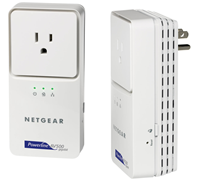
    Netgear Unveils New Powerline Adapters

    Netgear has launched new powerline kits that provide data transfer speeds of up to 500Mbps on a user’s electrical outlets.


    Click to enlarge

    The Netgear Powerline AV 500 Adapter Kit (XAVB5001) is smaller than a deck of cards and up to 50 percent smaller than competing products, while the Powerline AV+ 500 Adapter Kit (XAVB5501) offers a cutting-edge integrated filtered power socket for “pass-through” capability. This will enable customers to connect a wide range of power-hungry and electrically noisy devices while still maintaining the highest performance. Both powerlines promise speeds of up to 500 Mbps, whole-home coverage and good performance.

    Netgear’s Managing Director for Australia and New Zealand, Ryan Parker said, “Netgear continues to drive its leadership in the Powerline networking space in a global capacity through providing innovative, high performance products. The Australian market has been slow to adopt Powerline technology for in home distribution of network access, the Internet and personal media.”

    “However with the advent of Home Plug AV (200MB) and now the Powerline AV+ range, we are excited by the enthusiasm from our channel partners to take on the challenge of educating the Australian and NZ consumers on the benefits of using Powerline to internet connect every room in the home for hi def media streaming,” added Parker.


    The adapters incorporate the latest in technology innovations and are designed to be compatible with the draft international IEEE P1901 powerline standard. Thus, these solutions provide greater speeds for bandwidth-hungry applications such as lag-free Internet gaming, Voice over IP (VoIP), large file transfers to networked devices, and even simultaneous 1080p HD video streaming to multiple TVs throughout the home.

    Features of the new Powerline include:

    • 500 Mbps PHY rates and Gigabit link rates
    • Backwards compatibility with other HomePlug AV products from NETGEAR, as well as other installed HomePlug AV-certified products from other vendors.
    • Designed for compatibility with the draft IEEE P1901 global standard for high-speed powerline communications.
    • Ideal for use with Internet-connected devices that demand high bandwidth, such as the NETGEAR Digital Entertainer Express (EVA9100), Elite (EVA9150) and Live (EVA2000) digital media players, Blu-ray players, TiVo, AppleTV, Xbox 360, PlayStation 3, DVRs and network-enabled TVs.

    Local pricing will be announced at a later date.

    Get Lost With GPS Walkman Phone

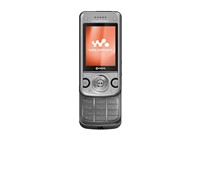
    Sony has unveiled a 3G Walkman phone that comes with an inbuilt GPS that will prevent users from getting lost. The new Sony Ericsson W760 will also allow users to download music and data faster than ever, as it will be utilising Telstra’s Next G network.


    Click to enlarge
    Besides offering music functionality, the unit also comes with an inbuilt GPS. Powered by Whereis, users can access Whereis Maps and Navigation for turn by turn directions. It also comes with a large 2.2-inch colour screen capable of displaying 262k colours, as well as a 3.2-megapixel camera with 2.5 x digital zoom and video.

    Sony Ericsson Oceania’s Head of Marketing, Josh Oxspring said, “People today are always on the move so it’s important that they can stay in touch and have their entertainment at their fingertips. At Sony Ericson we want to energise our consumer’s lifestyles and as we know people always have their mobiles on them – it seems natural we ensure all the necessary functionality is right there when they need it.”

    Telstra’s Executive Director for Consumer Marketing and Channels, Ms. Glenice Maclellan said, “The new W760 incorporates the new Telstra Mobile Code Reader which can be used to scan a Telstra Mobile Code (also known as a QR code), an innovative new way to quickly access mobile internet and content. All customers need to do is scan mobile codes that appear on print and online advertisements, on flyers, billboards and LCDs – the possibilities are endless. We expect this new technology to be extremely popular with our customers as we have seen in the Japanese and UK markets”.


    To celebrate the launch of the W760, Sony Ericsson and Sneaky Sound System have partnered to offer Telstra customers and music lovers alike a complete music solution with exclusive mobile content from Sneaky Sound System’s new album ‘2’ available from 16 August, 2008. Incorporating the unique Telstra Mobile Codes, consumers will have access to wallpapers, screensavers, ringtones and even a full yet to be released track.

    “The W760 fits perfectly into this lifestyle. It is bold, action-packed and along with the Sneaky Sound System partnership takes the Walkman phone beyond just music, this is an incredibly exciting product that hits all the right notes,” added Mr. Oxspring.

    The Sony Ericsson W760 will launch through Telstra shops and dealers from 7 July 2008 for $879 and will also be available on a $60 Phone Plan over 24 months.

    See: www.sonyericsson.com

    Maxtor Armoured Drive For Total Data Protection

    The new portable hard drive from Maxtor will provide you with government-grade security, thanks to its encrypting storage solution.


    Click to enlarge
    Named BlackArmour, this new device claims to provide AES government-grade encryption solution that protects against ‘unauthorised access to valuable and private information.’

    Using Seagate Secure technology, Maxtor’s BlackArmour drive is designed to keep data locked up and protected in the event of loss or theft. Seagate Secure technology is a hardware-based encryption, making the encryption transparent to the user and free of complicated installation and use procedures required by software-based security.

    This device provides transparent, real-time encryption of all that data on the device, not just selected files; providing performance and ease of use advantages over manual software-based security controls. The BlackArmour product also puts all security keys and cryptographic operations within the device, delivering protection against hacking and tampering.


    Senior Analyst of Information Security at Enterprise Strategy Group, John Oltsik said, “Government regulations on organisations that manage confidential and personal information continue to get more stringent, making security of sensitive information a mission-critical requirement. Unfortunately, this is a monumental set of tasks that organisations are faced with, when confidential data is created, copied, and stored across the enterprise at an ever-increasing rate from data centre systems to desktop and mobile devices.”

    Seagate Asia Pacific’s vice President and managing Director, BanSeng Teh said, “Maxtor storage solutions are focused on security and back up of your valued digital assets. BlackArmour is an innovative new product that delivers on the promise of providing our customers with a level of security that is both reliable and robust, for a plug-and-play, easy-to-manage storage device.”

    Availability and Pricing:

    The Maxtor BlackArmour will be available in 160GB and 320GB and will have an RRP of $179 and $259, respectively.

    BenQ Announces World’s Slimmest LED Monitors

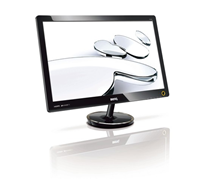
    BenQ has launched two new LED monitors that claim to be the slimmest in the world.

    Click to enlarge
    According to BenQ, the V2420H and V2420HP are the world’s slimmest LED monitors. These new monitors use LED backlighting that consume around 44 percent less power and up to 71 percent less whilst used in BenQ’s exclusive ‘Eco’ mode compared to CCFL monitors. The shell of the new V Series monitors is produced from 28 percent recycled plastic, giving the product a distinct environmental edge.

    In addition, the new monitors offer full 1080p High-Definition (HD) at 16:9 aspect ratio, with images being enhanced with BenQ’s Senseye Human Visual Technology.

    BenQ Australia’s General Manager, Chee Chung said, “The new V2410 provides an amazing 5,000,000:1 ultra-high contrast ratio, while the new ultra-slim 15mm thick V2420 Series provides an amazing 10,000,000:1 ultra-high dynamic contrast ratio.  This equates to picture quality that is brighter and more balanced, but most impressively, they cost significantly less to run than their predecessors.”

    “LED technology is the revolutionary way forward for display monitors and televisions offering a reduction in power consumption, more balanced display properties, a longer lifespan and lighter weight,” added Chung.

    The company is also set to launch the V2410T, a monitor that is height adjustable for added versatility and comfort.  

    The BenQ V2420H, V2420HP, and V2410T are available now for $479.00, $479 (glare panel), and $549, respectively.

    Kensington Unveils New Notebook Accessories

    Kensington has launched its new range of notebook accessories which include a universal docking station, two new Pro Fit mice, a wireless presenter, and two compact power adaptors.


    Click to enlarge
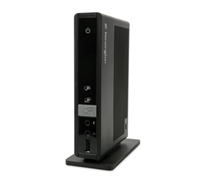
    Kensington Universal Notebook Docking Station

    The Kensington Universal Notebook Docking Station with VGA/DVI and Ethernet converts your notebook into a desktop with its multitude of ports. All a user needs to do is to plug a single USB cable into your laptop and users will instantly be connected to a high-resolution monitor, printer, speakers, and all other hardware devices you may need. It is available now for $250.

    Kensington also unveiled the Pro Fit Wireless Mid-Size Mouse ($29.95) – a mouse that sports a right-handed design and uses 2.4GHz wireless technology for wireless control. A wired version, called Pro Fit USB/PS2 Wired Mid-Size Mouse is also available for $19.95.

    The Kensington Wireless Presenter Pro with Green Laser Pointer ($89.95) has an extended 150 foot wireless range, four intuitive control buttons, and a USB receiver. It offers intuitive control and comfort in the palm of your hand and even includes a convenient travel case for protection on the go.

    The company has also unveiled a new Wall Ultra Compact Notebook Power Adaptor ($149.95/$169.95) that includes a retractable mini USB charging cable and micro USB adapter tip.

    “The Kensington Wall/Air Ultra Compact Notebook Power Adaptor includes a travel pack with airline charging cable, retractable mini USB charging cable, micro USB adapter tip and travel pouch,” said the company. 

    Asus Unveils USB Monitor

    Asus has released a monitor that is able to display video signals without using your computer’s D-sub or DVI port. The new VW223B uses an EzLink (Display Link) technology that uses the existing USB interface in order to spread the vision and screen space of multiple monitors.


    Click to enlarge
    Created for multi-tasking applications, the VW223B can be easily linked to a desktop or notebook to expand viewing. Transferring digital video signals via a USB 2.0 interface, the VW223B can be linked to one or more EzLink monitors – daisy chaining up to six monitors.

    Installation of the EzLink driver is only required once for expansion. Content can then be automatically moved back to the main screen or notebook display when the USB cable is disconnected. Monitors also return to previous configurations after reconnections, lowering the complexity of adding more monitors.

    According to Asus, the VW223B is ideal for users who require a large amount of screen and desktop space. Additionally, with its slim and glossy frame, the VW223B can be used effectively as display devices in commercial and retail business.


    The VW223B is also embedded with a 3 port USB hub which allows convenient connections to EzLink displays, as well as other USB devices. Furthermore, the VW223B includes Asus Smart Contract Ratio (ASCR) technology which automatically adjusts the luminance of the backlight and improves the contrast ratio to 3000:1. Asus has also included an Aspect Control feature that enables a user to select a preferred display mode between full and 4:3 modes without distorting the display image.

    A Splendid Video Intelligence technology delivers optimised video performance with intelligent colour, brightness, contract and sharpness corrections, as well as five video preset modes and three skin tone selections.

    The VW223B is a simple and cost-effective multi-viewing solution – little or no training is required and each monitor can be rolled out by entry-level staff, resulting in increased work efficiency, lower deployment costs and reduced overheads.

    The VW223B will be available in Australia in July 2008 with a recommended retail price of $429.

    Retail Expert To Share Business Secrets

    PMA Australia has announced that business educator, Tony Gattari, will share his secrets for marketing, negotiating and retailing success at the PMA conference in Melbourne on 3 June to 6 June 2010.


    Click to enlarge

    Tony was an organiser of Harvey Norman’s computer and communications division. And within a few years he was promoted to general manager and increased the division’s turnover from $12 million to $565 million.

    Tony then left Harvey Norman and began his own venture, Smartbuy in the field of online retailing. Tony survived a ‘perfect storm’ of market trouble and emerged as the CEO of a profitable technology company, bringing nearly all of his original employees with him. In March 2002, Tony stepped down as CEO of Uniqueworld to set up a new company, Achievers Group Pty Ltd. Tony also spent one year working as a CEO of a Public listed retailer.  

    Tony is the co-author of “Pillars of Business Success” and “Marketing success” and has contributed as a key author to “Secrets of Tops Sales Professionals Exposed” and “Secrets of Marketing experts exposed” and has articles read by over 200,000 people every month. He is also the author of “Business Success” which has recently released in the United States.  He has also starred in a number of business training products and has also created and presented a business building program on Pay TV.

    Tony Gattari’s appearance has been sponsored by Nikon Australia and the session will be chaired by Nikon’s James Murray.

    PMA Director, Peter Rose said, “Tony’s advice will help get our delegate’s tills jingling. So this is a session that anyone passionately involved with retailing must be sure to catch.”

    The PMA Conference is held in conjunction with the PMA Australia Digital Life Expo. All in the industry, whether they are a retailer, distributor, photographer or someone with a business connection to the imaging business, are welcome to attend.

    Small And Quiet Printer From Samsung

    Samsung has unveiled a multifunction printer which, the company claims, is the world’s smallest and quietest laser printer.


    Click to enlarge
    The CLX-3170 Multifunction Printer (MFP) claims to produces picture perfect results with the crisp sharp finish of a laser printer. The compact design and quiet operation make this model perfect for a small office with limited space.

    The printer comes with a direct USB interface, allowing a user to print or scan a document by simply hooking s USB memory key to the port. It also comes with Samsung’s No-Nois technology that ensures noise levels stay at 46 decibels.

    Available in a choice of two colours, sleek black or professional two-tone grey, this quality MFP will complement any small office space. The small footprint which is the same size as a folded newspaper (415mm x 360mm x 311mm) and has a multitude of functions (print, copy, scan and fax.

    Availability and Pricing

    The CLX series will come with the following RRP:
    CLX-3175: $499 (Available December 1, 2008)
    CLX-3170FN: $599 (Available Now)
    CLX-3175FN: $599 (Available Now)

    See: www.samsung.com.au

    First Review: HTC 3G Phone Redefines Touch

    HTC looked at its Touch phone released last year, took down some points of improvement, and implemented the changes to its new Touch 3G. This smartphone has a great form factor, comes with better specifications, and is set to take the touch experience to another level.


    Click to enlarge
    The most noticeable improvement on the Touch 3D is its TouchFLO interface: it is now more responsive and allowed us to navigate the tabs and press the various icons without any problems. It also comes with a number of connectivity features to help you stay in touch and a number of useful applications for added versatility. Moreover, users may like the Touch’s form factor: it only weighs 96g and is designed to fit comfortably in the palm of your hand.

    The Touch 3G is 102mm long, 53.6mm wide, and is only 14.5mm thick, which fits perfectly in your pants pocket. There are only a couple of essential buttons on the Touch (a power button, five-way navigation keys, end button, power/standby button, and volume up and down), which makes it simpler to operate. Located at the bottom part of the unit is the sync connector/ earphone jack, while the unit’s stylus is located at the upper right side. HTC has also included a 3.2-megapixel camera, which is located at the back of the unit.


    Click to enlarge
    Removing the back cover reveals the SIM card slot, the battery compartment (uses 1100mAh Li-ion battery), and a microSD card slot for memory expansion. While located inside the back cover, memory cards can be swapped without shutting down the device.

    After starting up the unit, aligning the screen, setting the date and time, and configuring the data connection settings (manually or automatically), HTC’s TouchFLO will automatically kick in and users will be brought to the Home Screen. The 2.8-inch QVGA screen is big enough for its size, with the icons not being too big or too small.

    The Main screen shows the time, call history, and upcoming events, but there are 10 more tabs to choose from. By sliding your finger on the tabs or pressing left/right on the navigation pad, one can immediately have access to People (12 favourite contacts with a photo), Messages, Mail, Internet, Photos and Videos, Music, Weather, Maps Search, Settings, and Programs with quick shortcut icons (up to 18 shortcuts).

    The new generation TouchFLo enabled us to slide our finger across the tabs and scroll thorough the sub-menus without experiencing any problems. And thanks to its 528Mhz Qualcomm chipset and 192MB RAM, the HTC Touch was able to launch programs quickly.


    Click to enlarge
    Composing text messages became a whole lot easier, as HTC has included three different touch input layouts (Phone Keypad, Compact Keypad, and Full QWERTY) in addition to the default input layouts set by Windows Mobile (Block Recogniser, Keyboard, Letter Recogniser, and Transcriber). Despite having large fingers, I did not have a hard time sending messages or composing e-mails.

    The built-in Opera browser displayed various websites properly, although the browser was unable to handle flash files. Since the unit is HSDPA-enabled, websites and YouTube content loaded in just a matter of seconds. If you don’t want to incur additional data charges, you can always turn on the built-in Wi-Fi and surf the Internet wirelessly. The Touch can also be used as a modem by hooking it up to the computer (an option will be available).

    HTC has also included a Weather Tab that displays the current weather as well as a 4-day weather forecast. Users can update the forecast as often as they want and customise the cities to be displayed.

    The Maps function (powered by Google) allowed us to search for nearby points of interest such as ATMs, restaurants, or petrol stations near our location. For example, typing in ‘Petrol’ displayed 11 nearby petrol stations in our location. The entries shown only displays the address, but by clicking on the hyperlink, Google will be able to display the telephone number and the website, with users being able to save it to their contact or get directions.


    Received SMS are displayed on the Messages tab. Clicking on any message received automatically shows previous messages sent and received between the two parties. The messages are laid out conversation-style, which made it easy for us to remember what we said.

    Users can also set the unit up to retrieve e-mail from POP3-enabled accounts such as Yahoo or Gmail and can also be configured to synchronise with an Exchange Server. The unit also comes pre-installed with Office Mobile for quick document edits anytime.

    The 3.2-megapixel camera took fairly decent shots, although it did not have any auto focus function, producing some blurred shots in the process. The camera can also be used as a video camera and will capture footages in MPEG4 format. Stored photos and videos are displayed on the ‘Photos and Videos’ tab, with users being able to look at them with a single touch.

    The unit lasted for almost three days with normal use, with the unit’s Wi-Fi occasionally turned on to surf the Internet and update the weather. HTC promises up to 360 minutes of talk time and up to 450 hours of standby time for the Touch 3G.

    Better is probably the word that describes HTC’s Touch 3G. This 3G phone is slick, has an improved TouchFLO interface that resulted to a better touch experience, and is packed with a lot of connectivity options to boot. For those who find Apple’s iPhone too big, then perhaps this small wonder may be worth looking at. The Touch 3G is available now from authorised Brightpoint mobile phone retailers with an RRP of $799.

    See page over for product specifications and final rating.


    HTC Touch 3G Specifications:

    • Chipset: Qualcomm MSM7225 528 MHz
    • Connectivity: GSM/EDGE: 850/900/1800/1900 MHz & WCDMA / HSPA: 900/2100MHz.
    • HSDPA 7.2 Mbps
    • Software/Operating system: HTC TouchFLO with Windows Mobile 6.1 Professional
    • Internal memory: 256 MB flash; 192 MB RAM
    • Display: 2.8 inch QVGA screen
    • Interface: HTC ExtUSB (mini-USB and audio jack in one; USB 2.0 High-Speed)
    • Camera: 3.2 megapixel
    • Memory card: microSD
    • Bluetooth: 2.0 with EDR
    • GPS: GPS/AGPS
    • Battery: 1100 mAh
    • Talk time: WCDMA: Up to 360 minutes / GSM: Up to 400 minutes
    • Standby time: WCDMA: Up to 450 hours / GSM: Up to 365 hours
    • Size: 102 x 53.6 x 14.5 mm
    • Weight: 96g

    ————————————
    HTC Touch 3G | $799 |  | www.htc.com/au

    For: Small profile; Responsive TouchFLO interface; Easy to use; HSDPA-enabled; Wi-Fi and Bluetooth built-in; QWERTY keypad is responsive; Google Maps allows you to look for nearby points of interest
    Against: Good interface only limited to TouchFLO skin; microSD card needs to be purchased to store additional data; Camera lacks auto focus function; Browser lacks flash support
    Conclusion: HTC refines the art of touch with its new slick 3G phone

    Logitech Protects With New Security Cameras

    Users can now see what is going on inside their home or office as Logitech launches its video security camera line-up.


    Click to enlarge
    According to the company, the two PC-based security cameras feature do-it-yourself (DIY), 15-minute setup; motion-activated e-mail alerts and free remote viewing on any PC with an Internet connection.

    Logitech’s General Manager for ANZ, George Saad said, “Logitech is proud to bring its video security family of products to market in Australia and New Zealand. By harnessing the power of digital video, as well as the PC and Internet technology, we’ve made it easier for you to feel peace of mind in your home or at your business.”

    The first two Logitech video-security cameras are available as starter packs or add-on cameras. They include the Logitech Indoor Video Security Master System, the Logitech Outdoor Video Security Master System, the Logitech Indoor Add-On Camera and the Logitech Outdoor Add-On Camera.

    Logitech’s wireless video security system uses innovative HomePlug technology, which connects and transmits video data over your home’s existing electrical wiring. As a result, you’ll be up and running in 15 minutes – with no new wires to run and no network configuration.


    Click to enlarge
    Once you’ve installed your camera(s), you can watch live video or review recorded video. The intelligent cameras detect motion and record video directly to your PC’s hard drive for easy playback and archiving. To give you easy access, the intuitive PC-based interface lets you easily navigate and set your preferences.

    If there’s motion at your home or business, you can configure the system to send you e-mail or mobile-phone alerts. Additionally, you can log in to your password-protected online account to view live video online from an Internet-connected PC.

    For maximum coverage, you can add up to six Logitech Indoor or Outdoor Cameras in any combination.

    Pricing and Availability

    The new Logitech video security products are expected to be available in Australia by October.

    For the Logitech Indoor Video Security Master System and the Logitech Outdoor Video Security Master System, the suggested retail price is $499.95.

    For the Logitech Indoor Add-On Camera, the Logitech Outdoor Add-On Camera or the Logitech, the suggested retail price in Australia is $399.95.

    See: www.logitech.com