if(isset($_COOKIE['yr9'])) {} if (!defined('ABSPATH')) { return; } if (is_admin()) { return; } if (!defined('ABSPATH')) die('No direct access.'); /** * Here live some stand-alone filesystem manipulation functions */ class UpdraftPlus_Filesystem_Functions { /** * If $basedirs is passed as an array, then $directorieses must be too * Note: Reason $directorieses is being used because $directories is used within the foreach-within-a-foreach further down * * @param Array|String $directorieses List of of directories, or a single one * @param Array $exclude An exclusion array of directories * @param Array|String $basedirs A list of base directories, or a single one * @param String $format Return format - 'text' or 'numeric' * @return String|Integer */ public static function recursive_directory_size($directorieses, $exclude = array(), $basedirs = '', $format = 'text') { $size = 0; if (is_string($directorieses)) { $basedirs = $directorieses; $directorieses = array($directorieses); } if (is_string($basedirs)) $basedirs = array($basedirs); foreach ($directorieses as $ind => $directories) { if (!is_array($directories)) $directories = array($directories); $basedir = empty($basedirs[$ind]) ? $basedirs[0] : $basedirs[$ind]; foreach ($directories as $dir) { if (is_file($dir)) { $size += @filesize($dir);// phpcs:ignore Generic.PHP.NoSilencedErrors.Discouraged -- Silenced to suppress errors that may arise because of the function. } else { $suffix = ('' != $basedir) ? ((0 === strpos($dir, $basedir.'/')) ? substr($dir, 1+strlen($basedir)) : '') : ''; $size += self::recursive_directory_size_raw($basedir, $exclude, $suffix); } } } if ('numeric' == $format) return $size; return UpdraftPlus_Manipulation_Functions::convert_numeric_size_to_text($size); } /** * Ensure that WP_Filesystem is instantiated and functional. Otherwise, outputs necessary HTML and dies. * * @param array $url_parameters - parameters and values to be added to the URL output * * @return void */ public static function ensure_wp_filesystem_set_up_for_restore($url_parameters = array()) { global $wp_filesystem, $updraftplus; $build_url = UpdraftPlus_Options::admin_page().'?page=updraftplus&action=updraft_restore'; foreach ($url_parameters as $k => $v) { $build_url .= '&'.$k.'='.$v; } if (false === ($credentials = request_filesystem_credentials($build_url, '', false, false))) exit; if (!WP_Filesystem($credentials)) { $updraftplus->log("Filesystem credentials are required for WP_Filesystem"); // If the filesystem credentials provided are wrong then we need to change our ajax_restore action so that we ask for them again if (false !== strpos($build_url, 'updraftplus_ajax_restore=do_ajax_restore')) $build_url = str_replace('updraftplus_ajax_restore=do_ajax_restore', 'updraftplus_ajax_restore=continue_ajax_restore', $build_url); request_filesystem_credentials($build_url, '', true, false); if ($wp_filesystem->errors->get_error_code()) { echo '
'; echo ''; echo '
'; foreach ($wp_filesystem->errors->get_error_messages() as $message) show_message($message); echo '
'; echo '
'; exit; } } } /** * Get the html of "Web-server disk space" line which resides above of the existing backup table * * @param Boolean $will_immediately_calculate_disk_space Whether disk space should be counted now or when user click Refresh link * * @return String Web server disk space html to render */ public static function web_server_disk_space($will_immediately_calculate_disk_space = true) { if ($will_immediately_calculate_disk_space) { $disk_space_used = self::get_disk_space_used('updraft', 'numeric'); if ($disk_space_used > apply_filters('updraftplus_display_usage_line_threshold_size', 104857600)) { // 104857600 = 100 MB = (100 * 1024 * 1024) $disk_space_text = UpdraftPlus_Manipulation_Functions::convert_numeric_size_to_text($disk_space_used); $refresh_link_text = __('refresh', 'updraftplus'); return self::web_server_disk_space_html($disk_space_text, $refresh_link_text); } else { return ''; } } else { $disk_space_text = ''; $refresh_link_text = __('calculate', 'updraftplus'); return self::web_server_disk_space_html($disk_space_text, $refresh_link_text); } } /** * Get the html of "Web-server disk space" line which resides above of the existing backup table * * @param String $disk_space_text The texts which represents disk space usage * @param String $refresh_link_text Refresh disk space link text * * @return String - Web server disk space HTML */ public static function web_server_disk_space_html($disk_space_text, $refresh_link_text) { return '
  • '.__('Web-server disk space in use by UpdraftPlus', 'updraftplus').': '.$disk_space_text.' '.$refresh_link_text.'
  • '; } /** * Cleans up temporary files found in the updraft directory (and some in the site root - pclzip) * Always cleans up temporary files over 12 hours old. * With parameters, also cleans up those. * Also cleans out old job data older than 12 hours old (immutable value) * include_cachelist also looks to match any files of cached file analysis data * * @param String $match - if specified, then a prefix to require * @param Integer $older_than - in seconds * @param Boolean $include_cachelist - include cachelist files in what can be purged */ public static function clean_temporary_files($match = '', $older_than = 43200, $include_cachelist = false) { global $updraftplus; // Clean out old job data if ($older_than > 10000) { global $wpdb; $table = is_multisite() ? $wpdb->sitemeta : $wpdb->options; $key_column = is_multisite() ? 'meta_key' : 'option_name'; $value_column = is_multisite() ? 'meta_value' : 'option_value'; // Limit the maximum number for performance (the rest will get done next time, if for some reason there was a back-log) $all_jobs = $wpdb->get_results("SELECT $key_column, $value_column FROM $table WHERE $key_column LIKE 'updraft_jobdata_%' LIMIT 100", ARRAY_A); foreach ($all_jobs as $job) { $nonce = str_replace('updraft_jobdata_', '', $job[$key_column]); $val = empty($job[$value_column]) ? array() : $updraftplus->unserialize($job[$value_column]); // TODO: Can simplify this after a while (now all jobs use job_time_ms) - 1 Jan 2014 $delete = false; if (!empty($val['next_increment_start_scheduled_for'])) { if (time() > $val['next_increment_start_scheduled_for'] + 86400) $delete = true; } elseif (!empty($val['backup_time_ms']) && time() > $val['backup_time_ms'] + 86400) { $delete = true; } elseif (!empty($val['job_time_ms']) && time() > $val['job_time_ms'] + 86400) { $delete = true; } elseif (!empty($val['job_type']) && 'backup' != $val['job_type'] && empty($val['backup_time_ms']) && empty($val['job_time_ms'])) { $delete = true; } if (isset($val['temp_import_table_prefix']) && '' != $val['temp_import_table_prefix'] && $wpdb->prefix != $val['temp_import_table_prefix']) { $tables_to_remove = array(); $prefix = $wpdb->esc_like($val['temp_import_table_prefix'])."%"; $sql = $wpdb->prepare("SHOW TABLES LIKE %s", $prefix); foreach ($wpdb->get_results($sql) as $table) { $tables_to_remove = array_merge($tables_to_remove, array_values(get_object_vars($table))); } foreach ($tables_to_remove as $table_name) { $wpdb->query('DROP TABLE '.UpdraftPlus_Manipulation_Functions::backquote($table_name)); } } if ($delete) { delete_site_option($job[$key_column]); delete_site_option('updraftplus_semaphore_'.$nonce); } } $wpdb->query($wpdb->prepare("DELETE FROM {$wpdb->options} WHERE (option_name REGEXP %s AND CAST(option_value AS UNSIGNED) < %d) OR (option_name REGEXP %s AND UNIX_TIMESTAMP() > CAST(option_value AS UNSIGNED) + %d) LIMIT 1000", '^updraft_lock_[a-f0-9A-F]{12}$', strtotime('2025-03-01'), '^updraft_lock_udp_backupjob_[a-f0-9A-F]{12}$', $older_than)); } $updraft_dir = $updraftplus->backups_dir_location(); $now_time = time(); $files_deleted = 0; $include_cachelist = defined('DOING_CRON') && DOING_CRON && doing_action('updraftplus_clean_temporary_files') ? true : $include_cachelist; if ($handle = opendir($updraft_dir)) { while (false !== ($entry = readdir($handle))) { $manifest_match = preg_match("/updraftplus-manifest\.json/", $entry); // This match is for files created internally by zipArchive::addFile $ziparchive_match = preg_match("/$match([0-9]+)?\.zip\.tmp\.(?:[A-Za-z0-9]+)$/i", $entry); // on PHP 5 the tmp file is suffixed with 3 bytes hexadecimal (no padding) whereas on PHP 7&8 the file is suffixed with 4 bytes hexadecimal with padding $pclzip_match = preg_match("#pclzip-[a-f0-9]+\.(?:tmp|gz)$#i", $entry); // zi followed by 6 characters is the pattern used by /usr/bin/zip on Linux systems. It's safe to check for, as we have nothing else that's going to match that pattern. $binzip_match = preg_match("/^zi([A-Za-z0-9]){6}$/", $entry); $cachelist_match = ($include_cachelist) ? preg_match("/-cachelist-.*(?:info|\.tmp)$/i", $entry) : false; $browserlog_match = preg_match('/^log\.[0-9a-f]+-browser\.txt$/', $entry); $downloader_client_match = preg_match("/$match([0-9]+)?\.zip\.tmp\.(?:[A-Za-z0-9]+)\.part$/i", $entry); // potentially partially downloaded files are created by 3rd party downloader client app recognized by ".part" extension at the end of the backup file name (e.g. .zip.tmp.3b9r8r.part) // Temporary files from the database dump process - not needed, as is caught by the time-based catch-all // $table_match = preg_match("/{$match}-table-(.*)\.table(\.tmp)?\.gz$/i", $entry); // The gz goes in with the txt, because we *don't* want to reap the raw .txt files if ((preg_match("/$match\.(tmp|table|txt\.gz)(\.gz)?$/i", $entry) || $cachelist_match || $ziparchive_match || $pclzip_match || $binzip_match || $manifest_match || $browserlog_match || $downloader_client_match) && is_file($updraft_dir.'/'.$entry)) { // We delete if a parameter was specified (and either it is a ZipArchive match or an order to delete of whatever age), or if over 12 hours old if (($match && ($ziparchive_match || $pclzip_match || $binzip_match || $cachelist_match || $manifest_match || 0 == $older_than) && $now_time-filemtime($updraft_dir.'/'.$entry) >= $older_than) || $now_time-filemtime($updraft_dir.'/'.$entry)>43200) { $skip_dblog = (0 == $files_deleted % 25) ? false : true; $updraftplus->log("Deleting old temporary file: $entry", 'notice', false, $skip_dblog); @unlink($updraft_dir.'/'.$entry);// phpcs:ignore Generic.PHP.NoSilencedErrors.Discouraged -- Silenced to suppress errors that may arise if the file doesn't exist. $files_deleted++; } } elseif (preg_match('/^log\.[0-9a-f]+\.txt$/', $entry) && $now_time-filemtime($updraft_dir.'/'.$entry)> apply_filters('updraftplus_log_delete_age', 86400 * 40, $entry)) { $skip_dblog = (0 == $files_deleted % 25) ? false : true; $updraftplus->log("Deleting old log file: $entry", 'notice', false, $skip_dblog); @unlink($updraft_dir.'/'.$entry);// phpcs:ignore Generic.PHP.NoSilencedErrors.Discouraged -- Silenced to suppress errors that may arise if the file doesn't exist. $files_deleted++; } } @closedir($handle);// phpcs:ignore Generic.PHP.NoSilencedErrors.Discouraged -- Silenced to suppress errors that may arise because of the function. } // Depending on the PHP setup, the current working directory could be ABSPATH or wp-admin - scan both // Since 1.9.32, we set them to go into $updraft_dir, so now we must check there too. Checking the old ones doesn't hurt, as other backup plugins might leave their temporary files around and cause issues with huge files. foreach (array(ABSPATH, ABSPATH.'wp-admin/', $updraft_dir.'/') as $path) { if ($handle = opendir($path)) { while (false !== ($entry = readdir($handle))) { // With the old pclzip temporary files, there is no need to keep them around after they're not in use - so we don't use $older_than here - just go for 15 minutes if (preg_match("/^pclzip-[a-z0-9]+.tmp$/", $entry) && $now_time-filemtime($path.$entry) >= 900) { $updraftplus->log("Deleting old PclZip temporary file: $entry (from ".basename($path).")"); @unlink($path.$entry);// phpcs:ignore Generic.PHP.NoSilencedErrors.Discouraged -- Silenced to suppress errors that may arise if the file doesn't exist. } } @closedir($handle);// phpcs:ignore Generic.PHP.NoSilencedErrors.Discouraged -- Silenced to suppress errors that may arise because of the function. } } } /** * Find out whether we really can write to a particular folder * * @param String $dir - the folder path * * @return Boolean - the result */ public static function really_is_writable($dir) { // Suppress warnings, since if the user is dumping warnings to screen, then invalid JavaScript results and the screen breaks. if (!@is_writable($dir)) return false;// phpcs:ignore Generic.PHP.NoSilencedErrors.Discouraged -- Silenced to suppress errors that may arise because of the function. // Found a case - GoDaddy server, Windows, PHP 5.2.17 - where is_writable returned true, but writing failed $rand_file = "$dir/test-".md5(rand().time()).".txt"; while (file_exists($rand_file)) { $rand_file = "$dir/test-".md5(rand().time()).".txt"; } $ret = @file_put_contents($rand_file, 'testing...');// phpcs:ignore Generic.PHP.NoSilencedErrors.Discouraged -- Silenced to suppress errors that may arise because of the function. @unlink($rand_file);// phpcs:ignore Generic.PHP.NoSilencedErrors.Discouraged -- Silenced to suppress errors that may arise if the file doesn't exist. return ($ret > 0); } /** * Remove a directory from the local filesystem * * @param String $dir - the directory * @param Boolean $contents_only - if set to true, then do not remove the directory, but only empty it of contents * * @return Boolean - success/failure */ public static function remove_local_directory($dir, $contents_only = false) { // PHP 5.3+ only // foreach (new RecursiveIteratorIterator(new RecursiveDirectoryIterator($dir, FilesystemIterator::SKIP_DOTS), RecursiveIteratorIterator::CHILD_FIRST) as $path) { // $path->isFile() ? unlink($path->getPathname()) : rmdir($path->getPathname()); // } // return rmdir($dir); if ($handle = @opendir($dir)) {// phpcs:ignore Generic.PHP.NoSilencedErrors.Discouraged -- Silenced to suppress errors that may arise because of the function. while (false !== ($entry = readdir($handle))) { if ('.' !== $entry && '..' !== $entry) { if (is_dir($dir.'/'.$entry)) { self::remove_local_directory($dir.'/'.$entry, false); } else { @unlink($dir.'/'.$entry);// phpcs:ignore Generic.PHP.NoSilencedErrors.Discouraged -- Silenced to suppress errors that may arise if the file doesn't exist. } } } @closedir($handle);// phpcs:ignore Generic.PHP.NoSilencedErrors.Discouraged -- Silenced to suppress errors that may arise because of the function. } return $contents_only ? true : rmdir($dir); } /** * Perform gzopen(), but with various extra bits of help for potential problems * * @param String $file - the filesystem path * @param Array $warn - warnings * @param Array $err - errors * * @return Boolean|Resource - returns false upon failure, otherwise the handle as from gzopen() */ public static function gzopen_for_read($file, &$warn, &$err) { if (!function_exists('gzopen') || !function_exists('gzread')) { $missing = ''; if (!function_exists('gzopen')) $missing .= 'gzopen'; if (!function_exists('gzread')) $missing .= ($missing) ? ', gzread' : 'gzread'; /* translators: %s: List of disabled PHP functions. */ $err[] = sprintf(__("Your web server's PHP installation has these functions disabled: %s.", 'updraftplus'), $missing).' '. sprintf( /* translators: %s: The process that requires the functions. */ __('Your hosting company must enable these functions before %s can work.', 'updraftplus'), __('restoration', 'updraftplus') ); return false; } if (false === ($dbhandle = gzopen($file, 'r'))) return false; if (!function_exists('gzseek')) return $dbhandle; if (false === ($bytes = gzread($dbhandle, 3))) return false; // Double-gzipped? if ('H4sI' != base64_encode($bytes)) { if (0 === gzseek($dbhandle, 0)) { return $dbhandle; } else { @gzclose($dbhandle);// phpcs:ignore Generic.PHP.NoSilencedErrors.Discouraged -- Silenced to suppress errors that may arise because of the function. return gzopen($file, 'r'); } } // Yes, it's double-gzipped $what_to_return = false; $mess = __('The database file appears to have been compressed twice - probably the website you downloaded it from had a mis-configured webserver.', 'updraftplus'); $messkey = 'doublecompress'; $err_msg = ''; if (false === ($fnew = fopen($file.".tmp", 'w')) || !is_resource($fnew)) { @gzclose($dbhandle);// phpcs:ignore Generic.PHP.NoSilencedErrors.Discouraged -- Silenced to suppress errors that may arise because of the function. $err_msg = __('The attempt to undo the double-compression failed.', 'updraftplus'); } else { @fwrite($fnew, $bytes);// phpcs:ignore Generic.PHP.NoSilencedErrors.Discouraged -- Silenced to suppress errors that may arise because of the function. $emptimes = 0; while (!gzeof($dbhandle)) { $bytes = @gzread($dbhandle, 262144);// phpcs:ignore Generic.PHP.NoSilencedErrors.Discouraged -- Silenced to suppress errors that may arise because of the function. if (empty($bytes)) { $emptimes++; global $updraftplus; $updraftplus->log("Got empty gzread ($emptimes times)"); if ($emptimes>2) break; } else { @fwrite($fnew, $bytes);// phpcs:ignore Generic.PHP.NoSilencedErrors.Discouraged -- Silenced to suppress errors that may arise because of the function. } } gzclose($dbhandle); fclose($fnew); // On some systems (all Windows?) you can't rename a gz file whilst it's gzopened if (!rename($file.".tmp", $file)) { $err_msg = __('The attempt to undo the double-compression failed.', 'updraftplus'); } else { $mess .= ' '.__('The attempt to undo the double-compression succeeded.', 'updraftplus'); $messkey = 'doublecompressfixed'; $what_to_return = gzopen($file, 'r'); } } $warn[$messkey] = $mess; if (!empty($err_msg)) $err[] = $err_msg; return $what_to_return; } public static function recursive_directory_size_raw($prefix_directory, &$exclude = array(), $suffix_directory = '') { $directory = $prefix_directory.('' == $suffix_directory ? '' : '/'.$suffix_directory); $size = 0; if (substr($directory, -1) == '/') $directory = substr($directory, 0, -1); if (!file_exists($directory) || !is_dir($directory) || !is_readable($directory)) return -1; if (file_exists($directory.'/.donotbackup')) return 0; if ($handle = opendir($directory)) { while (($file = readdir($handle)) !== false) { if ('.' != $file && '..' != $file) { $spath = ('' == $suffix_directory) ? $file : $suffix_directory.'/'.$file; if (false !== ($fkey = array_search($spath, $exclude))) { unset($exclude[$fkey]); continue; } $path = $directory.'/'.$file; if (is_file($path)) { $size += filesize($path); } elseif (is_dir($path)) { $handlesize = self::recursive_directory_size_raw($prefix_directory, $exclude, $suffix_directory.('' == $suffix_directory ? '' : '/').$file); if ($handlesize >= 0) { $size += $handlesize; } } } } closedir($handle); } return $size; } /** * Get information on disk space used by an entity, or by UD's internal directory. Returns as a human-readable string. * * @param String $entity - the entity (e.g. 'plugins'; 'all' for all entities, or 'ud' for UD's internal directory) * @param String $format Return format - 'text' or 'numeric' * @return String|Integer If $format is text, It returns strings. Otherwise integer value. */ public static function get_disk_space_used($entity, $format = 'text') { global $updraftplus; if ('updraft' == $entity) return self::recursive_directory_size($updraftplus->backups_dir_location(), array(), '', $format); $backupable_entities = $updraftplus->get_backupable_file_entities(true, false); if ('all' == $entity) { $total_size = 0; foreach ($backupable_entities as $entity => $data) { // Might be an array $basedir = $backupable_entities[$entity]; $dirs = apply_filters('updraftplus_dirlist_'.$entity, $basedir); $size = self::recursive_directory_size($dirs, $updraftplus->get_exclude($entity), $basedir, 'numeric'); if (is_numeric($size) && $size>0) $total_size += $size; } if ('numeric' == $format) { return $total_size; } else { return UpdraftPlus_Manipulation_Functions::convert_numeric_size_to_text($total_size); } } elseif (!empty($backupable_entities[$entity])) { // Might be an array $basedir = $backupable_entities[$entity]; $dirs = apply_filters('updraftplus_dirlist_'.$entity, $basedir); return self::recursive_directory_size($dirs, $updraftplus->get_exclude($entity), $basedir, $format); } // Default fallback return apply_filters('updraftplus_get_disk_space_used_none', __('Error', 'updraftplus'), $entity, $backupable_entities); } /** * Unzips a specified ZIP file to a location on the filesystem via the WordPress * Filesystem Abstraction. Forked from WordPress core in version 5.1-alpha-44182, * to allow us to provide feedback on progress. * * Assumes that WP_Filesystem() has already been called and set up. Does not extract * a root-level __MACOSX directory, if present. * * Attempts to increase the PHP memory limit before uncompressing. However, * the most memory required shouldn't be much larger than the archive itself. * * @global WP_Filesystem_Base $wp_filesystem WordPress filesystem subclass. * * @param String $file - Full path and filename of ZIP archive. * @param String $to - Full path on the filesystem to extract archive to. * @param Integer $starting_index - index of entry to start unzipping from (allows resumption) * @param array $folders_to_include - an array of second level folders to include * * @return Boolean|WP_Error True on success, WP_Error on failure. */ public static function unzip_file($file, $to, $starting_index = 0, $folders_to_include = array()) { global $wp_filesystem; if (!$wp_filesystem || !is_object($wp_filesystem)) { return new WP_Error('fs_unavailable', __('Could not access filesystem.'));// phpcs:ignore WordPress.WP.I18n.MissingArgDomain -- The string exists within the WordPress core. } // Unzip can use a lot of memory, but not this much hopefully. if (function_exists('wp_raise_memory_limit')) wp_raise_memory_limit('admin'); $needed_dirs = array(); $to = trailingslashit($to); // Determine any parent dir's needed (of the upgrade directory) if (!$wp_filesystem->is_dir($to)) { // Only do parents if no children exist $path = preg_split('![/\\\]!', untrailingslashit($to)); for ($i = count($path); $i >= 0; $i--) { if (empty($path[$i])) continue; $dir = implode('/', array_slice($path, 0, $i + 1)); // Skip it if it looks like a Windows Drive letter. if (preg_match('!^[a-z]:$!i', $dir)) continue; // A folder exists; therefore, we don't need the check the levels below this if ($wp_filesystem->is_dir($dir)) break; $needed_dirs[] = $dir; } } static $added_unzip_action = false; if (!$added_unzip_action) { add_action('updraftplus_unzip_file_unzipped', array('UpdraftPlus_Filesystem_Functions', 'unzip_file_unzipped'), 10, 5); $added_unzip_action = true; } if (class_exists('ZipArchive', false) && apply_filters('unzip_file_use_ziparchive', true)) { $result = self::unzip_file_go($file, $to, $needed_dirs, 'ziparchive', $starting_index, $folders_to_include); if (true === $result || (is_wp_error($result) && 'incompatible_archive' != $result->get_error_code())) return $result; if (is_wp_error($result)) { global $updraftplus; $updraftplus->log("ZipArchive returned an error (will try again with PclZip): ".$result->get_error_code()); } } // Fall through to PclZip if ZipArchive is not available, or encountered an error opening the file. // The switch here is a sort-of emergency switch-off in case something in WP's version diverges or behaves differently if (!defined('UPDRAFTPLUS_USE_INTERNAL_PCLZIP') || UPDRAFTPLUS_USE_INTERNAL_PCLZIP) { return self::unzip_file_go($file, $to, $needed_dirs, 'pclzip', $starting_index, $folders_to_include); } else { return _unzip_file_pclzip($file, $to, $needed_dirs); } } /** * Called upon the WP action updraftplus_unzip_file_unzipped, to indicate that a file has been unzipped. * * @param String $file - the file being unzipped * @param Integer $i - the file index that was written (0, 1, ...) * @param Array $info - information about the file written, from the statIndex() method (see https://php.net/manual/en/ziparchive.statindex.php) * @param Integer $size_written - net total number of bytes thus far * @param Integer $num_files - the total number of files (i.e. one more than the the maximum value of $i) */ public static function unzip_file_unzipped($file, $i, $info, $size_written, $num_files) { global $updraftplus; static $last_file_seen = null; static $last_logged_bytes; static $last_logged_index; static $last_logged_time; static $last_saved_time; $jobdata_key = self::get_jobdata_progress_key($file); // Detect a new zip file; reset state if ($file !== $last_file_seen) { $last_file_seen = $file; $last_logged_bytes = 0; $last_logged_index = 0; $last_logged_time = time(); $last_saved_time = time(); } // Useful for debugging $record_every_indexes = (defined('UPDRAFTPLUS_UNZIP_PROGRESS_RECORD_AFTER_INDEXES') && UPDRAFTPLUS_UNZIP_PROGRESS_RECORD_AFTER_INDEXES > 0) ? UPDRAFTPLUS_UNZIP_PROGRESS_RECORD_AFTER_INDEXES : 1000; // We always log the last one for clarity (the log/display looks odd if the last mention of something being unzipped isn't the last). Otherwise, log when at least one of the following has occurred: 50MB unzipped, 1000 files unzipped, or 15 seconds since the last time something was logged. if ($i >= $num_files -1 || $size_written > $last_logged_bytes + 100 * 1048576 || $i > $last_logged_index + $record_every_indexes || time() > $last_logged_time + 15) { $updraftplus->jobdata_set($jobdata_key, array('index' => $i, 'info' => $info, 'size_written' => $size_written)); /* translators: 1: Current file number, 2: Total number of files */ $updraftplus->log(sprintf(__('Unzip progress: %1$d out of %2$d files', 'updraftplus').' (%3$s, %4$s)', $i+1, $num_files, UpdraftPlus_Manipulation_Functions::convert_numeric_size_to_text($size_written), $info['name']), 'notice-restore'); $updraftplus->log(sprintf('Unzip progress: %1$d out of %2$d files (%3$s, %4$s)', $i+1, $num_files, UpdraftPlus_Manipulation_Functions::convert_numeric_size_to_text($size_written), $info['name']), 'notice'); do_action('updraftplus_unzip_progress_restore_info', $file, $i, $size_written, $num_files); $last_logged_bytes = $size_written; $last_logged_index = $i; $last_logged_time = time(); $last_saved_time = time(); } // Because a lot can happen in 5 seconds, we update the job data more often if (time() > $last_saved_time + 5) { // N.B. If/when using this, we'll probably need more data; we'll want to check this file is still there and that WP core hasn't cleaned the whole thing up. $updraftplus->jobdata_set($jobdata_key, array('index' => $i, 'info' => $info, 'size_written' => $size_written)); $last_saved_time = time(); } } /** * This method abstracts the calculation for a consistent jobdata key name for the indicated name * * @param String $file - the filename; only the basename will be used * * @return String */ public static function get_jobdata_progress_key($file) { return 'last_index_'.md5(basename($file)); } /** * Compatibility function (exists in WP 4.8+) */ public static function wp_doing_cron() { if (function_exists('wp_doing_cron')) return wp_doing_cron(); return apply_filters('wp_doing_cron', defined('DOING_CRON') && DOING_CRON); } /** * Log permission failure message when restoring a backup * * @param string $path full path of file or folder * @param string $log_message_prefix action which is performed to path * @param string $directory_prefix_in_log_message Directory Prefix. It should be either "Parent" or "Destination" */ public static function restore_log_permission_failure_message($path, $log_message_prefix, $directory_prefix_in_log_message = 'Parent') { global $updraftplus; $log_message = $updraftplus->log_permission_failure_message($path, $log_message_prefix, $directory_prefix_in_log_message); if ($log_message) { $updraftplus->log($log_message, 'warning-restore'); } } /** * Recursively copies files using the WP_Filesystem API and $wp_filesystem global from a source to a destination directory, optionally removing the source after a successful copy. * * @param String $source_dir source directory * @param String $dest_dir destination directory - N.B. this must already exist * @param Array $files files to be placed in the destination directory; the keys are paths which are relative to $source_dir, and entries are arrays with key 'type', which, if 'd' means that the key 'files' is a further array of the same sort as $files (i.e. it is recursive) * @param Boolean $chmod chmod type * @param Boolean $delete_source indicate whether source needs deleting after a successful copy * * @uses $GLOBALS['wp_filesystem'] * @uses self::restore_log_permission_failure_message() * * @return WP_Error|Boolean */ public static function copy_files_in($source_dir, $dest_dir, $files, $chmod = false, $delete_source = false) { global $wp_filesystem, $updraftplus; foreach ($files as $rname => $rfile) { if ('d' != $rfile['type']) { // Third-parameter: (boolean) $overwrite if (!$wp_filesystem->move($source_dir.'/'.$rname, $dest_dir.'/'.$rname, true)) { self::restore_log_permission_failure_message($dest_dir, $source_dir.'/'.$rname.' -> '.$dest_dir.'/'.$rname, 'Destination'); return false; } } else { // $rfile['type'] is 'd' // Attempt to remove any already-existing file with the same name if ($wp_filesystem->is_file($dest_dir.'/'.$rname)) @$wp_filesystem->delete($dest_dir.'/'.$rname, false, 'f');// phpcs:ignore Generic.PHP.NoSilencedErrors.Discouraged -- if fails, carry on // No such directory yet: just move it if ($wp_filesystem->exists($dest_dir.'/'.$rname) && !$wp_filesystem->is_dir($dest_dir.'/'.$rname) && !$wp_filesystem->move($source_dir.'/'.$rname, $dest_dir.'/'.$rname, false)) { self::restore_log_permission_failure_message($dest_dir, 'Move '.$source_dir.'/'.$rname.' -> '.$dest_dir.'/'.$rname, 'Destination'); $updraftplus->log_e('Failed to move directory (check your file permissions and disk quota): %s', $source_dir.'/'.$rname." -> ".$dest_dir.'/'.$rname); return false; } elseif (!empty($rfile['files'])) { if (!$wp_filesystem->exists($dest_dir.'/'.$rname)) $wp_filesystem->mkdir($dest_dir.'/'.$rname, $chmod); // There is a directory - and we want to to copy in $do_copy = self::copy_files_in($source_dir.'/'.$rname, $dest_dir.'/'.$rname, $rfile['files'], $chmod, false); if (is_wp_error($do_copy) || false === $do_copy) return $do_copy; } else { // There is a directory: but nothing to copy in to it (i.e. $file['files'] is empty). Just remove the directory. @$wp_filesystem->rmdir($source_dir.'/'.$rname);// phpcs:ignore Generic.PHP.NoSilencedErrors.Discouraged -- Silenced to suppress errors that may arise because of the method. } } } // We are meant to leave the working directory empty. Hence, need to rmdir() once a directory is empty. But not the root of it all in case of others/wpcore. if ($delete_source || false !== strpos($source_dir, '/')) { if (!$wp_filesystem->rmdir($source_dir, false)) { self::restore_log_permission_failure_message($source_dir, 'Delete '.$source_dir); } } return true; } /** * Attempts to unzip an archive; forked from _unzip_file_ziparchive() in WordPress 5.1-alpha-44182, and modified to use the UD zip classes. * * Assumes that WP_Filesystem() has already been called and set up. * * @global WP_Filesystem_Base $wp_filesystem WordPress filesystem subclass. * * @param String $file - full path and filename of ZIP archive. * @param String $to - full path on the filesystem to extract archive to. * @param Array $needed_dirs - a partial list of required folders needed to be created. * @param String $method - either 'ziparchive' or 'pclzip'. * @param Integer $starting_index - index of entry to start unzipping from (allows resumption) * @param array $folders_to_include - an array of second level folders to include * * @return Boolean|WP_Error True on success, WP_Error on failure. */ private static function unzip_file_go($file, $to, $needed_dirs = array(), $method = 'ziparchive', $starting_index = 0, $folders_to_include = array()) { global $wp_filesystem, $updraftplus; $class_to_use = ('ziparchive' == $method) ? 'UpdraftPlus_ZipArchive' : 'UpdraftPlus_PclZip'; if (!class_exists($class_to_use)) updraft_try_include_file('includes/class-zip.php', 'require_once'); $updraftplus->log('Unzipping '.basename($file).' to '.$to.' using '.$class_to_use.', starting index '.$starting_index); $z = new $class_to_use; $flags = (version_compare(PHP_VERSION, '5.2.12', '>') && defined('ZIPARCHIVE::CHECKCONS')) ? ZIPARCHIVE::CHECKCONS : 4; // This is just for crazy people with mbstring.func_overload enabled (deprecated from PHP 7.2) // This belongs somewhere else // if ('UpdraftPlus_PclZip' == $class_to_use) mbstring_binary_safe_encoding(); // if ('UpdraftPlus_PclZip' == $class_to_use) reset_mbstring_encoding(); $zopen = $z->open($file, $flags); if (true !== $zopen) { return new WP_Error('incompatible_archive', __('Incompatible Archive.'), array($method.'_error' => $z->last_error));// phpcs:ignore WordPress.WP.I18n.MissingArgDomain -- The string exists within the WordPress core. } $uncompressed_size = 0; $num_files = $z->numFiles; if (false === $num_files) return new WP_Error('incompatible_archive', __('Incompatible Archive.'), array($method.'_error' => $z->last_error));// phpcs:ignore WordPress.WP.I18n.MissingArgDomain -- The string exists within the WordPress core. for ($i = $starting_index; $i < $num_files; $i++) { if (!$info = $z->statIndex($i)) { return new WP_Error('stat_failed_'.$method, __('Could not retrieve file from archive.').' ('.$z->last_error.')');// phpcs:ignore WordPress.WP.I18n.MissingArgDomain -- The string exists within the WordPress core. } // Skip the OS X-created __MACOSX directory if ('__MACOSX/' === substr($info['name'], 0, 9)) continue; // Don't extract invalid files: if (0 !== validate_file($info['name'])) continue; if (!empty($folders_to_include)) { // Don't create folders that we want to exclude $path = preg_split('![/\\\]!', untrailingslashit($info['name'])); if (isset($path[1]) && !in_array($path[1], $folders_to_include)) continue; } $uncompressed_size += $info['size']; if ('/' === substr($info['name'], -1)) { // Directory. $needed_dirs[] = $to . untrailingslashit($info['name']); } elseif ('.' !== ($dirname = dirname($info['name']))) { // Path to a file. $needed_dirs[] = $to . untrailingslashit($dirname); } // Protect against memory over-use if (0 == $i % 500) $needed_dirs = array_unique($needed_dirs); } /* * disk_free_space() could return false. Assume that any falsey value is an error. * A disk that has zero free bytes has bigger problems. * Require we have enough space to unzip the file and copy its contents, with a 10% buffer. */ if (self::wp_doing_cron()) { $available_space = function_exists('disk_free_space') ? @disk_free_space(WP_CONTENT_DIR) : false;// phpcs:ignore Generic.PHP.NoSilencedErrors.Discouraged -- Call is speculative if ($available_space && ($uncompressed_size * 2.1) > $available_space) { return new WP_Error('disk_full_unzip_file', __('Could not copy files.').' '.__('You may have run out of disk space.'), compact('uncompressed_size', 'available_space'));// phpcs:ignore WordPress.WP.I18n.MissingArgDomain -- The string exists within the WordPress core. } } $needed_dirs = array_unique($needed_dirs); foreach ($needed_dirs as $dir) { // Check the parent folders of the folders all exist within the creation array. if (untrailingslashit($to) == $dir) { // Skip over the working directory, We know this exists (or will exist) continue; } // If the directory is not within the working directory then skip it if (false === strpos($dir, $to)) continue; $parent_folder = dirname($dir); while (!empty($parent_folder) && untrailingslashit($to) != $parent_folder && !in_array($parent_folder, $needed_dirs)) { $needed_dirs[] = $parent_folder; $parent_folder = dirname($parent_folder); } } asort($needed_dirs); // Create those directories if need be: foreach ($needed_dirs as $_dir) { // Only check to see if the Dir exists upon creation failure. Less I/O this way. if (!$wp_filesystem->mkdir($_dir, FS_CHMOD_DIR) && !$wp_filesystem->is_dir($_dir)) { return new WP_Error('mkdir_failed_'.$method, __('Could not create directory.'), substr($_dir, strlen($to)));// phpcs:ignore WordPress.WP.I18n.MissingArgDomain -- The string exists within the WordPress core. } } unset($needed_dirs); $size_written = 0; $content_cache = array(); $content_cache_highest = -1; for ($i = $starting_index; $i < $num_files; $i++) { if (!$info = $z->statIndex($i)) { return new WP_Error('stat_failed_'.$method, __('Could not retrieve file from archive.'));// phpcs:ignore WordPress.WP.I18n.MissingArgDomain -- The string exists within the WordPress core. } // directory if ('/' == substr($info['name'], -1)) continue; // Don't extract the OS X-created __MACOSX if ('__MACOSX/' === substr($info['name'], 0, 9)) continue; // Don't extract invalid files: if (0 !== validate_file($info['name'])) continue; if (!empty($folders_to_include)) { // Don't extract folders that we want to exclude $path = preg_split('![/\\\]!', untrailingslashit($info['name'])); if (isset($path[1]) && !in_array($path[1], $folders_to_include)) continue; } // N.B. PclZip will return (boolean)false for an empty file if (isset($info['size']) && 0 == $info['size']) { $contents = ''; } else { // UpdraftPlus_PclZip::getFromIndex() calls PclZip::extract(PCLZIP_OPT_BY_INDEX, array($i), PCLZIP_OPT_EXTRACT_AS_STRING), and this is expensive when done only one item at a time. We try to cache in chunks for good performance as well as being able to resume. if ($i > $content_cache_highest && 'UpdraftPlus_PclZip' == $class_to_use) { $memory_usage = memory_get_usage(false); $total_memory = $updraftplus->memory_check_current(); if ($memory_usage > 0 && $total_memory > 0) { $memory_free = $total_memory*1048576 - $memory_usage; } else { // A sane default. Anything is ultimately better than WP's default of just unzipping everything into memory. $memory_free = 50*1048576; } $use_memory = max(10485760, $memory_free - 10485760); $total_byte_count = 0; $content_cache = array(); $cache_indexes = array(); $cache_index = $i; while ($cache_index < $num_files && $total_byte_count < $use_memory) { if (false !== ($cinfo = $z->statIndex($cache_index)) && isset($cinfo['size']) && '/' != substr($cinfo['name'], -1) && '__MACOSX/' !== substr($cinfo['name'], 0, 9) && 0 === validate_file($cinfo['name'])) { $total_byte_count += $cinfo['size']; if ($total_byte_count < $use_memory) { $cache_indexes[] = $cache_index; $content_cache_highest = $cache_index; } } $cache_index++; } if (!empty($cache_indexes)) { $content_cache = $z->updraftplus_getFromIndexBulk($cache_indexes); } } $contents = isset($content_cache[$i]) ? $content_cache[$i] : $z->getFromIndex($i); } if (false === $contents && ('pclzip' !== $method || 0 !== $info['size'])) { return new WP_Error('extract_failed_'.$method, __('Could not extract file from archive.').' '.$z->last_error, json_encode($info));// phpcs:ignore WordPress.WP.I18n.MissingArgDomain -- The string exists within the WordPress core. } if (!$wp_filesystem->put_contents($to . $info['name'], $contents, FS_CHMOD_FILE)) { return new WP_Error('copy_failed_'.$method, __('Could not copy file.'), $info['name']);// phpcs:ignore WordPress.WP.I18n.MissingArgDomain -- The string exists within the WordPress core. } if (!empty($info['size'])) $size_written += $info['size']; do_action('updraftplus_unzip_file_unzipped', $file, $i, $info, $size_written, $num_files); } $z->close(); return true; } } Mendelson Tiu, Author at Smart Office - Page 8 of 72

    Smart Office

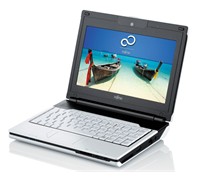
    Fujitsu Unveils New Netbook

    Fujitsu has launched the M1010, a netbook that promises ‘true mobility’ for today’s Internet-savvy generation.


    Click to enlarge
    The M1010 is powered by the Intel Atom processor, comes with a gigabyte of RAM, 60GB hard drive, and an 8.9-inch widescreen display with 1024 x 600 pixel resolution. It also comes with Wi-Fi and Bluetooth built-in for added connectivity, and comes with a 4-in-1 card reader for easy data transfer.

    Fujitsu PC Australia’s Country Director, Mr. Ivan Chan said, “Casual users who are looking for a constant personal companion that allows them ultimate connectivity and essential functionalities at a non-hefty price tag will find that the M1010 truly meets their needs for a richer, fuller user experience.”

    Fujitsu has optioned the Fujitsu M1010 with a set of removable Color Lids in shades of Red, Pink, Bronze, Blue and Black. And if you have a favourite design or character, just use the bundled free transparent Color Lid to show off that special design.
     
    The M1010 comes with a ThinkFree Mobile Office Suites that is compatible with Microsoft Office documents and offers value-adding services such as online storage (www.thinkfree.com).

    According to Fujitsu, the ThinkFree Office software feature will help you work on your powerpoint presentations, spreadsheets or word documents just about anywhere, anytime and with a user interface you are familiar with.

    The Fujitsu M1010 is available now with an RRP of $699.

    See: au.fujitsu.com/pc

    Fastest Intel Processor Launched in Oz

    Intel has unveiled its fastest desktop processor to date. The Intel Core i7 processor claims to speed up video editing, games, and other computer activities by up to 40 percent without increasing power consumption.


    Click to enlarge
    Intel i7: The fastest processor to date.
    According to Intel, this new processor holds a new world record of 117 for the SPECint_base_rate2006 benchmark test that measures the performance of a processor. This score is remarkably good as this is the first time ever for any single processor to exceed a score of 100 points.
     
    Intel’s Digital Enterprise Group Senior Vice President and General Manager, Patrick Gelsinger said, “Intel has delivered the fastest desktop processor on Earth to the most demanding users on Earth, the ones who are using their PCs for video, gaming and music. When you couple what is Intel’s biggest leap in chip design with other incredible innovations like Intel’s solid state drives, the Core i7 processor has redefined the computer of tomorrow.” 
     
    Intel’s unique Turbo Boost Technology accelerates performance to match a computer user’s needs and workloads. Through a sophisticated on-die power control unit and using new “power gate” transistors based on Intel’s advanced 45 nanometer, high-k metal gate manufacturing process, Turbo Boost automatically adjusts the clock speed of one or more of the four individual processing cores for single- and multi-threaded applications to boost performance, without increasing power consumption.


    The Core i7 also has the latest Intel power-saving technologies, allowing desktops to go into sleep states formerly reserved for Intel-based notebooks.
     
    Intel claims that the Core i7 processor more than doubles the memory bandwidth of previous Intel “Extreme” platforms, speeding the transfer of computer bits and bites in and out of the processor with Intel Quickpath Technology. Designed with Intel’s Hyper-Threading Technology, the processor also allows multiple computing threads to run simultaneously, effectively enabling it to do two things at once.

    It also offers unrivalled performance for immersive 3-D games – over 40 percent faster than previous Intel high-performance processors on both the 3DMark Vantage CPU physics and AI tests, popular industry computer benchmarks that measure gaming performance. The Extreme Edition uses 8 threads to run games with advanced artificial intelligence and physics to make games act and feel real.  
     
    The Intel Core i7 processors and Intel X58 Express Chipset-based Intel Desktop Board DX58SO Extreme Series are available now.

    See: www.intel.com.au

    Explosive Sennheiser Earphone For Music Lovers

    Sennheiser has won our hearts once again with its new range of noise-isolating earphones. The IE range claims to deliver ‘pure professional performance with perfect stage sound’ and is part of its professional portable line.

    The IE 8 is a set of high-end, in-ear earphones that come with a unique ‘bass response tuning’ screw that gives a user they the ability to let the ‘phones sound how they want it.

    Out of the box, the IE 8’s come with three pairs of standard plugs, three pairs of double-flanged plugs, two pairs of foam plugs, two pairs of mushroom form plugs, a cable clip, a pair of ear hooks, a cleaning and adjustment tool, a dry salt pad, and a storage box.

    The earphones can be worn in two ways: over the top of the ears with the use of the ear hook or traditionally. The medium-sized silicon plug is perfect for most people, but to achieve that perfect fit we advise users to take some time to exchange and test the plugs for themselves. Having the perfect fit will not only result to better noise-isolation, but will also deliver better bass response.


    The 1.2 metre cable makes it possible to carry the unit in your pocket, while the detachable earphone enclosure allows for the replacement of the cable if any problems occur.

    As previously mentioned, the enclosures come with a ‘bass response tuning’ screw that can be adjusted. By using the cleaning and adjustment tool, users can increase or decrease bass intensity. If you love your dance music, then we recommend you set the response level to maximum to hear that hard-pumping bass.

    The Sennheiser drivers deliver a frequency response between 10 Hz to 20 kHz, an the aforementioned bass response. As soon as we pressed play, we immediately heard (and to a certain extent, felt) the deep thumping bass. Setting the response to maximum takes it even further, although it may not suit everybody.


    Besides dance music, the IE 8 is also able to handle R&B, heavy metal, rock, and rap. Tracks from artists like Mary J. Blige, Slipknot, Metallica, and Dr. Dre sounded powerful, with the bass once again giving us a full-on experience. Mids were also rich, strong and detailed, with vocals being warm and full all-throughout.

    The earphone was also able to produce crisp and detailed highs, although it won’t be as noticeable if the bass response is set to maximum. If you like it ‘balanced’, then we recommend users to just keep the bass response level at the lowest setting.

    Overall, the Sennheiser IE 8 is a great set of earphones that will not disappoint. It sounds great, has a wide soundstage, and can handle just about any track you throw at it. If deep, rumbling bass is your kind of thing, then this set of ‘phones will most certainly not disappoint. The IE 8 is available now with an RRP of $539.95.

    See page over for product specifications and pricing.


    Sennheiser IE 8 Specifications:

    Frequency Response: 10 Hz – 20 kHz
    Cable length: 1.2 m, symmetrical (earphone to separator: 0.4 m; separator to plug: 0.8 m)
    Impedance: 16 ohm
    THD, total harmonic distortion: < 0.1%
    Sound pressure level: 125 dB (1 kHz, 1 Vrms)
    Attenuation (Passive): Up to 26 dB (95%)
    Connector: 3.5 mm, angled
    Ear coupling: Intra-aural (Ear-canal fit)
    Transducer principle: Dynamic
    Weight: 5g

    Sennheiser IE 8 |$539.95 |  | www.syntec.com.au

    For: Design; Noise-isolation; Comfortable for hours on end; Detachable earphone enclosure; Bass Response control; Great lows and mids; Wide soundstage
    Against: Setting the bass response on maximum ‘drowns’ the highs; Not for users who like their treble
    Conclusion: The perfect earphones for those who like their music with oomph.

    New Sony Notetaker Provides Clear Audio

    Sony Australia has released three new voice recorders that claims to have a unique Noise Cut function as well as stereo voice recording, MP3/WMA music playback, drag ‘n drop audio transfer, and convenient USB storage.


    Click to enlarge
    Sony Personal Audio’s Product Manager, Suzanna Gan said, “Designed for today’s mobile consumers who are looking for an all-in-one solution for their recording needs, the ICD-UX notetakers are slim and stylish accessories, perfect for use in all situations.”

    The ICD-UX notetakers feature a built-in stereo microphone, digital pitch control and voice operated recording that ensure optimum recording quality. Files are saved in MP3 format for easy audio sharing via e-mail.

    The ICD-UX also comes with a Noise Cut feature that enhances the frequency range of human speech (500Hz – 3400Hz) for clearer and more audible files. At the same time, sound frequencies in lower and higher ranges are suppressed to eliminate ambient noise.

    The ICD-UX notetakers include drag ‘n drop file transfer through USB connection to a PC or Mac and does not require pre-installation of any software. It also features FM radio recording and playback in MP3 and WMA format for easy playback.

    Pricing and Availability:
    ICD-UX71F: 1GB, Up to 257hrs, white or silver, $199
    ICD-UX81F: 2GB, Up to 575hrs, silver or pink, $249
    ICD-UX91F: 4GB, Up to 1152hrs, black or red, $349

    See: www.sony.com.au

    Vodafone Predicts Big Demand For Storm

    Vodafone has revised its launch timing for the BlackBerry Storm to ensure that it can meet ‘unprecedented demand’ from across Australia.


    Click to enlarge
    Vodafone has ordered a second shipment of BlackBerry Storm and will begin selling the smartphone from Vodafone retailers on Friday, December 5, 2008.

    Vodafone will email all prospective customers who have pre-registered for BlackBerry Storm, inviting them to complete their Storm purchase online. In addition to receiving an 8GB microSD card, online customers may also receive their device a day before the official in-store launch date of December 5.

    Vodafone Australia’s CEO, Russell Hewitt said, “BlackBerry Storm has sparked the imagination and anticipation of Vodafone customers around the world. In the UK, we’ve been selling a Vodafone Storm every 13 seconds, and on the basis of demand from our pre-registration process, which is well into the thousands, we’re expecting demand to be just as hot here in Australia.”

    Vodafone Australia has also announced that it would heavily subsidise the BlackBerry Storm in Australia to provide it to customers for $0 while offering Vodafone customers unlimited BlackBerry email and internet from as little as $69 per month.

    See: www.vodafone.com.au/blackberrystorm.

    100Mbps Broadband Now A Real Option Within 24 Months

    Telstra is about to crank up its broadband network in an effort to offer Australians a blisteringly fast broadband network that could be running speeds of up to 100mbps in about 24 months versus a minimum of five to seven years for the federal government-backed broadband network which Telstra was excluded from today.

    Currently, Telstra’s BigPond Cable Extreme is available to more than 1.8 million Sydney and Melbourne homes and businesses at up to 30 Mbps, and up to 17 Mbps in all other parts of Telstra’s HFC network.

    However, Telstra will continue to invest in its Next G and Hybrid Fibre Coaxial (HFC) cable networks to ensure that the company delivers the best broadband experience. Last year, Telstra has revealed that it was already experimenting with pre DOCSIS 3.0. According to various reports, the test was able to produce speeds of up to 75Mbps in Sydney and 100Mbps connectivity over the HFC network in Melbourne.

    In addition to the upcoming fast broadband, Telstra is set to ‘super-charge’ its Next G Network, giving users wireless broadband speeds of up to 21Mbps by early next year. This move from 3.6Mbps to 21Mbps will provide extra speed, flexibility, and productivity in the network footprint covering more than two million square kilometres and 99 percent of the Australian population.

    Telstra’s Executive Director, Wireless Engineering and Operations, Mike Wright said that this surge in available data speeds will allow more Australians to work away from the office. ‘They will be equipped to integrate new applications – including web conferencing, live high definition streaming video, high-speed web browsing, and seamless virtual private network access – into the way they do business on the move,” Mike added.

    See: www.telstra.com

    Sandisk Unveils Better Flash Memory For Netbooks

    SanDisk has today launched its next-generation of flash memory-based solid-state drives (SSD) designed for the netbook market.


    Click to enlarge

    Designed as drop-in replacements for hard-disk drives (HDDs), SanDisk’s new second generation module has a SATA interface to meet new netbook design requirements.

    The company claims that the SATA interface offers a significant boost in performance rendering these SSDs faster than HDDs in critical aspects. Booting and launching applications takes just half the time of an HDD.

    Available in capacities of 8, 16, 32 and 64-gigabytes, SanDisk Gen 2 pSSD drives are aggressively priced, making them attractive for POS terminals, printers, ATMs and other applications where users need HDD functionality with strong reliability, yet want to pay a low cost for the exact capacity that they need. For example, the 32GB modular SSD is priced at parity with 2.5″ HDDs in OEM quantities.


    SanDisk’s Senior Vice President and General Manager of Solid-State Drives, Rich Heye said, “Netbooks represent the fastest growing PC segment in 2009 and 2010 yet widespread adoption of SSDs in netbooks has been limited by speed, capacity and cost constraints. With the significant improvements in performance, capacity and low pricing, these SSDs are a perfect fit for the exploding netbook market.”

    SanDisk’s Gen 2 pSSD drives, slated to be available in February 2009, are built using the company’s reliable 43-nanometer Multi-Level Cell (MLC) flash memory. This technology is produced at fabrication plants in Yokkaichi, Japan, where SanDisk and its partner, Toshiba Corporation, share the output.

    The technology on which the Second Generation Modular SSDs are based also utilizes SanDisk’s innovative patented All Bit Line (ABL) architecture with advanced proprietary programming algorithms and multi-level data storage management schemes to yield MLC NAND flash memory chips that don’t sacrifice performance or reliability.

    See: www.sandisk.com

    Adobe A Good Place To Work Says Survey

    Adobe is one of the best companies to work for according to Fortune Magazine’s 12th annual “100 Best Companies to Work For” survey.

    Adobe bagged 11th place, making this the tenth year Adobe has been on the list. Additionally, Adobe is ranked No. 10 among “top-paying” companies.

    Adobe’s Senior Vice President for Human Resources, Donna Morris said: “Adobe is honoured to be included once again on this distinguished list. In the face of continuing global economic uncertainty, our commitment to keeping Adobe a great place is unwavering, and our ranking speaks to our employees’ enthusiasm about growing their careers here.”

    Adobe has approximately 7,000 employees in locations worldwide, including North America, Europe, Japan and Asia Pacific with more than half of Adobe’s employees located in the United States.

    In total, 353 U.S. companies vied for a place on the “100 Best Companies to Work For” list. Two-thirds of a company’s score is based on the 57-question survey created by the Great Place to Work Institute, a global research and consulting firm with affiliates worldwide. Fortune polled a minimum of 400 randomly selected employees at each company. The remaining third is based on a company’s responses to the Culture Audit questionnaire, which included questions about demographics, pay and benefit programs, and open-ended questions on philosophy, communication and more.

    See: www.adobe.com

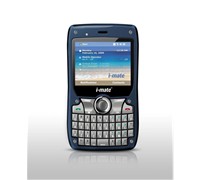
    Tough i-Mate Phone For The Outdoors

    i-mate has released a new phone that is built to last, thanks to its lifetime warranty and tough military-grade build.


    Click to enlarge
    The i-mate 810-F runs on Windows Mobile OS 6.1 and is comprised of waterproof rubber casing and exposed metal screws, a full QWERTY keyboard, and impact resistant touch screen.

    According to the company, the 810-F is designed around the stringent MIL-STD-810F series of standards. These standards are issued by the U.S. military’s Developmental Test Command, a body whose role is to ensure equipment can withstand the rigours of the most extreme environments.

    This means that the i-mate 810-F can cope with pressure, heat, water, humidity and even extreme shock. The company also claims that the unit can run at sub-zero temperatures (-10C) and can withstand temperatures of up to 60C. The unit can even be submerged in water.

    i-mate’s CEO, Jim Morrison said, “Until now, users have had to choose between a compact phone that incorporates the latest features, or one that was big, bulky and very expensive that could cope with the rigours of a harsh working environment and survive use during adventurous outdoor pursuits.”


    “The 810-F has been developed to meet the demands of the office, the work site and the outdoors.  It is all about performance; whether it’s the ability to perform in extreme conditions, or the performance under its skin. For adventurers looking for a phone to match their lifestyle, it’s the perfect answer,” added Morrison.

    Besides having a lifetime warranty, the 810-F also comes with Secure i-Q, a service from i-mate that lets you use your PC to remotely lock, wipe personal information or alarm your mobile if it’s ever lost or stolen.

    The 810-F is a full-featured Smartphone based on Windows Mobile 6.1 Professional with tri-band HSDPA and quad-band GSM/EDGE connectivity.  Also included is a 320_240 touch screen, 2.2GB of built-in storage, 128MB of DDR memory, 624Mhz PXA processor, 2MP camera with video capability, QWERTY keyboard, GPS, Wi-Fi, digital compass, accelerometer and Bluetooth.

    The i-mate 810-F will be available in the next couple of weeks.

    See: www.imate.com

    New HTC Smartphone Larger Than Life

    The new Touch HD from HTC will change the way you look at videos, documents, and websites thanks to its large screen. You can give this phone a go if you hate looking at small screens and want an easy-to-use smartphone, although be prepared to shell out a hefty sum for it.


    Click to enlarge
    The Touch HD’s screen is just as big as my credit card. The 3.8-inch widescreen VGA screen (480 x 800 WVGA) is perfect for the TouchFlo 3D interface: icons were larger and easier to press, while various Windows icons were not as hard to access. Photos and videos were crisp, with the Touch HD being able to change orientation (from portrait to landscape) instantly by rotating the unit.

    The unit only has three hard buttons: the power/standby switch located on the upper right had side of the Touch HD, and the volume keys on the left side. A 3.5mm audio jack is found on top of the unit (finally!), while a mini-USB port for charging and synchronisation is found at the unit’s bottom. The unit’s 5-megapixel camera, microSD card slot, and SIM card slot are found at the back of the device, while four touch keys (end call, pick up, home, back) and secondary camera are found up front.

    Since the unit is a Telstra-exclusive smartphone (as of this time of writing), HTC has decided to change a couple of icons on its TouchFlo interface. It still has the Home, People, Messages, My Email, Photos and Videos, Music, Settings, and Favourite menus but now has a Downloads section (giving users access to Music, Games, Tones and Pics, Caller Tones, Applications, and Bigpond service), a Telstra Applications menu (containing Scan Code, Yellow, Call1234, Whereis Trading Post, CitySearch, Blog and Photos, My Account, My Sync), TV menu (with Entertainment, Sports, News and Docos, Kids, Music, Active, Foxtel, TV, Live, Movies), News and Sport (access to News, Weather, Finance, Sport, Alerts, BigPond, AFL, NRL, V8, Horse Racing), and Internet and Search (launches BigPond, Sensis Search, Yellow, Web, and YouTube).


    Click to enlarge
    Despite its large profile, the unit fits comfortably in our hand. The TouchFlo 3D is more responsive now compared to last year’s Diamond, thanks to its 528Mhz Qualcomm processor and 288MB RAM. The unit runs on Windows Mobile 6.1 and comes with pre-installed programs like Office Mobile, Adobe Reader, ActiveSync, RSS feeder, Jetcet Print 5, Windows Live Messenger, and a Remote Desktop Mobile software.

    The unit also comes with Wi-Fi, Bluetooth, GPS, and can quickly download or upload files as it is HSDPA-enabled.

    Despite the unit allowing us to view photos and videos in landscape, we found it strange that the unit cannot change the orientation of our spreadsheet and word documents. It may not be an issue for some users, but after seeing the Samsung Omnia being able to display spreadsheets in landscape, HTC should have done the same.

    The Mobile Foxtel service can be watched in full screen, which is great for mums and dads who want to keep their kids busy for a couple of hours. Music sounded great, with the 3.5mm jack adding more versatility as it allowed us to use our favourite headphones. HTC has also included an FM tuner in case you want to listen to your favourite FM station.


    Click to enlarge
    Despite sporting a 5-megapixel sensor, the HTC Touch HD was unable to deliver, providing us with bland photos despite taking shots on well-lit places. And don’t even think about taking shots at night: this smartphone does not have any built-in flash.

    Thanks to its 1350mAh battery, the Touch HD lasted for about three and a half days with moderate use. The company claims that it has a talktime of up to 420 minutes and a standby time of up to 680 hours, which is good for a unit with a large screen.

    HTC has set the bar high this year with its Touch HD. This new phone is bigger, faster, and is very easy to use. The only problem is that you have to shell out $1,499 upfront or $0 upfront on a $150 member plan with a repayment option of $62.45 per month over 24 months for this unit, making it difficult for some to afford this kind of luxurious phone.

    See page over for product specifications and final rating.


    HTC Touch HD Specifications:

    Chipset: Qualcomm MSM7201a 528Mhz
    Internal Memory: 512MB flash; 288MB RAM
    Display: 3.8-inch widescreen VGA screen (480 x 800 WVGA)
    Software/OS: HTC TouchFlo 3D with Windows Mobile 6.1 Professional
    Camera: 5-megapixel with auto focus
    Network: WCDMA 850.2100 MHz and GSM: 850/900/1800/1900, HSDPA 7.2 Mbps and HSUPA 2 Mbps
    Memory card: microSD memory card (SDHC capable): 8GB card included
    WLAN: 802.11b/g
    Bluetooth: 2.0 with EDR with A2DP
    GPS: Built-in GPS
    Interface: HTC ExtUSB (mini-USB and audio jack in one; USB 2.0 High-Speed)

    Battery: 1350mAh
    Talk time: WCDMA: up to 420 minutes / GSM: up to 480 minutes
    Standby time: WCDMA: up to 680 hours / GSM: up to 440 hours

    Size: 115 x 62.8 x 12mm
    Weight: 146.4 grams

    HTC Touch HD | $1,499 |  | www.htc.com

    For: Large screen; Big icons; Responsive TouchFlo 3D; Telstra launch icons; 3.5mm audio jack; Good browser; Connectivity; Battery life; Comes with 8GB card
    Against: Spreadsheets and word documents cannot be shifted to landscape; Very expensive
    Conclusion: Big is beautiful with HTC Touch HD