The post Bluesound Launches Two Dolby Atmos Soundbars to Challenge Sonos Dominance appeared first on Smart Office.
]]>The Pulse Cinema represents the premium option at $2,315 AUD, featuring a 3.2.2 Dolby Atmos configuration with 16 speaker drivers, including a dedicated centre channel, dual four-inch woofers, and up-firing speakers.
The 119cm-wide soundbar delivers 500 watts of total power and targets televisions above 55 inches according to Bluesound specifications.
The more compact Pulse Cinema Mini, priced at $1,543 AUD, measures 84cm in width and provides 280 watts of system power.
While lacking dedicated up-firing Atmos speakers, it incorporates angled drivers and 2.1-channel Atmos virtualisation for smaller room setups.
Both models support HDMI eARC, optical, and analog inputs with included wall mounts for flexible positioning options.
The soundbars integrate Bluesound’s BluOS platform, enabling compatibility with over 20 streaming services, including Tidal, Spotify, and Qobuz, while supporting high-resolution audio up to 24-bit/192kHz.

Multi-channel surround system connectivity is available through the BluOS ecosystem, allowing integration with other Bluesound speakers for expanded audio setups.
Design options include black with grey fabric grille or white with tan accent details.
The Pulse Cinema faces direct competition from the Sonos Arc Ultra, which has received positive reviews for three-dimensional sound reproduction and bass performance.
The Arc Ultra operates in a similar premium price range and offers comparable Dolby Atmos capabilities.
The Pulse Cinema Mini competes against the established Sonos Arc, originally launched at $1,399 and recognised with industry awards for its performance in the mid-premium soundbar category.
The Arc’s proven track record and lower price point present significant competitive challenges for Bluesound’s entry.
Both Bluesound models will be available for pre-order starting September 24, entering a crowded soundbar market where established players like Sonos have built strong reputations through consistent performance and ecosystem integration.
The success of Bluesound’s soundbar venture will depend on whether the company can differentiate its offerings through superior audio quality or unique features, given the competitive pricing landscape and Sonos’s established market presence in premium wireless audio products.
The post Bluesound Launches Two Dolby Atmos Soundbars to Challenge Sonos Dominance appeared first on Smart Office.
]]>The post Sonos Finally Enter Dolby Atmos Soundbar Market With Expensive New ARC Bar appeared first on Smart Office.
]]>Earlier this year the Company was trying to nobble existing customers systems in an effort to generate new sales.
Their latest offering which is set sell for around $1,399 in Australia finally supports Dolby Atmos which has been a key feature of competitors soundbars for the past 18 months.In comparison Aldi recently sold a Dolby Atmos sound bar for $299.
Called the Arc soundbar is a long, thin, speaker with rounded edges that can be placed below TVs. It fires sound in multiple directions, resulting in a three-dimensional effect.
The Arc replaces the Playbase and Playbar, the company’s older soundbar models, the Company has also said that it will release a new app and operating system for its speakers in June.[wpdevart_youtube]Yu1NiZUbukA[/wpdevart_youtube]
The problem with buying a Sonos product is that also have to contend with the 16bit proprietary Sonos operating system which is constantly having to be upgraded.
Several competitors now use Google Voice and Alexa from Amazon without the need for a proprietary OS, they include soundbar brands such as LG, Samsung, Philips, and Polk.
The Companies poor selling Playbase speaker, designed to fit underneath some TVs, is also being discontinued as of today. 
Significantly more expensive than the $995 Playbar, Sonos said that the new device will be released on June 10th and will only work with the new Sonos S2 app which will work on iOS, Android, Windows, and Mac.
The Arc, third-generation Sub, and Sonos Five are the first products built on the company’s S2 platform which they had to develop due to complaints from existing owners of Sonos sound systems and the fact it only allowed for 16bit playback Vs 24 bit playback of audio.
The new Arc will be available in either black or white, and it features an elongated, matte plastic design with 76,000 holes drilled into the casing.
Inside that outer shell are 11 drivers that fire audio all around your room to create immersive, multidirectional sound.
As with most soundbars, the centre channel focuses on dialogue clarity while the left and right channels, along with the surround and up-firing height speakers, increase the sense of spaciousness and immersion that comes out of the Arc.
Like most of their competitors the ARC can play PCM stereo, Dolby Digital 5.1, Dolby Digital Plus, and Dolby Atmos audio. DTS and multichannel PCM audio are not supported.
It automatically optimizes what the drivers are doing in each scenario, several cheaper brands such as the $799 Polk system does this.
TV Owners will need a new generation TV with an eARC HDMI port or a 4K Blu-ray player — to take full advantage of the lossless Atmos playback that the Arc is capable of.
The bottom line is this is simply a soundbar that is coming late to market with a lot of features found in other soundbars. The combination of an expensive $1000+ Sonos sub and ARC soundbar makes it a very expensive TV sound system.
For me, the Sennheiser Ambeo is the premium soundbar to go for.
The post Sonos Finally Enter Dolby Atmos Soundbar Market With Expensive New ARC Bar appeared first on Smart Office.
]]>The post INSIGHT: Networked Sound & Home Theatre Battle Looms appeared first on Smart Office.
]]>At the same time new entrants to the sound market are now moving to a new generation of sound gear. Google is rolling out a new premium networked speaker, Apple a new range of speakers and headphones and several specialist such as the Swedish Company Audio Pro are now expanding into the premium networked sound market. The big question now is where this market is going and what will the future look like.
Analyst firm Canalys claims that the market will more than double in size to reach 225 million units by 2020, they are also tipping that the smart speaker market is set to approach an installed base of 100 million devices by the end of this year, making it almost 2.5 times bigger than at the end of 2017.
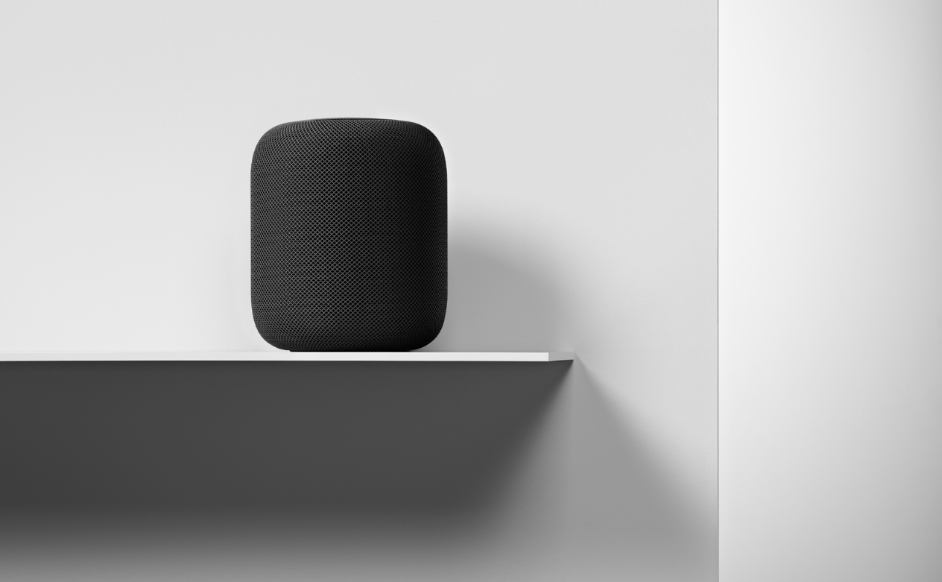
Amazon Echo devices will account for over 50 percent of the installed base in 2018, while Google’s Home series will account for 30 percent. At present, Apple’s HomePod – late entrants to the market – are trailing and will account for a meagre four percent of the 2018 base, according to Canalys.
Multi-room audio systems, which enable consumers to play songs through mobile application, are expected to pave huge opportunities for home theatre audio systems manufacturers.
Integration of home audio systems with wearable devices have compelled manufacturers in developing smart and networked speakers
Global sales of home theatre audio systems will account for revenues worth US$9 Billion in 2017, according to a report by Persistence Market Research (PMR).
PMR’s report projects the global home theatre audio systems market to register 5% CAGR through 2025. Global sales of home theatre audio systems alone are estimated to reach nearly US$ 15,000 Mn in revenues by 2025-end.

“Value” home theatre audio systems will remain sought after, based on price range while sales of premium home theatre audio systems will register the fastest growth in the Australian market, this bodes well for the likes of Denon, Marantz, Bowers and Wilkins and Harman.
In addition, revenues from sales of mid-range home theatre audio systems will remain comparatively higher than that of premium home theatre audio systems.
Mass retailers such as JB Hi Fi and The Good Guys along with Harvey Norman will remain the most lucrative sales channel for home theatre audio systems, expanding at the highest CAGR through 2025.
Sales of home theatre audio systems in the specialist channel are also tipped to grow by 12%.
By technology, Bluetooth home theatre audio systems will remain dominant in the market, followed by Wi-Fi.
In addition, sales of Wi-Fi and NFC home theatre audio systems are estimated to exhibit parallel expansion at 4.8% CAGR through 2025.
More than 40 Mn units of 9.1 channel & above home theatre audio systems are expected to be sold by 2025-end, based on channel type. In terms of volume, sales of 6.1 channel home theatre audio systems will comparatively lower than other channel type segments in the market.
Asia-Pacific (APAC) will remain the second largest market for home theatre audio systems after the USA, closely followed by Europe. However, sales in Europe will exhibit a comparatively higher CAGR than APAC through 2025.
The analysts claim that increasing adoption of wireless home theatre audio systems will drive market growth in Australia, Increasing adoption of wireless home theatre audio systems equipped with features such as Wi-Fi and Bluetooth will also deliver growth for retailers.
Specialist sound dealers are witnessing a rise in technological advancements, transforming the way in which music is played. The biggest issue for these dealers is the cost of marketing to bring consumers into their stores, e/marketing and effective web site operations coupled with regular EDM campaigns are critical if the specialist channel is to stay competitive and above all a relevant place to shop say analysts.

Key market players identified in PMR’s report include Bose Corporation, Harman International Industries, Yamaha Corporation, Sony Corporation, LG Electronics, Samsung Electronics, Pioneer Corporation, Sound United LLC, Philips, Bowers & Wilkins, Pioneer Corporation, Bang & Olufsen, Braven LC, as well as Apple, Google and Amazon.
“The US is the world leader in smart speaker adoption,” said research analyst Vincent Thielke. “Amazon and Google know the power of an ecosystem lock-in and have been engaged in a fierce price war to try and build the largest installed base.
“As Amazon’s Prime Day looms, customers expect discounts, and the company is set for a rush of shipments.”
Amazon and Google will take their devices beyond the smart home and deploy them in a range of new scenarios, he added. “Their business development teams are targeting commercial opportunities, such as hotels, offices, gyms, and airports, with initiatives such as Amazon’s Alexa for Business and Alexa for Hospitality.
“These deployments are a major opportunity for the IT channel to develop solutions and provide technical skills and services that customers may lack.”
“In the second half of 2018, sales promotions will be an important driver, as vendors anticipate a surge of shipments during the December January peak shopping period.

Growth creates growth
“The rapid growth of the smart speaker installed base is itself a growth driver,” added Canalys analyst Ben Stanton. “Amazon and Google are desperate to prove the scale and reach of their platforms to developers.
“As the Amazon Alexa and Google Assistant speaker installed bases grow, the companies can make a more compelling case. And as developers invest in voice and try to cash in on the creation of new experiences, smart speaker adoption will grow.
“The battle for developers’ attention is vital for Google and Amazon. It will determine the speed at which they can appeal to new demographics, move into new industry verticals, and gain traction in new countries.”
The post INSIGHT: Networked Sound & Home Theatre Battle Looms appeared first on Smart Office.
]]>